When you click on links to various merchants on this site and make a purchase, this can result in this site earning a commission. Affiliate programs and affiliations include, but are not limited to, the eBay Partner Network.
I am getting close to taking my motor off of my frame, and I know that many of you have stated they are really heavy to put on a common engine stand. It may be sitting on there for awhile. Any recommendations or fabrication I can do to a common engine stand? thanks
Start with a heavy duty, four-legged stand, and make or have made a plate to mount it off the exhaust port bolts. I don't know if anyone makes them for sale, Stumpy's would be a good bet: Featured Products -
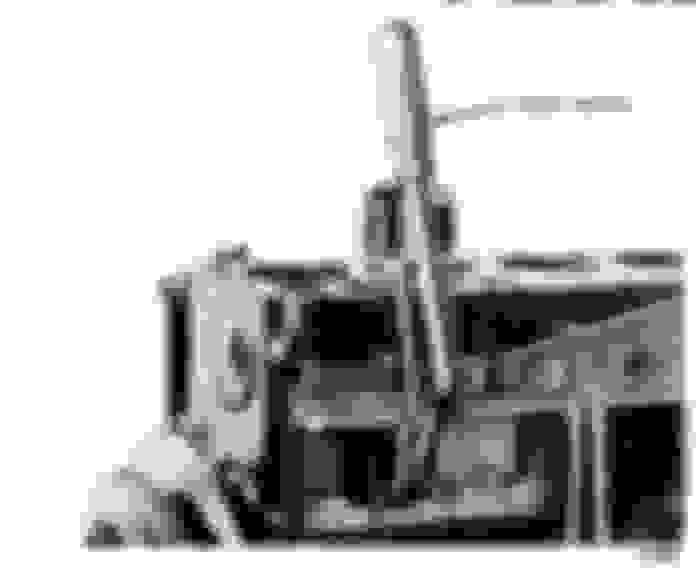
The ones at the bottom are the kind of thing I'm talking about. You can see the official Ford support in the pic below.
I've heard and seen the flat-6's on a regular stand supported off the bellhousing, but it would make me REAL nervous. Once the crank is out, it would be more manageable. I suppose you could make some kind of support for the overhanging end of the block, but it would make rotating the block a pain.
The mechanic on this video just used a wood crate to store the engine. Looks like the block and oil pan rails are sitting on blocks on a larger wood pallet. I plan on building this same design only adding castors to the bottom for mobility. He also moves the block around by flipping it by hand. I have been doing the same but with my lift.
If you not going to do much more than store the engine for awhile the long furniture dolly some 2x4's and a tie down strap work real well
Be careful with those dollies, before you know it your garage and house will be covered with them
If your going to tear down the motor then go with Joho Nolin's engine stand and Ross's side mount design
Whats the best way to lift these beasts? With the head off and lift bracket bolted in?
I haven't ever lifted a 226, but I've done even bigger inlines. I don't like lifting off the block deck directly, too much chance of putting a divit in the surface. The exhaust and intake ports should be fine, if you tighten a flat lifting lug down against the surface. But on the opposite side of the engine, I don't know what you can use. Anything 3/8" should be OK. You could use a choker sling, but I don't trust them. Will you have the front end sheet metal off?
Yes, when I swap, I am swapping and derusting everything up front, including the radiator. I have a NOS three core heavy duty radiator I am dying to bolt in. And plan to change tranny too with the one I am rebuilding. Basically gutting drivetrain and putting in all new/rebuilt/correctly painted parts.
The manual shows a lift plate bolted on the deck. Couldn't I avoid the risks of a divot if I used a piece of thick cardboard in between?
Not doing this tomorrow or even this month, just trying to plan ahead. Right now I am lifting it with a sling through the piston chambers but that only works while I have it taken apart.
If you use a plate on the deck, that's a very good solution. What I was getting at is some people stick a bolt thru a chain, and tighten it down onto the deck. The chain can dent the deck easily. A lifting lug that only catches one bolt can also mar the deck. But a longer plate with 4 or more bolts and reasonably flat, tightened down onto the deck, is very safe.
Is there a way to do that with the head on? It would be SO much better to put the head on and torque it with the engine out of the truck.
This is the lifting plate I threw together for flat-V8's. It work off the intake flange. (one bolt is missing, it uses 4) The engine is perfectly balanced with the single hook, with flywheel on. For a flat-6, you might want to use a leveling beam due to length. You want something stout if you're going to lift over the fenders!!
Thanks Ross, when I get closer to the swap I will check that out. That plate is exactly what I was envisioning to do what I want to do. I should be able to torque it pretty well. I torqued the manifolds on with the engine in the truck and it wasn't bad.
For what it's worth, here's my experience... not saying it's the safest or "correct" way, but it worked.
Pulling the engine, two grade 8 bolts, chain offset ot balance, left the head on. Once it cleared the frame, straight down to the trans pallet to remove trans and PP. Minimized any sway and moved very slowly. After that engine whet to it's own pallet where it sat for just over a year
I used wood scrapes I had lying around to make mounts on the pallet for it.
Disassembly; used a four point stand from HF. This was a little dicey... I was uncomfortable enough I moved the pallet under the engine, and placed a cinder block under to help support the end incase something bad happened. Once the crank was out it was much better.
This was the ONLY way I could get the stand to line up with the block...
Here's what I used 30+ years ago when I had the flat six out of my F-2. A couple of 4x4s and sme 2x4s. I built another set up like this for the extra flat six I have n my shop.
This Hennessey Takes the Expedition Tremor's Off-Roading Capability to the Next Level
Slideshow: The VelociRaptor Expedition gains a lift, upgraded suspension, Brembo brakes, and trail-ready equipment while retaining the stock 440-horsepower EcoBoost V6.
Rezvani's Latest Post-Apocalyptic Monster Is a Ford F-150 Raptor Underneath
Slideshow: Called the Fortress, the 850-horsepower pickup combines Raptor underpinnings with military-inspired features, survival equipment, and a starting price of $285,000.