


Factory engine block heater

Fleet Mechanic
Joined: Jan 2011
Posts: 1,493
Likes: 21
Huh, now that's interesting. Just took a look at the order guide and found this:
Looks like if you live in Alaska or the upper midwest it's standard, all other states need not apply. Very interesting.
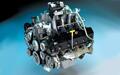
I've never seen one work that way, but the only ones I've had before were on diesel models. But every one I've ever owned or read about is comprised of a heating element that replaces one of the block casting plugs and is immersed in coolant. I'll have to do some more digging, but I'm assuming that's what this one is.
Looks like if you live in Alaska or the upper midwest it's standard, all other states need not apply. Very interesting.
I've never seen one work that way, but the only ones I've had before were on diesel models. But every one I've ever owned or read about is comprised of a heating element that replaces one of the block casting plugs and is immersed in coolant. I'll have to do some more digging, but I'm assuming that's what this one is.
Thread Starter
|
Super Moderator


Joined: Aug 2003
Posts: 25,479
Likes: 742
From: Isanti, MN

Looks like it. From the 2013 Order Guide:
Originally Posted by 2013 Order Guide
ENGINE BLOCK HEATER
Standard and only available in the following states: AK, MN, ND,
SD, MT, WI and WY. Other states available via FCSD.
NOTE: (Fleet Only) – Engine block heater (41H) available in all
states with valid FIN code.
Standard and only available in the following states: AK, MN, ND,
SD, MT, WI and WY. Other states available via FCSD.
NOTE: (Fleet Only) – Engine block heater (41H) available in all
states with valid FIN code.
Fleet Mechanic
Joined: Jan 2011
Posts: 1,493
Likes: 21
Well, that's why my 2013 has a block heater. (It was sold new in WI) I live in IL. I bought the truck in WI. it spent its winters in AZ. I do not plan to drive this one in the salt.

Mountain Pass
Joined: Mar 2003
Posts: 100
Likes: 6
They are common here in Northern Minnesota, The Eco uses a immersion type heater, It screws into the block cooling jacket, most are 400 watts on gas engines,
Most of the newer cars are also equipped with a thermostatic cord so the block heater won't turn on until the cord temp is around 5 to 10 degrees, I suppose it saves energy.
Here it Zero-Starts catalog, this is the brand most use up here.
Phillips & Temro Online Parts Catalog
Most of the newer cars are also equipped with a thermostatic cord so the block heater won't turn on until the cord temp is around 5 to 10 degrees, I suppose it saves energy.
Here it Zero-Starts catalog, this is the brand most use up here.
Phillips & Temro Online Parts Catalog
Thread Starter
|
Super Moderator
Joined: Aug 2003
Posts: 25,479
Likes: 742
From: Isanti, MN
Originally Posted by 2015 Owner's Guide, p 162
Using the Engine Block Heater
Make sure the receptacle terminals are
clean and dry prior to use. Clean them with
a dry cloth if necessary.
The heater uses 0.4 to 1.0 kilowatt-hours
of energy per hour of use. The system does
not have a thermostat. It achieves
maximum temperature after
approximately three hours of operation.
Using the heater longer than three hours
does not improve system performance and
unnecessarily uses electricity.
Make sure the receptacle terminals are
clean and dry prior to use. Clean them with
a dry cloth if necessary.
The heater uses 0.4 to 1.0 kilowatt-hours
of energy per hour of use. The system does
not have a thermostat. It achieves
maximum temperature after
approximately three hours of operation.
Using the heater longer than three hours
does not improve system performance and
unnecessarily uses electricity.

Certified Thread Hijacker

Joined: Aug 2001
Posts: 14,441
Likes: 60

Josh
Mountain Pass
Joined: Mar 2003
Posts: 100
Likes: 6
The Diesel just has a larger heating element, It has to warm up much more coolant then the gas engine has, the gas is the same, If it was plugged in all night the heater was blowing heat right away. 400 watts is plenty down to the -45 we see up here anyway.
FTE Stories
Ford Trucks for Ford Truck Enthusiasts

Top 6 Best Deals Available on New Fords & Lincolns Right Now
Brett Foote
This Hennessey Takes the Expedition Tremor's Off-Roading Capability to the Next Level
Verdad Gallardo
Top 10 Fords at 2026 Carlisle Ford Nationals
Joe Kucinski
3 Best / 3 Worst Parts of Modern Ford Ownership
Brett Foote
10 Amazing Upgrades That Solve Common Ford Truck Owner Headaches
Pouria Savadkouei
Every 2026 Ford Engine Explained
Brett Foote
10 Ugly Ford Trucks That We Still Kinda Love
Joe Kucinski
10 Things Every Truck Owner NEEDS (2026 Edition)
Michael S. Palmer
Rezvani's Latest Post-Apocalyptic Monster Is a Ford F-150 Raptor Underneath
Verdad Gallardo
Certified Thread Hijacker
Joined: Aug 2001
Posts: 14,441
Likes: 60
Even still, the 6.0 block heater only raises the coolant a certain amount over ambient.
Josh

Lead Driver
Joined: Jun 2005
Posts: 8,475
Likes: 728
From: Calgary Canada
I have heard of such systems for use on heavy equipment. they generally have a pump and a diesel-fired heater from what I've seen. I don't think that's a common system anywhere but the arctic, and even there, if it's truly cold, those machines will run 24/7 until the job is done.

Lead Driver

Joined: May 2015
Posts: 5,890
Likes: 360
From: Mts. S. of San Francisco
Back in the day when I lived up in north-central Minnesota (near Brainerd), everyone used circulating tank heaters. It was a small unit a little larger than a Fosters beer can. You hook it into one of the heater hose lines, and it heats and circulates the coolant.
We had a non-heated garage, but we rigged up a timer that would turn on all the tank heaters at OH-dark:30.
It was wonderful to be able to turn on the heat in the vehicle and get warm air from the git-go. Backing out of the driveway, I would already be warm, but I still had the square tire problem until those old nylon-chord tires started warming up.
We had a non-heated garage, but we rigged up a timer that would turn on all the tank heaters at OH-dark:30.
It was wonderful to be able to turn on the heat in the vehicle and get warm air from the git-go. Backing out of the driveway, I would already be warm, but I still had the square tire problem until those old nylon-chord tires started warming up.

Post Fiend
Joined: Apr 2002
Posts: 19,311
Likes: 97
From: Waterloo, Iowa
I have heard of such systems for use on heavy equipment. they generally have a pump and a diesel-fired heater from what I've seen. I don't think that's a common system anywhere but the arctic, and even there, if it's truly cold, those machines will run 24/7 until the job is done.
Certified Thread Hijacker
Joined: Aug 2001
Posts: 14,441
Likes: 60
Diesel was cheap then, now it's different. Plus electronic controls etc make cold diesel starts easier.
I may look into retrofitting block heater in my 5.0, or I may not.....
Josh

New User
Joined: Apr 2005
Posts: 16
Likes: 0
From: North Pole, Alaska
Bullitt...you don't have to do any retrofitting to your 5.0, just order a block heater from Ford and install it. I live in North Pole Alaska, all of the vehicles have block heaters, battery pad heater, oil and transmission pan heaters. When it's 50 below it's tough on a vehicle. But almost all the garages here are heated so we don't plug in at home.
Certified Thread Hijacker
Joined: Aug 2001
Posts: 14,441
Likes: 60
Bullitt...you don't have to do any retrofitting to your 5.0, just order a block heater from Ford and install it. I live in North Pole Alaska, all of the vehicles have block heaters, battery pad heater, oil and transmission pan heaters. When it's 50 below it's tough on a vehicle. But almost all the garages here are heated so we don't plug in at home.
Josh