


Paint Question

Thread Starter
|
Laughing Gas

Joined: Jun 2004
Posts: 823
Likes: 4
From: Calais, Vermont
Paint Question
Hi folks,
I am preparing to (finally) paint my truck. Single stage over epoxy primer. I've converted my two-car garage into a dust-free & bug-free paint booth complete with filtered fan-assist ventilation. I've had a couple of motor-head friends tell me that I should water down the concrete floor. I've heard of this practice, but I thought it had to do with dust control. I have covered the floor with some of those ubiquitous plastic tarps. My concern was not just dust up from the concrete, but I also didn't want to make too big a mess on the concrete. I was told that wetting down the slab would also keep the paint from sticking to it. To me that sounds like a more slippery mess and problem than dealing with paint any particles that land on the plastic tarps. Anyone have a comment regarding either / both options?
I am preparing to (finally) paint my truck. Single stage over epoxy primer. I've converted my two-car garage into a dust-free & bug-free paint booth complete with filtered fan-assist ventilation. I've had a couple of motor-head friends tell me that I should water down the concrete floor. I've heard of this practice, but I thought it had to do with dust control. I have covered the floor with some of those ubiquitous plastic tarps. My concern was not just dust up from the concrete, but I also didn't want to make too big a mess on the concrete. I was told that wetting down the slab would also keep the paint from sticking to it. To me that sounds like a more slippery mess and problem than dealing with paint any particles that land on the plastic tarps. Anyone have a comment regarding either / both options?
Elder User
Joined: Mar 2012
Posts: 787
Likes: 1
From: Prescott AZ.
You might want to consider a third option. Single stage takes longer to dry than base/clear so the overspray might just hit the floor wet. Water will hold the dust down but you will end up with a slippery mess and when the water dries so will the paint wherever it might be. Plastic traps would work but I always seem to get tangled up in them and if you stumble into your new paint job you won't be a happy camper. You might get a roll of brown paper, tape it down so you don't trip over it and when the paint is completely dry roll it up and pitch it, no dust and clean floor.

Welder User


Joined: Feb 2009
Posts: 5,269
Likes: 50
From: northwest MT

You can use water to clean it, then squeegee it off.....that's what I do. I don't like standing water where I paint.
Cover the floor if you don't want overspray on it, cause you will get some with any kind of paint. Plastic or paper or whatever.....tape the seams and edges so it doesn't move around.
Fans.......personally I would never use a household type fan to remove paint vapor from a room, even with a filter. Can you say KABOOM? Might be better to use those fans to force clean air into the room then have a much larger filtered exit for the vapor. JMO
Cover the floor if you don't want overspray on it, cause you will get some with any kind of paint. Plastic or paper or whatever.....tape the seams and edges so it doesn't move around.
Fans.......personally I would never use a household type fan to remove paint vapor from a room, even with a filter. Can you say KABOOM? Might be better to use those fans to force clean air into the room then have a much larger filtered exit for the vapor. JMO
Lead Driver


Joined: Aug 2006
Posts: 8,095
Likes: 655
From: Brentwood, TN

Anytime you paint you will get overspray on the floor. If the floor is covered with plastic or paper that material will instantly become like fly paper. Your feet will stick to it, your hoses will stick to it, and in the end it will stick to your truck when it gets pulled up by a hose/feet. Wetting down the pavement will help hold back any dust on the concrete and with a bit of care you can keep the wet hoses out of your fresh paint job. Personally I feel that the best course of action is to clean the floor well and leave it dry...deal with the overspray on the floor later. As for vapors and the threat of a KABOOM...forget about it, it ain't gonna happen. I have challenged many of people to cite even ONE example of anyone ever igniting paint overspray, even with and open flame, no one has ever been able to do it. Automotive paint is just not volatile enough to ignite in the concentrations found while painting a vehicle.

Elder User
Joined: Jun 2012
Posts: 508
Likes: 0
From: Frankfort, Ohio
Charlie is right, no kaboom. I have wet the floor, paint still sticks. After about 15 minutes or so the floor starts to dry, no help. The best thing to do is sweep the garage floor a day or so before you paint. The dust will settle, when you sweep it, it stirs up more dust. Any kind of fan you can get to pull out vapor and solids will help. I did say pull out not in. Remember most paint masks will only keep solids out, not vapor. If you have a relatively clean garage you won't have any problem. If you have worked in there for years and created all kinds of dirt and dust, then maybe. Don't get too excited over it, it all sands and buffs out.
Thread Starter
|
Laughing Gas
Joined: Jun 2004
Posts: 823
Likes: 4
From: Calais, Vermont
After almost ten years since I started patching, banging and metal bumping, cutting, grinding, banging & bumping some more, lead soldering, polyester fillering, blocking, cleaning, more blocking, etc (all the while spending money that probably should have gone into the house, or at least paid for a warm winter vacation) I finally have laid down a couple of coats of primer. My "spray booth" works great; there's so little overspray from the HVLP gun that I find myself quite comfortable. The air never gets overwhelmingly cloudy. Nothing has exploded. Only one drip, but it'll sand out. I'm doing the bed right now. painting the pieces separately and will hit spots as necessary after I bolt it back together. When the bed's all done with the finish paint and wood and fenders all assembled into one heavy unified piece, I'll move it somewhere safe, and move the cab, doors, hood, fenders etc. into the booth. I'm hoping that by then (maybe a week from now) my spray technique will be developed enough so that I can handle all those curvy parts without too much anxiety...
Lead Driver
Joined: Aug 2006
Posts: 8,095
Likes: 655
From: Brentwood, TN
Trending Topics
New User
Joined: Aug 2015
Posts: 20
Likes: 0
From: Perry, IA
I thoroughly clean my paint room the day before, spray the walls and floor down, squeegee it out, let it dry then paper the floor. It helps control the dust and gives a good surface to tape to and won't get sticky like plastic will.. Pics for reference


Recently I came across paper they use to protect floor in new homes during construction that is 6 feet wide for like 20 bucks a roll at Menards. Its the pinkish paper


Recently I came across paper they use to protect floor in new homes during construction that is 6 feet wide for like 20 bucks a roll at Menards. Its the pinkish paper

FTE Stories
Ford Trucks for Ford Truck Enthusiasts

Top 10 Fords at 2026 Carlisle Ford Nationals
Joe Kucinski
3 Best / 3 Worst Parts of Modern Ford Ownership
Brett Foote
10 Amazing Upgrades That Solve Common Ford Truck Owner Headaches
Pouria Savadkouei
Every 2026 Ford Engine Explained
Brett Foote
10 Ugly Ford Trucks That We Still Kinda Love
Joe Kucinski
10 Things Every Truck Owner NEEDS (2026 Edition)
Michael S. Palmer
Rezvani's Latest Post-Apocalyptic Monster Is a Ford F-150 Raptor Underneath
Verdad Gallardo
Top 10 Most Expensive Ford Trucks Ever Sold on Bring a Trailer
Joe Kucinski
2027 Ford Super Duty Buyer's Guide (Every Model, Engine, & Package)
Brett Foote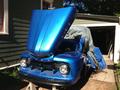
Postmaster
Joined: Aug 2003
Posts: 3,222
Likes: 6
From: Houston

Nice paint work and good advise...

Thread
Thread Starter
Forum
Replies
Last Post
joe hoffman
1948 - 1956 F1, F100 & Larger F-Series Trucks
11
Apr 24, 2006 05:20 AM