



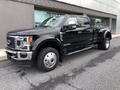


Something I saw

Fleet Mechanic


Joined: Jun 2011
Posts: 1,865
Likes: 34
From: Annandale, VA
Wonder what the objectives of this test are? Demonstrate what exactly? What measures of performance and evaluation criteria are we looking for? What is the success criteria for Ram? How do we know we've succeeded.
It boggles my mind what these motor companies put out for videos when it comes to "testing.".
I have seen some videos where actual scientific measurements are made and data are collected to satisfy measures of performance (fuel economy over 100 miles towing XXX in a user relevant environment) that answer a specific test objective (Fuel usage).
I'd like to speak to an engineer who actually accomplishes real test on these vehicles.
It boggles my mind what these motor companies put out for videos when it comes to "testing.".
I have seen some videos where actual scientific measurements are made and data are collected to satisfy measures of performance (fuel economy over 100 miles towing XXX in a user relevant environment) that answer a specific test objective (Fuel usage).
I'd like to speak to an engineer who actually accomplishes real test on these vehicles.

Laughing Gas

Joined: Feb 2007
Posts: 950
Likes: 6
From: Waco, Texas

With Ford, from what I was told by Ford Engineers at the ClayComo Plant in Liberty, MO, along with the shields and guards, you actually have more travel in the rear and front wheels, such as crossing a ditch at an angle or going over a burm so the tires stay in touch with surfaces better than the ones without the package. From Experience, there is a burm around Texas Motor Speedway, as it runs all the way around the Parking area, over 600 acres. Most trucks cannot traverse the burm, especially at an angle. Many trucks are high centered or lose traction. I can go over it without a problem. I have crossed it at an angle, directly over, I do drag a bit. I do have the Off-Road package. So I tend to think there is merit to it.
Postmaster
Joined: Sep 2006
Posts: 2,598
Likes: 5
From: Maryland
Exactly Scott! When I first saw GM do this test, I couldn't help but to laugh and think they are proving the opposite of what they think they are! Who wants such a rigid chassis that they have no traction on the slightest uneven terrain?

Laughing Gas
Joined: Feb 2004
Posts: 974
Likes: 5
From: FLA
If you notice also the Ford right rear tires are much closer to the ground than the Dodge. I am guessing if they had pulled the Ford forward enough to get the tires at the same distance from the ground some of the flex would come out and the tailgate would open.
This is also a perfect example of how Ford's tolerances are much closer than the sloppy Dodge.
This is also a perfect example of how Ford's tolerances are much closer than the sloppy Dodge.
Trending Topics

Fleet Owner

Joined: Mar 2012
Posts: 20,141
Likes: 15,901
From: Wisconsin
In my opinion it provided they need to spend the $10 on a wind deflector for their mic and why my buddy struggles down rocky two tracks at the hunting property and I don't.
FTE Stories
Ford Trucks for Ford Truck Enthusiasts

2027 Ford Super Duty Buyer's Guide (Every Model, Engine, & Package)
Brett Foote
Top 10 Ford Truck Tragedies
Joe Kucinski
AEV FXL Super Duty - the Super Duty Raptor Ford Doesn't Make
Brett Foote
Lobo Vs Lobo: Proof the F-150 Lobo Should Be Even Lower!
Michael S. Palmer
Ford's 2001 Explorer Sportsman Concept Looks For a New Home
Verdad Gallardo
10 Best Ford Truck Engines We Miss the Most!
Joe Kucinski
2026 Shelby F-150 Off-Road: Better Than a Raptor R?
Brett Foote
2027 Super Duty Carhartt Package First Look: 12 Things You NEED to Know!
Michael S. Palmer
10 Most Surprising 2026 Ford Truck Features!
Joe Kucinski


Lead Driver
Joined: Dec 2013
Posts: 9,762
Likes: 115
I was thinking the same thing about needing the wind deflecting mic... If you are going to test $60-$70k+ trucks and would like any respect, you would do the video professionally.
Viewpoint and Marketing makes sense too jdadmsjr.
I do remember our favorite powerstroke youtube video maker talking about radiator failures in a superduty. He even had one that a Mishimotors one failed in and was able attribute it to frame flex. Granted that person was an extreme end-user of the vehicle. Something I don't do with mine. Too much flex isn't good either, apparently.
Viewpoint and Marketing makes sense too jdadmsjr.
I do remember our favorite powerstroke youtube video maker talking about radiator failures in a superduty. He even had one that a Mishimotors one failed in and was able attribute it to frame flex. Granted that person was an extreme end-user of the vehicle. Something I don't do with mine. Too much flex isn't good either, apparently.

Elder User
Joined: Jul 2010
Posts: 501
Likes: 1
From: Pacific NW
I believe this video was just a dealer doing the demo. Ford and RAM have far higher budgets for videos when they want to show off their engineering.
I personally saw this as an issue. I do drive on logging roads, the beach, and areas where the roads aren't as nice. A stiff frame was one of many reasons why I owned a 2010 F-150. However, how many remember when the tables were flipped and Ford conducted the same tests against Toyota and flaunted the results? Toyota claims that the flex is integral to the design while Ford notes how horrible the frame flex is on the Tundra and how it's just wrong (Remember those "Truth about Trucks" videos?). Of course Ford will not bring up that subject matter on Super Duty vs. GM or RAM. Pot meet Kettle. It's just like how someone noted to me that Chrysler pulled a similar stunt with the whole DEF versus massive EGR bit. Now everyone is DEF equipped for diesels.
In the end, this is all marketing speaking to their strengths and ignoring/not mentioning the flaws. To each their own.
I personally saw this as an issue. I do drive on logging roads, the beach, and areas where the roads aren't as nice. A stiff frame was one of many reasons why I owned a 2010 F-150. However, how many remember when the tables were flipped and Ford conducted the same tests against Toyota and flaunted the results? Toyota claims that the flex is integral to the design while Ford notes how horrible the frame flex is on the Tundra and how it's just wrong (Remember those "Truth about Trucks" videos?). Of course Ford will not bring up that subject matter on Super Duty vs. GM or RAM. Pot meet Kettle. It's just like how someone noted to me that Chrysler pulled a similar stunt with the whole DEF versus massive EGR bit. Now everyone is DEF equipped for diesels.
In the end, this is all marketing speaking to their strengths and ignoring/not mentioning the flaws. To each their own.
Lead Driver


Joined: Feb 2005
Posts: 7,928
Likes: 2,644
From: The Great State of Texas
I believe this video was just a dealer doing the demo. Ford and RAM have far higher budgets for videos when they want to show off their engineering.
I personally saw this as an issue. I do drive on logging roads, the beach, and areas where the roads aren't as nice. A stiff frame was one of many reasons why I owned a 2010 F-150. However, how many remember when the tables were flipped and Ford conducted the same tests against Toyota and flaunted the results? Toyota claims that the flex is integral to the design while Ford notes how horrible the frame flex is on the Tundra and how it's just wrong (Remember those "Truth about Trucks" videos?). Of course Ford will not bring up that subject matter on Super Duty vs. GM or RAM. Pot meet Kettle. It's just like how someone noted to me that Chrysler pulled a similar stunt with the whole DEF versus massive EGR bit. Now everyone is DEF equipped for diesels.
In the end, this is all marketing speaking to their strengths and ignoring/not mentioning the flaws. To each their own.
I personally saw this as an issue. I do drive on logging roads, the beach, and areas where the roads aren't as nice. A stiff frame was one of many reasons why I owned a 2010 F-150. However, how many remember when the tables were flipped and Ford conducted the same tests against Toyota and flaunted the results? Toyota claims that the flex is integral to the design while Ford notes how horrible the frame flex is on the Tundra and how it's just wrong (Remember those "Truth about Trucks" videos?). Of course Ford will not bring up that subject matter on Super Duty vs. GM or RAM. Pot meet Kettle. It's just like how someone noted to me that Chrysler pulled a similar stunt with the whole DEF versus massive EGR bit. Now everyone is DEF equipped for diesels.
In the end, this is all marketing speaking to their strengths and ignoring/not mentioning the flaws. To each their own.

Thread
Thread Starter
Forum
Replies
Last Post