


Timing has me stumped...

Thread Starter
|
New User
Joined: Feb 2012
Posts: 12
Likes: 0
Timing has me stumped...
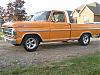
I have a 1972 Ford F100 with a 360 with a unknown mileage... probably 250,000 or so. I bought it and it ran ok. I took it to my mechanic (Cousin) and he got it timed and it ran good for a while I replaced the valve cover gaskets and it ran ok. ( I know, nothing to do with how it runs.) I had to replace the battery and it had a hard time staying running after I replaced it. I left the hood open where I could see and noticed one of the plug wires was interfering with the throttle. I turned the truck off and moved the wire to a safe place where it wouldn't get caught in the spring going to the carburetor. While moving it I noticed that the distributer was loose. I tightened it down and tried to start it. It ran for about 3-5 seconds and died. it did this several times. I moved the distributer a bit in advance and a bit in retard. neither way helped it run any better. it backfired a few times. I had my mechanic take a look at it and he made sure it was close when the #1 cylinder is at tdc. I tried to start it again and it backfired again. he tried moving the distributor in about every position and it wouldn't run or it would backfire. The truck wont stay running, the pressure coming from the fuel pump is good and the filter is clean. does anyone have any ideas??

Post Fiend
Joined: Apr 2002
Posts: 19,311
Likes: 97
From: Waterloo, Iowa
No, but it would be a place to focus on. They had their own little routine for a long time. They need to be "set", that is the point gap checked and adjusted, make sure all the wires are tight, etc. your buddy who timed it should have done that I'd guess. Loose is not good though. If you have a timing light or a vacuum gauge you can get the timing set if you can get it running.
Are you getting a good strong blue spark at the plugs?
Sent from my iPhone using IB AutoGroup
Are you getting a good strong blue spark at the plugs?
Sent from my iPhone using IB AutoGroup
More Turbo
Joined: Nov 2004
Posts: 725
Likes: 0
From: Western Canada
No it does not, it is a small part inside held down with two screws and one wire lead that connects to the points real easy to do.

Hotshot
Joined: May 2004
Posts: 12,170
Likes: 5
From: The hills of No. Calif.

I had a similar problem once. With the distributor loose it would run, but when I tightened it down it wouldn't start. It was a short inside the distributor on the hot side of the points grounding out just a little, with the bad dist. ground to the block from being loose it grounded just enough to run (though not all that well!) but once I tightened it down and got a better ground connection it was too much for it. One of those weird things that leaves you scratching your head and chasing the wrong problems. You might check that out...
Trending Topics

Hotshot


Joined: Mar 2013
Posts: 14,255
Likes: 199
From: Phoenix, Az.
Check the wires to be on the correct spark plugs. In other words, firing order. When doing valve cover gaskets you might have put them back on the wrong plugs by accident.
FTE Stories
Ford Trucks for Ford Truck Enthusiasts

2027 Ford Super Duty Buyer's Guide (Every Model, Engine, & Package)
Brett Foote
Top 10 Ford Truck Tragedies
Joe Kucinski
AEV FXL Super Duty - the Super Duty Raptor Ford Doesn't Make
Brett Foote
Lobo Vs Lobo: Proof the F-150 Lobo Should Be Even Lower!
Michael S. Palmer
Ford's 2001 Explorer Sportsman Concept Looks For a New Home
Verdad Gallardo
10 Best Ford Truck Engines We Miss the Most!
Joe Kucinski
2026 Shelby F-150 Off-Road: Better Than a Raptor R?
Brett Foote
2027 Super Duty Carhartt Package First Look: 12 Things You NEED to Know!
Michael S. Palmer
10 Most Surprising 2026 Ford Truck Features!
Joe Kucinski
Senior User
Joined: Jun 2005
Posts: 364
Likes: 0
From: Las Vegas, NV
[quote=Tedster9;14316487] If you have a timing light or a vacuum gauge you can get the timing set if you can get it running.
Are you getting a good strong blue spark at the plugs?
I have a vacuum gauge but have never used it to time an engine. Do you shoot for a specific number more than by the sound of the engine?
Are you getting a good strong blue spark at the plugs?
I have a vacuum gauge but have never used it to time an engine. Do you shoot for a specific number more than by the sound of the engine?
Post Fiend
Joined: Apr 2002
Posts: 19,311
Likes: 97
From: Waterloo, Iowa
Kind of. An engine at idle should have a certain amount that can be measured. Healthy V8s, stock cam, should pull 17-20 inches at sea level. If the engine doesn't something is wrong - bad valves, worn rings, all kinds of things. But can also use this for tuning by adjusting the advance on the distributor; timing will vary the engine vacuum. Usually a setting close to, but not at the maximum, is right in there for best performance and economy. It's a good way to double check against a light, too. Be careful with too much advance, gasoline is not what it used to be, and there is more to timing than just setting the initial, or "base" timing.
Sent from my iPhone using IB AutoGroup
Sent from my iPhone using IB AutoGroup
Senior User
Joined: Jun 2005
Posts: 364
Likes: 0
From: Las Vegas, NV
[quote=Tedster9;14321264]Kind of. An engine at idle should have a certain amount that can be measured. Healthy V8s, stock cam, should pull 17-20 inches at sea level. If the engine doesn't something is wrong - bad valves, worn rings, all kinds of things. But can also use this for tuning by adjusting the advance on the distributor; timing will vary the engine vacuum. Usually a setting close to, but not at the maximum, is right in there for best performance and economy. It's a good way to double check against a light, too. Be careful with too much advance, gasoline is not what it used to be, and there is more to timing than just setting the initial, or "base" timing.
Which vacuum port is the right to use?
Which vacuum port is the right to use?

Thread
Thread Starter
Forum
Replies
Last Post
JoshWayne
1961 - 1966 F-100 & Larger F-Series Trucks
35
Oct 29, 2019 05:54 PM
bigbeardbiii
1966 - 1977 Early Broncos
8
Nov 5, 2015 01:51 PM
86ford302help
1967 - 1972 F-100 & Larger F-Series Trucks
18
Jan 25, 2015 01:20 AM