1997 LTD IAT Sensor

Thread Starter
|
Senior User
Joined: Jul 2004
Posts: 358
Likes: 0
From: Brisbane Australia
1997 LTD IAT Sensor
I just got the X back from an engine swap, the IAT is missing and the hole is plugged.
It idles beautifully but anything over idle and it runs extremely badly unless it's at full throttle.
I will be getting a new IAT sensor but should the engine run that badly without it or should i be looking for something else as well?
It idles beautifully but anything over idle and it runs extremely badly unless it's at full throttle.
I will be getting a new IAT sensor but should the engine run that badly without it or should i be looking for something else as well?

Logistics Pro


Joined: Jun 2009
Posts: 4,812
Likes: 83
From: Cedar Rapids, IA
If the IAT connector is open circuit, then this sensor missing could explain the truck running poorly. I wonder if the previous owner believed the sales pitch for the $0.02 resistor "performance chip" that folks sell on auction sites for $50 or more and decided to remove the IAT instead of just bypassing it.
I'm not sure which side of the MAF the IAT is on your truck, but if it's after the MAF and the hole is not completely plugged, that will contribute to the poor running as well.
-Rod
I'm not sure which side of the MAF the IAT is on your truck, but if it's after the MAF and the hole is not completely plugged, that will contribute to the poor running as well.
-Rod
Thread Starter
|
Senior User
Joined: Jul 2004
Posts: 358
Likes: 0
From: Brisbane Australia
If the IAT connector is open circuit, then this sensor missing could explain the truck running poorly. I wonder if the previous owner believed the sales pitch for the $0.02 resistor "performance chip" that folks sell on auction sites for $50 or more and decided to remove the IAT instead of just bypassing it.
I'm not sure which side of the MAF the IAT is on your truck, but if it's after the MAF and the hole is not completely plugged, that will contribute to the poor running as well.
-Rod
I'm not sure which side of the MAF the IAT is on your truck, but if it's after the MAF and the hole is not completely plugged, that will contribute to the poor running as well.
-Rod
The hole was plugged, by a rubber tubeless valve stem - with the valve in it.
There were 2 complete engines, I don't know how I ended up with with no IAT sensor.
I saw the spare IAC sitting on the floor, but that wasn't it - there was one fitted.
The rubber hose going into the IAC doesn't look like a good fit though.
This is why I paid somebody else to do the engine swap.
Thread Starter
|
Senior User
Joined: Jul 2004
Posts: 358
Likes: 0
From: Brisbane Australia
Yep, they know about it.
I worked out why I had no IAT sensor.
The donor vehicle was sitting around for a long time and I raided it for the sensor to see if that was what was wrong with a Mondeo (Contour) at the time. So that sensor is still around...somewhere.
The one that was supposed to go in with replacement engine was sold along with the inlet trunk while the LTD was in the shop.
I had totally forgotten/ didn't realise that I only had 1 sensor and that I didn't know where it was.
That's not the problem though, I'm buying another sensor tomorrow but I'm not convinced it's the whole of the reason why it's running so bad.
The shop has no idea so there's no point trying to get them to do anything.
I suppose what I can do is replace the sensor and clear the code and see if it throws any more codes.
I worked out why I had no IAT sensor.
The donor vehicle was sitting around for a long time and I raided it for the sensor to see if that was what was wrong with a Mondeo (Contour) at the time. So that sensor is still around...somewhere.
The one that was supposed to go in with replacement engine was sold along with the inlet trunk while the LTD was in the shop.
I had totally forgotten/ didn't realise that I only had 1 sensor and that I didn't know where it was.
That's not the problem though, I'm buying another sensor tomorrow but I'm not convinced it's the whole of the reason why it's running so bad.
The shop has no idea so there's no point trying to get them to do anything.
I suppose what I can do is replace the sensor and clear the code and see if it throws any more codes.

Postmaster
Joined: Oct 2009
Posts: 3,432
Likes: 7
Makes sense that it would run badly without that sensor. The computer measures how much air goes into the engine based on the MAF sensor, but it has to do a correction for air density by knowing the temperature of the air as it enters the engine. If it doesn't have a way of knowing, it does not do this correction, and the assumed values can be way different from the required values. If the computer does not know the density of the air, it will use an incorrect amount of fuel. Too rich or too lean, and viola, the engine runs poorly.
The shop sounds lousy. When doing an engine swap, you see whats different about the two engines, and surely there was a sensor on the old motor, so it should have been swapped to the new. You mean IAT, not IAC. If you run with no IAC, it is doubtful the motor would even idle.
The shop sounds lousy. When doing an engine swap, you see whats different about the two engines, and surely there was a sensor on the old motor, so it should have been swapped to the new. You mean IAT, not IAC. If you run with no IAC, it is doubtful the motor would even idle.
Thread Starter
|
Senior User
Joined: Jul 2004
Posts: 358
Likes: 0
From: Brisbane Australia
I mean IAT sensor, definitely. The one in the intake trunk.
In the post before yours I explain that the shop didn't have the sensor.
It's my understanding that the IAT sensor just trims the fuel mixture for the best running in the climactic conditions and that the engine should run mostly ok, but not optimally, without it.
It idles dead smooth.
I'll find out tomorrow when the new sensor goes in.
In the post before yours I explain that the shop didn't have the sensor.
It's my understanding that the IAT sensor just trims the fuel mixture for the best running in the climactic conditions and that the engine should run mostly ok, but not optimally, without it.
It idles dead smooth.
I'll find out tomorrow when the new sensor goes in.
Trending Topics
Thread Starter
|
Senior User
Joined: Jul 2004
Posts: 358
Likes: 0
From: Brisbane Australia
So I replaced the IAT sensor and as I feared it wasn't the only thing wrong.
It runs better now but far from good.
I don't have to give it as much throttle to make it go now but coming off idle slowly it stumbles very badly and blows black smoke.
Does the switch on the throttle body activate something just off idle or is it there to activate something using more pedal movement?
I have an ELM 32 to read the codes but I haven't figured out how to use it. The PC doesn't seem to pick up the signal, I'll try the phone.
It runs better now but far from good.
I don't have to give it as much throttle to make it go now but coming off idle slowly it stumbles very badly and blows black smoke.
Does the switch on the throttle body activate something just off idle or is it there to activate something using more pedal movement?
I have an ELM 32 to read the codes but I haven't figured out how to use it. The PC doesn't seem to pick up the signal, I'll try the phone.
FTE Stories
Ford Trucks for Ford Truck Enthusiasts

AEV FXL Super Duty - the Super Duty Raptor Ford Doesn't Make
Brett Foote
Lobo Vs Lobo: Proof the F-150 Lobo Should Be Even Lower!
Michael S. Palmer
Ford's 2001 Explorer Sportsman Concept Looks For a New Home
Verdad Gallardo
10 Best Ford Truck Engines We Miss the Most!
Joe Kucinski
2026 Shelby F-150 Off-Road: Better Than a Raptor R?
Brett Foote
2027 Super Duty Carhartt Package First Look: 12 Things You NEED to Know!
Michael S. Palmer
10 Most Surprising 2026 Ford Truck Features!
Joe Kucinski
Top 10 Ford Trucks Coming to Mecum Indy 2026
Brett Foote
5 Best / 5 Worst Ford Truck Wheels of All Time
Joe Kucinski
Logistics Pro
Joined: Jun 2009
Posts: 4,812
Likes: 83
From: Cedar Rapids, IA
What switch off the throttle body are you referring to? There should be a Throttle Position Sensor (TPS) connected to the butterfly valve, but it's not just a switch, it's a potentiometer that provides a variable voltage back to the PCM to report throttle position.
You could have a simple vacuum leak somewhere, but the black exhaust would suggest a rich condition rather than a lean condition from a vacuum leak. You might want to pull a few spark plugs to see if they support a rich condition. Be sure to inspect the fuel system to make sure the fuel pressure regulator has a good vacuum source and that the line back to the tank is not kinked somewhere.
-Rod
You could have a simple vacuum leak somewhere, but the black exhaust would suggest a rich condition rather than a lean condition from a vacuum leak. You might want to pull a few spark plugs to see if they support a rich condition. Be sure to inspect the fuel system to make sure the fuel pressure regulator has a good vacuum source and that the line back to the tank is not kinked somewhere.
-Rod
Thread Starter
|
Senior User
Joined: Jul 2004
Posts: 358
Likes: 0
From: Brisbane Australia
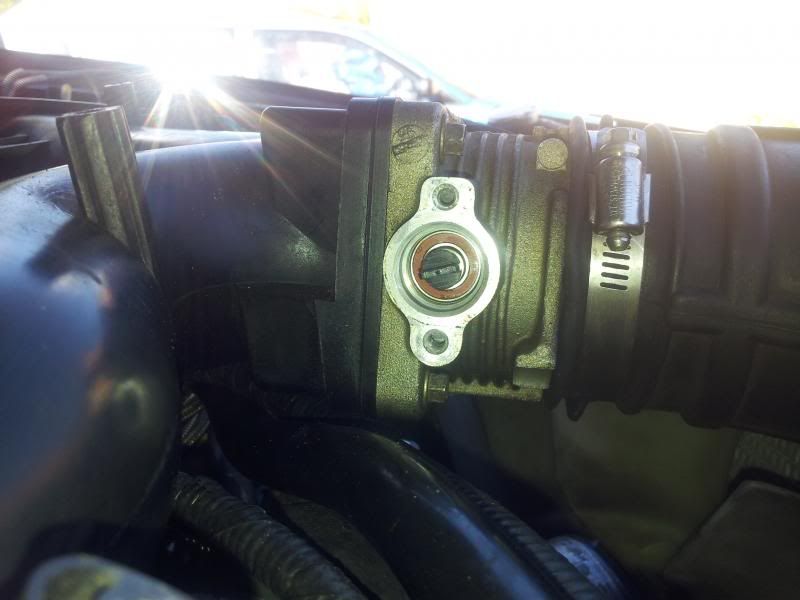
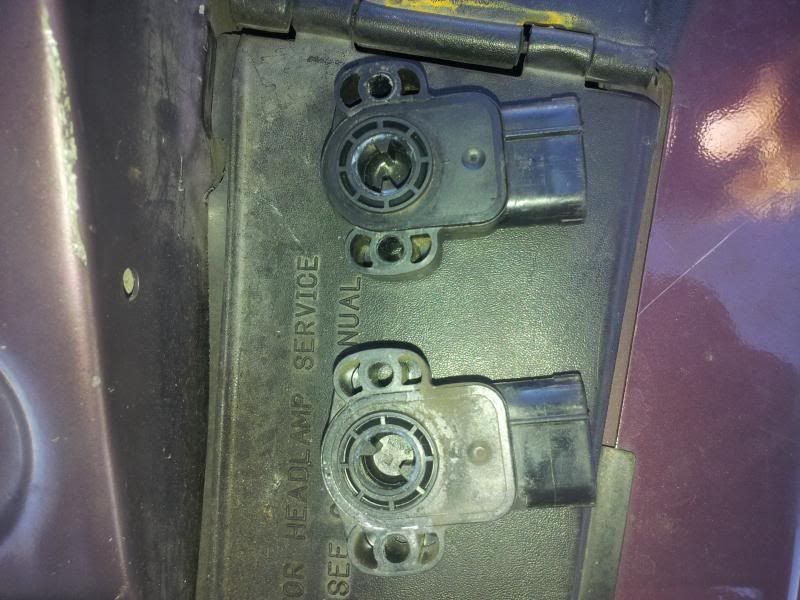
I was looking at the way the TPS attaches to the throttle body, it looks like the throttle blade can move a fair bit before it engages the potentiometer.
If that's not right that could be my problem.
If that's not right that could be my problem.
Logistics Pro
Joined: Jun 2009
Posts: 4,812
Likes: 83
From: Cedar Rapids, IA
I'm not sure how you define "fair bit" but that doesn't seem right. Using a scan tool with datastream or the ELM327 route you should be able to see a very linear response from the TPS with any throttle input. You can also use a multimeter but that requires some creative mounting of the DMM or two people.
-Rod
-Rod
Thread Starter
|
Senior User
Joined: Jul 2004
Posts: 358
Likes: 0
From: Brisbane Australia
Have a look at the 2 pics, by comparing the mounting holes you can see how the TPS screws on to the throttle body and how the throttle blade can move a fair way before the potentiometer is engaged.