



Brake Booster Not Boosting

Thread Starter
|
Junior User
Joined: Aug 2013
Posts: 78
Likes: 1
From: Fort Worth, TX
Brake Booster Not Boosting
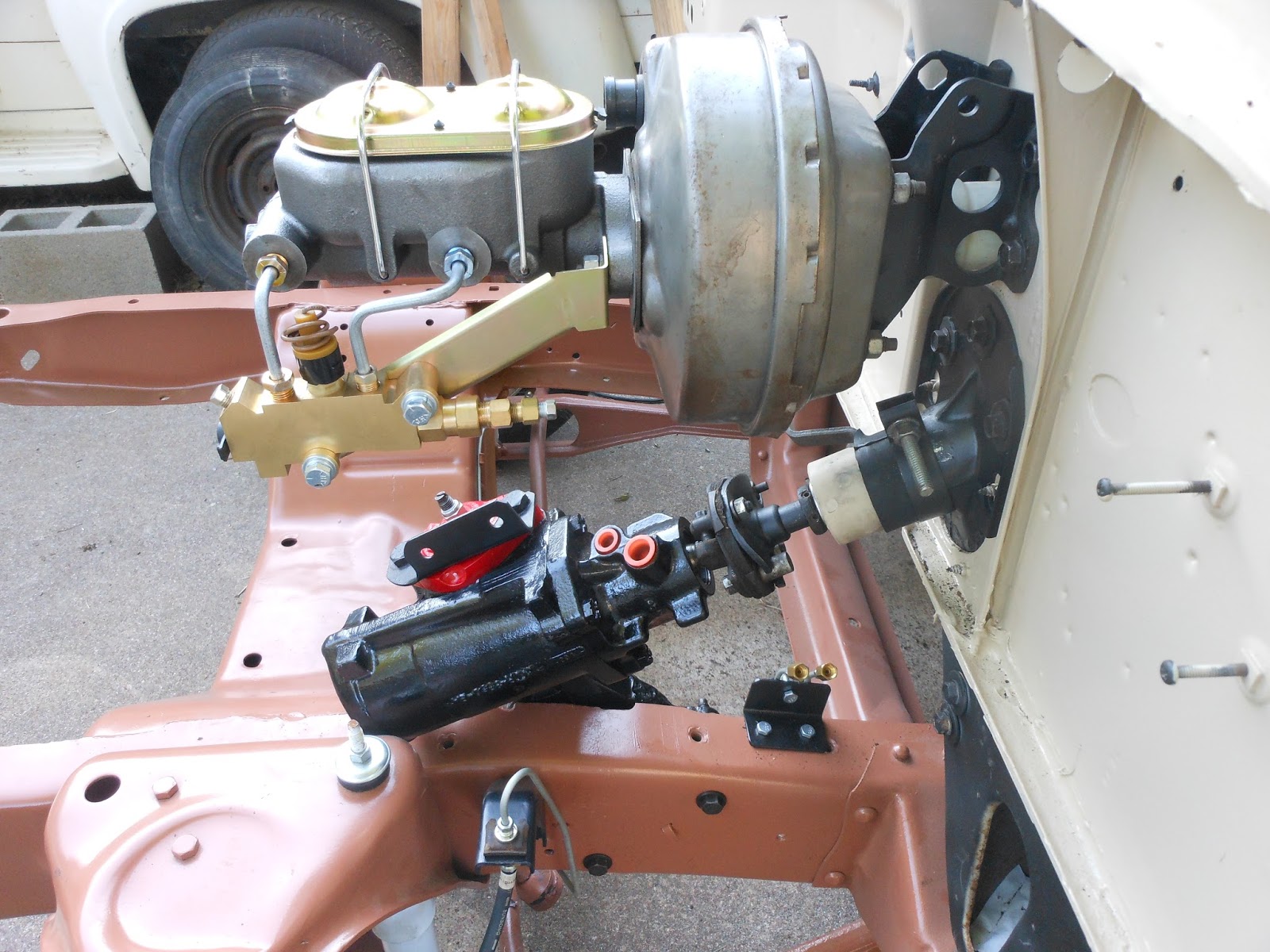
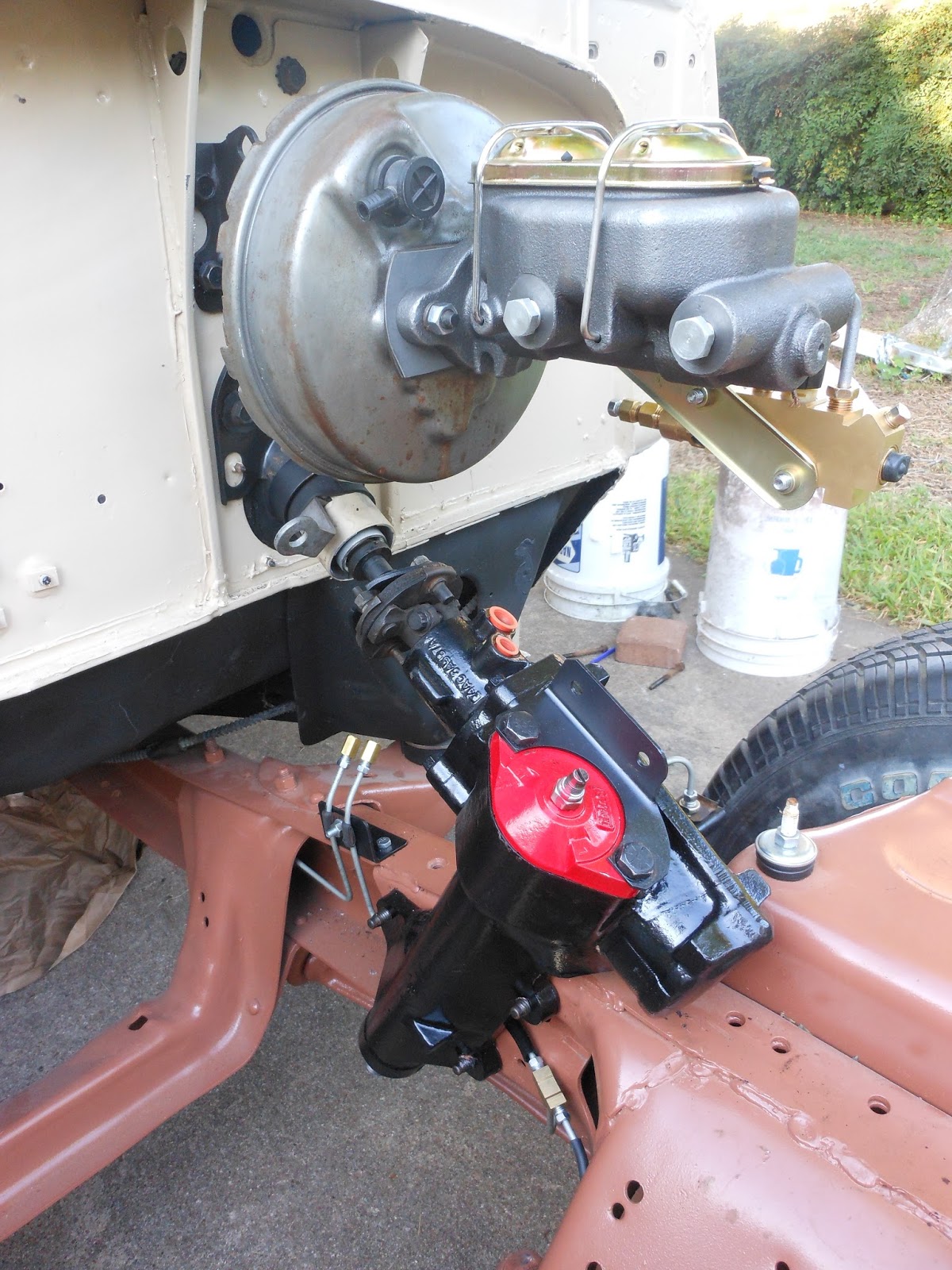
Brakes are bled, and the truck will stop, as though the brakes are manual. When I hold the brake down and start the truck I don't feel any additional resistance. After running the motor I can pull the vacuum line out of the booster and is still under vacuum. But when I stop, there isn't any power to "power brakes"
Any ideas?
Any ideas?

Hotshot


Joined: Mar 2013
Posts: 14,255
Likes: 199
From: Phoenix, Az.
Maybe some vacuum but not enough. Is your engine running at idle like the inside of the booster is a vacuum leak? Do you hear a hissing noise under the dash with engine idling? I have also heard if the booster's rod is not adjusted correct then either the booster will suck the pedal down on it's own or not boost at all. This is what I had been told decades ago. I personally have never seen this. But did you mix and match M/C and booster from different vehicles?

Ford Parts Specialist
Joined: Nov 2006
Posts: 88,826
Likes: 785
From: Simi Valley, CA

The P/B booster check valve (2365) fits into a rubber grommet. Over time, the grommet hardens to the consistency of iron and/or age cracks, allowing air to escape.
Rubber hose that routes from check valve to fitting on manifold age cracks, allowing air to escape.
ssssssssssss What is this hissing? Is this a rattlesnake, or is air escaping from the booster's diaphram, booster check valve rubber hose, booster check valve grommet?
If one lives in Arid-Zona, it could be all of the above!
Rubber hose that routes from check valve to fitting on manifold age cracks, allowing air to escape.
ssssssssssss What is this hissing? Is this a rattlesnake, or is air escaping from the booster's diaphram, booster check valve rubber hose, booster check valve grommet?
If one lives in Arid-Zona, it could be all of the above!
Thread Starter
|
Junior User
Joined: Aug 2013
Posts: 78
Likes: 1
From: Fort Worth, TX
Maybe some vacuum but not enough. Is your engine running at idle like the inside of the booster is a vacuum leak? Do you hear a hissing noise under the dash with engine idling? I have also heard if the booster's rod is not adjusted correct then either the booster will suck the pedal down on it's own or not boost at all. This is what I had been told decades ago. I personally have never seen this. But did you mix and match M/C and booster from different vehicles?
Thread Starter
|
Junior User
Joined: Aug 2013
Posts: 78
Likes: 1
From: Fort Worth, TX
The P/B booster check valve (2365) fits into a rubber grommet. Over time, the grommet hardens to the consistency of iron and/or age cracks, allowing air to escape.
Rubber hose that routes from check valve to fitting on manifold age cracks, allowing air to escape.
ssssssssssss What is this hissing? Is their a rattlesnake under the hood, or is air escaping from the booster's diaphram, booster check valve rubber hose to fitting on manifold, booster check valve grommet?
Rubber hose that routes from check valve to fitting on manifold age cracks, allowing air to escape.
ssssssssssss What is this hissing? Is their a rattlesnake under the hood, or is air escaping from the booster's diaphram, booster check valve rubber hose to fitting on manifold, booster check valve grommet?
Thread Starter
|
Junior User
Joined: Aug 2013
Posts: 78
Likes: 1
From: Fort Worth, TX
Trending Topics

Lead Driver
Joined: Aug 2003
Posts: 7,592
Likes: 10
From: **** hole San Jose ca.
Oh that M/C setup looks like it's for disc bakes setup. Also looks like from a chevy.
If having your foot on the pedal when starting the motor your foot should sink down just a little then return with resistance when the booster is good..
You may need to add a adjustable proportioning valve for the rear brakes.
When adding a proportioning valve from a different vehicle they like a chevy they'll have one larger brake line to off set the pressure.
It's what, I had to balance out my brake system as, I was not pleased my rears brakes having to much line psi. Do this adds more line psi to the front disc..
Hope this helps some.

orich
If having your foot on the pedal when starting the motor your foot should sink down just a little then return with resistance when the booster is good..
You may need to add a adjustable proportioning valve for the rear brakes.
When adding a proportioning valve from a different vehicle they like a chevy they'll have one larger brake line to off set the pressure.
It's what, I had to balance out my brake system as, I was not pleased my rears brakes having to much line psi. Do this adds more line psi to the front disc..
Hope this helps some.

orich
FTE Stories
Ford Trucks for Ford Truck Enthusiasts

Rezvani's Latest Post-Apocalytic Monster Is a Ford F-150 Raptor Underneath
Verdad Gallardo
Top 10 Most Expensive Ford Trucks Ever Sold on Bring a Trailer
Joe Kucinski
2027 Ford Super Duty Buyer's Guide (Every Model, Engine, & Package)
Brett Foote
Top 10 Ford Truck Tragedies
Joe Kucinski
AEV FXL Super Duty - the Super Duty Raptor Ford Doesn't Make
Brett Foote
Lobo Vs Lobo: Proof the F-150 Lobo Should Be Even Lower!
Michael S. Palmer
Ford's 2001 Explorer Sportsman Concept Looks For a New Home
Verdad Gallardo
10 Best Ford Truck Engines We Miss the Most!
Joe Kucinski
2026 Shelby F-150 Off-Road: Better Than a Raptor R?
Brett Foote
Hotshot
Joined: Mar 2013
Posts: 14,255
Likes: 199
From: Phoenix, Az.
2 X Orich. My 1st rection was it's a 4 wheel disc Corvette M/C. Non-Ford prop valve also. Did you buy these two from someplace as part a 4 wheel disc Kit? Been a while since I read your build thread. I'm thinkin' the problem is not the booster but rather something is holding back brake fluid flow. A restriction if you will. Try pushing in the button on the front of the Prop valve. Also take cap off of M/c and with engine running have a buddy push the brake pedal while you watch for both sides of M/C to squirt fluid up in the air as they should. Have the buddy push gently at 1st and then consistantly harder with each stroke. Carefull with your eyes but watch for how good the flow in the M/C is.
Thread Starter
|
Junior User
Joined: Aug 2013
Posts: 78
Likes: 1
From: Fort Worth, TX
Oh that M/C setup looks like it's for disc bakes setup. Also looks like from a chevy.
If having your foot on the pedal when starting the motor your foot should sink down just a little then return with resistance when the booster is good..
You may need to add a adjustable proportioning valve for the rear brakes.
When adding a proportioning valve from a different vehicle they like a chevy they'll have one larger brake line to off set the pressure.
It's what, I had to balance out my brake system as, I was not pleased my rears brakes having to much line psi. Do this adds more line psi to the front disc..
Hope this helps some.
orich
If having your foot on the pedal when starting the motor your foot should sink down just a little then return with resistance when the booster is good..
You may need to add a adjustable proportioning valve for the rear brakes.
When adding a proportioning valve from a different vehicle they like a chevy they'll have one larger brake line to off set the pressure.
It's what, I had to balance out my brake system as, I was not pleased my rears brakes having to much line psi. Do this adds more line psi to the front disc..
Hope this helps some.
orich
Disc brake Master Cylinder AC Delco Proportioning Valve Kit
So what I am hearing is, that even though it feels like a manual brake, I need an additional prop valve?

Thread Starter
|
Junior User
Joined: Aug 2013
Posts: 78
Likes: 1
From: Fort Worth, TX
2 X Orich. My 1st rection was it's a 4 wheel disc Corvette M/C. Non-Ford prop valve also. Did you buy these two from someplace as part a 4 wheel disc Kit? Been a while since I read your build thread. I'm thinkin' the problem is not the booster but rather something is holding back brake fluid flow. A restriction if you will. Try pushing in the button on the front of the Prop valve. Also take cap off of M/c and with engine running have a buddy push the brake pedal while you watch for both sides of M/C to squirt fluid up in the air as they should. Have the buddy push gently at 1st and then consistantly harder with each stroke. Carefull with your eyes but watch for how good the flow in the M/C is.
Lead Driver
Joined: Aug 2003
Posts: 7,592
Likes: 10
From: **** hole San Jose ca.
Are you sure you ordered the mc setup for disc & drums? And not the all wheel discs setup?
This is happens then you have even line pressure at all 4's.
Where as you should have about 1/2 the PSI going to the rears with drums.
I mounted mind in the rear part of the inner frame to correct the same thing
orich.
This is happens then you have even line pressure at all 4's.
Where as you should have about 1/2 the PSI going to the rears with drums.
I mounted mind in the rear part of the inner frame to correct the same thing
orich.
Lead Driver
Joined: Aug 2003
Posts: 7,592
Likes: 10
From: **** hole San Jose ca.
I seen on some vehicles where the forward outer m/c well is hooked up to the front disc.
Where as are classics the M/C is the well nearest the fire wall is for the fronts.
So could be you'll got it the lines hooked wrong.
orich
Where as are classics the M/C is the well nearest the fire wall is for the fronts.
So could be you'll got it the lines hooked wrong.
orich
Hotshot
Joined: Mar 2013
Posts: 14,255
Likes: 199
From: Phoenix, Az.
Hey Pinch. Try adjusting the booster's rod shorter going in to the M/C. You may be applying pressure in the M/C before everything shifts inside the booster so it can work. Small pic below is what I was after.
<IFRAME style="POSITION: absolute; WIDTH: 10px; HEIGHT: 10px; TOP: -9999em" id=twttrHubFrameSecure tabIndex=0 src="https://platform.twitter.com/widgets/hub.html" frameBorder=0 allowTransparency name=twttrHubFrameSecure scrolling=no></IFRAME><IFRAME style="POSITION: absolute; WIDTH: 10px; HEIGHT: 10px; TOP: -9999em" id=twttrHubFrame tabIndex=0 src="http://platform.twitter.com/widgets/hub.html" frameBorder=0 allowTransparency name=twttrHubFrame scrolling=no></IFRAME>
<IFRAME aria-hidden=true style="BORDER-BOTTOM: medium none; BORDER-LEFT: medium none; BORDER-TOP: medium none; BORDER-RIGHT: medium none" id=fb_xdm_frame_http title="Facebook Cross Domain Communication Frame" src="http://static.ak.facebook.com/connect/xd_arbiter/wTH8U0osOYl.js?version=40#channel=f1c28cb54c43fa2& origin=http%3A%2F%2Fwww.hemmings.com" frameBorder=0 allowTransparency name=fb_xdm_frame_http scrolling=no tab-index="-1"></IFRAME><IFRAME aria-hidden=true style="BORDER-BOTTOM: medium none; BORDER-LEFT: medium none; BORDER-TOP: medium none; BORDER-RIGHT: medium none" id=fb_xdm_frame_https title="Facebook Cross Domain Communication Frame" src="https://s-static.ak.facebook.com/connect/xd_arbiter/wTH8U0osOYl.js?version=40#channel=f1c28cb54c43fa2& origin=http%3A%2F%2Fwww.hemmings.com" frameBorder=0 allowTransparency name=fb_xdm_frame_https scrolling=no tab-index="-1"></IFRAME>
<IFRAME style="POSITION: absolute; WIDTH: 10px; HEIGHT: 10px; TOP: -9999em" id=twttrHubFrameSecure tabIndex=0 src="https://platform.twitter.com/widgets/hub.html" frameBorder=0 allowTransparency name=twttrHubFrameSecure scrolling=no></IFRAME><IFRAME style="POSITION: absolute; WIDTH: 10px; HEIGHT: 10px; TOP: -9999em" id=twttrHubFrame tabIndex=0 src="http://platform.twitter.com/widgets/hub.html" frameBorder=0 allowTransparency name=twttrHubFrame scrolling=no></IFRAME> <IFRAME aria-hidden=true style="BORDER-BOTTOM: medium none; BORDER-LEFT: medium none; BORDER-TOP: medium none; BORDER-RIGHT: medium none" id=fb_xdm_frame_http title="Facebook Cross Domain Communication Frame" src="http://static.ak.facebook.com/connect/xd_arbiter/wTH8U0osOYl.js?version=40#channel=f1c28cb54c43fa2& origin=http%3A%2F%2Fwww.hemmings.com" frameBorder=0 allowTransparency name=fb_xdm_frame_http scrolling=no tab-index="-1"></IFRAME><IFRAME aria-hidden=true style="BORDER-BOTTOM: medium none; BORDER-LEFT: medium none; BORDER-TOP: medium none; BORDER-RIGHT: medium none" id=fb_xdm_frame_https title="Facebook Cross Domain Communication Frame" src="https://s-static.ak.facebook.com/connect/xd_arbiter/wTH8U0osOYl.js?version=40#channel=f1c28cb54c43fa2& origin=http%3A%2F%2Fwww.hemmings.com" frameBorder=0 allowTransparency name=fb_xdm_frame_https scrolling=no tab-index="-1"></IFRAME>
<FORM style="MARGIN-BOTTOM: 0px" action=http://www.hemmings.com/classifieds/><INPUT id=q-mobile class=q-mobile name=q placeholder="Search Hemmings">
</FORM>
w Image Gallery
Vacuum Brake Boosters
Using vacuum to make stopping a car less breathtaking
 <!-- ADDITIONAL IMAGES --><!-- 1 Additional Images From This Story
--><!-- 1 Additional Images From This Story
-->
<!-- END ADDITIONAL IMAGES -->
Feature Article from Hemmings Motor News
January, 2012 - Mike McNessor
Firewall-mounted vacuum power brake boosters are a common collector-car upgrade. Boosters reduce the pedal effort needed to slow down an automobile giving the driver greater confidence and taking some of the worry out of driving an old car in traffic.
A vacuum brake booster, like the Delco-Moraine unit pictured here, is an ingeniously simple device that uses nothing more than regulated air pressure to apply additional force on the master cylinder's piston.
The inside of the booster is divided into two chambers that are separated by a diaphragm. When the engine is running, the engine's vacuum sucks the air out of both chambers, equalizing the pressure inside the canister. However, when the operator steps on the pedal, a valve is activated that allows outside air pressure to enter the booster's rear chamber. The pressure difference created by the outside air entering behind the diaphragm forces the diaphragm outward, taking the output rod along with it. As the driver pushes the pedal further, more air enters the booster's rear chamber, multiplying the effect.
When the driver lifts his or her foot off the pedal, a spring inside the booster, on the front side of the diaphragm, helps return the diaphragm to the original position. What's even more ingenious about this type of booster is that if the canister or the diaphragm leaks, or the engine stalls, and vacuum isn't available, the driver can still operate the brakes--though greater pedal effort is needed to overcome the diaphragm and the spring. A check valve installed on the vacuum line to the booster ensures that air can only be sucked out of the booster. So when the engine stalls, the driver has sufficient boost for a few pumps of the pedal.
This, of course, isn't the only type of vacuum brake booster. For instance, in applications where this type of booster would be too large or more boost is required (as in a four-wheel disc-brake system), dual-diaphragm boosters may be used. A dual-diaphragm booster can be made smaller in diameter than a single diaphragm unit and have equal or greater power depending on the design.
Remote boosters and hydrovac units have no direct mechanical linkage to the pedal, instead relying on brake fluid and air pressure to provide boost with the aid of a series of valves and a slave cylinder.
On diesel engines, hydraulic brake boosters use fluid pressure provided by the power steering pump rather than engine vacuum to give additional boost.
This article originally appeared in the January, 2012 issue of Hemmings Motor News.
Order Backissues of Hemmings Motor News | Subscribe to Hemmings Motor News
<IFRAME style="WIDTH: 110px; HEIGHT: 20px" id=twitter-widget-0 class="twitter-share-button twitter-tweet-button twitter-count-horizontal" title="Twitter Tweet Button" src="http://platform.twitter.com/widgets/tweet_button.1395870373.html#_=1396628679894&count =horizontal&id=twitter-widget-0&lang=en&original_referer=http%3A%2F%2Fwww.hemmin gs.com%2Fhmn%2Fstories%2F2012%2F01%2F01%2Fhmn_feat ure23.html&size=m&text=Vacuum%20Brake%20Boosters&u rl=%2Fhmn%2Fstories%2F2012%2F01%2F01%2Fhmn_feature 23.html&via=HemmingsNews" frameBorder=0 allowTransparency scrolling=no data-twttr-rendered="true"></IFRAME>
<IFRAME style="BORDER-BOTTOM: medium none; BORDER-LEFT: medium none; WIDTH: 0px; HEIGHT: 0px; VISIBILITY: visible; BORDER-TOP: medium none; BORDER-RIGHT: medium none" title="fb:like Facebook Social Plugin" height=1000 src="http://www.facebook.com/plugins/like.php?app_id=29106530394&channel=http%3A%2F%2Fs tatic.ak.facebook.com%2Fconnect%2Fxd_arbiter%2FwTH 8U0osOYl.js%3Fversion%3D40%23cb%3Df3d7e3d0c999f32% 26domain%3Dwww.hemmings.com%26origin%3Dhttp%253A%2 52F%252Fwww.hemmings.com%252Ff1c28cb54c43fa2%26rel ation%3Dparent.parent&href=http%3A%2F%2Fwww.hemmin gs.com%2Fhmn%2Fstories%2F2012%2F01%2F01%2Fhmn_feat ure23.html&locale=en_US&sdk=joey&send=true&show_fa ces=true&width=310" frameBorder=0 width=310 allowTransparency name=f10c8716e7c6451 scrolling=no></IFRAME>
<HR>
<!-- END RELATED CONTENT -->
<!-- Begin Right Col -->
Subscribe Now
<FOOTER>
<IFRAME style="POSITION: absolute; WIDTH: 10px; HEIGHT: 10px; TOP: -9999em" id=twttrHubFrameSecure tabIndex=0 src="https://platform.twitter.com/widgets/hub.html" frameBorder=0 allowTransparency name=twttrHubFrameSecure scrolling=no></IFRAME><IFRAME style="POSITION: absolute; WIDTH: 10px; HEIGHT: 10px; TOP: -9999em" id=twttrHubFrame tabIndex=0 src="http://platform.twitter.com/widgets/hub.html" frameBorder=0 allowTransparency name=twttrHubFrame scrolling=no></IFRAME>
<IFRAME aria-hidden=true style="BORDER-BOTTOM: medium none; BORDER-LEFT: medium none; BORDER-TOP: medium none; BORDER-RIGHT: medium none" id=fb_xdm_frame_http title="Facebook Cross Domain Communication Frame" src="http://static.ak.facebook.com/connect/xd_arbiter/wTH8U0osOYl.js?version=40#channel=f1c28cb54c43fa2& origin=http%3A%2F%2Fwww.hemmings.com" frameBorder=0 allowTransparency name=fb_xdm_frame_http scrolling=no tab-index="-1"></IFRAME><IFRAME aria-hidden=true style="BORDER-BOTTOM: medium none; BORDER-LEFT: medium none; BORDER-TOP: medium none; BORDER-RIGHT: medium none" id=fb_xdm_frame_https title="Facebook Cross Domain Communication Frame" src="https://s-static.ak.facebook.com/connect/xd_arbiter/wTH8U0osOYl.js?version=40#channel=f1c28cb54c43fa2& origin=http%3A%2F%2Fwww.hemmings.com" frameBorder=0 allowTransparency name=fb_xdm_frame_https scrolling=no tab-index="-1"></IFRAME>
<IFRAME style="POSITION: absolute; WIDTH: 10px; HEIGHT: 10px; TOP: -9999em" id=twttrHubFrameSecure tabIndex=0 src="https://platform.twitter.com/widgets/hub.html" frameBorder=0 allowTransparency name=twttrHubFrameSecure scrolling=no></IFRAME><IFRAME style="POSITION: absolute; WIDTH: 10px; HEIGHT: 10px; TOP: -9999em" id=twttrHubFrame tabIndex=0 src="http://platform.twitter.com/widgets/hub.html" frameBorder=0 allowTransparency name=twttrHubFrame scrolling=no></IFRAME> <IFRAME aria-hidden=true style="BORDER-BOTTOM: medium none; BORDER-LEFT: medium none; BORDER-TOP: medium none; BORDER-RIGHT: medium none" id=fb_xdm_frame_http title="Facebook Cross Domain Communication Frame" src="http://static.ak.facebook.com/connect/xd_arbiter/wTH8U0osOYl.js?version=40#channel=f1c28cb54c43fa2& origin=http%3A%2F%2Fwww.hemmings.com" frameBorder=0 allowTransparency name=fb_xdm_frame_http scrolling=no tab-index="-1"></IFRAME><IFRAME aria-hidden=true style="BORDER-BOTTOM: medium none; BORDER-LEFT: medium none; BORDER-TOP: medium none; BORDER-RIGHT: medium none" id=fb_xdm_frame_https title="Facebook Cross Domain Communication Frame" src="https://s-static.ak.facebook.com/connect/xd_arbiter/wTH8U0osOYl.js?version=40#channel=f1c28cb54c43fa2& origin=http%3A%2F%2Fwww.hemmings.com" frameBorder=0 allowTransparency name=fb_xdm_frame_https scrolling=no tab-index="-1"></IFRAME>
<FORM style="MARGIN-BOTTOM: 0px" action=http://www.hemmings.com/classifieds/><INPUT id=q-mobile class=q-mobile name=q placeholder="Search Hemmings">
</FORM>
w Image Gallery
Vacuum Brake Boosters
Using vacuum to make stopping a car less breathtaking
 <!-- ADDITIONAL IMAGES --><!-- 1 Additional Images From This Story
--><!-- 1 Additional Images From This Story
-->

<!-- END ADDITIONAL IMAGES -->
Feature Article from Hemmings Motor News
January, 2012 - Mike McNessor
Firewall-mounted vacuum power brake boosters are a common collector-car upgrade. Boosters reduce the pedal effort needed to slow down an automobile giving the driver greater confidence and taking some of the worry out of driving an old car in traffic.
A vacuum brake booster, like the Delco-Moraine unit pictured here, is an ingeniously simple device that uses nothing more than regulated air pressure to apply additional force on the master cylinder's piston.
The inside of the booster is divided into two chambers that are separated by a diaphragm. When the engine is running, the engine's vacuum sucks the air out of both chambers, equalizing the pressure inside the canister. However, when the operator steps on the pedal, a valve is activated that allows outside air pressure to enter the booster's rear chamber. The pressure difference created by the outside air entering behind the diaphragm forces the diaphragm outward, taking the output rod along with it. As the driver pushes the pedal further, more air enters the booster's rear chamber, multiplying the effect.
When the driver lifts his or her foot off the pedal, a spring inside the booster, on the front side of the diaphragm, helps return the diaphragm to the original position. What's even more ingenious about this type of booster is that if the canister or the diaphragm leaks, or the engine stalls, and vacuum isn't available, the driver can still operate the brakes--though greater pedal effort is needed to overcome the diaphragm and the spring. A check valve installed on the vacuum line to the booster ensures that air can only be sucked out of the booster. So when the engine stalls, the driver has sufficient boost for a few pumps of the pedal.
This, of course, isn't the only type of vacuum brake booster. For instance, in applications where this type of booster would be too large or more boost is required (as in a four-wheel disc-brake system), dual-diaphragm boosters may be used. A dual-diaphragm booster can be made smaller in diameter than a single diaphragm unit and have equal or greater power depending on the design.
Remote boosters and hydrovac units have no direct mechanical linkage to the pedal, instead relying on brake fluid and air pressure to provide boost with the aid of a series of valves and a slave cylinder.
On diesel engines, hydraulic brake boosters use fluid pressure provided by the power steering pump rather than engine vacuum to give additional boost.
This article originally appeared in the January, 2012 issue of Hemmings Motor News.
Order Backissues of Hemmings Motor News | Subscribe to Hemmings Motor News
<IFRAME style="WIDTH: 110px; HEIGHT: 20px" id=twitter-widget-0 class="twitter-share-button twitter-tweet-button twitter-count-horizontal" title="Twitter Tweet Button" src="http://platform.twitter.com/widgets/tweet_button.1395870373.html#_=1396628679894&count =horizontal&id=twitter-widget-0&lang=en&original_referer=http%3A%2F%2Fwww.hemmin gs.com%2Fhmn%2Fstories%2F2012%2F01%2F01%2Fhmn_feat ure23.html&size=m&text=Vacuum%20Brake%20Boosters&u rl=%2Fhmn%2Fstories%2F2012%2F01%2F01%2Fhmn_feature 23.html&via=HemmingsNews" frameBorder=0 allowTransparency scrolling=no data-twttr-rendered="true"></IFRAME>
<IFRAME style="BORDER-BOTTOM: medium none; BORDER-LEFT: medium none; WIDTH: 0px; HEIGHT: 0px; VISIBILITY: visible; BORDER-TOP: medium none; BORDER-RIGHT: medium none" title="fb:like Facebook Social Plugin" height=1000 src="http://www.facebook.com/plugins/like.php?app_id=29106530394&channel=http%3A%2F%2Fs tatic.ak.facebook.com%2Fconnect%2Fxd_arbiter%2FwTH 8U0osOYl.js%3Fversion%3D40%23cb%3Df3d7e3d0c999f32% 26domain%3Dwww.hemmings.com%26origin%3Dhttp%253A%2 52F%252Fwww.hemmings.com%252Ff1c28cb54c43fa2%26rel ation%3Dparent.parent&href=http%3A%2F%2Fwww.hemmin gs.com%2Fhmn%2Fstories%2F2012%2F01%2F01%2Fhmn_feat ure23.html&locale=en_US&sdk=joey&send=true&show_fa ces=true&width=310" frameBorder=0 width=310 allowTransparency name=f10c8716e7c6451 scrolling=no></IFRAME>
<HR>
<!-- END RELATED CONTENT -->
<!-- Begin Right Col -->
<FOOTER>

Thread
Thread Starter
Forum
Replies
Last Post
6erwebb
1948 - 1956 F1, F100 & Larger F-Series Trucks
3
Aug 6, 2015 11:09 AM
alcan60283
Brakes, Steering, Suspension, Tires, & Wheels
3
Apr 9, 2007 03:46 PM