





Rough idle and acceleration
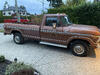
Tuned
Joined: Nov 2013
Posts: 333
Likes: 219
From: British Columbia
As already suggested, I would be inclined to eliminate the points by swapping in a pertronix system or going with Ford Duraspark set up.
If there are no vacuum leaks and no mechanical issues, the symptoms you are describing could be attributed to bad points.
Even new, sometimes I have had to try several sets before getting a set that runs well. I guarantee that your engine will run better over all with electronic ignition.
You also may want to rebuild the carb (kits are pretty cheap...) or swap it out with another just to eliminate that issue from the equation.
If there are no vacuum leaks and no mechanical issues, the symptoms you are describing could be attributed to bad points.
Even new, sometimes I have had to try several sets before getting a set that runs well. I guarantee that your engine will run better over all with electronic ignition.
You also may want to rebuild the carb (kits are pretty cheap...) or swap it out with another just to eliminate that issue from the equation.

Moderator


Joined: Aug 2002
Posts: 6,111
Likes: 386
From: Southern California

IMHO...it sounds more distributor related than cam.......the distributor itself may be tired and require a rebuild, or even a bad condenser/points are a possibility especially if they are imported items.
Switching out to an e-box conversion is well, if you want to do it to say its electronic ok, but, there is absolutely no performance or discernible efficiency improvement in street vehicle applications...well known and documented within the industry. First IMHO, its important to determine the actual fault/cause, until then, you could actually buy and install an e-box kit and if it is the distributor itself, you are going to have the same issue.
You will have to excuse me a little here (and I am taking my hat off as a moderator for a minute), but, what is more reliable than points......certainly not the more popular & common “e-box replacement kits”. Yes you can hear people state "It runs so much smoother/better than when it had points"........in each case that an individual said that in my presence, they had very little knowledge about points and the ones they were running were- old & tired or inexpensive aftermarket replacement units or the individual (including professional mechanic) was unfamiliar with not just setting the gap to OEM specs, but setting the dwell & initial timing to what the engine likes.
But let’s look at the OEM ignition system from the early 60’s….
Original Coil Voltage: 20,000; by the end of the 60’s 40,000 volt high performance coils were common…..by the 70’s 50,000 & 60,000 volt coils were easily available & is what we have today. Did we really gain all sorts of HP/TQ with all this extra voltage…….no, what we were able to gain was stronger support (if you will excuse my terms here) for higher RPM’s- specifically in the 6,000+ range…..enough to power NASCAR engines in the 8,000 rpm range at 200+ mph!
Points were used in NASCAR up through the late 1970's, running speeds of 200mph+.........Cale Yarborough did lose a race one time because the ignition points broke. In a street application, if you look at the data very closely that is provided by these more common e-box companies, in street applications (where max power-band RPM is around 6000), when the standard dyno deviation is removed (5% standard per every dyno mfg) there is less than 1% improvement in performance. Further testing by independent aftermarket DIS (direct ignition system) manufacturers verify this through their own testing- there is little gain over an ignition points system until you reach 4000 rpm…then you begin to see a slight sustainment of ignition delivery above what points can deliver but it doesn’t even begin to compare to what a “modern”, real e-based system can & does deliver in a real world street (and race) environment.
I am not promoting this product but their analysis is very demonstrative of actual performance results. link: http://www.compu-tronix.com/MightyMo...risonGraph.pdf
The other item is, in a street vehicle, if you wait to see improvement until 4000+ rpm, the race is over.
Here is a link to a back to back ¼ runs- comparison of points vs a couple of e-box conversions……..no discernible difference PerTronix Track Test
These e-box “conversion kits” have literally the same design limitations as the “conventional points”- because they are essentially using the same delivery system (rotor, cap, wires, etc.) and they are subject to the same inherent design impactors of which there are numerous….including ozone that is produced within the cap…..none of this has by miracle “disappeared” and in fact when compared in true recorded data-frame analysis, the benefit will be gone by 5800 rpm and the loss, although slightly less, parallels that of points. In racing conditions that could very well make a difference, but in a street application, you could literally change brand of fuel and see that level of improvement or degradation.
Additionally, there are companies such as ProComp whose “High-Tech Multiple Discharge Ignition Systems” are nothing more than re-boxed low tech conversion parts purchased in bulk from other companies- mostly Chinese-based. Check out this pic procomp ignition box?? of a “new” ProComp e-ignition system- it’s a glued together GM part stuffed into a pretty aluminum box. Considering they were sued in 2006 by MSD (and prohibited as part of a settlement from using/distributing any of their parts), I’m not surprised by anything I see with their crap….but this includes much of the e-box aftermarket industry- a lot of PR documents which physics does not play any part!
Very good quality ignition points/condensors are available and when set properly, are very reliable and provide excellent performance. There have been no less than 5 people who I personally knew were going to get e-boxes, then I had them get a good set of points/condenser, a high voltage (40k+) coil, and installed them showing them specifically how to do it......the engines ran smooth and strong. One person did end up buying an e-box, why, because he said he just got tired of not being "cool", after spending $500 for a distributor, etc (he went “Popular” high end), a year later (when he asked me to help him fix something) he admitted, it was a waste of $...it didn't run any better than after we put the points in.
While many state the positives of e-boxes (and there are certainly many positive attributes), there are conditions which reduce an e-boxes effectiveness & reliability....to start with the circuitry and handling (container vessel shipping) of it from China (which is where 90% of the more common/popular e-box company's products originate). Any aspect including temperature control, static safeguards, moisture can & will cause both detectable and undetectable damage which may not show up until after you have subjected the installed component to real world vibrations, heat, cold, moisture & grease/oil. Yes, all of these damage e-components, but the systems (based upon a variety of factors) are suppose to be prepared to endure these exposures but that is based upon many, many assumptions. Including proper handling & q/a.......given all of the 3rd party involvement in the final product, it is unrealistic (IMHO) to believe that e-boxes have an increased reliability as compared to their mechanical-based counterpart. And in terms of “Dwell Control” I won’t even go into that in detail but I will say, what the “kits” (especially Pertronix) provide is a joke…..you can actually get more control over the dwell by having an understanding of how to set timing versus dwell setting with points than the most popular e-box conversion kits can provide…..which makes for a very smooth running engine- this is not just IMHO, but well known among the "higher quality" aftermarket engineers whose systems reflect this ability to "tune"!
If you need to say I got rid of my points…ok, that’s fine, but if you are really serious about actually upgrading the ignition system then do so……although it has been scrapped by the OEM’s in favor of more advanced, effective systems, there are aftermarket DIS units (yes the same as Ford used in the 90’s & developed by Porsche in the 80’s) whose cost is within reach of most buyers and will actually perform as stated.
Switching out to an e-box conversion is well, if you want to do it to say its electronic ok, but, there is absolutely no performance or discernible efficiency improvement in street vehicle applications...well known and documented within the industry. First IMHO, its important to determine the actual fault/cause, until then, you could actually buy and install an e-box kit and if it is the distributor itself, you are going to have the same issue.
You will have to excuse me a little here (and I am taking my hat off as a moderator for a minute), but, what is more reliable than points......certainly not the more popular & common “e-box replacement kits”. Yes you can hear people state "It runs so much smoother/better than when it had points"........in each case that an individual said that in my presence, they had very little knowledge about points and the ones they were running were- old & tired or inexpensive aftermarket replacement units or the individual (including professional mechanic) was unfamiliar with not just setting the gap to OEM specs, but setting the dwell & initial timing to what the engine likes.
But let’s look at the OEM ignition system from the early 60’s….
Original Coil Voltage: 20,000; by the end of the 60’s 40,000 volt high performance coils were common…..by the 70’s 50,000 & 60,000 volt coils were easily available & is what we have today. Did we really gain all sorts of HP/TQ with all this extra voltage…….no, what we were able to gain was stronger support (if you will excuse my terms here) for higher RPM’s- specifically in the 6,000+ range…..enough to power NASCAR engines in the 8,000 rpm range at 200+ mph!
Points were used in NASCAR up through the late 1970's, running speeds of 200mph+.........Cale Yarborough did lose a race one time because the ignition points broke. In a street application, if you look at the data very closely that is provided by these more common e-box companies, in street applications (where max power-band RPM is around 6000), when the standard dyno deviation is removed (5% standard per every dyno mfg) there is less than 1% improvement in performance. Further testing by independent aftermarket DIS (direct ignition system) manufacturers verify this through their own testing- there is little gain over an ignition points system until you reach 4000 rpm…then you begin to see a slight sustainment of ignition delivery above what points can deliver but it doesn’t even begin to compare to what a “modern”, real e-based system can & does deliver in a real world street (and race) environment.
I am not promoting this product but their analysis is very demonstrative of actual performance results. link: http://www.compu-tronix.com/MightyMo...risonGraph.pdf
The other item is, in a street vehicle, if you wait to see improvement until 4000+ rpm, the race is over.
Here is a link to a back to back ¼ runs- comparison of points vs a couple of e-box conversions……..no discernible difference PerTronix Track Test
These e-box “conversion kits” have literally the same design limitations as the “conventional points”- because they are essentially using the same delivery system (rotor, cap, wires, etc.) and they are subject to the same inherent design impactors of which there are numerous….including ozone that is produced within the cap…..none of this has by miracle “disappeared” and in fact when compared in true recorded data-frame analysis, the benefit will be gone by 5800 rpm and the loss, although slightly less, parallels that of points. In racing conditions that could very well make a difference, but in a street application, you could literally change brand of fuel and see that level of improvement or degradation.
Additionally, there are companies such as ProComp whose “High-Tech Multiple Discharge Ignition Systems” are nothing more than re-boxed low tech conversion parts purchased in bulk from other companies- mostly Chinese-based. Check out this pic procomp ignition box?? of a “new” ProComp e-ignition system- it’s a glued together GM part stuffed into a pretty aluminum box. Considering they were sued in 2006 by MSD (and prohibited as part of a settlement from using/distributing any of their parts), I’m not surprised by anything I see with their crap….but this includes much of the e-box aftermarket industry- a lot of PR documents which physics does not play any part!
Very good quality ignition points/condensors are available and when set properly, are very reliable and provide excellent performance. There have been no less than 5 people who I personally knew were going to get e-boxes, then I had them get a good set of points/condenser, a high voltage (40k+) coil, and installed them showing them specifically how to do it......the engines ran smooth and strong. One person did end up buying an e-box, why, because he said he just got tired of not being "cool", after spending $500 for a distributor, etc (he went “Popular” high end), a year later (when he asked me to help him fix something) he admitted, it was a waste of $...it didn't run any better than after we put the points in.
While many state the positives of e-boxes (and there are certainly many positive attributes), there are conditions which reduce an e-boxes effectiveness & reliability....to start with the circuitry and handling (container vessel shipping) of it from China (which is where 90% of the more common/popular e-box company's products originate). Any aspect including temperature control, static safeguards, moisture can & will cause both detectable and undetectable damage which may not show up until after you have subjected the installed component to real world vibrations, heat, cold, moisture & grease/oil. Yes, all of these damage e-components, but the systems (based upon a variety of factors) are suppose to be prepared to endure these exposures but that is based upon many, many assumptions. Including proper handling & q/a.......given all of the 3rd party involvement in the final product, it is unrealistic (IMHO) to believe that e-boxes have an increased reliability as compared to their mechanical-based counterpart. And in terms of “Dwell Control” I won’t even go into that in detail but I will say, what the “kits” (especially Pertronix) provide is a joke…..you can actually get more control over the dwell by having an understanding of how to set timing versus dwell setting with points than the most popular e-box conversion kits can provide…..which makes for a very smooth running engine- this is not just IMHO, but well known among the "higher quality" aftermarket engineers whose systems reflect this ability to "tune"!
If you need to say I got rid of my points…ok, that’s fine, but if you are really serious about actually upgrading the ignition system then do so……although it has been scrapped by the OEM’s in favor of more advanced, effective systems, there are aftermarket DIS units (yes the same as Ford used in the 90’s & developed by Porsche in the 80’s) whose cost is within reach of most buyers and will actually perform as stated.

Postmaster
Joined: Mar 2013
Posts: 3,066
Likes: 7
From: Over There
It's a bit more complicated to se up but with how your engine is running I would suggest changing to a manifold vacuum signal for the vacuum advance(drivers side plug) This will give you more timing advance at idle that should help smooth it out.
Postmaster
Joined: Mar 2013
Posts: 3,066
Likes: 7
From: Over There
WOW, fist of all this has NOTHING to so with the OP but I'm sorry there is so much here that I am forced to pick this apart.
The OP has stated that the distributor and points are new. Nor is there any indication of a miss, at least I didn't hear any in the vid. Thus I see no reason to suspect the points as the issue.
While this can be true in some instances, there are many many factors and often there may not be improvement in performance but that is often cause of factors outside of the ignition improvement. Nor is a performance improvement the only goal, the simple fact is that points are only as good as even the most basic electronic system when new and perfectly adjusted. So to match the performance of a decent basic electronic system they must be regularly replaced and maintained at short intervals.
This I absolutely agree with.
Good cause FTE mods have a history of banning those who disagree with them.
Reliable is a relative term, yes nothing is more reliable then well maintained, adjusted, and unabused points. But that requires as you mentioned knowledge, maintenance, being mindful of what they can't and can handle, and being able to deal with their issues on the fly. While a decent electronic system like the DSII is an install it and forget it system that only needs to be dealt with on the rare occasion when something goes wrong and even then is often plug and play with parts available everywhere. While with points you carry a screwdriver, feeler gauges, points file and extra points in your toolbox, with a DSII you might carry a DSII box. When it comes right down to it points need to be maintained basically with every oil change but a DSII system might need attention once in 5 years.
Whoa, not quite, almost no canister style coils stock or aftermarket will put out anything more then 45,000 volts.
Was/Is there a HP/TQ gain with these higher voltages yes and no. No of course the higher voltages alone do nothing to increase HP/TQ but they do allow for other factors that do, higher pressures, higher RPMS, leaner mixtures, etc.
And what does NASCAR have to do with anything?
What's the point your making here, that points are just ok under 4000RPM and that if it doesn't make more then 5%(which is huge for a small ignition change) improvement then it doesn't count?
Ohh and I find one thing ironic here, you got that 4000RPM limit and mention NASCAR, who used dual point systems to get to 8000RPM, 4000x2, hmmm.
Link doesn't work
Um no, did you read the VERY OLD, unscientific amateur article?
Um no, the SAME design limitations I think not, you are talking about entirely separate design limitations. The cap, rotor, and wires are completely separate from whatever system is used to fire the coil and have no weight in an electronic vs. points discussion.
However this is one reason I suggest just going to a DSII system cause you get a much better cap, rotor and wires, but a DSII dizzy with a conversion to points still has the limitations of points.
I'm with you on those pricey gimmicky MSD and other systems, MOST are over priced of hyped junk. There are some systems that are an improvement and can be worth it but you have to search them out an pay a premium.
As said, points CAN work fine but they take a pro to deal with and must be maintained. But a basic cheap, stock, electronic system will do it easier and cheaper in the long run.
Uhm no, once again dwell and timing are separate attributes. There is an advantage to a dwell that varies with RPM, something that points can not do. Nor do most electronic systems but that's another discussion.
All in all you seem to be saying that it's a VERY expensive multiple coil on plug system or you might as well stick with points. That's just silly, there's lots of cost effective easy improvements over the stock points system that are very worthwhile.
Let me follow this up with a point about my personal choices, I personally prefer the more reliable, simpler tech. My daily is an IDI(all mechanical) diesel and my gas trucks are all carbureted. That said ignition is so important and DSII systems simple enough that in my personal vehicles it's an easy choice.
... what is more reliable than points......certainly not the more popular & common “e-box replacement kits”. Yes you can hear people state "It runs so much smoother/better than when it had points"........in each case that an individual said that in my presence, they had very little knowledge about points and the ones they were running were- old & tired or inexpensive aftermarket replacement units or the individual (including professional mechanic) was unfamiliar with not just setting the gap to OEM specs, but setting the dwell & initial timing to what the engine likes.
But let’s look at the OEM ignition system from the early 60’s….
Original Coil Voltage: 20,000; by the end of the 60’s 40,000 volt high performance coils were common…..by the 70’s 50,000 & 60,000 volt coils were easily available & is what we have today. Did we really gain all sorts of HP/TQ with all this extra voltage…….no, what we were able to gain was stronger support (if you will excuse my terms here) for higher RPM’s- specifically in the 6,000+ range…..enough to power NASCAR engines in the 8,000 rpm range at 200+ mph!
Original Coil Voltage: 20,000; by the end of the 60’s 40,000 volt high performance coils were common…..by the 70’s 50,000 & 60,000 volt coils were easily available & is what we have today. Did we really gain all sorts of HP/TQ with all this extra voltage…….no, what we were able to gain was stronger support (if you will excuse my terms here) for higher RPM’s- specifically in the 6,000+ range…..enough to power NASCAR engines in the 8,000 rpm range at 200+ mph!
Was/Is there a HP/TQ gain with these higher voltages yes and no. No of course the higher voltages alone do nothing to increase HP/TQ but they do allow for other factors that do, higher pressures, higher RPMS, leaner mixtures, etc.
And what does NASCAR have to do with anything?
Points were used in NASCAR up through the late 1970's, running speeds of 200mph+.........Cale Yarborough did lose a race one time because the ignition points broke. In a street application, if you look at the data very closely that is provided by these more common e-box companies, in street applications (where max power-band RPM is around 6000), when the standard dyno deviation is removed (5% standard per every dyno mfg) there is less than 1% improvement in performance. Further testing by independent aftermarket DIS (direct ignition system) manufacturers verify this through their own testing- there is little gain over an ignition points system until you reach 4000 rpm…then you begin to see a slight sustainment of ignition delivery above what points can deliver but it doesn’t even begin to compare to what a “modern”, real e-based system can & does deliver in a real world street (and race) environment.
Ohh and I find one thing ironic here, you got that 4000RPM limit and mention NASCAR, who used dual point systems to get to 8000RPM, 4000x2, hmmm.
I am not promoting this product but their analysis is very demonstrative of actual performance results. link: http://www.compu-tronix.com/MightyMo...risonGraph.pdf
The other item is, in a street vehicle, if you wait to see improvement until 4000+ rpm, the race is over.
The other item is, in a street vehicle, if you wait to see improvement until 4000+ rpm, the race is over.
Here is a link to a back to back ¼ runs- comparison of points vs a couple of e-box conversions……..no discernible difference PerTronix Track Test
..... We made our best run with points at 11:53 AM - 14.682 sec @ 96.11 mph.
...... we changed over to a prototype of the Ignitor II and a low resistance
Flame-Thrower coil that PerTronix had sent us for evaluation. ...... PM we
ran the best time of the day - 14.446 sec @ 97.62 mph.
...... with a little more tuning we ran a best of 14.013 sec. @ 99.23 mph with the Ignitor
II/Coil II combo.
...... we changed over to a prototype of the Ignitor II and a low resistance
Flame-Thrower coil that PerTronix had sent us for evaluation. ...... PM we
ran the best time of the day - 14.446 sec @ 97.62 mph.
...... with a little more tuning we ran a best of 14.013 sec. @ 99.23 mph with the Ignitor
II/Coil II combo.
However this is one reason I suggest just going to a DSII system cause you get a much better cap, rotor and wires, but a DSII dizzy with a conversion to points still has the limitations of points.
I'm with you on those pricey gimmicky MSD and other systems, MOST are over priced of hyped junk. There are some systems that are an improvement and can be worth it but you have to search them out an pay a premium.
And in terms of “Dwell Control” I won’t even go into that in detail but I will say, what the “kits” (especially Pertronix) provide is a joke…..you can actually get more control over the dwell by having an understanding of how to set timing versus dwell setting with points than the most popular e-box conversion kits can provide…..which makes for a very smooth running engine- this is not just IMHO, but well known among the "higher quality" aftermarket engineers whose systems reflect this ability to "tune"!
All in all you seem to be saying that it's a VERY expensive multiple coil on plug system or you might as well stick with points. That's just silly, there's lots of cost effective easy improvements over the stock points system that are very worthwhile.
Let me follow this up with a point about my personal choices, I personally prefer the more reliable, simpler tech. My daily is an IDI(all mechanical) diesel and my gas trucks are all carbureted. That said ignition is so important and DSII systems simple enough that in my personal vehicles it's an easy choice.
Moderator
Joined: Aug 2002
Posts: 6,111
Likes: 386
From: Southern California
WOW, fist of all this has NOTHING to so with the OP but I'm sorry there is so much here that I am forced to pick this apart.
The OP has stated that the distributor and points are new. Nor is there any indication of a miss, at least I didn't hear any in the vid. Thus I see no reason to suspect the points as the issue.
While this can be true in some instances, there are many many factors and often there may not be improvement in performance but that is often cause of factors outside of the ignition improvement. Nor is a performance improvement the only goal, the simple fact is that points are only as good as even the most basic electronic system when new and perfectly adjusted. So to match the performance of a decent basic electronic system they must be regularly replaced and maintained at short intervals.
This I absolutely agree with.
Good cause FTE mods have a history of banning those who disagree with them.
Reliable is a relative term, yes nothing is more reliable then well maintained, adjusted, and unabused points. But that requires as you mentioned knowledge, maintenance, being mindful of what they can't and can handle, and being able to deal with their issues on the fly. While a decent electronic system like the DSII is an install it and forget it system that only needs to be dealt with on the rare occasion when something goes wrong and even then is often plug and play with parts available everywhere. While with points you carry a screwdriver, feeler gauges, points file and extra points in your toolbox, with a DSII you might carry a DSII box. When it comes right down to it points need to be maintained basically with every oil change but a DSII system might need attention once in 5 years.
Whoa, not quite, almost no canister style coils stock or aftermarket will put out anything more then 45,000 volts.
Was/Is there a HP/TQ gain with these higher voltages yes and no. No of course the higher voltages alone do nothing to increase HP/TQ but they do allow for other factors that do, higher pressures, higher RPMS, leaner mixtures, etc.
And what does NASCAR have to do with anything?
What's the point your making here, that points are just ok under 4000RPM and that if it doesn't make more then 5%(which is huge for a small ignition change) improvement then it doesn't count?
Ohh and I find one thing ironic here, you got that 4000RPM limit and mention NASCAR, who used dual point systems to get to 8000RPM, 4000x2, hmmm.
Link doesn't work
Um no, did you read the VERY OLD, unscientific amateur article?
Um no, the SAME design limitations I think not, you are talking about entirely separate design limitations. The cap, rotor, and wires are completely separate from whatever system is used to fire the coil and have no weight in an electronic vs. points discussion.
However this is one reason I suggest just going to a DSII system cause you get a much better cap, rotor and wires, but a DSII dizzy with a conversion to points still has the limitations of points.
I'm with you on those pricey gimmicky MSD and other systems, MOST are over priced of hyped junk. There are some systems that are an improvement and can be worth it but you have to search them out an pay a premium.
As said, points CAN work fine but they take a pro to deal with and must be maintained. But a basic cheap, stock, electronic system will do it easier and cheaper in the long run.
Uhm no, once again dwell and timing are separate attributes. There is an advantage to a dwell that varies with RPM, something that points can not do. Nor do most electronic systems but that's another discussion.
All in all you seem to be saying that it's a VERY expensive multiple coil on plug system or you might as well stick with points. That's just silly, there's lots of cost effective easy improvements over the stock points system that are very worthwhile.
Let me follow this up with a point about my personal choices, I personally prefer the more reliable, simpler tech. My daily is an IDI(all mechanical) diesel and my gas trucks are all carbureted. That said ignition is so important and DSII systems simple enough that in my personal vehicles it's an easy choice.
The OP has stated that the distributor and points are new. Nor is there any indication of a miss, at least I didn't hear any in the vid. Thus I see no reason to suspect the points as the issue.
While this can be true in some instances, there are many many factors and often there may not be improvement in performance but that is often cause of factors outside of the ignition improvement. Nor is a performance improvement the only goal, the simple fact is that points are only as good as even the most basic electronic system when new and perfectly adjusted. So to match the performance of a decent basic electronic system they must be regularly replaced and maintained at short intervals.
This I absolutely agree with.
Good cause FTE mods have a history of banning those who disagree with them.
Reliable is a relative term, yes nothing is more reliable then well maintained, adjusted, and unabused points. But that requires as you mentioned knowledge, maintenance, being mindful of what they can't and can handle, and being able to deal with their issues on the fly. While a decent electronic system like the DSII is an install it and forget it system that only needs to be dealt with on the rare occasion when something goes wrong and even then is often plug and play with parts available everywhere. While with points you carry a screwdriver, feeler gauges, points file and extra points in your toolbox, with a DSII you might carry a DSII box. When it comes right down to it points need to be maintained basically with every oil change but a DSII system might need attention once in 5 years.
Whoa, not quite, almost no canister style coils stock or aftermarket will put out anything more then 45,000 volts.
Was/Is there a HP/TQ gain with these higher voltages yes and no. No of course the higher voltages alone do nothing to increase HP/TQ but they do allow for other factors that do, higher pressures, higher RPMS, leaner mixtures, etc.
And what does NASCAR have to do with anything?
What's the point your making here, that points are just ok under 4000RPM and that if it doesn't make more then 5%(which is huge for a small ignition change) improvement then it doesn't count?
Ohh and I find one thing ironic here, you got that 4000RPM limit and mention NASCAR, who used dual point systems to get to 8000RPM, 4000x2, hmmm.
Link doesn't work
Um no, did you read the VERY OLD, unscientific amateur article?
Um no, the SAME design limitations I think not, you are talking about entirely separate design limitations. The cap, rotor, and wires are completely separate from whatever system is used to fire the coil and have no weight in an electronic vs. points discussion.
However this is one reason I suggest just going to a DSII system cause you get a much better cap, rotor and wires, but a DSII dizzy with a conversion to points still has the limitations of points.
I'm with you on those pricey gimmicky MSD and other systems, MOST are over priced of hyped junk. There are some systems that are an improvement and can be worth it but you have to search them out an pay a premium.
As said, points CAN work fine but they take a pro to deal with and must be maintained. But a basic cheap, stock, electronic system will do it easier and cheaper in the long run.
Uhm no, once again dwell and timing are separate attributes. There is an advantage to a dwell that varies with RPM, something that points can not do. Nor do most electronic systems but that's another discussion.
All in all you seem to be saying that it's a VERY expensive multiple coil on plug system or you might as well stick with points. That's just silly, there's lots of cost effective easy improvements over the stock points system that are very worthwhile.
Let me follow this up with a point about my personal choices, I personally prefer the more reliable, simpler tech. My daily is an IDI(all mechanical) diesel and my gas trucks are all carbureted. That said ignition is so important and DSII systems simple enough that in my personal vehicles it's an easy choice.
Well, so much for the oems that had 60k volt coils and much of the aftermarket (when it was built in the USA)- well documented also....
So to match the performance of a decent basic electronic system they must be regularly replaced and maintained at short intervals.
FYI- My Blue Steak points, condenser have 15k miles on them, no degradation of performance nor adjustment.
And what does NASCAR have to do with anything?
just a little fyi that points can survive racing conditions at 8k rpm for ...heck...500 miles (daytona)...so, properly set, good quality units can take a bit of abuse.....
What's the point your making here, that points are just ok under 4000RPM and that if it doesn't make more then 5%(which is huge for a small ignition change) improvement then it doesn't count?
When you look at the actual ISO certified lab data, using the same dyno, there is less than a 1% performance variance from the ignition output....and when mfg #1 says my part is 5% better compared to mfg #2 who uses perhaps a different year, etc dyno.....tha standard dyno variance is 5%....amongst different dynos....so the advertised data implying a 5% gain is basically bogus.
Ohh and I find one thing ironic here, you got that 4000RPM limit and mention NASCAR, who used dual point systems to get to 8000RPM, 4000x2, hmmm.
No, dual points just means you have 2 sets inside the distributor.....I can tell with this one you are very respectful, but young.....each of the points is still functioning at the given rpm...
As said, points CAN work fine but they take a pro to deal with and must be maintained. But a basic cheap, stock, electronic system will do it easier and cheaper in the long run. Uhm no, once again dwell and timing are separate attributes. There is an advantage to a dwell that varies with RPM, something that points can not do. Nor do most electronic systems but that's another discussion.
Well, if I spend 30 minutes with someone, they can learn everything needed to properly set dwell, etc.....the industry (Credentialed Engineer Publications)in published documents (referenced) clearly show the discrepancy from what is "common knowledge- PR materials" to what is reality....again, much of what I stated was in reference to the e-box replacement kits....not the duraspark, etc ignitions/distributors

Posting Guru
Joined: Oct 2007
Posts: 1,144
Likes: 0
From: Sedro-Woolley, WA
First I would pull out your idle mixture screws and blow them out with compressed air then reset them.
Then I would move your vacuum advance from the lower, unmetered port to the upper metered port as per Edelbrock recommendation.
Next I would look for signs of slipping on the harmonic balancer. It does appear to be turned now in the right direction as if it has slipped.
Dumb questions I know but are you making all adjustments with the motor fully warmed up and the choke fully open?
Edelbrocks are my preferred carb but it has been my experience that they have about zero tolerance for dirt. Most carb foulings that I have had were caused by the rubber in the fuel lines when they start to deteriorate.
I am convinced that your problem is a fouled carberator.
Then I would move your vacuum advance from the lower, unmetered port to the upper metered port as per Edelbrock recommendation.
Next I would look for signs of slipping on the harmonic balancer. It does appear to be turned now in the right direction as if it has slipped.
Dumb questions I know but are you making all adjustments with the motor fully warmed up and the choke fully open?
Edelbrocks are my preferred carb but it has been my experience that they have about zero tolerance for dirt. Most carb foulings that I have had were caused by the rubber in the fuel lines when they start to deteriorate.
I am convinced that your problem is a fouled carberator.
Postmaster
Joined: Mar 2013
Posts: 3,066
Likes: 7
From: Over There

When you look at the actual ISO certified lab data, using the same dyno, there is less than a 1% performance variance from the ignition output....and when mfg #1 says my part is 5% better compared to mfg #2 who uses perhaps a different year, etc dyno.....tha standard dyno variance is 5%....amongst different dynos....so the advertised data implying a 5% gain is basically bogus.
. And no not always are both sets working at the same RPM. In the NASCAR example what was common was to run a dual point distributor with only 4 lobes. This split the load and speed that each set had to work to effectively 4000RPM. However to your point most common aftermarket dual point distributors still have 8 lobes(or6, 4) but stagger the points timing for get longer dwell with a less steep ramp to get more power and less bounce. Still the point stands, even the most simple of electronic systems do this without all the complicated trickery.
Well, if I spend 30 minutes with someone, they can learn everything needed to properly set dwell, etc.....the industry (Credentialed Engineer Publications)in published documents (referenced) clearly show the discrepancy from what is "common knowledge- <acronym title="Page Ranking">PR</acronym> materials" to what is reality....again, much of what I stated was in reference to the e-box replacement kits....not the duraspark, etc ignitions/distributors
I have no idea what you mean by "e-box", you can't expect me to make that distinction when you make up terms like that.
FTE Stories
Ford Trucks for Ford Truck Enthusiasts

10 Fords to Drive Before You Die
Joe Kucinski
3 Best / Worst Features Of The 2025+ Ford Expedition
Brett Foote
10 Ways Ford is LOSING to the Competition
Joe Kucinski
Top 6 Best Deals Available on New Fords & Lincolns Right Now
Brett Foote
This Hennessey Takes the Expedition Tremor's Off-Roading Capability to the Next Level
Verdad Gallardo
Top 10 Fords at 2026 Carlisle Ford Nationals
Joe Kucinski
3 Best / 3 Worst Parts of Modern Ford Ownership
Brett Foote
10 Amazing Upgrades That Solve Common Ford Truck Owner Headaches
Pouria Savadkouei
Every 2026 Ford Engine Explained
Brett Foote
Postmaster
Joined: Mar 2013
Posts: 3,066
Likes: 7
From: Over There
Edelbrocks are my preferred carb but it has been my experience that they have about zero tolerance for dirt. Most carb foulings that I have had were caused by the rubber in the fuel lines when they start to deteriorate.
I am convinced that your problem is a fouled carberator.
I am convinced that your problem is a fouled carberator.
That combined wit the fact that his engine clearly like to idle with a lot of timing is why I suggested swapping to a manifold vacuum signal for the vacuum advance. This would increase timing at idle likely smoothing it out and increasing idle vacuum allowing a closing of the carb adjustments and making sure it's running completely on the idle circuit and not also slightly on the main.

Thread
Thread Starter
Forum
Replies
Last Post
the kid
1980 - 1986 Bullnose F100, F150 & Larger F-Series Trucks
7
Nov 2, 2006 05:02 PM
ackusackus
1973 - 1979 F-100 & Larger F-Series Trucks
13
Sep 10, 2003 09:33 AM