


300 6 Emissions

Thread Starter
|
Tuned


Joined: Sep 2013
Posts: 453
Likes: 19
From: Little Rock, AR
 300 6 Emissions
I'm in the process of buying a 1983 F-100 with 300 6. I asked the current owner about a hose he had blocked off with a piece of a broom handle. He said it was where the smog device had been. Can anyone give me information on the emissions device on the I6?

Super Moderator


Joined: Apr 2004
Posts: 34,495
Likes: 2,809

It is possible he blocked a hose that came off the "smog pump", or Thermactor air pump. This is a drawing of that system, yours would be similar if not identical:
http://www.fordification.com/tech/im...tor667E100.jpg
It is also possible you have/had an EGR set up, which is a pipe from the exhaust to the intake via an EGR valve.
You will have evaporative controls as well, which capture fumes from the fuel tanks and hold them for intake via hoses and charcoal filled canisters.
http://www.fordification.com/tech/im...tor667E100.jpg
It is also possible you have/had an EGR set up, which is a pipe from the exhaust to the intake via an EGR valve.
You will have evaporative controls as well, which capture fumes from the fuel tanks and hold them for intake via hoses and charcoal filled canisters.

New User
Joined: Oct 2013
Posts: 8
Likes: 0
the diagram might be helpful if it has a key...also not sure if it is for an 83...that common rail thing doesn't look like anything I've seen on any 83.
Super Moderator
Joined: Apr 2004
Posts: 34,495
Likes: 2,809
The hose that is plugged--where does it go?
That common rail is the manifold for air injection into the exhaust manifold. Not all thermactor systems worked that way.
That drawing is a '66-67 E100, but the basics of thermactor systems are the same. Air pump, hoses, and so mechanism to inject the air into the exhaust.
That common rail is the manifold for air injection into the exhaust manifold. Not all thermactor systems worked that way.
That drawing is a '66-67 E100, but the basics of thermactor systems are the same. Air pump, hoses, and so mechanism to inject the air into the exhaust.
Trending Topics

Lead Driver
Joined: Jul 2009
Posts: 6,477
Likes: 19
From: Sheffield, AL
cstephens,
It is good seeing that a 16 year old is in a high school automotive VoTech and is interested in a 1983 Ford F100 with our beloved 300 six cylinder.
Do not worry, members of this forum are knowledgable and willing to assist. If you can provide photos of the hose and all around it, others will be able to help you. Keep in mind, your truck is now 31 model years old and most likely has passed through a few previous owners, each with his own idea of what makes an engine run better. It can be difficult to return an emission system to its original state. Where you live [Hot Springs, AK], does your truck have to be inspected and pass emissions?
It is good seeing that a 16 year old is in a high school automotive VoTech and is interested in a 1983 Ford F100 with our beloved 300 six cylinder.
Do not worry, members of this forum are knowledgable and willing to assist. If you can provide photos of the hose and all around it, others will be able to help you. Keep in mind, your truck is now 31 model years old and most likely has passed through a few previous owners, each with his own idea of what makes an engine run better. It can be difficult to return an emission system to its original state. Where you live [Hot Springs, AK], does your truck have to be inspected and pass emissions?
FTE Stories
Ford Trucks for Ford Truck Enthusiasts

Rezvani's Latest Post-Apocalytic Monster Is a Ford F-150 Raptor Underneath
Verdad Gallardo
Top 10 Most Expensive Ford Trucks Ever Sold on Bring a Trailer
Joe Kucinski
2027 Ford Super Duty Buyer's Guide (Every Model, Engine, & Package)
Brett Foote
Top 10 Ford Truck Tragedies
Joe Kucinski
AEV FXL Super Duty - the Super Duty Raptor Ford Doesn't Make
Brett Foote
Lobo Vs Lobo: Proof the F-150 Lobo Should Be Even Lower!
Michael S. Palmer
Ford's 2001 Explorer Sportsman Concept Looks For a New Home
Verdad Gallardo
10 Best Ford Truck Engines We Miss the Most!
Joe Kucinski
2026 Shelby F-150 Off-Road: Better Than a Raptor R?
Brett Foote
Thread Starter
|
Tuned
Joined: Sep 2013
Posts: 453
Likes: 19
From: Little Rock, AR
cstephens,
It is good seeing that a 16 year old is in a high school automotive VoTech and is interested in a 1983 Ford F100 with our beloved 300 six cylinder.
Do not worry, members of this forum are knowledgable and willing to assist. If you can provide photos of the hose and all around it, others will be able to help you. Keep in mind, your truck is now 31 model years old and most likely has passed through a few previous owners, each with his own idea of what makes an engine run better. It can be difficult to return an emission system to its original state. Where you live [Hot Springs, AK], does your truck have to be inspected and pass emissions?
It is good seeing that a 16 year old is in a high school automotive VoTech and is interested in a 1983 Ford F100 with our beloved 300 six cylinder.
Do not worry, members of this forum are knowledgable and willing to assist. If you can provide photos of the hose and all around it, others will be able to help you. Keep in mind, your truck is now 31 model years old and most likely has passed through a few previous owners, each with his own idea of what makes an engine run better. It can be difficult to return an emission system to its original state. Where you live [Hot Springs, AK], does your truck have to be inspected and pass emissions?
Super Moderator
Joined: Apr 2004
Posts: 34,495
Likes: 2,809
For that model year, which I assume predates the feedback carb, the only emissions item that might cause running issues would be the EGR. And I doubt it would in your case.
Half removed emissions items can lead to vacuum leaks.
Also, anything to do with the evap system should be left in place and made functional. OR, removed completely, and the fuel venting must be moved to the rear of the vehicle. The worst case is a butchered evap system with gas fumes venting into the engine compartment. Good formula for a fire.
Half removed emissions items can lead to vacuum leaks.
Also, anything to do with the evap system should be left in place and made functional. OR, removed completely, and the fuel venting must be moved to the rear of the vehicle. The worst case is a butchered evap system with gas fumes venting into the engine compartment. Good formula for a fire.
Thread Starter
|
Tuned
Joined: Sep 2013
Posts: 453
Likes: 19
From: Little Rock, AR
cstephens,
It is good seeing that a 16 year old is in a high school automotive VoTech and is interested in a 1983 Ford F100 with our beloved 300 six cylinder.
Do not worry, members of this forum are knowledgable and willing to assist. If you can provide photos of the hose and all around it, others will be able to help you. Keep in mind, your truck is now 31 model years old and most likely has passed through a few previous owners, each with his own idea of what makes an engine run better. It can be difficult to return an emission system to its original state. Where you live [Hot Springs, AK], does your truck have to be inspected and pass emissions?
It is good seeing that a 16 year old is in a high school automotive VoTech and is interested in a 1983 Ford F100 with our beloved 300 six cylinder.
Do not worry, members of this forum are knowledgable and willing to assist. If you can provide photos of the hose and all around it, others will be able to help you. Keep in mind, your truck is now 31 model years old and most likely has passed through a few previous owners, each with his own idea of what makes an engine run better. It can be difficult to return an emission system to its original state. Where you live [Hot Springs, AK], does your truck have to be inspected and pass emissions?
Senior User
Joined: Jul 2005
Posts: 101
Likes: 0
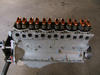
Other members here are professionals and will have technical info for you. I can tell you that my '89 4.9 (F-150 body) has had the "smog pump" (pumps air into the exhaust manifold) removed. The pump system was "T.U." when I bought the truck, along with a lot of other stuff. Machine Shop could not find a replacement pump/related parts to make it "stock" so they just deleted the pump and hoses/pipes hooked to it. They inserted proper size bolts into the holes in the exhaust manifold where the fresh air used to be pumped in. (or rather, where it would have been if the system had been functional).
The loss of the "Smog Pump" apparently made no difference in the running of the engine, even though it was designed to adjust the exhaust before the exhaust hit the sensor located before the expensive "cat". Which is supposed (?) to adjust the fuel/air mixture to avoid clogging up the "cat".
"However", there are several other devices that should be working properly to have your engine run well. Just off the top I remember the Intake Air Sensor (screwed into the intake manifold), the Engine Coolant Temperature Sensor (screwed into the coolant system), the EGR components to include the part that feeds the voltage to the valve if it's that type, Throttle Position Sensor, and probably a couple others that I can't remember right now.
The EGR valve does several things that are supposed to make the engine run better. All the other devices feed info to the computer which then sends back commands to adjust the timing and fuel to achieve the best performance.
"If" your state requires an emissions test, the absence of the "smog pump" could cause your engine to be refused emissions certification. If your gas gage says "Use Unleaded Fuel Only", and the vehicle has no "cat", then it will also be refused emissions certification and you cannot register the vehicle to get your license plates. I learned that the hard way on a fancy Jeep I bought one time and then moved to a city that required emissions testing before license registration.
What I'm trying to say is; if the car has a "computer" and if the engine is seriously messed up regarding the original sensors and other emissions/computer related hang-ons, then you may have a fair amount of work replacing/fixing those items before it will be worth your hard-earned money.
Good luck on your purchase, and congratulations for choosing an excellent engine for your first. I looked for two years before finding mine, and it required a *lot* of repairs. Which were worth the end results.


Thread
Thread Starter
Forum
Replies
Last Post
enrgizerbunny
Ford Inline Six, 200, 250, 4.9L / 300
3
Nov 9, 2016 09:16 PM
coreye1976
1980 - 1986 Bullnose F100, F150 & Larger F-Series Trucks
6
Mar 31, 2009 11:06 AM
Percy
Ford Inline Six, 200, 250, 4.9L / 300
1
Oct 23, 2004 02:24 PM
