




What am I doing wrong?

Thread Starter
|
Cargo Master
Joined: Oct 2010
Posts: 2,339
Likes: 32
From: Lost In a Pit of Despair

Oh well can't change it

Postmaster
Joined: Sep 2013
Posts: 2,595
Likes: 5
From: Pasadena, Ca
Lol, you are in highschool driving an old *** truck...no matter mpg, that's cool as hell! In my day, 10-12 was average, so if you are getting that now, i would say you are doing ok. The greatest part about an old truck is that you can roll thru slow, and people still look your way😎
Lead Driver


Joined: Dec 2012
Posts: 7,877
Likes: 49
From: Tennessee
The method you have of checking your gallons used works ( too well for ones with only one tank ) ! Only thing left to ck ,
  You odometer reading !
 Is it accurate ?
Only thing left to ck , You odometer reading ! Is it accurate ?
Posting Guru
Joined: Oct 2007
Posts: 1,144
Likes: 0
From: Sedro-Woolley, WA
These sixes were never that great in the mileage department but there are some decent tuning gurus in the engine threads here that have helped me immensely.
I have been getting much better mileage and power since I've been searching them.
I have been getting much better mileage and power since I've been searching them.

Post Fiend
Joined: Apr 2008
Posts: 8,261
Likes: 15
From: Big Sky Country
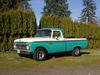
12-13 mpg may seem a little low for a 300/np435 combo, but you need to take into consideration you're driving a 3/4 ton 4x4 w/4.10's
The guys getting 16-20 mpg with a 300/np435 are most likely driving 1/2 ton 2wd's with more highway friendly gearing.
The guys getting 16-20 mpg with a 300/np435 are most likely driving 1/2 ton 2wd's with more highway friendly gearing.
Laughing Gas

Joined: Sep 2003
Posts: 968
Likes: 5
From: Corbett, Oregon
I have had Dents where the cab tank would take anywhere from 18 to 20.5 gallons, after running them dry. The readings can vary depending on whether the truck was running on the level or going up hill or down.
One gallon either way isn't going to make a huge difference in your mileage, but it will make some.
The only way to get an accurate mileage figure is actual miles divided by actual (not assumed) gallons, as many previous posters stated.
Also, as stated before, a F-250 with 4.10's is not a mileage oriented rig.
Another item to take into consideration is speedometer error. Is yours accurate?
Roger Carter
One gallon either way isn't going to make a huge difference in your mileage, but it will make some.
The only way to get an accurate mileage figure is actual miles divided by actual (not assumed) gallons, as many previous posters stated.
Also, as stated before, a F-250 with 4.10's is not a mileage oriented rig.
Another item to take into consideration is speedometer error. Is yours accurate?
Roger Carter
Thread Starter
|
Cargo Master
Joined: Oct 2010
Posts: 2,339
Likes: 32
From: Lost In a Pit of Despair
I have had Dents where the cab tank would take anywhere from 18 to 20.5 gallons, after running them dry. The readings can vary depending on whether the truck was running on the level or going up hill or down.
One gallon either way isn't going to make a huge difference in your mileage, but it will make some.
The only way to get an accurate mileage figure is actual miles divided by actual (not assumed) gallons, as many previous posters stated.
Also, as stated before, a F-250 with 4.10's is not a mileage oriented rig.
Another item to take into consideration is speedometer error. Is yours accurate?
Roger Carter
One gallon either way isn't going to make a huge difference in your mileage, but it will make some.
The only way to get an accurate mileage figure is actual miles divided by actual (not assumed) gallons, as many previous posters stated.
Also, as stated before, a F-250 with 4.10's is not a mileage oriented rig.
Another item to take into consideration is speedometer error. Is yours accurate?
Roger Carter
I've been tracking my miles driven and comparing it to google maps and GPS readings. Over the past 4 trips, the odo has been off by less than .1 miles. So I think its safe to say the speedo/odo are accurate
Thanks
Jameson
FTE Stories
Ford Trucks for Ford Truck Enthusiasts

Top 10 Fords at 2026 Carlisle Ford Nationals
Joe Kucinski
3 Best / 3 Worst Parts of Modern Ford Ownership
Brett Foote
10 Amazing Upgrades That Solve Common Ford Truck Owner Headaches
Pouria Savadkouei
Every 2026 Ford Engine Explained
Brett Foote
10 Ugly Ford Trucks That We Still Kinda Love
Joe Kucinski
10 Things Every Truck Owner NEEDS (2026 Edition)
Michael S. Palmer
Rezvani's Latest Post-Apocalyptic Monster Is a Ford F-150 Raptor Underneath
Verdad Gallardo
Top 10 Most Expensive Ford Trucks Ever Sold on Bring a Trailer
Joe Kucinski
2027 Ford Super Duty Buyer's Guide (Every Model, Engine, & Package)
Brett Foote
MSEE
Joined: Apr 2004
Posts: 10,386
Likes: 35
From: Austin, TX

All of this speculation is useless because the way you're calculating mileage is wrong. There is no way around that. The tank is not at zero when you run out of gas, and it doesn't take 19 gallons to shut the pump off despite having a 19-gallon tank. You're assuming a differential of 19 each time, when in fact it is less than 19. This thread is a waste of your time until you calculate mileage as Mike described.
MSEE
Joined: Apr 2004
Posts: 10,386
Likes: 35
From: Austin, TX
EDIT: guess I should have read your last post. Durrr.

Thread Starter
|
Cargo Master
Joined: Oct 2010
Posts: 2,339
Likes: 32
From: Lost In a Pit of Despair
I understand that it is not completely out of gas. I divide by however much it takes to fill it back up again, no matter what it is. I'm essentially doing what mike described. At least I think
Here the info off one of my receipts
Start mileage with full tank: 142,912.9
End mileage when I fill up again: 143,131.4
Distance traveled: 218.5 miles
Fill up with 19.023 gallons.
MPG: 218.5/19.023 = 11.486
-Jameson
Here the info off one of my receipts
Start mileage with full tank: 142,912.9
End mileage when I fill up again: 143,131.4
Distance traveled: 218.5 miles
Fill up with 19.023 gallons.
MPG: 218.5/19.023 = 11.486
-Jameson
MSEE
Joined: Apr 2004
Posts: 10,386
Likes: 35
From: Austin, TX
The octane required by an engine is directly determined by its compression ratio. Mileage and octane have nothing to do with one another.

Post Fiend
Joined: Mar 2011
Posts: 8,501
Likes: 4
From: Lynchburg, VA
Octane (we use the AKI measurement method in the US) is a measure of a fuel's resistance to ignition. Octane does not indicate a fuel's purity, cleanliness, or energy content.
Thread Starter
|
Cargo Master
Joined: Oct 2010
Posts: 2,339
Likes: 32
From: Lost In a Pit of Despair
Like Devin said, octane deals with resistance to detonation. Vehicles that have higher compression ratios require higher octane gas to prevent pre-ignition caused by compression. A lot of the newer cars that are turbo/supercharged require higher octane because of the turbo/blower adding pressure to the cylinders when the intake valves are open.

Thread
Thread Starter
Forum
Replies
Last Post