


Van Dwelling

Thread Starter
|
New User
Joined: Nov 2012
Posts: 24
Likes: 0
Van Dwelling
Hey guys,
Any ideas on keeping warm in below-freezing temperatures in the back of an Aerostar? I've been stuffing blankets in the cracks and bundling up but I would like to find a way to warm the van up as opposed to just warming my body.
I've done some research and read some blogs but haven't found much... I can't use propane or light candles because of the fumes, and I can't keep the van running either. I've got electrical blankets and such, but the van is freezing when I get up in the morning and I think I'm getting sick.
Any suggestions? (besides renting a place for the winter)
-William Baker
Any ideas on keeping warm in below-freezing temperatures in the back of an Aerostar? I've been stuffing blankets in the cracks and bundling up but I would like to find a way to warm the van up as opposed to just warming my body.
I've done some research and read some blogs but haven't found much... I can't use propane or light candles because of the fumes, and I can't keep the van running either. I've got electrical blankets and such, but the van is freezing when I get up in the morning and I think I'm getting sick.
Any suggestions? (besides renting a place for the winter)
-William Baker

Lead Driver


Joined: Sep 2003
Posts: 7,018
Likes: 210
From: SoCal

If you're not using a fuel-based heater, then your only other choice is electric. Can you get an electric space heater, extension cord, and find a wall outlet?
By the way, is there some necessity that's forcing you to dwell in your van?
By the way, is there some necessity that's forcing you to dwell in your van?

Post Fiend
Joined: Apr 2005
Posts: 5,720
Likes: 5
From: Washington state
electric space heater with a tilt over protection switch. most of the newer ones have the protection switch.
just have to find a safe place to set it up so radiant heat won't set anything on fire. maybe a hook from the ceiling, coat hanger wire?
Not safe to lay on an electric blanket, still have large hole in leg muscle from cooking the muscle meat years ago.
good 12ga extension cord will carry a 1500w space heater.
I put one in the wife's car in the winter time on a timer so it's warm for her before she leaves for work. I'm retired so get to sleep in but know what side of my bread it's buttered on, got to keep her buttered up.
sorry to hear about your situation Bill B.
Cliff
just have to find a safe place to set it up so radiant heat won't set anything on fire. maybe a hook from the ceiling, coat hanger wire?
Not safe to lay on an electric blanket, still have large hole in leg muscle from cooking the muscle meat years ago.
good 12ga extension cord will carry a 1500w space heater.
I put one in the wife's car in the winter time on a timer so it's warm for her before she leaves for work. I'm retired so get to sleep in but know what side of my bread it's buttered on, got to keep her buttered up.
sorry to hear about your situation Bill B.
Cliff

FTE Community Team

Joined: Nov 2001
Posts: 1,863
Likes: 273
From: Oak Harbor, Washington

Moisture you put into the air by just breathing, with the van not running, is going to contribute a lot of water condensation in your interior and will get the mold started. Here in the Pacific Northwest it's very common to find ruined Aerostar interiors when they are left to sit over a winter or so, just from the ambient humidity. Both from mold, and from the various pressed-fibre interior panels delaminating.
So, you're going to want to think about ventilation as well as heating.
If you don't have access to power (electricity), I don't know of a good solution.
If you're willing to cut your van, there are lots of old cheap RV propane heaters around. I lived in a 1972 Kit Companion travel trailer for most of a decade and it had a really great propane furnace that required no electricity -- though there was a 12v fan option, mine didn't have it. Even on 15°F days I could easily keep that trailer toasty (at the cost of a lot of propane; I could burn nine gallons a week in winter temps in the 20s).
RV furnaces vent externally, so you have to cut a hole in the side of your van to make it work. A big plus is that the huge amount of water generated by burning petroleum fuels is all exhausted outside, so no moisture added by the heat. A downside is that the heat does all tend to go up, and the floor area does stay pretty cold unless you have a circulating fan. I just wore slippers, and used a footstool
You'd probably want an older RV furnace that doesn't require electricity. Even running a small fan quickly gobbles your van's battery's charge. The newer RVs all want electric thermostats and central ducting blowers & such. But if you could find one from a scrapped tent trailer that had an under-bed heater, that would probably take up the least room.
But an oil-filled electric heater is by far the safest -- if you have access to power.
(This has me thinking about the ammonia absorbtion-cycle refrigerator, how it worked perfectly on 120v or propane, and was dead-silent. Never gave me a lick of trouble, and it was over 30 years old. I sure wish my 1996 Whirlpool here was that quiet!)
So, you're going to want to think about ventilation as well as heating.
If you don't have access to power (electricity), I don't know of a good solution.
If you're willing to cut your van, there are lots of old cheap RV propane heaters around. I lived in a 1972 Kit Companion travel trailer for most of a decade and it had a really great propane furnace that required no electricity -- though there was a 12v fan option, mine didn't have it. Even on 15°F days I could easily keep that trailer toasty (at the cost of a lot of propane; I could burn nine gallons a week in winter temps in the 20s).
RV furnaces vent externally, so you have to cut a hole in the side of your van to make it work. A big plus is that the huge amount of water generated by burning petroleum fuels is all exhausted outside, so no moisture added by the heat. A downside is that the heat does all tend to go up, and the floor area does stay pretty cold unless you have a circulating fan. I just wore slippers, and used a footstool
You'd probably want an older RV furnace that doesn't require electricity. Even running a small fan quickly gobbles your van's battery's charge. The newer RVs all want electric thermostats and central ducting blowers & such. But if you could find one from a scrapped tent trailer that had an under-bed heater, that would probably take up the least room.
But an oil-filled electric heater is by far the safest -- if you have access to power.
(This has me thinking about the ammonia absorbtion-cycle refrigerator, how it worked perfectly on 120v or propane, and was dead-silent. Never gave me a lick of trouble, and it was over 30 years old. I sure wish my 1996 Whirlpool here was that quiet!)
Lead Driver
Joined: Sep 2003
Posts: 7,018
Likes: 210
From: SoCal
I think if you used an electric space heater (oil filled or fan-blown), the heat will do a pretty good job of driving out the moisture.
I was going to suggest checking your local Salvation army or other resale shops. You might find a good used heater and extension cords for very low cost.
I was going to suggest checking your local Salvation army or other resale shops. You might find a good used heater and extension cords for very low cost.

Mountain Pass
Joined: Jan 2008
Posts: 193
Likes: 0
If you use any combustion device for heat, make sure you have both a functioning smoke detector and especially a carbon monoxide (CO) detector inside the van with you at all times. Read enough stories of people sleeping in unventilated tents and vans with fossil fueled heaters and/or generators going to sleep with them running - and staying asleep - forever.
https://www.google.com/search?q=Carb...+camper+deaths
Carbon Monoxide Advice | RV's Caravans & Holiday Homes
https://www.google.com/search?q=Carb...+camper+deaths
Carbon Monoxide Advice | RV's Caravans & Holiday Homes
Trending Topics

Tuned


Joined: Mar 2011
Posts: 411
Likes: 7
From: Proctorsville VT
I run a carpet cleaning business in New England and must protect truck mounted extraction equipment from winter freeze. I have depended upon electric ceramic heaters to do the job for over 20 years. With the van insulated you can safely heat the Aero cabin this way. Some of the best heaters are made by Pelonis but a cheap $20 unit will work and last years.
https://www.google.com/search?q=cera...icial&tbm=shop
https://www.google.com/search?q=cera...icial&tbm=shop
FTE Stories
Ford Trucks for Ford Truck Enthusiasts

Top 10 Fords at 2026 Carlisle Ford Nationals
Joe Kucinski
3 Best / 3 Worst Parts of Modern Ford Ownership
Brett Foote
10 Amazing Upgrades That Solve Common Ford Truck Owner Headaches
Pouria Savadkouei
Every 2026 Ford Engine Explained
Brett Foote
10 Ugly Ford Trucks That We Still Kinda Love
Joe Kucinski
10 Things Every Truck Owner NEEDS (2026 Edition)
Michael S. Palmer
Rezvani's Latest Post-Apocalyptic Monster Is a Ford F-150 Raptor Underneath
Verdad Gallardo
Top 10 Most Expensive Ford Trucks Ever Sold on Bring a Trailer
Joe Kucinski
2027 Ford Super Duty Buyer's Guide (Every Model, Engine, & Package)
Brett Foote
FTE Community Team
Joined: Nov 2001
Posts: 1,863
Likes: 273
From: Oak Harbor, Washington
In the converted bus community, where people convert school & transit buses to RVs & use them either part- or full-time, internal condensation & rust is a major problem, from moisture from people, not heating. Unlike house insulation, where moisture hits a barrier right behind the drywall, & moisture that does make it into the insulation can make its way out further, in a car, van, or bus the moisture condenses on the inside metal and cannot escape, causing rust, and if you have the wrong items in contact, mold.
Aero interiors really hate moisture, especially the earlier Aeros.
Aero interiors really hate moisture, especially the earlier Aeros.
Tuned
Joined: Mar 2011
Posts: 411
Likes: 7
From: Proctorsville VT
Yes they do...and they can be their own worst enemies.
I could boil water in a turkey fryer in my '95 and not add much to the dampness in there after a rain. I siliconed the roof rack screws, replaced the hatch seal and still have a perpetually saturated headliner in the driver's side rear.
I have long ago lost sympathy for what Aero's hate.
I could boil water in a turkey fryer in my '95 and not add much to the dampness in there after a rain. I siliconed the roof rack screws, replaced the hatch seal and still have a perpetually saturated headliner in the driver's side rear.
I have long ago lost sympathy for what Aero's hate.
FTE Community Team
Joined: Nov 2001
Posts: 1,863
Likes: 273
From: Oak Harbor, Washington
I tracked down my water intrusions this summer. I had a bad seal of the rear hatch glass to the hatch, and both rear side windows had lost their seal as well (though they weren't leaking, I had them yanked and resealed at the same time I had the rear hatch window done).
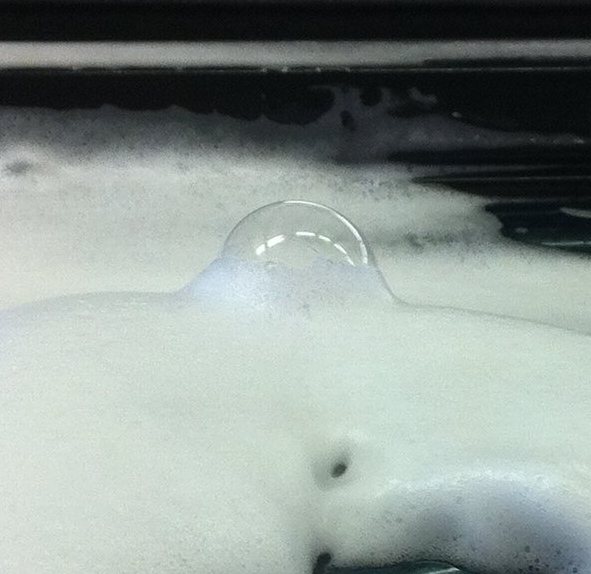
However, the worst culprit turned out to be the roof panel seam located above the sliding door at the rear edge. A bit of seam sealer there and my last leak was gone.
Lots of pics in this post. This next pic shows a bubble when blowing compressed air above the headliner:
Click HERE for larger

Click HERE for larger
Here's the seam after sealant applied:
Click HERE for larger
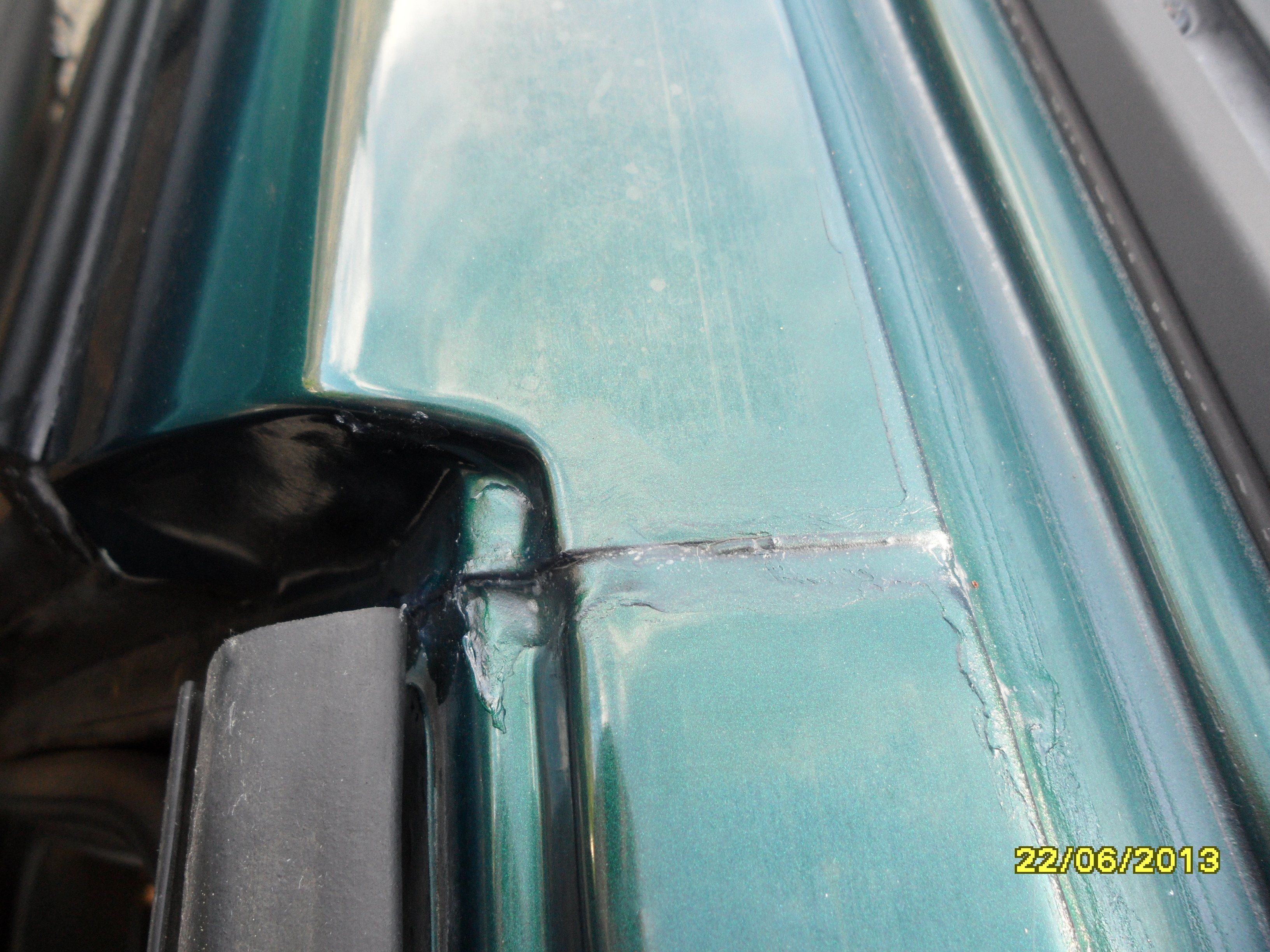
However, the worst culprit turned out to be the roof panel seam located above the sliding door at the rear edge. A bit of seam sealer there and my last leak was gone.
Lots of pics in this post. This next pic shows a bubble when blowing compressed air above the headliner:
Click HERE for larger
Click HERE for larger
Here's the seam after sealant applied:
Click HERE for larger
Lead Driver
Joined: Sep 2003
Posts: 7,018
Likes: 210
From: SoCal
I saw rust forming around the edges of the roof joints on my vans a few years ago, so I cleaned them out, and covered them with RTV sealant. I don't think they were leaking yet, but I decided to be proactive about preventing leaks. They're still holding after a few years, but I don't know for how long.
One of these days I'll have to tackle my side window leak...
One of these days I'll have to tackle my side window leak...

Thread
Thread Starter
Forum
Replies
Last Post
Oregon Rob
Cooling, Heating, Ventilation & A/C
0
Feb 23, 2004 02:48 PM
paetersen
1987 - 1996 F150 & Larger F-Series Trucks
11
Nov 18, 2003 05:54 PM