



Leveling 2WD F250
Thread Starter
|
Laughing Gas


Joined: Aug 2003
Posts: 836
Likes: 9
Leveling 2WD F250
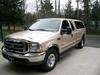
Would be interested on hear from anybody that has leveled their 2WD. Did it actually level the front? Did you do it yourself? Cost? Pictures? Will it affect handling or towing in anyway?

Molon Labe

Joined: Dec 2006
Posts: 5,272
Likes: 1
From: Alaska


https://www.ford-trucks.com/forums/1...kit-is-on.html
To this day I have no regrets leveling the truck, it looks better, handles fine, tires are wearing normal, and it goes down the road straight as can be.
I haul heavy quite often and its never been an issue. I do remember the truck feeling kinda squirrely right after it was leveled, and I thought that I may have made a mistake by raising the front, but it turns out that it just took some getting used to the different feel.
I can take more pics if you need.

Hotshot


Joined: Nov 2006
Posts: 11,286
Likes: 263
From: North of Greenville
I, on the other hand, had a few issues with mine when I leveled it. Everything is now fine, but I went through some issues you might need to be prepared for as well.
I used a 2" kit from Fat Bob's Garage - HDPE spacers. Self-installed, roughly $50 for the kit. Installed new Bilsteins and ball joints (plus adjustable caster/camber bushings) at the same time.
1. Shock length is an issue (still for me), unless you use bolt extenders to maintain the correct amount of vertical travel in both directions (up and down, and I have not yet done the extenders bu can sometimes feel the shocks limit out in the upward travel direction).
2. Had to shim my carrier bearing due to the change in driveline geometry due to the elevated front end (this resolved the drive line vibration which was created with the geometry change).
3. Had to do a good bit of grinding on both the c-frames and upper ball joint knuckles to create adequate clearance in order to get the caster/camber back into alignment.
Final result is still limited shock travel due to the "stretch" on the shocks, and there are no real good solutions for any other shocks to give the correct travel distance unless you use the bolt extenders or do a custom rebuild for the shock mounting system.
Truck handles fine, and looks good. It was just a lot more of a pain for me than I had anticipated (or even read about when researching the issue before hand).
I used a 2" kit from Fat Bob's Garage - HDPE spacers. Self-installed, roughly $50 for the kit. Installed new Bilsteins and ball joints (plus adjustable caster/camber bushings) at the same time.
1. Shock length is an issue (still for me), unless you use bolt extenders to maintain the correct amount of vertical travel in both directions (up and down, and I have not yet done the extenders bu can sometimes feel the shocks limit out in the upward travel direction).
2. Had to shim my carrier bearing due to the change in driveline geometry due to the elevated front end (this resolved the drive line vibration which was created with the geometry change).
3. Had to do a good bit of grinding on both the c-frames and upper ball joint knuckles to create adequate clearance in order to get the caster/camber back into alignment.
Final result is still limited shock travel due to the "stretch" on the shocks, and there are no real good solutions for any other shocks to give the correct travel distance unless you use the bolt extenders or do a custom rebuild for the shock mounting system.
Truck handles fine, and looks good. It was just a lot more of a pain for me than I had anticipated (or even read about when researching the issue before hand).
Thread Starter
|
Laughing Gas
Joined: Aug 2003
Posts: 836
Likes: 9
I think after reading several post on adding 2 1/2" spacers to raise the front, that I will look for a front 2wd suspension system with new longer coil springs. I realize this would cost alot more.
F250, I think if you took your shock specs to a good parts store they could cross reference you a longer pair of front shocks. Some lifted trucks are running shocks 3 feet long...
F250, I think if you took your shock specs to a good parts store they could cross reference you a longer pair of front shocks. Some lifted trucks are running shocks 3 feet long...
Hotshot
Joined: Nov 2006
Posts: 11,286
Likes: 263
From: North of Greenville
I understand what you're saying, but for the 2wd Fords, one of our members has chased this issue into oblivion and there just do not seem to be any really good options for us, at least not for just a 2-2.5" leveling kit approach, anyway. Granted, there are a larger number of options for a taller lift, but the "leveling kit" arena is extremely limited for us. You tend to either find a shock that is either too short or too long to match up with only a 2-2.5 inch lift because the majority of the market is driven by a more popular approach of going with bigger lifts. Apparently, we 2WD "levelers" are in a very small minority.
I myself have also reviewed the 2wd options from Monroe, KYB, Bilstein, and Rancho, and there just is not a model available that provides the full range of motion and leaves the right amount of travel in each direction UNLESS.... you either keep the truck at stock height, use at least a 4-inch front lift kit, OR use a bolt extender for the top mounting bolt. (I've used the shock model specifications found at the various shock manufacturer web sites, 4WDonline.com, and ShockWarehouse.com). If you can find something, great, but my guess would be that anything that you find which could be truly workable would be a brand new addition to the company's product line.
I myself have also reviewed the 2wd options from Monroe, KYB, Bilstein, and Rancho, and there just is not a model available that provides the full range of motion and leaves the right amount of travel in each direction UNLESS.... you either keep the truck at stock height, use at least a 4-inch front lift kit, OR use a bolt extender for the top mounting bolt. (I've used the shock model specifications found at the various shock manufacturer web sites, 4WDonline.com, and ShockWarehouse.com). If you can find something, great, but my guess would be that anything that you find which could be truly workable would be a brand new addition to the company's product line.
Molon Labe
Joined: Dec 2006
Posts: 5,272
Likes: 1
From: Alaska
Pete, when you say "driveline vibration" can you clarify at what speeds you were feeling the vibration, or was it constant?
I have been battling a vibration that I cannot put my finger on for quite some time. Every time I think I found the culprit the vibrations goes away and resurfaces a few hours/days later.
I was about ready to rip my rear end out and rebuild it until I seen your post.
Maybe a shim would solve my issue
I have been battling a vibration that I cannot put my finger on for quite some time. Every time I think I found the culprit the vibrations goes away and resurfaces a few hours/days later.
I was about ready to rip my rear end out and rebuild it until I seen your post.
Maybe a shim would solve my issue

Post Fiend
Joined: Mar 2007
Posts: 26,966
Likes: 50
From: Texas
Pete, just to clarify, there are shocks available for the 2wd w/ leveling kit. They just suck. Daystar Part KU01004 - Daystar Scorpion Shock Absorber
I went through enough options. My opinion is, just get the thread extenders and thread the top of your favorite shock to make it work and ride like you want.
I've got a crew cab long bed. I have had no issue with drive line vibration or did not need any grinding to get the alignment done. My front springs (Ford replacements) don't seem strong enough though, so my truck doesn't sit level, but it no longer sags up front.
I went through enough options. My opinion is, just get the thread extenders and thread the top of your favorite shock to make it work and ride like you want.
I've got a crew cab long bed. I have had no issue with drive line vibration or did not need any grinding to get the alignment done. My front springs (Ford replacements) don't seem strong enough though, so my truck doesn't sit level, but it no longer sags up front.
Trending Topics

Senior User
Joined: Jul 2003
Posts: 111
Likes: 0
From: Cross Plains, TX
I used the aluminum leveling blocks on mine and have been very pleased with them. Didn't have to do any grinding, still using the stock shocks and no vibrations. I also put in a F-350 rear block at the same time so I cant say anything for how it sits compared to stock. I cant remember exactly what the leveling blocks cost but I believe the dual axis camber bushings were about $60. Had to shorten one bolt but that was the only fabrication required. I use the truck as a ranch truck and it gets the tar beat out of it every day, has a full replacement front bumper and heavy flatbed with 1500 lb feeder on the back, and have no complaints with the blocks. They do feel different at first but you get used to them.
FTE Stories
Ford Trucks for Ford Truck Enthusiasts

Rezvani's Latest Post-Apocalytic Monster Is a Ford F-150 Raptor Underneath
Verdad Gallardo
Top 10 Most Expensive Ford Trucks Ever Sold on Bring a Trailer
Joe Kucinski
2027 Ford Super Duty Buyer's Guide (Every Model, Engine, & Package)
Brett Foote
Top 10 Ford Truck Tragedies
Joe Kucinski
AEV FXL Super Duty - the Super Duty Raptor Ford Doesn't Make
Brett Foote
Lobo Vs Lobo: Proof the F-150 Lobo Should Be Even Lower!
Michael S. Palmer
Ford's 2001 Explorer Sportsman Concept Looks For a New Home
Verdad Gallardo
10 Best Ford Truck Engines We Miss the Most!
Joe Kucinski
2026 Shelby F-150 Off-Road: Better Than a Raptor R?
Brett Foote
Cargo Master
Joined: Jan 2002
Posts: 2,079
Likes: 11
From: LA and CO
Can you explain this? I can't see the driveline angle changing due to the front end being raised.
I put the "hockey pucks" on mine as well as new springs all at the same time. It's still not level but it's real close. The shop aligned it and even though the tops of the tires look further out than the bottoms it rides fine and wears the tires evenly.
Hotshot
Joined: Nov 2006
Posts: 11,286
Likes: 263
From: North of Greenville
Pete, just to clarify, there are shocks available for the 2wd w/ leveling kit. They just suck. Daystar Part KU01004 - Daystar Scorpion Shock Absorber
I went through enough options. My opinion is, just get the thread extenders and thread the top of your favorite shock to make it work and ride like you want.
...
I went through enough options. My opinion is, just get the thread extenders and thread the top of your favorite shock to make it work and ride like you want.
...
I'm beginning to think that perhaps I did not get the correct dual adjustable camber bushings. I know that there are a variety of adjustment ranges available, and perhaps the ones I got simply did not have adequate adjustment range.
What I know for sure is that the new carrier bearing resolved about half the vibration intensity. The shims finished the rest of it completely. Don't know for sure of what the exact root cause(s) were, but I do know that the combination of a new carrier bearing and two 1/8" shims eliminated the vibration completely, and it's hard to argue with success.
Cargo Master
Joined: Jan 2002
Posts: 2,079
Likes: 11
From: LA and CO
Thanks.
I have a vibration too. Might just be tires or may be u-joints and the center support bearing. Mine is more pronounced when it shifts into OD about 45mph and the engine us loaded. After that its fine.
I have a vibration too. Might just be tires or may be u-joints and the center support bearing. Mine is more pronounced when it shifts into OD about 45mph and the engine us loaded. After that its fine.
Thread Starter
|
Laughing Gas
Joined: Aug 2003
Posts: 836
Likes: 9
Wouldn't that be the pinion bearing? Just saying because I had my carrier bearings go out. I did not get any vibration, just a Waa Waa Waa bearing noise that got louder as time went on. I am thinking it's in the u-joints and probably the front one.

