When you click on links to various merchants on this site and make a purchase, this can result in this site earning a commission. Affiliate programs and affiliations include, but are not limited to, the eBay Partner Network.
During the calibration I discovered that the DC bias voltage that feedsboth fuel, oil and temperature sender units pulses intermittently causing the controller to be confused because it doesn't get an accurate resistance measurement. This would explain a lot because over the years I have always suspected my factory gauges to be kinda goofy. Oddly enough the fuel gauges work. Looking at the schematics my suspects are the flex circuit behind the instrument panel, the connector and maybe the radio suppression choke/Voltage regulator. I know the easy way out would be to just get aftermarket gauges (Still a possibility) but I really would like to get the factory gauges working.
I do have a spare instrument cluster that I will use as a parts bin. In the meantime the fan runs at both low and high speed and the coolant temperature is still 180 degrees.
This is how the 3 gauges work.
The IVR (rectangle box on the back of the gauge pod) for the 3 gauges puts out about 5 volts and it does this by turning on & off the power and why you see the pulses. Use a test light on each of the wires at the senders and you will see this pulse.
Now power for this gauge system goes 12 volts into the IVR where it pulses to get 5 volts then out to each gauge (fuel / temp / oil) then out to the senders where the senders are adjustable resister to ground to make the gauge work.
Now being the gauges work on resistance any resistance added or removed from the path will alter the gauge readings.
Hope that clears up how the stock gauges work and why you cant use them to trigger other systems.
Dave ----
This is how the 3 gauges work.
The IVR (rectangle box on the back of the gauge pod) for the 3 gauges puts out about 5 volts and it does this by turning on & off the power and why you see the pulses. Use a test light on each of the wires at the senders and you will see this pulse.
Now power for this gauge system goes 12 volts into the IVR where it pulses to get 5 volts then out to each gauge (fuel / temp / oil) then out to the senders where the senders are adjustable resister to ground to make the gauge work.
Now being the gauges work on resistance any resistance added or removed from the path will alter the gauge readings.
Hope that clears up how the stock gauges work and why you cant use them to trigger other systems.
Dave ----
Thanks Dave for that info. Your timing was perfect because I just spent most of the day figuring out what exactly the IVR does and how it works before I read your post. Good ole' 70s technology to down convert 12VDC to 5VDC. So this is what I did today. After taking my dash apart and swapping out the flex circuit I was getting the same pulsing. I figured that it was there by design. The IVR is being fed by a 12VDC buss that has a inline 8 to 9 Ohm resistor that dropped my measured voltage to 7VDC going into the IVR. I was getting the pulsing voltage around 4 to 5 VDC. (That's why I used my old trusty Simpson 260 analog meter)
So to experiment I bypassed the IVR thus sending 7VDC to the gauges. The results where obvious (At least with the temp.) I have 2 full fuel tanks already so I cant test the fuel gauge but the temp gauge was hot. The fan controller was seeing 240 degrees. My coolant thermometer was right at 180.
I didn't have my big stash of resistors at home so I had to dig around the misc section of my storage bins to fin some loose resistors. I found a 10 Ohm 1/8 watt (What luck!) I put that in front of the temp sender and the gauge went to normal where I would expect 180 to sit. The Dakota was seeing 190 to 200. Close enough! I was getting about 4VDC right at the sender.
OK so based on what I discovered today and reading Dave's very helpful post I will need to engineer up a 5VDC system to power the gauges and sending units. The easy route would be to put a 8 Ohm (Or so) 10 Watt resistor across the IVR (Easy) Or..... 12VDC to 5VDC DC to DC converters are a dime a dozen (Just not in my garage) and I can spend a few bucks more and get one that is adjustable so I can really dial in the gauges. In the meantime I'll run with the little 1/8 watt resistor in front of the temp sender unit for now and do the long term fix later this month.
Love this forum. Two more questions for NBC Steve and LafermeDave
Steve looking forward to what you come up with 5vdc power, seems like a phone charger is almost in order? But not tidy, so hopefully you can share your creation. I stopped trying with electrical engineering in college at decoding resistor bands by color and location....
Dave, curious how you mount the mark 8 fan, especially on passenger side with the ~2" offset to mounting hole to support, I was gonna get a 24" length of 2x2 aluminum bar but I'm open to suggestions.
Love this forum. Two more questions for NBC Steve and LafermeDave
Steve looking forward to what you come up with 5vdc power, seems like a phone charger is almost in order? But not tidy, so hopefully you can share your creation. I stopped trying with electrical engineering in college at decoding resistor bands by color and location....
Dave, curious how you mount the mark 8 fan, especially on passenger side with the ~2" offset to mounting hole to support, I was gonna get a 24" length of 2x2 aluminum bar but I'm open to suggestions.
I'm still thinking on what I'm going to do. All cards are still on the table, Just not the phone charger one..... I have plenty DC to DC converters (Some are adjustable) and they are small enough to be neatly tucked up behind the instrument panel. Aftermarket gauges or a independent sender just for the Dakota decoder are possibilities as well. More to follow.....
Drove the CC yesterday all day in the nasty Bay Area traffic and my engine temp never went above this (Picture) which translates to around 180 degrees (According to my radiator thermometer) and has been rock solid no matter what my driving conditions have been. Before I would have fluctuating engine temperatures. This has been a dramatic improvement so far.
Steve I should have asked you earlier, what are you running in your radiator? 50/50, 70/30, water wetter? 180 in Bay Area traffic is impressive. I’m often seeing 10 degrees over that.
Steve I should have asked you earlier, what are you running in your radiator? 50/50, 70/30, water wetter? 180 in Bay Area traffic is impressive. I’m often seeing 10 degrees over that.
I'm running 50/50 concentrated antifreeze and water mix.
I'm running 50/50 concentrated antifreeze and water mix.
Roger that. I’m also doing 50/50, but I’m on a fuel injection (TB) setup with 14:1 AFR so it’s probably leaner than your carb setup. You running a closed system with an overflow tank? I have one but it’s a small stainless tank and I’m considering going to a larger “factory” style overflow tank.
Not that your asking or would change at this point but I'll just share that I put the Evans waterless coolant in my old beast and it seems to work wonders. I don't hit much stop and go (some yes) and I don't have an A/C on it but she does pretty well if and when I venture out in 100 degree Texas weather. My temp dial never seems to get past 180. The downsides to making the change are (1) higher cost over regular antifreeze (2) the need to really purge your system (and block) of all antifreeze and water before changing over and (3) the remote chance you spring a leak with a hose or something and need to add some on the road means you probably should keep some in your truck. However, despite these downsides, it should be the last coolant you will ever need and does a great job of keeping your motor cool without having to get bigger radiators or fancy electric fans etc.
Not that your asking or would change at this point but I'll just share that I put the Evans waterless coolant in my old beast and it seems to work wonders. I don't hit much stop and go (some yes) and I don't have an A/C on it but she does pretty well if and when I venture out in 100 degree Texas weather. My temp dial never seems to get past 180. The downsides to making the change are (1) higher cost over regular antifreeze (2) the need to really purge your system (and block) of all antifreeze and water before changing over and (3) the remote chance you spring a leak with a hose or something and need to add some on the road means you probably should keep some in your truck. However, despite these downsides, it should be the last coolant you will ever need and does a great job of keeping your motor cool without having to get bigger radiators or fancy electric fans etc.
Thanks for the info. Right now I am running within acceptable temps, but so far I have avoided some of the really killer times / highways so I am not sure if my system would be overwhelmed in full bay area traffic. For example, the 6 mile drive I take along highway 85 can often take 20 minutes in heavy traffic. I am also running a .040 446 stroker that might contribute to some of the added heat I have to get rid of. But if I do see temps going off the reservation, I will definitely take a closer look at Evans. Thanks man!
Been busy with work lately and I have been on the road. I haven't done anything yet with the gauges but I'm leaning more on using period correct aftermarket gauges for oil and temp.
Cool truck! I see you have the roof top lights or I guess the correct terminology is "clearance lights". Are yours factory or aftermarket install?
I have seen two different layouts for the roof top lights.... the 3 in the center and 2 spaced farther outwards (like yours) I am assuming this is the factory layout? I have also seen them, all 5 lights, spaced evenly across the roof, I assume this is an aftermarket install?
If/when you get the time can you post the measurements of your roof top lights....the spacing in between and the distance from window moulding? Thanks.
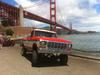
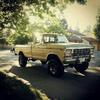
I'm still here! I've been doing some small project work on the CC over the year due to a busy work shedule. Last weekend we finally had no rain after one of the wettest winters we have had in a long time so it was nice to get CC detailed and out for a drive. I'll be going to the Kool April Nights car show in Redding CA. I'm hoping to get a new set of springs for the rear before then. Here's a photo from last Saturday.
Thanks for shaking the tree! Yes there are some pending updates. I was suppose to start them this weekend but work has sent me to Utah for a few days so I'll have to start the next weekend. Here's my list.
1. Repair leaking freeze plugs. I'm going to attempt to do this without pulling the engine. I have pretty good access if I remove the starter, exhaust manifold and motor mount and place a floor jack with some lumbar to support the engine.
2. Replace rear shock supports. Mine are worn out and I have had to use fender washers on the shocks to keep them in place.
3. Replace the long tie rod with new (Straight) tie rod. Make a plan for a future crossover steering system.
All parts are in stock and ready to go. I'll post my progress and hopefully my success story here! I will be going to the Reno Hot August Nights car show so I want to get those things done before then. Especially the freeze plugs as its a 200 mile road trip over the Sierras for me.
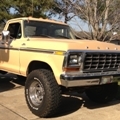
Here's a photo from out local car show a couple of weeks ago.
Rezvani's Latest Post-Apocalyptic Monster Is a Ford F-150 Raptor Underneath
Slideshow: Called the Fortress, the 850-horsepower pickup combines Raptor underpinnings with military-inspired features, survival equipment, and a starting price of $285,000.