


brake bleed sequence

Thread Starter
|
Elder User
Joined: Mar 2006
Posts: 615
Likes: 0
From: Pennsylvania
brake bleed sequence
Hi, did a search and nothing. Does anyone have a idea on brake bleed sequence for a 2004 escape rear drums? I have always tried the old ways with the furthest first, also do you recommend gravity over 2 man bleed, thanks.

Posting Guru
Joined: Feb 2002
Posts: 1,534
Likes: 2
From: Warren, MI
Never did an Escape but during the summer I did a brake job on my '78 Corvette and used a pressure bleeder which is similiar to a two man. I heard that gravity is actually better but takes much longer.
After that I learned that brake fluid doesn't last forever and did my '90 Buick with pressure again. After a week of penetrating oil, tapping, cursing, praying, all four were loose. One wouldn't bleed till I used a vacuum pump to get it started, after that it bleed perfectly.
You can use a vacuum pump but you have to worry about sucking air into the system although it works for some people just fine.
After that I learned that brake fluid doesn't last forever and did my '90 Buick with pressure again. After a week of penetrating oil, tapping, cursing, praying, all four were loose. One wouldn't bleed till I used a vacuum pump to get it started, after that it bleed perfectly.
You can use a vacuum pump but you have to worry about sucking air into the system although it works for some people just fine.

Freshman User
Joined: Nov 2012
Posts: 35
Likes: 0
From: Sussex, Wi
I believe the process of bleeding brakes has never changed, always the furthest away from the master and/or ABS system gets bled first.
So, RR, then LR,The RF, then LF.
As far as Gravity, speed bleeders, whatnot, I've always used a helper whether it be brakes or clutches. Just the way I've always done it.
I never bought a speed bleeder, but I probably should have with the amount of cars I've worked on.
Oh well.
So, RR, then LR,The RF, then LF.
As far as Gravity, speed bleeders, whatnot, I've always used a helper whether it be brakes or clutches. Just the way I've always done it.
I never bought a speed bleeder, but I probably should have with the amount of cars I've worked on.
Oh well.

Elder User
Joined: Oct 2001
Posts: 544
Likes: 2
From: Jersey Shore Not Seaside!
Some vehicles have had a quirky pattern but the normal sequence as stated is longest to shortest. It's just easier to get all the old fluid out that way and not cross contaminate.
Being in charge of one of the countries largest friction material manufacturer vehicle test facilities I had the option of getting (and we tried) all different types of brake fluid bleeding equipment ever made. To run our tests where we would evaluate performance not only for stopping distance but pedal travel as well, it was essential to all the air out of the brake system. And we always went back to the two man manual bleeding.
Being in charge of one of the countries largest friction material manufacturer vehicle test facilities I had the option of getting (and we tried) all different types of brake fluid bleeding equipment ever made. To run our tests where we would evaluate performance not only for stopping distance but pedal travel as well, it was essential to all the air out of the brake system. And we always went back to the two man manual bleeding.
Posting Guru
Joined: Feb 2002
Posts: 1,534
Likes: 2
From: Warren, MI
I believe the process of bleeding brakes has never changed, always the furthest away from the master and/or ABS system gets bled first.
So, RR, then LR,The RF, then LF.
As far as Gravity, speed bleeders, whatnot, I've always used a helper whether it be brakes or clutches. Just the way I've always done it.
I never bought a speed bleeder, but I probably should have with the amount of cars I've worked on.
Oh well.
So, RR, then LR,The RF, then LF.
As far as Gravity, speed bleeders, whatnot, I've always used a helper whether it be brakes or clutches. Just the way I've always done it.
I never bought a speed bleeder, but I probably should have with the amount of cars I've worked on.
Oh well.
Freshman User
Joined: Nov 2012
Posts: 35
Likes: 0
From: Sussex, Wi
You have a Corvette, during my brake work on mine, it has been shown that even the Chevy books don't agree on a set procedure and vary by year. I have the books for mine and don't even mention a inner/outer bleeder on the rears and IIRC has you start on a front one. Some say to tilt/jiggle/tap them. The rears can't be removed with lines to tilt/jiggle, etc. as the steel lines cross infront of the mounting bolts.
Regardless of that, and what the FMCs may state, I've always done my brakes as I mentioned above. At least I'm still here to post about it.
It is fluid dynamics in the end. They're hydraulic systems, not all that complicated, so I follow the logical way.
As far as the tilting goes, I've employed that for gravity-feed bleeding the slave cylinder on clutches, but never brakes. Even with the gravity bleed, I needed someone to pump the pedal to get the pressure/throw-out to a desirable level.

Posting Guru
Joined: Feb 2002
Posts: 1,534
Likes: 2
From: Warren, MI
It's my second, the first being a C3, and I have worked on C1 and 2s that my older brother owned.
Regardless of that, and what the FMCs may state, I've always done my brakes as I mentioned above. At least I'm still here to post about it.
It is fluid dynamics in the end. They're hydraulic systems, not all that complicated, so I follow the logical way.
As far as the tilting goes, I've employed that for gravity-feed bleeding the slave cylinder on clutches, but never brakes. Even with the gravity bleed, I needed someone to pump the pedal to get the pressure/throw-out to a desirable level.
Regardless of that, and what the FMCs may state, I've always done my brakes as I mentioned above. At least I'm still here to post about it.
It is fluid dynamics in the end. They're hydraulic systems, not all that complicated, so I follow the logical way.
As far as the tilting goes, I've employed that for gravity-feed bleeding the slave cylinder on clutches, but never brakes. Even with the gravity bleed, I needed someone to pump the pedal to get the pressure/throw-out to a desirable level.
Trending Topics
Freshman User
Joined: Nov 2012
Posts: 35
Likes: 0
From: Sussex, Wi
Yes, I did use the furthest away method but I forget on the rears which one(inners/outers) is done first. All info was from: C3 Tech/Performance - Corvette Forum.
Do you mean the parking brake as the inner? and the disk caliper as the outers.
On my '85, the parking brake (the inner shoes) is cable actuated, not hydraulic.
BTW, I'm a member over there with the same SN (IB owns both this and that site), but I don't venture into the C3 section. I sold my '76 back in the '90s.
FTE Stories
Ford Trucks for Ford Truck Enthusiasts

3 Best / 3 Worst Parts of Modern Ford Ownership
Brett Foote
10 Amazing Upgrades That Solve Common Ford Truck Owner Headaches
Pouria Savadkouei
Every 2026 Ford Engine Explained
Brett Foote
10 Ugly Ford Trucks That We Still Kinda Love
Joe Kucinski
10 Things Every Truck Owner NEEDS (2026 Edition)
Michael S. Palmer
Rezvani's Latest Post-Apocalyptic Monster Is a Ford F-150 Raptor Underneath
Verdad Gallardo
Top 10 Most Expensive Ford Trucks Ever Sold on Bring a Trailer
Joe Kucinski
2027 Ford Super Duty Buyer's Guide (Every Model, Engine, & Package)
Brett Foote
Top 10 Ford Truck Tragedies
Joe Kucinski
Posting Guru
Joined: Feb 2002
Posts: 1,534
Likes: 2
From: Warren, MI
I'm a little confused by the inner/outer.
Do you mean the parking brake as the inner? and the disk caliper as the outers.
On my '85, the parking brake (the inner shoes) is cable actuated, not hydraulic.
BTW, I'm a member over there with the same SN (IB owns both this and that site), but I don't venture into the C3 section. I sold my '76 back in the '90s.
Do you mean the parking brake as the inner? and the disk caliper as the outers.
On my '85, the parking brake (the inner shoes) is cable actuated, not hydraulic.
BTW, I'm a member over there with the same SN (IB owns both this and that site), but I don't venture into the C3 section. I sold my '76 back in the '90s.
IIRC, the C4's had the exactly the same except they used different piston seals, went from lip type to "O" rings.
Freshman User
Joined: Nov 2012
Posts: 35
Likes: 0
From: Sussex, Wi
I had to go look at a reference pic of the C3 caliper, because I didn't remember it having 4 pistons. Sure enough does. So I know I never bled that system. Looks like the inner and outer bleeders are on opposite ends. Does a single line with a Y fitting feed both sides? If so, it probably wouldn't matter which got bled first, if the Y split hoses are the same length. I would still bleed furthest away from the master first.
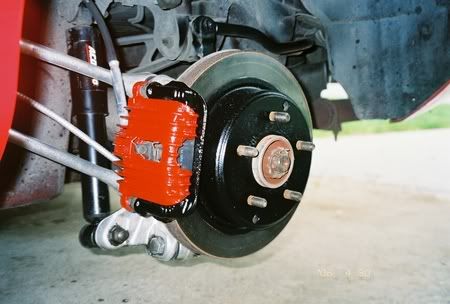
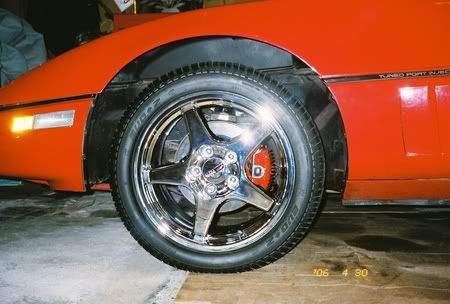
My '85 caliper is like this,

And you can see it only has 1 bleeder.
Last time I had my '85 apart was 2006 when I cleaned them up.
OK, enough thread jacking, back to Ford stuffs.

My '85 caliper is like this,
And you can see it only has 1 bleeder.
Last time I had my '85 apart was 2006 when I cleaned them up.
OK, enough thread jacking, back to Ford stuffs.

Thread
Thread Starter
Forum
Replies
Last Post
Luch
1973 - 1979 F-100 & Larger F-Series Trucks
6
Oct 24, 2013 09:33 AM
wrd0225
Explorer, Sport Trac, Mountaineer & Aviator
3
Aug 3, 2010 10:01 PM
TXranger2003
Brakes, Steering, Suspension, Tires, & Wheels
4
Nov 22, 2005 08:43 AM