


Should the EBP Sensor read higher than MAP with engine off


Thread Starter
|
More Turbo


Joined: Nov 2009
Posts: 525
Likes: 274
From: Kansas
Should the EBP Sensor read higher than MAP with engine off
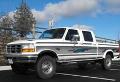
1996 F350 Crew Cab Completely Stock 220,000 miles runs well
With engine off the MAP is about 14.7PSI and the EBP is reading 17PSI, shouldn't they read the same
follow up question
on the street full throttle acceleration to about 50mph the EBP will top out at 28-30 psi and the MAP tops out about the same. Is this indicative of a restriction in exhaust, or is it perfectly normal for a stock exhaust.
With engine off the MAP is about 14.7PSI and the EBP is reading 17PSI, shouldn't they read the same
follow up question
on the street full throttle acceleration to about 50mph the EBP will top out at 28-30 psi and the MAP tops out about the same. Is this indicative of a restriction in exhaust, or is it perfectly normal for a stock exhaust.
Postmaster
Joined: Sep 2007
Posts: 4,195
Likes: 6
From: Medford Oregon

Depends how you are reading MAP. If you are reading atmospheric then yes MAP usually would be around 14.7 PSI at sea level. Usually MAP (atmospheric) is subtracted from BARO (atmospheric) sensor so with MAP ends up at zero with engine off. Since you are reading atmospheric you need to subtract 14.7 from you top MAP reading ... 30 - 14.7 = 15.3 PSI of boost.
EBP should be the same as MAP (atmospheric) so yes it is a little high. I seldom see more than 19 PSI EBP unless on those cold mornings the EBPV is operating then EBP could and does go as high as 40 PSI. If your truck was up to temperature and you are seeing 28-30 PSI I certainly would suspect a clogged exhaust or defective EBPV.
What scanner are you using?
EBP should be the same as MAP (atmospheric) so yes it is a little high. I seldom see more than 19 PSI EBP unless on those cold mornings the EBPV is operating then EBP could and does go as high as 40 PSI. If your truck was up to temperature and you are seeing 28-30 PSI I certainly would suspect a clogged exhaust or defective EBPV.
What scanner are you using?
Thread Starter
|
More Turbo
Joined: Nov 2009
Posts: 525
Likes: 274
From: Kansas
Yes it was up to operating temp, and I was using an OTC scanner
The EBP sensor seems to be responding quickly but since it doesn't come down to atmospheric then maybe its max pressure reading is off also, so I'll replace it and re-scan it in the next few days
thanks
thanks
Postmaster
Joined: Sep 2007
Posts: 4,195
Likes: 6
From: Medford Oregon
I doubt you would get that much boost with a clogged exhaust system, so my best guess is the a bad EBP sensor. If the truck is running fine I wouldn't worry about it. It has no major function on engine performance with the exception if the EBPV (exhaust back pressure valve) is operational ... plugged in, operational etc, and that only occurs on cold engine starts and temps below 32*.

Lead Driver

Joined: Oct 2003
Posts: 8,476
Likes: 37
From: Madison, WI
Depends how you are reading MAP. If you are reading atmospheric then yes MAP usually would be around 14.7 PSI at sea level. Usually MAP (atmospheric) is subtracted from BARO (atmospheric) sensor so with MAP ends up at zero with engine off. Since you are reading atmospheric you need to subtract 14.7 from you top MAP reading ... 30 - 14.7 = 15.3 PSI of boost.
To the OP - there's probably soot in the tube from the manifold to the EBP sensor, or in the sensor itself. So when the engine shuts off and exhaust pressure returns to atmospheric, the sensor doesn't detect it. It would be interesting to remove the sensor from the end of the tube, then turn the key to RUN again (KOEO - key on engine off), and see what you get for EBP. If it drops back to something close to BARO, then the sensor is probably good, and the tube is clogged. If it doesn't, then I'd look inside the sensor for a plug of soot.
Postmaster
Joined: Sep 2007
Posts: 4,195
Likes: 6
From: Medford Oregon
It's the other way around. BARO is subtracted from MAP. MAP minus BARO = boost. And MAP is always MAP, not relative to BARO (hint: what does the A in MAP stand for?).
And your point is ? .. OP did not measure BARO so my assumption BARO is the same as MAP.
To the OP - there's probably soot in the tube from the manifold to the EBP sensor, or in the sensor itself. So when the engine shuts off and exhaust pressure returns to atmospheric, the sensor doesn't detect it. It would be interesting to remove the sensor from the end of the tube, then turn the key to RUN again (KOEO - key on engine off), and see what you get for EBP. If it drops back to something close to BARO, then the sensor is probably good, and the tube is clogged. If it doesn't, then I'd look inside the sensor for a plug of soot.
Nice hypothesis, hopefully from you experience but highly unlikely.
And your point is ? .. OP did not measure BARO so my assumption BARO is the same as MAP.
To the OP - there's probably soot in the tube from the manifold to the EBP sensor, or in the sensor itself. So when the engine shuts off and exhaust pressure returns to atmospheric, the sensor doesn't detect it. It would be interesting to remove the sensor from the end of the tube, then turn the key to RUN again (KOEO - key on engine off), and see what you get for EBP. If it drops back to something close to BARO, then the sensor is probably good, and the tube is clogged. If it doesn't, then I'd look inside the sensor for a plug of soot.
Nice hypothesis, hopefully from you experience but highly unlikely.
Lead Driver
Joined: Oct 2003
Posts: 8,476
Likes: 37
From: Madison, WI
Um, how simply can this be put? MAP does not "depend" on how it's measured. It's always MAP - manifold _absolute_ pressure. IOW, it's absolute, not relative to BARO (or anything else). What equipment you use to measure it and how it might impress other people doesn't matter either.
Yes, that was a hypothesis. It was based on the OP's statement that her/his reported EBP is above atmospheric with the engine _not_ running.
Yes, that was a hypothesis. It was based on the OP's statement that her/his reported EBP is above atmospheric with the engine _not_ running.

Thread
Thread Starter
Forum
Replies
Last Post
Crewcab Turbo
1999 - 2003 7.3L Power Stroke Diesel
10
May 15, 2012 07:16 PM






