



Plug problems

Thread Starter
|
Cargo Master


Joined: May 2011
Posts: 2,388
Likes: 138
From: Northern California
Plug problems
So here is the issue of the day...
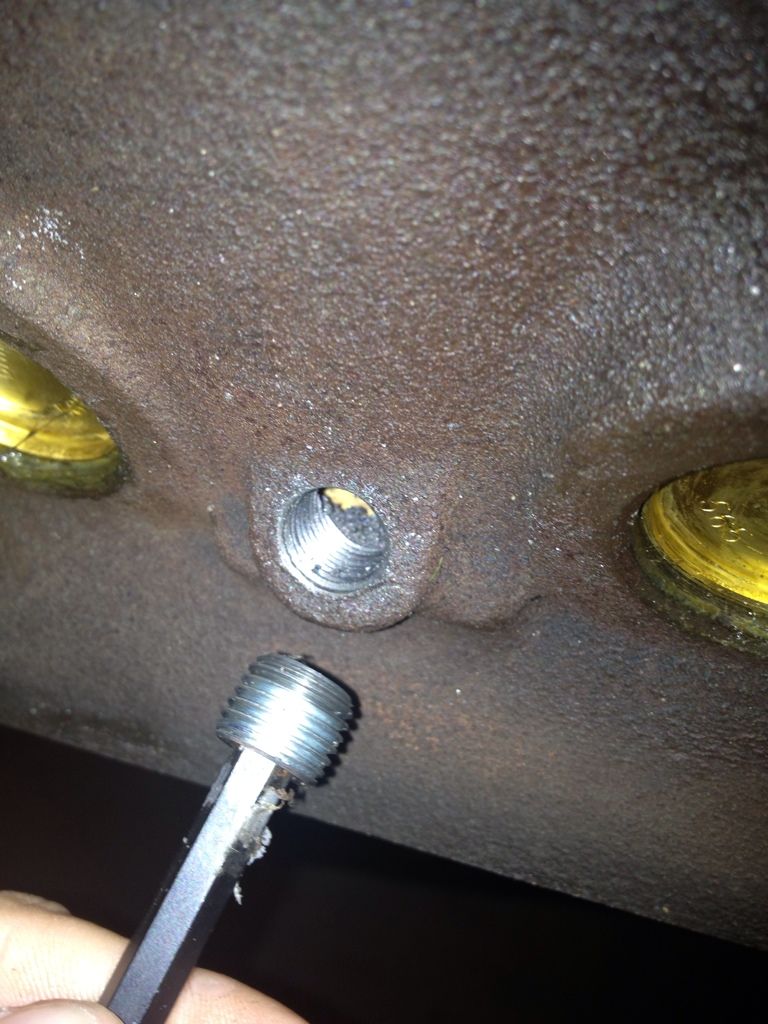
I got these plugs in the freeze plug kit I picked up. The kit provided 4 but I could only locate three on the block... Here is the only one that seemed to go in right (its located on the forward #1 side):
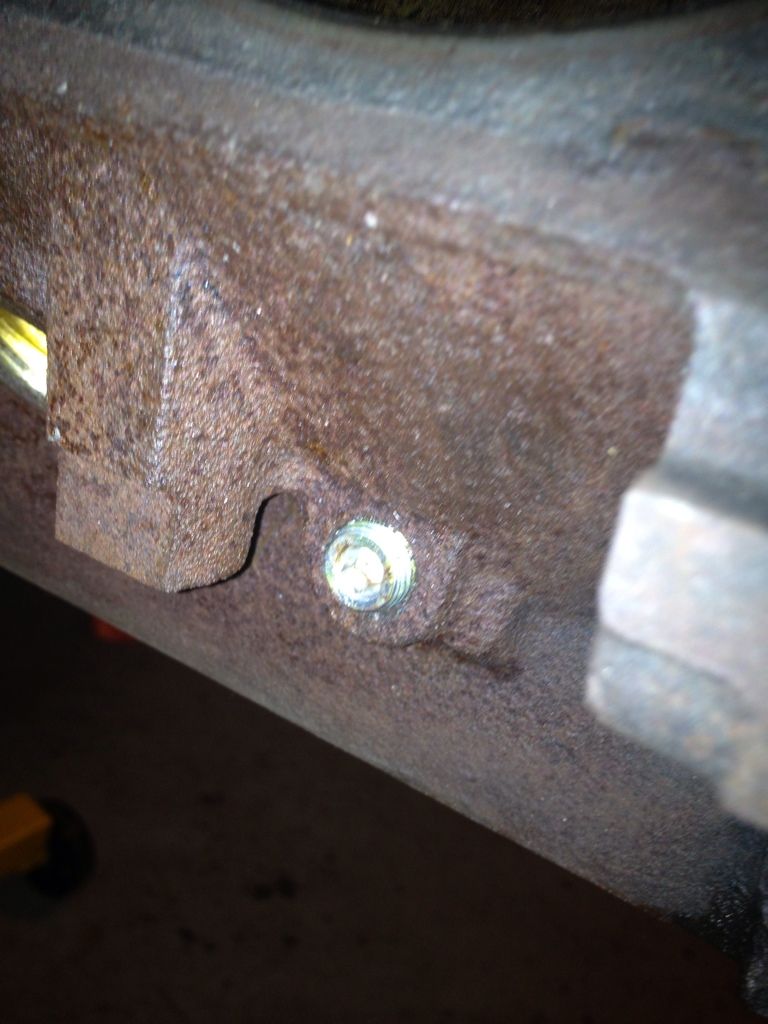
Both of the ones on the #2 side are being a little troublesome, but the biggest issue is the forward plug on the #2 side. The rear plug simply doesnt thread in but a thread or two as indicted in the picture:
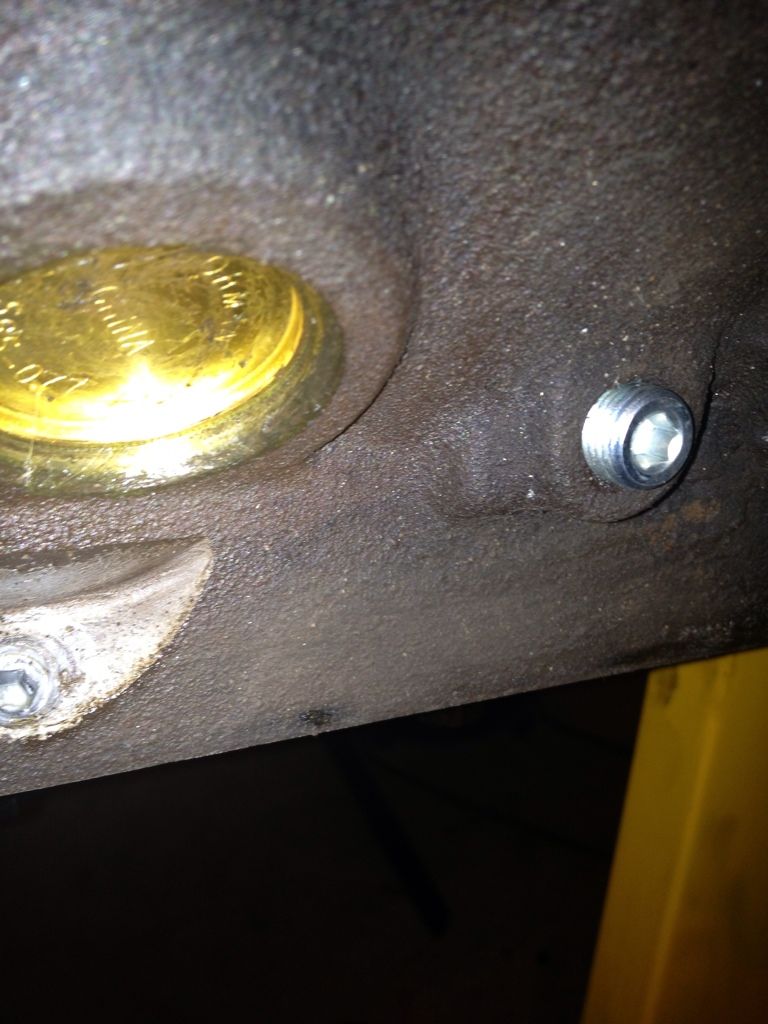
The dirty threads are as far as it went in:
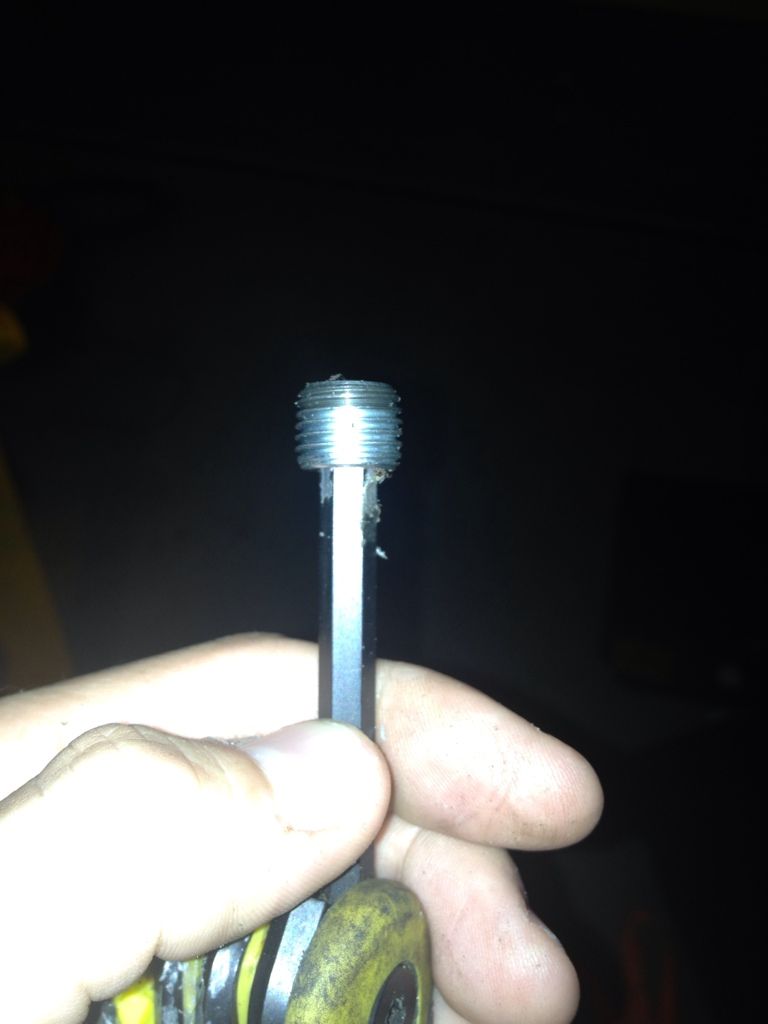
The forward plug on the number two side really has me scratching my head as I seem to have drilled it out and tapped threads to the wrong thread count inadvertently; the reason for drilling out is that it had a smaller plug which Didnt come in the kir so I unwittingly assumed drilling and tapping would be a-ok. The threads I cut are 1/2-20. When I compared the plug to the tap, at a glance it looked the same especially when compared to the other tap I had, 1/2-13. At a closer look the plugs seem to be a 1/2-18 thread size which doesnt at all appear to be a standard size; it may be metric but I didnt really look to closely at this possibility as all the other threads on the block are english.
So my question is what is the best approach from here? I was thinking to simply find a short 1/2-20 bolt and thread in as a plug while coating the threads with some sealant. Will this make an effective plug? What grade bolt is best for this... 5, 8, or brass maybe? I dont want to drill this hole any bigger and to change the thread count would essentially require going a size larger. There is only so much meat here and before doing anything else I figured I should come up with a solid plan of action.
Any advice? And what the heck is the purpose of these holes anyway? The freeze plugs obviously pop out when things freeze up so these arent needed for that purpose.
Thanks?
I got these plugs in the freeze plug kit I picked up. The kit provided 4 but I could only locate three on the block... Here is the only one that seemed to go in right (its located on the forward #1 side):
Both of the ones on the #2 side are being a little troublesome, but the biggest issue is the forward plug on the #2 side. The rear plug simply doesnt thread in but a thread or two as indicted in the picture:
The dirty threads are as far as it went in:
The forward plug on the number two side really has me scratching my head as I seem to have drilled it out and tapped threads to the wrong thread count inadvertently; the reason for drilling out is that it had a smaller plug which Didnt come in the kir so I unwittingly assumed drilling and tapping would be a-ok. The threads I cut are 1/2-20. When I compared the plug to the tap, at a glance it looked the same especially when compared to the other tap I had, 1/2-13. At a closer look the plugs seem to be a 1/2-18 thread size which doesnt at all appear to be a standard size; it may be metric but I didnt really look to closely at this possibility as all the other threads on the block are english.
So my question is what is the best approach from here? I was thinking to simply find a short 1/2-20 bolt and thread in as a plug while coating the threads with some sealant. Will this make an effective plug? What grade bolt is best for this... 5, 8, or brass maybe? I dont want to drill this hole any bigger and to change the thread count would essentially require going a size larger. There is only so much meat here and before doing anything else I figured I should come up with a solid plan of action.
Any advice? And what the heck is the purpose of these holes anyway? The freeze plugs obviously pop out when things freeze up so these arent needed for that purpose.
Thanks?

Lead Driver

Joined: Sep 2003
Posts: 7,015
Likes: 208
From: SoCal

Are you certain you used a pipe tap to cut the threads in the hole? Most pipes use a tapered thread, and requires a tapered tap, not the straight tap for bolts. If you've tapped it with a straight tap, just get a short 1/2-20 bolt (or an oil pan plug), as you said, and use lots of teflon tape around its thread.
Too bad the hole's boss isn't smooth, or you can use the gasket that usually comes with an oil pan plug.
Too bad the hole's boss isn't smooth, or you can use the gasket that usually comes with an oil pan plug.
Senior User
Joined: Feb 2010
Posts: 432
Likes: 1
From: Amherst, WI
That should be a pipe tap as said and takes a tapered tap. Equivalent to the 1/2"-20 thd you used would have been a 1/4"-18 NPT. A straight thread is not meant to seal unless it has a '0' ring under a hex hd.
Dave
Dave
Thread Starter
|
Cargo Master
Joined: May 2011
Posts: 2,388
Likes: 138
From: Northern California
Yeah thats the problem... I used a straight tap. Considering the plug doesnt even come close the threading in, I might still have enough meat to be able to use a pipe tap. Otherwise I could go one size larger.
Senior User
Joined: Feb 2010
Posts: 432
Likes: 1
From: Amherst, WI
And the purpose is usually to drill something like cross holes in the oil galleys. A couple are in the back of the block also.
Dave
Dave
Trending Topics

Cargo Master

Joined: Jun 2001
Posts: 2,571
Likes: 22
From: Oxford, Indiana
FTE Stories
Ford Trucks for Ford Truck Enthusiasts

10 Things Every Truck Owner NEEDS (2026 Edition)
Michael S. Palmer
Rezvani's Latest Post-Apocalyptic Monster Is a Ford F-150 Raptor Underneath
Verdad Gallardo
Top 10 Most Expensive Ford Trucks Ever Sold on Bring a Trailer
Joe Kucinski
2027 Ford Super Duty Buyer's Guide (Every Model, Engine, & Package)
Brett Foote
Top 10 Ford Truck Tragedies
Joe Kucinski
AEV FXL Super Duty - the Super Duty Raptor Ford Doesn't Make
Brett Foote
Lobo Vs Lobo: Proof the F-150 Lobo Should Be Even Lower!
Michael S. Palmer
Ford's 2001 Explorer Sportsman Concept Looks For a New Home
Verdad Gallardo
10 Best Ford Truck Engines We Miss the Most!
Joe Kucinski
Thread Starter
|
Cargo Master
Joined: May 2011
Posts: 2,388
Likes: 138
From: Northern California
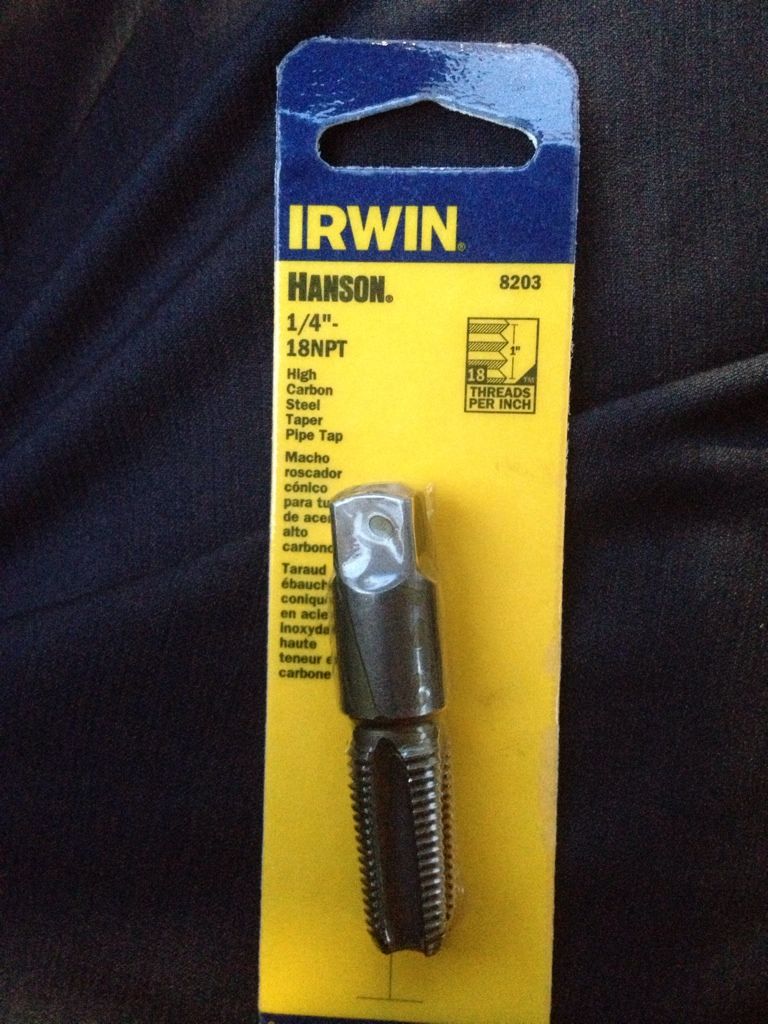
I just grabbed the pipe tap... I can tell its the right size but I am confused as to how the size is rationalized. This thing is clearly about 1/2 in size but this and the plugs are considered to have a 1/4-18 NPT. Anyone know the logic behind this?

Cargo Master

Joined: May 2007
Posts: 2,071
Likes: 36
From: British Columbia
Pipe threads are sized by the inside diameter of the pipe back when they were first manufactured. So way back when, a pipe with a quarter inch hole was fairly thick steel or cast iron and ended up with an OD about .54" ins. Then a tapered thread was cut on the ends, and called 1/4 Pipe thread.
As manufacturing improved, thinner walls were used so now a nominal inside diameter is commonly about 3/8".
It's not that strange after all. For instance when we buy a piece of 5/16" fuel hose we are referring to the inside diameter, not its outside diameter.
As manufacturing improved, thinner walls were used so now a nominal inside diameter is commonly about 3/8".
It's not that strange after all. For instance when we buy a piece of 5/16" fuel hose we are referring to the inside diameter, not its outside diameter.
Thread Starter
|
Cargo Master
Joined: May 2011
Posts: 2,388
Likes: 138
From: Northern California
Your right its not strange... I guess knowingtge background better assists in knowing and understanding the sizes.
I had some extra plugs that came with the freeze plug kit so I went all out filling some other holes with them. Figured it was that or tossing them.
Btw... Easy outs make removing the old rusty plugs so much easier.
I had some extra plugs that came with the freeze plug kit so I went all out filling some other holes with them. Figured it was that or tossing them.
Btw... Easy outs make removing the old rusty plugs so much easier.
Senior User
Joined: Feb 2010
Posts: 432
Likes: 1
From: Amherst, WI
Pipe threads are sized by the inside diameter of the pipe back when they were first manufactured. So way back when, a pipe with a quarter inch hole was fairly thick steel or cast iron and ended up with an OD about .54" ins. Then a tapered thread was cut on the ends, and called 1/4 Pipe thread.
As manufacturing improved, thinner walls were used so now a nominal inside diameter is commonly about 3/8".
It's not that strange after all. For instance when we buy a piece of 5/16" fuel hose we are referring to the inside diameter, not its outside diameter.
As manufacturing improved, thinner walls were used so now a nominal inside diameter is commonly about 3/8".
It's not that strange after all. For instance when we buy a piece of 5/16" fuel hose we are referring to the inside diameter, not its outside diameter.
Dave
Cargo Master
Joined: May 2007
Posts: 2,071
Likes: 36
From: British Columbia
Pipe sizing
Dave, you are right that copper tubing is measured two ways. In industry it is measured by OD, but oddly enough house 1/2" copper "pipe" (actually tubing, of course) is 1/2" ID. This terminology is probably a relic of the fact that it replaced 1/2" galvanized (real) pipe.
In industry, this 1/2" copper "pipe" becomes 5/8" copper tube!
And of course there are two different taper pipe thread systems. There is NPT, used in Canada and the US, and possibly Mexico and the rest of the Americas. Then there is British pipe, BSPT, used in most of the rest of the world. It uses different but close thread pitches for most sizes, and the thread profile is 55 degrees instead of 60 for NPT.
This BSPT has been adopted as the ISO metric pipe thread. So there is "Metric" 1/4 pipe thread! I am not sure if US cars use NPT or BSPT/ISO nowadays, although most of the fasteners have been metric for many years now.
The small block V8s happily use good old standard bolts and NPT threads, other than the metric spark plug threads.
In industry, this 1/2" copper "pipe" becomes 5/8" copper tube!
And of course there are two different taper pipe thread systems. There is NPT, used in Canada and the US, and possibly Mexico and the rest of the Americas. Then there is British pipe, BSPT, used in most of the rest of the world. It uses different but close thread pitches for most sizes, and the thread profile is 55 degrees instead of 60 for NPT.
This BSPT has been adopted as the ISO metric pipe thread. So there is "Metric" 1/4 pipe thread! I am not sure if US cars use NPT or BSPT/ISO nowadays, although most of the fasteners have been metric for many years now.
The small block V8s happily use good old standard bolts and NPT threads, other than the metric spark plug threads.

Thread
Thread Starter
Forum
Replies
Last Post
crazy96863
Small Block V8 (221, 260, 289, 5.0/302, 5.8/351W)
13
Nov 11, 2012 10:09 AM
Dodgeyaussie
1987 - 1996 F150 & Larger F-Series Trucks
5
Jun 19, 2012 07:50 PM
Cruiseomatic
Ford Inline Six, 200, 250, 4.9L / 300
11
Dec 22, 2004 08:32 AM

