



Cab weights ......

Thread Starter
|
Senior User
Joined: Oct 2001
Posts: 276
Likes: 0
From: Spokane USA
Cab weights ......
Greetings all .......
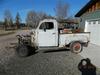
A long time hot rod builder friend of mine recently brought up the issue of how heavy are the cabs on our trucks, and after some snooping through various sources, it became very clear that few if any builders ever weigh just the cabs. So ... I'm posting this question for all to ponder, and hopefully someone will have the answers. For the 48 - 52 F series trucks, the cabs for the f1 through F8 conventional models should all basically be the same weight. The COE versions will likely be different .. they have more bracing on them, but less door area.
The other rigs we are trying to figure out are the cab weights for the 40 conventionals, and the COE cabs as well.
Any real knowledge would be very helpful.
Thanks in advance.
RG in Spokane
A long time hot rod builder friend of mine recently brought up the issue of how heavy are the cabs on our trucks, and after some snooping through various sources, it became very clear that few if any builders ever weigh just the cabs. So ... I'm posting this question for all to ponder, and hopefully someone will have the answers. For the 48 - 52 F series trucks, the cabs for the f1 through F8 conventional models should all basically be the same weight. The COE versions will likely be different .. they have more bracing on them, but less door area.
The other rigs we are trying to figure out are the cab weights for the 40 conventionals, and the COE cabs as well.
Any real knowledge would be very helpful.
Thanks in advance.
RG in Spokane

Elder User
Joined: Jan 2011
Posts: 859
Likes: 3
From: Newberg, OR
Is that a bare cab? with doors? with doors with glass? I'd say a bare cab is under 200. I was surprised last week when I took my running 54 F100 across the scales. Most everything on it except cab interior upholstery and a bed. 2500 front axle, 3700 total, 1200 rear axle. I'm going to avoid driving it in the rain until I get a bed in it and maybe a spare tire hanger and spare under the bed behind the rear axle.

Fleet Owner


Joined: Jul 2004
Posts: 27,298
Likes: 1,059
From: NM
Is that a bare cab? with doors? with doors with glass? I'd say a bare cab is under 200. I was surprised last week when I took my running 54 F100 across the scales. Most everything on it except cab interior upholstery and a bed. 2500 front axle, 3700 total, 1200 rear axle. I'm going to avoid driving it in the rain until I get a bed in it and maybe a spare tire hanger and spare under the bed behind the rear axle.

Hotshot


Joined: Oct 2009
Posts: 16,188
Likes: 4,795
From: Burbank, WA
I agree with Ross. Unless you're running a big block with a C6 and some hefty chassis mods, I can't see 3700 without a bed. Those numbers are highly suspect. I'd be for getting a second opinion.

Posting Guru
Joined: May 2010
Posts: 2,068
Likes: 7
From: Moyie, BC Canada
The best way to weigh your truck is to have both axles on the scale. If you weigh the front and rear axle separately you will get a higher number because of the lever effect. Same idea as weighing a log on each end rather than the whole log.

Hotshot
Joined: Oct 2004
Posts: 15,882
Likes: 88
From: Durham NC
An F100 weighs close to 4000 # complete. My little Solstice weighs 2875# with empty tank and no driver. That and the frontal area is why you get low gas mileage.
Mervy, try it, you will get the exact same weight if you add the front axle and rear axle weights or weigh the whole vehicle. I've corner weighed a lot of vehicles using 4 pad scales and platform scales. If you weigh it with 4 pads and add the 4 wheel weights you will get the total weight as well. There is no "lever effect" error. Sorry, pure physics.
Mervy, try it, you will get the exact same weight if you add the front axle and rear axle weights or weigh the whole vehicle. I've corner weighed a lot of vehicles using 4 pad scales and platform scales. If you weigh it with 4 pads and add the 4 wheel weights you will get the total weight as well. There is no "lever effect" error. Sorry, pure physics.
Trending Topics
Posting Guru
Joined: May 2010
Posts: 2,068
Likes: 7
From: Moyie, BC Canada
FTE Stories
Ford Trucks for Ford Truck Enthusiasts

3 Best / 3 Worst Parts of Modern Ford Ownership
Brett Foote
10 Amazing Upgrades That Solve Common Ford Truck Owner Headaches
Pouria Savadkouei
Every 2026 Ford Engine Explained
Brett Foote
10 Ugly Ford Trucks That We Still Kinda Love
Joe Kucinski
10 Things Every Truck Owner NEEDS (2026 Edition)
Michael S. Palmer
Rezvani's Latest Post-Apocalyptic Monster Is a Ford F-150 Raptor Underneath
Verdad Gallardo
Top 10 Most Expensive Ford Trucks Ever Sold on Bring a Trailer
Joe Kucinski
2027 Ford Super Duty Buyer's Guide (Every Model, Engine, & Package)
Brett Foote
Top 10 Ford Truck Tragedies
Joe Kucinski
Hotshot
Joined: Oct 2004
Posts: 15,882
Likes: 88
From: Durham NC
OK, let's look at the physics: you have a weight (the truck). if it was balanced on one point, and a scale placed under that point, it would read the total weight. Add a second point under the weight, now the total weight is supported by the two points, it doesn't matter where those two points are located under the weight. If you put a scale under each point you would read what portion of the weight each point supported, but both are supporting the total weight so adding the two scale readings will equal the total weight. Put 4 points of support and 4 scales under the weight and the total of the 4 will equal the total weight. It doesn't matter what proportion each is supporting, you can move those supports anyplace you want, the total weight supported is still the same.

Posting Guru
Joined: Sep 2012
Posts: 1,314
Likes: 1
Unless the weighing point (scale) is at a considerably different height. Then the center of gravity can shift relative to the scale and the pavement. That's why truck scales are not built on elevated platforms. Think of it at an extreme. Tailgate dragging on the pavement and front wheels barely touching the scales. Of course, that is an extreme. However, that's why a calibrated scale is right at pavement height.
Fleet Owner
Joined: Jul 2004
Posts: 27,298
Likes: 1,059
From: NM

Thread
Thread Starter
Forum
Replies
Last Post
mikeo0o0o0
1973 - 1979 F-100 & Larger F-Series Trucks
34
Jun 8, 2021 01:55 PM