







Biodiesel blend

Thread Starter
|
Senior User
Joined: Mar 2011
Posts: 211
Likes: 0
From: eastern ky
Biodiesel blend
I saw this sign when I was fueling up at the walfarts.
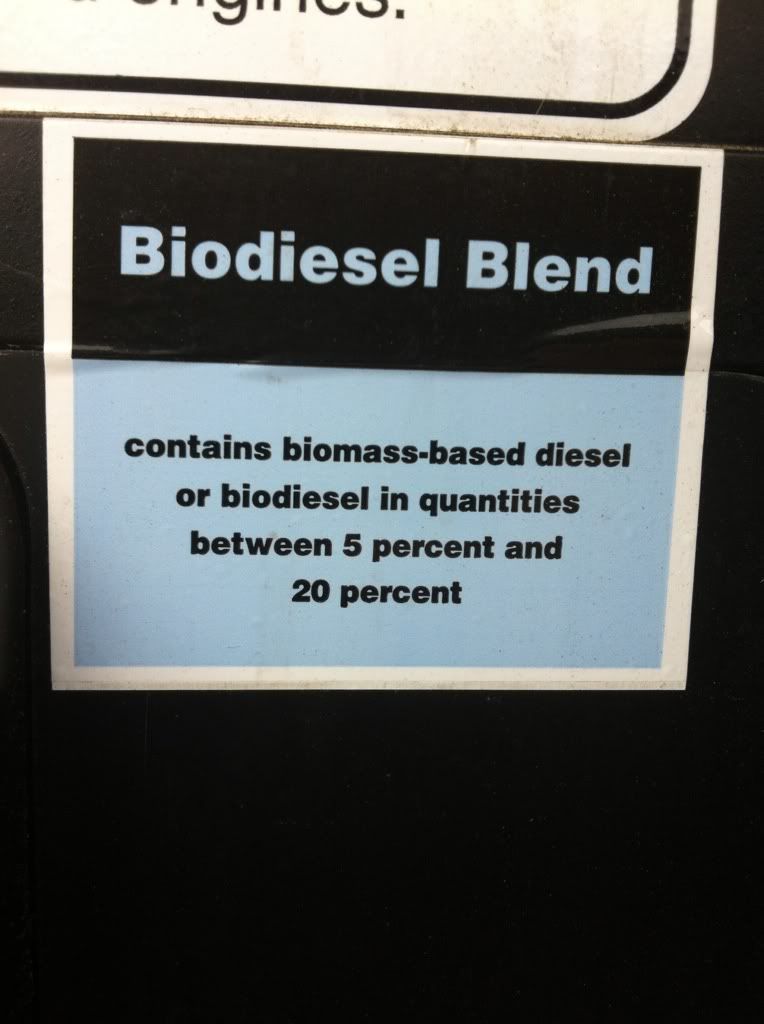
This is blended with ultra low sulferSo is this ok to use in my excursion or should I go elsewhere next time
This is blended with ultra low sulferSo is this ok to use in my excursion or should I go elsewhere next time

Lead Driver


Joined: Feb 2011
Posts: 8,241
Likes: 155
From: L.A. (Lower Alabama)

Several months ago someone posted some lab results for various fuel additives. The bio blend (5% IIRC) posted some good numbers for lubricity. Comparable to the old higher sulphur diesel. I don't remember all the details, but I decided the b5 was BETTER than dry ULSD.

Elder User
Joined: Jul 2008
Posts: 599
Likes: 0
From: Tucker, GA
Keep spare fuel filters handy because bio is a better solvent than dino diesel. It will dissolve crud out of the fuel system and the filters will catch it.
Trending Topics

Senior User
Joined: Oct 2008
Posts: 437
Likes: 1
From: Bucyrus, KS
Yea your fine. I run B99 in mine every time I head out east. It runs great. The smell is nice too.
FTE Stories
Ford Trucks for Ford Truck Enthusiasts

3 Best / 3 Worst Parts of Modern Ford Ownership
Brett Foote
10 Amazing Upgrades That Solve Common Ford Truck Owner Headaches
Pouria Savadkouei
Every 2026 Ford Engine Explained
Brett Foote
10 Ugly Ford Trucks That We Still Kinda Love
Joe Kucinski
10 Things Every Truck Owner NEEDS (2026 Edition)
Michael S. Palmer
Rezvani's Latest Post-Apocalyptic Monster Is a Ford F-150 Raptor Underneath
Verdad Gallardo
Top 10 Most Expensive Ford Trucks Ever Sold on Bring a Trailer
Joe Kucinski
2027 Ford Super Duty Buyer's Guide (Every Model, Engine, & Package)
Brett Foote
Top 10 Ford Truck Tragedies
Joe Kucinski
Elder User
Joined: Aug 2003
Posts: 933
Likes: 0
From: Québec
I fuel up in Grande Prairie Alberta today, it says, it may contain 5% biodiesel, it should be OK, we are in petrole contry and it was a commercial truck fueling place. Like you said, it will lubricate a little more, do not know about efficiency.

More Turbo
Joined: Nov 2004
Posts: 577
Likes: 12
From: Cumming, Iowa

100% Bio is less efficient than petro diesel, Less BTU but a lot more Cetain. at a 20/80 blend you should not see hardly reduction in fuel economey.....
#2 diesel 140000 btu
100% bio 130000 btu
20/80 blend 138000 btu all per gallon
#2 diesel 140000 btu
100% bio 130000 btu
20/80 blend 138000 btu all per gallon

Fleet Mechanic
Joined: Jan 2007
Posts: 1,741
Likes: 3
The only issue here is that you need to stick closely to the "severe service" oil change intervals.
HUH???
It seems that the combustion by-products of biodiesel, when absorbed by the engine oil and then transferred to the fuel injectors, makes the injectors not play nicely. The oil side of the injectors can get gummed up. Not a warrantable failure.
5000 miles (or less) on the oil changes if you run biodiesel.
However, the FUEL side of the injectors LOVES biodiesel. It runs quieter and more smoothly.
Just note that since the 6.0's fuel system isn't fully heated, biodiesel can be EXTREMELY problematic during weather below 35 degrees. Not only does it absorb much more water, but it gels at a much higher temperature. Be prepared to treat it much more heavily with anti-gel in the winter, even if the pump says it's already treated.
-blaine
HUH???
It seems that the combustion by-products of biodiesel, when absorbed by the engine oil and then transferred to the fuel injectors, makes the injectors not play nicely. The oil side of the injectors can get gummed up. Not a warrantable failure.
5000 miles (or less) on the oil changes if you run biodiesel.
However, the FUEL side of the injectors LOVES biodiesel. It runs quieter and more smoothly.
Just note that since the 6.0's fuel system isn't fully heated, biodiesel can be EXTREMELY problematic during weather below 35 degrees. Not only does it absorb much more water, but it gels at a much higher temperature. Be prepared to treat it much more heavily with anti-gel in the winter, even if the pump says it's already treated.
-blaine



Hotshot

Joined: Dec 2003
Posts: 15,369
Likes: 121
From: Stuttgart, Ar

The only issue here is that you need to stick closely to the "severe service" oil change intervals.
HUH???
It seems that the combustion by-products of biodiesel, when absorbed by the engine oil and then transferred to the fuel injectors, makes the injectors not play nicely. The oil side of the injectors can get gummed up. Not a warrantable failure.
5000 miles (or less) on the oil changes if you run biodiesel.
However, the FUEL side of the injectors LOVES biodiesel. It runs quieter and more smoothly.
Just note that since the 6.0's fuel system isn't fully heated, biodiesel can be EXTREMELY problematic during weather below 35 degrees. Not only does it absorb much more water, but it gels at a much higher temperature. Be prepared to treat it much more heavily with anti-gel in the winter, even if the pump says it's already treated.
-blaine
HUH???
It seems that the combustion by-products of biodiesel, when absorbed by the engine oil and then transferred to the fuel injectors, makes the injectors not play nicely. The oil side of the injectors can get gummed up. Not a warrantable failure.
5000 miles (or less) on the oil changes if you run biodiesel.
However, the FUEL side of the injectors LOVES biodiesel. It runs quieter and more smoothly.
Just note that since the 6.0's fuel system isn't fully heated, biodiesel can be EXTREMELY problematic during weather below 35 degrees. Not only does it absorb much more water, but it gels at a much higher temperature. Be prepared to treat it much more heavily with anti-gel in the winter, even if the pump says it's already treated.
-blaine

Thread
Thread Starter
Forum
Replies
Last Post
northerndave
6.0L Power Stroke Diesel
10
Mar 14, 2009 10:35 AM
FordTruckNoob
Bio-diesel, Propane & Alternative Diesel Engine Fuels
11
Jan 17, 2008 12:09 AM
BigRed350
Bio-diesel, Propane & Alternative Diesel Engine Fuels
10
Jun 1, 2006 11:18 AM
