



Antenna Boot

Junior User
Joined: Feb 2012
Posts: 75
Likes: 0
shortening antenna
I have operated this way for the last 12 years and have never had a poor signal that i know of. My truck was always as good as my other cars around home and i never had trouble finding stations all across US and Canada from coast to coast. Reception on new one is same before and after snipping for my range of stations from 88.3 to 107.9 which are my normal stations at opposite ends of the band.

Elder User
Joined: Feb 2011
Posts: 639
Likes: 1
From: K.C. MO
A "tuned" antenna has far more to do with an antenna's transmit ability than it does with it's receive ability. While his signal was somewhat degraded, whether he noticed it or not, the effect would be minimal in most urban situations. You can fully disconect your antenna and still pick up stations that are close to you. Not something you would want to try with your CB/Ham radio though and key the mic...
Elder User
Joined: Jan 2012
Posts: 675
Likes: 0
From: Phoenix, AZ
Mine was installed correctly (build date 2/2/12) and I noticed it when I was removing the stock antenna to replace it as I had the same problem as others in that it smacks the top of the garage. But I figured it was there for a reason and put it back on and ticked it under. Nice to know what purpose it serves though...Thanks! 
I replaced it with a 13" one from AutoZone and I can still pull all the stations in HD.
I replaced it with a 13" one from AutoZone and I can still pull all the stations in HD.
Posting Guru
Joined: Jan 2010
Posts: 1,616
Likes: 6
From: Whitecourt AB, Canada
Cutting the antenna probably wouldn't affect FM all that much, wavelengths are short in any case. If a user only listens to FM radio they probably wouldn't notice any difference. The horizon line still limits normal-mode FM propagation... heck, a lift kit might even help reception for FM more than the antenna.
I only listen to AM radio stations so I want my long wire since it does affect reception... these are small market 10kW stations and I'm way out in their 0.5mV/m contour area. Technical functionality over appearance here.
The stock antenna whip portion is 33 inches long. This is 1/4 wave of 88MHz, the longest wavelength and lowest frequency in the FM broadcast band. I'm willing to bet that this length was engineered, not just a coincidence.
The whip also has a wire wrapped around it which could be used as a continuously loaded antenna design for the lower frequencies, but I haven't bothered to measure that or wreck a whip just to figure out what it's made of or if it's even functional. It won't be a nice quarter wave for the AM broadcast band though, because a quarter of 1MHz is still 246 feet.
Tuning for receive systems is pretty much optional and won't cause equipment damage, so I don't really stress best practices as much. If 'good enough' is acceptable to someone, then no problem.
I only listen to AM radio stations so I want my long wire since it does affect reception... these are small market 10kW stations and I'm way out in their 0.5mV/m contour area. Technical functionality over appearance here.
The stock antenna whip portion is 33 inches long. This is 1/4 wave of 88MHz, the longest wavelength and lowest frequency in the FM broadcast band. I'm willing to bet that this length was engineered, not just a coincidence.
The whip also has a wire wrapped around it which could be used as a continuously loaded antenna design for the lower frequencies, but I haven't bothered to measure that or wreck a whip just to figure out what it's made of or if it's even functional. It won't be a nice quarter wave for the AM broadcast band though, because a quarter of 1MHz is still 246 feet.
Tuning for receive systems is pretty much optional and won't cause equipment damage, so I don't really stress best practices as much. If 'good enough' is acceptable to someone, then no problem.

Lead Driver


Joined: Apr 2011
Posts: 7,302
Likes: 1,153
From: Edmonton Alberta

Cutting the antenna probably wouldn't affect FM all that much, wavelengths are short in any case. If a user only listens to FM radio they probably wouldn't notice any difference. The horizon line still limits normal-mode FM propagation... heck, a lift kit might even help reception for FM more than the antenna.
I only listen to AM radio stations so I want my long wire since it does affect reception... these are small market 10kW stations and I'm way out in their 0.5mV/m contour area. Technical functionality over appearance here.
The stock antenna whip portion is 33 inches long. This is 1/4 wave of 88MHz, the longest wavelength and lowest frequency in the FM broadcast band. I'm willing to bet that this length was engineered, not just a coincidence.
The whip also has a wire wrapped around it which could be used as a continuously loaded antenna design for the lower frequencies, but I haven't bothered to measure that or wreck a whip just to figure out what it's made of or if it's even functional. It won't be a nice quarter wave for the AM broadcast band though, because a quarter of 1MHz is still 246 feet.
Tuning for receive systems is pretty much optional and won't cause equipment damage, so I don't really stress best practices as much. If 'good enough' is acceptable to someone, then no problem.
I only listen to AM radio stations so I want my long wire since it does affect reception... these are small market 10kW stations and I'm way out in their 0.5mV/m contour area. Technical functionality over appearance here.
The stock antenna whip portion is 33 inches long. This is 1/4 wave of 88MHz, the longest wavelength and lowest frequency in the FM broadcast band. I'm willing to bet that this length was engineered, not just a coincidence.
The whip also has a wire wrapped around it which could be used as a continuously loaded antenna design for the lower frequencies, but I haven't bothered to measure that or wreck a whip just to figure out what it's made of or if it's even functional. It won't be a nice quarter wave for the AM broadcast band though, because a quarter of 1MHz is still 246 feet.
Tuning for receive systems is pretty much optional and won't cause equipment damage, so I don't really stress best practices as much. If 'good enough' is acceptable to someone, then no problem.

Thanks for the info (even though I don't really understand it).
Dude, seriously, you know where I live, stop by for a beer some time.


Freshman User
Joined: Apr 2007
Posts: 42
Likes: 0
From: Houston, TX
Cutting the antenna probably wouldn't affect FM all that much, wavelengths are short in any case. If a user only listens to FM radio they probably wouldn't notice any difference. The horizon line still limits normal-mode FM propagation... heck, a lift kit might even help reception for FM more than the antenna.
I only listen to AM radio stations so I want my long wire since it does affect reception... these are small market 10kW stations and I'm way out in their 0.5mV/m contour area. Technical functionality over appearance here.
The stock antenna whip portion is 33 inches long. This is 1/4 wave of 88MHz, the longest wavelength and lowest frequency in the FM broadcast band. I'm willing to bet that this length was engineered, not just a coincidence.
The whip also has a wire wrapped around it which could be used as a continuously loaded antenna design for the lower frequencies, but I haven't bothered to measure that or wreck a whip just to figure out what it's made of or if it's even functional. It won't be a nice quarter wave for the AM broadcast band though, because a quarter of 1MHz is still 246 feet.
Tuning for receive systems is pretty much optional and won't cause equipment damage, so I don't really stress best practices as much. If 'good enough' is acceptable to someone, then no problem.
I only listen to AM radio stations so I want my long wire since it does affect reception... these are small market 10kW stations and I'm way out in their 0.5mV/m contour area. Technical functionality over appearance here.
The stock antenna whip portion is 33 inches long. This is 1/4 wave of 88MHz, the longest wavelength and lowest frequency in the FM broadcast band. I'm willing to bet that this length was engineered, not just a coincidence.
The whip also has a wire wrapped around it which could be used as a continuously loaded antenna design for the lower frequencies, but I haven't bothered to measure that or wreck a whip just to figure out what it's made of or if it's even functional. It won't be a nice quarter wave for the AM broadcast band though, because a quarter of 1MHz is still 246 feet.
Tuning for receive systems is pretty much optional and won't cause equipment damage, so I don't really stress best practices as much. If 'good enough' is acceptable to someone, then no problem.
Posting Guru
Joined: Jan 2010
Posts: 1,616
Likes: 6
From: Whitecourt AB, Canada
Yeah, as in, wind noise reduction. That's the only valid explanation for the wire since it doesn't make sense electrically since the whip core is also conductive. The windings are also way too far apart to be of any use.
Wind noise is never a design consideration at all on the stuff I work on, so I keep thinking there must be a technical reason for it to be there.
This automotive radio stuff has gotten my interest now... I am suspecting the AM tuner of a car radio also uses part of the feedline as the antenna element. On an old antenna I had laying around, I chopped the line between the threaded base and the Motorola connector and the coax used is different from the usual RG-58 that I've seen... the center conductor is way thinner.
Or there must be some matching network in the radio unit itself. Ah, I gotta try this. Where's my function generator...
Wind noise is never a design consideration at all on the stuff I work on, so I keep thinking there must be a technical reason for it to be there.
This automotive radio stuff has gotten my interest now... I am suspecting the AM tuner of a car radio also uses part of the feedline as the antenna element. On an old antenna I had laying around, I chopped the line between the threaded base and the Motorola connector and the coax used is different from the usual RG-58 that I've seen... the center conductor is way thinner.
Or there must be some matching network in the radio unit itself. Ah, I gotta try this. Where's my function generator...
Elder User
Joined: Feb 2011
Posts: 639
Likes: 1
From: K.C. MO
Time was the AM antenna was a ferrite bar inside the radio itself. Only FM used the whip. I have not disected my head unit yet...
FTE Stories
Ford Trucks for Ford Truck Enthusiasts

10 Best Ford Truck Engines We Miss the Most!
Joe Kucinski
2026 Shelby F-150 Off-Road: Better Than a Raptor R?
Brett Foote
2027 Super Duty Carhartt Package First Look: 12 Things You NEED to Know!
Michael S. Palmer
10 Most Surprising 2026 Ford Truck Features!
Joe Kucinski
Top 10 Ford Trucks Coming to Mecum Indy 2026
Brett Foote
5 Best / 5 Worst Ford Truck Wheels of All Time
Joe Kucinski
Ford Super Duty: 5 Things Owners LOVE, 5 Things They LOATHE!
Joe Kucinski
Every 2026 Ford Truck Engine RANKED from WORST to FIRST!
Michael S. Palmer
The Best F-150 Deal of Every Trim Level (XL through Raptor)
Joe Kucinski
Elder User
Joined: Jan 2012
Posts: 675
Likes: 0
From: Phoenix, AZ
I didn't see it either when I was ordering my truck, must be a mod.
Pits got a supplier and part number that you want to share
Pits got a supplier and part number that you want to share
Posting Guru
Joined: Jan 2010
Posts: 1,616
Likes: 6
From: Whitecourt AB, Canada
I mean, it might have a matching circuit inside that might employ ferrite material, but it's not the standalone bar antenna that we're all used to inside portable radios. Test: AM doesn't work when the whip is pulled out.
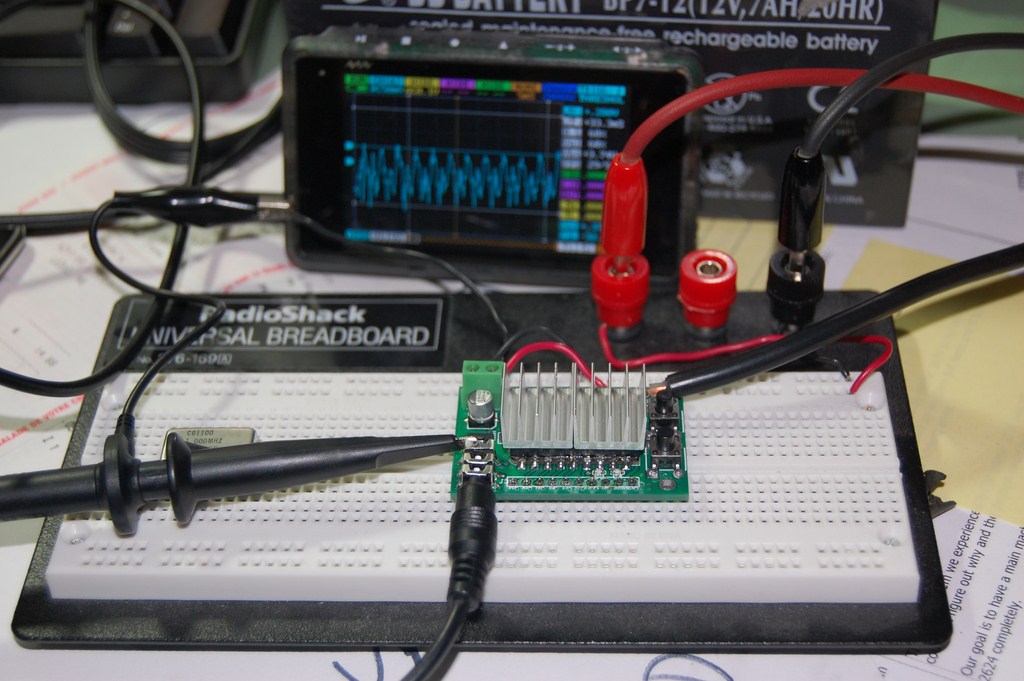
So, I started doing testing with the function generator cranking out 1MHz into a wire, modulated approx 95% by a 1004Hz toner, and swapping in different sized whips... but somehow I got distracted and ended up building a little FM transmitter. I suppose it was getting dark outside, and AM skywave was starting to happen which would screw up my tests anyway.
Lower frequencies in radio are a totally different animal altogether. The stuff I usually deal with is VHF and up (LMR/trunked radio, packet data up to microwave).
Lead Driver
Joined: Apr 2011
Posts: 7,302
Likes: 1,153
From: Edmonton Alberta
But car radios don't have ferrite bars... plus it would never work properly inside the vehicle and the grounded metal casing of the head unit, and reception would change any time you made a left or right turn since those bars are quite directional.
I mean, it might have a matching circuit inside that might employ ferrite material, but it's not the standalone bar antenna that we're all used to inside portable radios. Test: AM doesn't work when the whip is pulled out.
So, I started doing testing with the function generator cranking out 1MHz into a wire, modulated approx 95% by a 1004Hz toner, and swapping in different sized whips... but somehow I got distracted and ended up building a little FM transmitter. I suppose it was getting dark outside, and AM skywave was starting to happen which would screw up my tests anyway.
Lower frequencies in radio are a totally different animal altogether. The stuff I usually deal with is VHF and up (LMR/trunked radio, packet data up to microwave).
I mean, it might have a matching circuit inside that might employ ferrite material, but it's not the standalone bar antenna that we're all used to inside portable radios. Test: AM doesn't work when the whip is pulled out.
So, I started doing testing with the function generator cranking out 1MHz into a wire, modulated approx 95% by a 1004Hz toner, and swapping in different sized whips... but somehow I got distracted and ended up building a little FM transmitter. I suppose it was getting dark outside, and AM skywave was starting to happen which would screw up my tests anyway.
Lower frequencies in radio are a totally different animal altogether. The stuff I usually deal with is VHF and up (LMR/trunked radio, packet data up to microwave).


Elder User
Joined: Feb 2011
Posts: 639
Likes: 1
From: K.C. MO

