




really bright head lights

Thread Starter
|
Freshman User
Joined: Sep 2006
Posts: 25
Likes: 0
really bright head lights
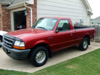
Just got a 2004 mazda b2300 and everyone keeps flashing me at night. My wife was behind me the other day and I realize the lights are really bright so it looks like the brights are on when they are not. If I turn the brights on it does make a difference. SO my question: is it possible to dim the lights somehow or change the angle?

Moderator


Joined: Jan 2004
Posts: 13,851
Likes: 111
From: SW Va

Is your in dash volt meter reading high, or are you having other lamps prematurely burning out???? If so, check the alternators under load voltage regulation with your multimeter. It should read between 14-15 volts DC.

Elder User
Joined: Apr 2004
Posts: 966
Likes: 1
Have noticed it with other Ford trucks when coming my direction and have had people flashing their brights at me as well. Ford must use a higher output bulb as original equipment as opposed to other manufacturers. Makes for great visibility. It is alot brighter than the halogens in my car.

Postmaster
Joined: Oct 2009
Posts: 3,432
Likes: 7
Based on your description, it does not sound like you have original equipment. If someone has done an illegal HID conversion, it will destroy the focus of the lens, and they will scatter light everywhere, including into oncoming traffic. If that is the case, there are only two approaches you can take, either instal an HID projectors, which properly focuses the light and allows you to aim it correctly, or switch back to halogen. In my opinion, switching back to halogen is the best option. I would find it very hard to believe that you currently have halogens, as they just plain won't be that bright or produce that much glare. HIDs are deceiving, which is why several countries have actually outlawed them as even original equipment. They can create a false perception of improved night vision. Even if the HIDs are the warm tone type, which does glare less, they tend to produce large amounts of light in specific frequencies, and little light in others. They do not produce a full spectrum, which causes an intense contrast between the lit and unlit areas. Even the more yellow looking 4500K bulbs produce immense amounts of blue light, and all it does is glare and scatter.
Its funny. My 2000 Ford Focus, which has conventional halogens, looks dimmer than my sisters 2004 Mazda3, which has HIDs. And yet, despite the fact that it looks dimmer and looks like it puts out less light. My headlights let you see better, as evidenced my the distance it carries. I can see reflectors and signs light up as much as a quarter of a mile away, whereas in my sisters car, you can't. Both are properly aimed, but the HID light does not produce as much red, yellow, or green light as a regular halogen. These are the frequencies you need to be able to see in the dark. Blue light is a daytime color. It is a high energy light, and our eyes are very sensitive to even small amounts of it. But not in a way that helps us see better. It has a high index of reflection. It bends as it passes though the lens of the headlight, when it hits air, when it hits water, snow, fog, or any other inclement weather, it bends when it enters our eyes, it bends when it hits the cells in our retina. All of these bends make for a less distinct image. The last bends it does are the most dangerous.
In our eyes are cells called cone cells. These allow us to perceive color. They work like prisms, splitting light into its three primary colors. The light then strikes one of three different receptors. Red reflects very little, so it hits its receptor, green bends a little bit more and hits a different receptor. And blue bends the most. In fact it bends so much, than unlike the other colors, it will actually strike both the other receptors too, because it scatters. This is why you can make something that is white appear to be whiter by making it slightly blue. Ask your wives about this if you don't believe me, bluing is used in laundry to make whites appear whiter and brighter, and actually comes in many detergents already mixed in.
There is also another type of cell in our eyes called the rod cell. These cells cannot differential color, and can only see in black and white. They are however very sensitive to low levels of light. They allow us to see in the shadows. When light strikes them, they transmit the brightness of the light. The problem comes in when blue light strikes them. Blue light carries more energy than lower frequency light. It in fact carries so much energy that the rod cell perceives it to be brighter than it actually is. Rod cells contain a pigment. This pigment darkens and blocks the light when it is too bright. This protects the rod cell from being damaged by excessive light. Blue light contains enough energy to darken the rod cells. This not only impairs its ability to left you see small amounts of blue light, but makes so you can't see light from other spectrums either. So what is all this gibberish I'm talking about mean?
It means that light sources that may seem to be brighter are actually impairing your ability to see in the dark. HIDs also tend to produce more foreground light, which is light that illuminates closer to your car. This creates an effect which is comforting to you the driver, since more light tends to get back to you. But if you are moving more than a couple miles per hour, this is not where your light needs to be going. You need the light to travel down the road at a distance sufficient that you can see what is ahead.
I have seen other B2300s and have never seen a factory setup that was as bright as what you seem to be describing. I think you may find on closer examination, that the trucks previous owner has replaced the factory bulbs with HID bulbs. If done properly you can get good results, factory HIDs use specialized projectors, which gather and focus the light, and and allow it to be aimed properly. Good aftermarket conversions will use proper projectors to do the same thing. But most aftermarket conversions are not done correctly, and they fit an HID bulb into a halogen reflectors, which is not designed to focus a light source other than its intended halogen bulb. As a result, the light gets scattered, and much of it will not be focus or aimed properly. This increases glare for other road users, which is why they are flashing you. Even with aiming adjustments, there will be increased glare, because the light is still out of focus.
I'm not meaning to bash on HID bulbs here.HIDs can be good lights in the proper setting. Their strongest suit is that you can make a very bright light source very small. However, I do not find enough evidence to support the idea that they are brighter than conventional halogen bulbs. Halogen technology has improved very dramatically over the last 30 years, whereas HID technology has advanced very little. Modern halogens can be brighter and have a more full spectrum while still having good lifespan, though OEM bulbs are often cheaper versions. There are a few really good halogen bulbs, which when used properly along with supporting upgrades, light a relay harness and larger lower resistance wire, can rival the brightness of HIDs without the glare commonly associated. They will not appear to be as bright, but thats largely because of the color temperature difference, which is not a proper indicator of brightness.
Sorry for the long winded post, I am merely attempting to help you resolve your problem, bring forth factual information, and help you get straight information, instead of some of the incorrect perceptions of some people, who have been deceived by an optical illusion.
Its funny. My 2000 Ford Focus, which has conventional halogens, looks dimmer than my sisters 2004 Mazda3, which has HIDs. And yet, despite the fact that it looks dimmer and looks like it puts out less light. My headlights let you see better, as evidenced my the distance it carries. I can see reflectors and signs light up as much as a quarter of a mile away, whereas in my sisters car, you can't. Both are properly aimed, but the HID light does not produce as much red, yellow, or green light as a regular halogen. These are the frequencies you need to be able to see in the dark. Blue light is a daytime color. It is a high energy light, and our eyes are very sensitive to even small amounts of it. But not in a way that helps us see better. It has a high index of reflection. It bends as it passes though the lens of the headlight, when it hits air, when it hits water, snow, fog, or any other inclement weather, it bends when it enters our eyes, it bends when it hits the cells in our retina. All of these bends make for a less distinct image. The last bends it does are the most dangerous.
In our eyes are cells called cone cells. These allow us to perceive color. They work like prisms, splitting light into its three primary colors. The light then strikes one of three different receptors. Red reflects very little, so it hits its receptor, green bends a little bit more and hits a different receptor. And blue bends the most. In fact it bends so much, than unlike the other colors, it will actually strike both the other receptors too, because it scatters. This is why you can make something that is white appear to be whiter by making it slightly blue. Ask your wives about this if you don't believe me, bluing is used in laundry to make whites appear whiter and brighter, and actually comes in many detergents already mixed in.
There is also another type of cell in our eyes called the rod cell. These cells cannot differential color, and can only see in black and white. They are however very sensitive to low levels of light. They allow us to see in the shadows. When light strikes them, they transmit the brightness of the light. The problem comes in when blue light strikes them. Blue light carries more energy than lower frequency light. It in fact carries so much energy that the rod cell perceives it to be brighter than it actually is. Rod cells contain a pigment. This pigment darkens and blocks the light when it is too bright. This protects the rod cell from being damaged by excessive light. Blue light contains enough energy to darken the rod cells. This not only impairs its ability to left you see small amounts of blue light, but makes so you can't see light from other spectrums either. So what is all this gibberish I'm talking about mean?
It means that light sources that may seem to be brighter are actually impairing your ability to see in the dark. HIDs also tend to produce more foreground light, which is light that illuminates closer to your car. This creates an effect which is comforting to you the driver, since more light tends to get back to you. But if you are moving more than a couple miles per hour, this is not where your light needs to be going. You need the light to travel down the road at a distance sufficient that you can see what is ahead.
I have seen other B2300s and have never seen a factory setup that was as bright as what you seem to be describing. I think you may find on closer examination, that the trucks previous owner has replaced the factory bulbs with HID bulbs. If done properly you can get good results, factory HIDs use specialized projectors, which gather and focus the light, and and allow it to be aimed properly. Good aftermarket conversions will use proper projectors to do the same thing. But most aftermarket conversions are not done correctly, and they fit an HID bulb into a halogen reflectors, which is not designed to focus a light source other than its intended halogen bulb. As a result, the light gets scattered, and much of it will not be focus or aimed properly. This increases glare for other road users, which is why they are flashing you. Even with aiming adjustments, there will be increased glare, because the light is still out of focus.
I'm not meaning to bash on HID bulbs here.HIDs can be good lights in the proper setting. Their strongest suit is that you can make a very bright light source very small. However, I do not find enough evidence to support the idea that they are brighter than conventional halogen bulbs. Halogen technology has improved very dramatically over the last 30 years, whereas HID technology has advanced very little. Modern halogens can be brighter and have a more full spectrum while still having good lifespan, though OEM bulbs are often cheaper versions. There are a few really good halogen bulbs, which when used properly along with supporting upgrades, light a relay harness and larger lower resistance wire, can rival the brightness of HIDs without the glare commonly associated. They will not appear to be as bright, but thats largely because of the color temperature difference, which is not a proper indicator of brightness.
Sorry for the long winded post, I am merely attempting to help you resolve your problem, bring forth factual information, and help you get straight information, instead of some of the incorrect perceptions of some people, who have been deceived by an optical illusion.
Thread Starter
|
Freshman User
Joined: Sep 2006
Posts: 25
Likes: 0
Hmmmmm well I'll be sure to check it out and get it fixed. It's kind of annoying everyone flashing me as I drive by and I don't like blinding everyone anyways. This truck is new to me and I've noticed a lot of little quirks like this. But so far I love the truck. Well, i love the MPGs. Thanks for the replys.
Trending Topics
Thread Starter
|
Freshman User
Joined: Sep 2006
Posts: 25
Likes: 0
turns out the angle just needed to be adjusted. I took out the headlights and turned the bracket further out on the top bolt so it points more down towards the ground. Made a big difference
FTE Stories
Ford Trucks for Ford Truck Enthusiasts

Top 10 Fords at 2026 Carlisle Ford Nationals
Joe Kucinski
3 Best / 3 Worst Parts of Modern Ford Ownership
Brett Foote
10 Amazing Upgrades That Solve Common Ford Truck Owner Headaches
Pouria Savadkouei
Every 2026 Ford Engine Explained
Brett Foote
10 Ugly Ford Trucks That We Still Kinda Love
Joe Kucinski
10 Things Every Truck Owner NEEDS (2026 Edition)
Michael S. Palmer
Rezvani's Latest Post-Apocalyptic Monster Is a Ford F-150 Raptor Underneath
Verdad Gallardo
Top 10 Most Expensive Ford Trucks Ever Sold on Bring a Trailer
Joe Kucinski
2027 Ford Super Duty Buyer's Guide (Every Model, Engine, & Package)
Brett Foote
Thread
Thread Starter
Forum
Replies
Last Post
Aubrey3
1983 - 2012 Ranger & B-Series
1
Jan 11, 2005 09:50 PM
