


351 Cleveland Help?





Posting Guru
Joined: Nov 2008
Posts: 1,937
Likes: 2
From: wyoming
yes, butt?
4v head are more for top end and getting your low end rpms to work are a little soggy! Currenlty doing a 4v headed engine on a 400 ford. What is your application. daily driver i would go with the 2v heads and some mild port work.
Posting Guru
Joined: Nov 2008
Posts: 1,937
Likes: 2
From: wyoming
aftermarket heads?
I would stick with the 2v heads and work ports, or? aftermarket heads like the CHI heads or the new AFR's or something of that nature. If wanting to stick with factory iron check out barnett hi performance ported iron heads seems to have his stuff together. Never ran his products but a site to check out. if really serious check out blue thunder racing products. I really like the chi stuff austrailan head really seem to work. good luck. the 2v heads will work good but if any decent port work done to 2v heads they will run well.


Mountain Pass


Joined: Aug 2024
Posts: 201
Likes: 84
From: Queensland Australia
I would agree with Wyoming 4 x 4 that sticking to the 2V Cleveland heads is wise, the 4V are excellent for high RPM circuit work but are less suited to street use, they develop their max torque and HP at higher RPM's and tend to be doughy down low until they light up.
The 4V factory Cleveland's I have owned did not like idling in traffic much in a (Brisbane Australia) summer and temperatures would rise, they had a fairly Lopey' idle.
A 351 with flat top pistons and 2V heads with mild shaping of the ports, good aftermarket springs, a torque cam such as a Sig Erson TQ 20 will have a slight lope at idle,
instal a Cloyes or TRW timing gear/double row chain set with ability to advance or retard cam timing, (remember Ford retarded the cam timing 4 degrees to meet pollution
requirements around 1972) dropping power.
For a good healthy reliable 350 HP a roller cam is not necessary and Cleveland's oil the cam and valve train very well, high rpm track work requires oil restrictors to keep more oil pressure on the crank bearings, however under 5500 - 6000 RPM IMO this is not necessary, particularly with the quality of oils we have now.
In Australia many post' 76 STD Cleveland's were supplied with OEM (Australian cast) 4-barrel manifolds to suit the 2V heads, they came in 600 Holley Style equal sized ports for the unique Australian 302 cu Cleveland and 750 Holley style spread bore small primaries and large secondary's on 351's.
Carter 850 CFM Thermo-quads were standard fitment in 2V engines after late 77 here and they worked very well, although many were converted to run on petrol, (gas) and LPG (Liquid Petroleum Gas) here and sometimes a carburettor backfire would split the plastic fuel bowls on the Carters making 650 or 750 Holley's a better proposition in this case due to their alloy bowls.
However, my preference otherwise was for the Carter.
A good set of headers and a 2 3/4" exhaust pipes will give a good sounding reliable engine that will perform very well, and an added bonus is that the Cleveland dressed up is visually a very 'pretty engine'
On a heavier vehicle like a truck a 2-inch phenolic riser on top of the manifold under the carburettor can give a bit more torque at lower RPM.
The Australian 302 Cleveland's 56 -59 cc quench type combustion chamber is just a smaller port version of the 4V and indeed bolted on a 2V 351 will go like a bat out of hell' raising compression with flat top pistons to 11.75:1 and a better swirl pattern but will require premium gas.
In reply to my 53' who emailed me re oil pressure problems on an older Cleveland, 65 lbs cold sounds OK, the big drop in pressure at 180 degrees Hmmmm,
1, Try changing the oil to a good 20/50 or 20/60 and replace oil filter, the oil may be old or poor spec breaking down as it heats up, does the oil on the dipstick look clean, does it have good viscosity, try when it's cold then compared to hot.
2, Is your oil gauge accurate? is it an electric wire sensor type or an oil line type, replace block sensor, or blow out oil line to gauge in case of sludge or debris, does the engine get noisier with the large pressure drop? ie crank bearing knock, noisy lifters etc.
3, Replace oil pump, possibly sludge or debris blocking pump pickup screen, this will require dropping the sump.
4, No success, it's possible the heads lifter bores are out of spec requiring sleeving but at 0 oil pressure you will soon hear a lot of knocking and lifter noise.
if not. I would be wondering about the gauge readings.
try another gauge
Let me know how you go !
Ross,
Any Cleveland will outflow an OEM Chevy 350 of the same era in my experience.
The 4V factory Cleveland's I have owned did not like idling in traffic much in a (Brisbane Australia) summer and temperatures would rise, they had a fairly Lopey' idle.
A 351 with flat top pistons and 2V heads with mild shaping of the ports, good aftermarket springs, a torque cam such as a Sig Erson TQ 20 will have a slight lope at idle,
instal a Cloyes or TRW timing gear/double row chain set with ability to advance or retard cam timing, (remember Ford retarded the cam timing 4 degrees to meet pollution
requirements around 1972) dropping power.
For a good healthy reliable 350 HP a roller cam is not necessary and Cleveland's oil the cam and valve train very well, high rpm track work requires oil restrictors to keep more oil pressure on the crank bearings, however under 5500 - 6000 RPM IMO this is not necessary, particularly with the quality of oils we have now.
In Australia many post' 76 STD Cleveland's were supplied with OEM (Australian cast) 4-barrel manifolds to suit the 2V heads, they came in 600 Holley Style equal sized ports for the unique Australian 302 cu Cleveland and 750 Holley style spread bore small primaries and large secondary's on 351's.
Carter 850 CFM Thermo-quads were standard fitment in 2V engines after late 77 here and they worked very well, although many were converted to run on petrol, (gas) and LPG (Liquid Petroleum Gas) here and sometimes a carburettor backfire would split the plastic fuel bowls on the Carters making 650 or 750 Holley's a better proposition in this case due to their alloy bowls.
However, my preference otherwise was for the Carter.
A good set of headers and a 2 3/4" exhaust pipes will give a good sounding reliable engine that will perform very well, and an added bonus is that the Cleveland dressed up is visually a very 'pretty engine'
On a heavier vehicle like a truck a 2-inch phenolic riser on top of the manifold under the carburettor can give a bit more torque at lower RPM.
The Australian 302 Cleveland's 56 -59 cc quench type combustion chamber is just a smaller port version of the 4V and indeed bolted on a 2V 351 will go like a bat out of hell' raising compression with flat top pistons to 11.75:1 and a better swirl pattern but will require premium gas.
In reply to my 53' who emailed me re oil pressure problems on an older Cleveland, 65 lbs cold sounds OK, the big drop in pressure at 180 degrees Hmmmm,
1, Try changing the oil to a good 20/50 or 20/60 and replace oil filter, the oil may be old or poor spec breaking down as it heats up, does the oil on the dipstick look clean, does it have good viscosity, try when it's cold then compared to hot.
2, Is your oil gauge accurate? is it an electric wire sensor type or an oil line type, replace block sensor, or blow out oil line to gauge in case of sludge or debris, does the engine get noisier with the large pressure drop? ie crank bearing knock, noisy lifters etc.
3, Replace oil pump, possibly sludge or debris blocking pump pickup screen, this will require dropping the sump.
4, No success, it's possible the heads lifter bores are out of spec requiring sleeving but at 0 oil pressure you will soon hear a lot of knocking and lifter noise.
if not. I would be wondering about the gauge readings.
try another gauge
Let me know how you go !
Ross,
Any Cleveland will outflow an OEM Chevy 350 of the same era in my experience.

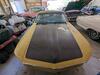
Hotshot


Joined: Jul 2020
Posts: 10,451
Likes: 2,630
From: Near Salt Lake City

Compression ratio is the key
The pent roof closed chamber 4bbl heads are around 65 cc
The 4 bbl heads have less flow velocity at low rpm (the ports are huge)
That said, I am running a set on my Boss 302 and they work fine for my application
Course I have 4.56 gears in it and keep the R's way up
Been going to build a turbo motor for it using open chamber 2bbl heads
That's next, after the 2) 427s I am building for my Camaro
The pent roof closed chamber 4bbl heads are around 65 cc
The 4 bbl heads have less flow velocity at low rpm (the ports are huge)
That said, I am running a set on my Boss 302 and they work fine for my application
Course I have 4.56 gears in it and keep the R's way up
Been going to build a turbo motor for it using open chamber 2bbl heads
That's next, after the 2) 427s I am building for my Camaro

Thread
Thread Starter
Forum
Replies
Last Post
nothercrash
Ford Truck Parts for Sale
0
Mar 27, 2011 09:25 PM
highp90town
335 Series- 5.8/351M, 6.6/400, 351 Cleveland
5
Dec 15, 2005 08:17 AM
Trail_Rider
1973 - 1979 F-100 & Larger F-Series Trucks
1
Feb 29, 2000 10:41 PM







