


No Start-0*

Thread Starter
|
Senior User
Joined: Sep 2010
Posts: 201
Likes: 1
From: Ellensburg, Wa
Wow, this is good to know. Shall we assume the fuel was not flowing then? Zero degrees is a real possibility where I live and I'd rather not have my pants down either. Nice to know the block heater helped but I'm trying to figure out how it factored into the equation. Does the block heater warm the fuel in any way?

Post Fiend
Joined: Jul 2005
Posts: 6,127
Likes: 6
Take a look here:
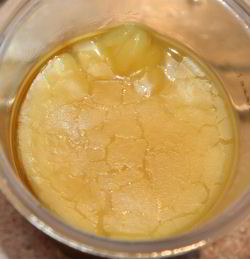
Are you “gellin’”? A Tip for Cold Climate Kubotas | OrangeTractorTalks

School Bus Gelling Problem | KOHD
Did you use biodiesel?
Are you “gellin’”? A Tip for Cold Climate Kubotas | OrangeTractorTalks
School Bus Gelling Problem | KOHD
Did you use biodiesel?
An addition of 2% bio diesel to a batch of poor quality diesel fuel can easily amount to a 10-degree or more loss of cold weather compatibility.
Thread Starter
|
Senior User
Joined: Sep 2010
Posts: 201
Likes: 1
From: Ellensburg, Wa
Take a look here:
Are you “gellin’”? A Tip for Cold Climate Kubotas | OrangeTractorTalks
School Bus Gelling Problem | KOHD
Did you use biodiesel?
Are you “gellin’”? A Tip for Cold Climate Kubotas | OrangeTractorTalks
School Bus Gelling Problem | KOHD
Did you use biodiesel?

Senior User
Joined: Oct 2010
Posts: 324
Likes: 0
Gel
If gelling occurred,
I would suspect the tank is the last place it would (lots of volume).
It would start in the small areas that have more surface area per unit of fuel. As in lines / filters, etc.
Block heater will spill some heat over to areas near by, and if its close, then it may help...
You need a high volume diesel station / Truck stop. I've never seen gel, and it gets below 0 here some times.... But, if you can't then additivies.
I would suspect the tank is the last place it would (lots of volume).
It would start in the small areas that have more surface area per unit of fuel. As in lines / filters, etc.
Block heater will spill some heat over to areas near by, and if its close, then it may help...
You need a high volume diesel station / Truck stop. I've never seen gel, and it gets below 0 here some times.... But, if you can't then additivies.

Post Fiend
Joined: Jan 2009
Posts: 6,521
Likes: 11
From: Greenwood, SC

Well, if Ford really thought the block heater through, ideally when you plug in your truck it would heat the DEF tank and also warm the fuel. I doubt that the def tank is looped into the system but it should be, and warming the fuel lines from the frame mounted filter up to the engine would be smart.
Post Fiend
Joined: Jul 2005
Posts: 6,127
Likes: 6
Ultra-Low Sulfur Diesel Cold Weather Information
Ultra-Low Sulfur Diesel Fuel
Cold Weather Information
The Ultra-Low Sulfur Diesel (ULSD (S-15)) that we started to receive in mid 2006 has shown some dramatically different cold weather characteristics from the earlier High Sulfur (HSD (S-5000)) and Low Sulfur Fuels (LSD (S-500)).
These new characteristics including higher temperature gelling, wax dropout, icing, and difficulty in treating have in the first year and will continue into the foreseeable future to provide some significant challenges to distributors and end users during cold weather.
Due to these new characteristics users in areas of the US where they have not seen cold weather problems in the past, are now and will continue to see serious issues with gelling, wax dropout, and icing.
Here are the main issues known today:
Wax in diesel fuels – Paraffin wax is a natural and important part of diesel fuel. This wax provides several beneficial characteristics including high energy content (Btu’s), lubricity, stability, and viscosity. The negative characteristics mainly revolve around cold weather operation and include gelling and something new we refer to as wax dropout.
In HSD and LSD the wax characteristics were relatively well understood and consistent. For example the “Rule of Thumb” used for adding kerosene (#1 diesel, Jet A) to #2 fuel to lower Cold Filter Plug Point (CFPP) was that for every 10% kerosene added to #2 diesel you would lower CFPP by approximately 5°F. An example would be that a 50% blend would have improved CFPP by about 25°F.
However the new ULSD has had several important characteristics changed by the new refining processes. The catalytic cracking and hydrodesulfurization processes remove some of the wax, it alters the size and shape of the wax seed crystals in the fuel, lowers the aromatic content of the fuel, removes a significant amount of the Lubricity, and lowers the fuels ability to dissipate static electricity by as much as 100 times.
The result of this is that the ULSD fuel actually will gel at a higher temperature than the old LSD and HSD. This problem is made more difficult because we can no longer use regular kerosene (#1 diesel, Jet A) for cold weather blending. These fuels are considered High Sulfur and their use would cause the end fuel to have sulfur content higher than the allowable 15 ppm. So refiners have had to create an ULSD #1 specifically for winter blending purposes.
There are a number of problems with this new fuel. First, it is currently very expensive, ranging anywhere from $.30 to $1.00 more than regular kerosene, second it is not available in all areas, and third this new ULSD #1 is not as effective at lowering the Cloud Point (CP) and CFPP (gel point) of the fuel. For example; ULSD #2 when blended with 10% ULSD #1 will lower the CFPP by only 2°F or maybe 3°F. This means that a 50% blend would only improve CFPP by 10°F.
To make this problem even more difficult, many of the diesel fuel anti-gel additive products that have been on the market for last 5 to 30 years have little or no effect on ULSD. The change in fuel chemistry brought about by changes in the Catalytic Cracking processes and the addition of Hydrodesulfurization have rendered many of the most popular products nearly useless in ULSD.
There is a new cold weather problem that the industry has not adequately defined
as of today. We are calling this issue “Wax Dropout”. Wax Dropout occurs when diesel fuel is “cold saturated”. This where the fuel reaches a given temperature and stays at or below that temperature for a given period of time. This time period is usually between 48 and 72 hours or longer and the temperature can vary with different batches of fuel. This past winter we saw this problem at between 5°F and 10°F.
When the fuel gets to the Wax Dropout temperature, say for example 8°F and stays there for 48 to 72 hours, the wax will suddenly agglomerate and fall to the bottom of the container. This wax plugs filters and fuel lines until it is removed or until the fuel temperature is raised to a point where the fuel will reabsorb the wax.
Again there is a further complication, in that the “old” HSD and LSD wax would gradually start to reabsorb as the fuel temperature rose. With ULSD when wax dropout has occurred the wax does not begin to reabsorb until the fuel reaches fairly high temperatures, often above 40°F, 50°F or even higher. This can make the process of getting an engine with gelled fuel to run properly far more challenging than we have ever seen before.
In the fuel distribution and fleet operations businesses, we have relied on CFPP as
a measure of winter fuel quality for many years. CFPP is a fairly complicated test involving using a vacuum to draw a sample of fuel through a 45 um (micron) screen within a given period of time.
When the HSD and LSD were most prevalent and most fuel filters were 10 um there was a good correlation between CFPP and the temperature at which a standard fuel filter would plug. For example you could be relatively certain that a fuel testing for CFPP of -25°F would provide trouble free operation to -15°F to -20°F.
However the relationship is much different with ULSD. A ULSD fuel testing
-25°F CFPP might have filter plugging problems at between -5°F and -10°F. Also CFPP does not seem to be directly related to Wax Dropout. A fuel can test for
-15°F and still have Wax Dropout at 8°F.
Furthermore, OEM engine manufacturers have changed the media size of their fuel filters. Where 10 um has been almost an industry standard, we now see 7 um, 5 um, and even 2 um filters today. This throws the whole relationship between CFPP and winter operability out the window. For example fuel that is at the CP can have filter plugging problems with a 2 um fuel filter.
The industry has not yet agreed on or developed testing methods to measure cold weather operability with the new fuels and filters.
Until such time as the industry develops a test method for determining the relationship between CFPP, PP, Wax Dropout, and filter media size for ULSD, we suggest the following: For 10 um filters; Take the midpoint between PP and CFPP, for 7 um filters, take the midpoint between PP and CFPP, then take the midpoint between that number and the original CP, for 5 um and 2 um use the CP.
Water is more of a problem than ever before. Diesel and biodiesel fuels hold
water dissolved in them. The amount of water that ULSD is able to hold is greater than that of HSD or LSD. One of the characteristics of fuel is that its ability to hold water in solution diminishes as the temperature decreases. Fuel delivered at 70°F with 200 ppm of dissolved water will as the temperature drops begin to push that water out of the fuel into droplets. These droplets can be seen floating in the fuel and as temperatures reach and go below 32°F those droplets freeze becoming ice crystals.
As a result many of the cold weather problems where people believe they have fuel gelling problem are actually a fuel icing problem. If you have operability issues in temperatures above 0°F you should check to be sure that you aren’t dealing with ice.
Customers are regularly reporting situations where they have no water in storage tanks, no water in vehicle or equipment tanks, but they constantly have water in filters and separators. This is due to the dissolved water falling out of solution due to temperature changes.
Fuel School: Ultra-Low Sulfur Diesel Cold Weather Information

Postmaster
Joined: Apr 2009
Posts: 3,839
Likes: 2
Well, if Ford really thought the block heater through, ideally when you plug in your truck it would heat the DEF tank and also warm the fuel. I doubt that the def tank is looped into the system but it should be, and warming the fuel lines from the frame mounted filter up to the engine would be smart.
Regards
FTE Stories
Ford Trucks for Ford Truck Enthusiasts

Top 6 Best Deals Available on New Fords & Lincolns Right Now
Brett Foote
This Hennessey Takes the Expedition Tremor's Off-Roading Capability to the Next Level
Verdad Gallardo
Top 10 Fords at 2026 Carlisle Ford Nationals
Joe Kucinski
3 Best / 3 Worst Parts of Modern Ford Ownership
Brett Foote
10 Amazing Upgrades That Solve Common Ford Truck Owner Headaches
Pouria Savadkouei
Every 2026 Ford Engine Explained
Brett Foote
10 Ugly Ford Trucks That We Still Kinda Love
Joe Kucinski
10 Things Every Truck Owner NEEDS (2026 Edition)
Michael S. Palmer
Rezvani's Latest Post-Apocalyptic Monster Is a Ford F-150 Raptor Underneath
Verdad Gallardo
Post Fiend
Joined: Jan 2009
Posts: 6,521
Likes: 11
From: Greenwood, SC
Yeah, you are right Ricatic. The performance we have seen here is good for cold weather starts but to be a bit off topic, the 3 or 4 posts about DEF system problems do worry me. Personally, I don't think I will ever have any problems because of where I live and work. But even though the urea system is practically unused in cold weather running conditions, I hate to see folks having issues with it.

Thread
Thread Starter
Forum
Replies
Last Post
TexasDiesel97
1994.5 - 1997 7.3L Power Stroke Diesel
0
Mar 27, 2013 09:18 AM
