




Electric Chock

Thread Starter
|
Senior User
Joined: Dec 2010
Posts: 407
Likes: 0
From: Galvin, WA
Electric Chock
wheres a good spot to hook up the positive wire for the electric chock? Edelbrock is suggesting run it into the cab on the fuse block. when i got the truck it was hooked up to the positive on the coil. i have it unpluged right now.

Posting Guru
Joined: Jun 2009
Posts: 1,509
Likes: 1
From: Wagener, SC
Not to hyjack this thread, but how do you tell the difference between an electric choke that needs 12v and one that needs 7.5v off of the alternator stator? I have a Holley 4160 w/electric choke that isn't hooked up. How does one know which way to go with supplying power to it?
Post Fiend
Joined: Nov 2005
Posts: 7,437
Likes: 4
From: Charles Town, W bygod Va
If its an aftermarket, universal carb like you'd get from jegs I think they use battery voltage but if you were to get a carb from say, napa and it is specificly for your vehicle it should use the same wire as the factory choke. I am ASSuming a lot here, so hopefully someone will correct me if wrong. I've never confirmed it but I suspect the OEM choke stat has 0 or close to 0 resistance, thus the need for the lower voltage (some resistance in the circuit elsewhere), otherwise it would flow too much current. The ones that use straight battery voltage should have more resistance in the choke stat. Sooooo, the answer to your question is, I dont know.
Trending Topics

Posting Guru
Joined: Oct 2010
Posts: 1,199
Likes: 1
From: Missouri
You can use your list number on the carb and look for the manual, but it will simply say to "You must use a 12v+ source"
I'm using 12v on my 4180 that originally used the stock wiring, and it's just fine.
http://www.holley.com/data/Products/...199R7948-5.pdf
FTE Stories
Ford Trucks for Ford Truck Enthusiasts

3 Best / 3 Worst Parts of Modern Ford Ownership
Brett Foote
10 Amazing Upgrades That Solve Common Ford Truck Owner Headaches
Pouria Savadkouei
Every 2026 Ford Engine Explained
Brett Foote
10 Ugly Ford Trucks That We Still Kinda Love
Joe Kucinski
10 Things Every Truck Owner NEEDS (2026 Edition)
Michael S. Palmer
Rezvani's Latest Post-Apocalyptic Monster Is a Ford F-150 Raptor Underneath
Verdad Gallardo
Top 10 Most Expensive Ford Trucks Ever Sold on Bring a Trailer
Joe Kucinski
2027 Ford Super Duty Buyer's Guide (Every Model, Engine, & Package)
Brett Foote
Top 10 Ford Truck Tragedies
Joe Kucinski
pedant
Joined: Jan 2008
Posts: 23,576
Likes: 40
From: EXTREME southwest CT

If the element has one bullet-like contact and says Motorcraft, or has a Ford part # it takes the 7.5+/-V from the alternator stator.
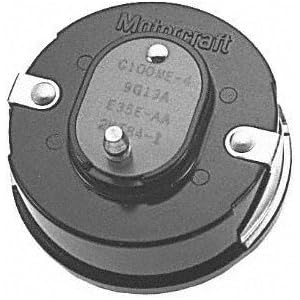
If it it has male and female spade connectors it is the standard 45-258 Holley 12V element.

Of course you can just swap a new Ford element or the one from your old carb and avoid all the rewiring...
If it it has male and female spade connectors it is the standard 45-258 Holley 12V element.
Of course you can just swap a new Ford element or the one from your old carb and avoid all the rewiring...

Post Fiend
Joined: Jul 2004
Posts: 8,786
Likes: 28
From: Northern California
I believe all aftermarket Holley and Edelbrock carbs say to use 12v. The factory used the line going to the altenator so that it doesn't drain the battery when you have the key switched on to listen to the radio. Plus, you won't really want the choke opening up when the engine isn't even running.
You can use your list number on the carb and look for the manual, but it will simply say to "You must use a 12v+ source"
I'm using 12v on my 4180 that originally used the stock wiring, and it's just fine.
http://www.holley.com/data/Products/Technical/199R7948-5.pdf
You can use your list number on the carb and look for the manual, but it will simply say to "You must use a 12v+ source"
I'm using 12v on my 4180 that originally used the stock wiring, and it's just fine.
http://www.holley.com/data/Products/Technical/199R7948-5.pdf
There are two factory type choke systems used on these trucks, and a third and fourth aftermarket one that can be found.
Factory 1: Thermastatic choke: Uses the choke stove tubes from the exaust manifold and/or heater hose routing. It uses manifold or heater hose heat to operate the choke.
Factory 2: Electrically assisted, thermastatic choke. Exact same as the first one using the choke stove and exaust manifold heat, except it has a connection with the altenator stator wire for speeded up operation. This choke setup is the most comon.
Aftermarket 1: Manual Choke. By this timeframe none of these trucks used manual chokes from the factory due to smog compliance laws.
Aftermarket 2: Electric Choke. Uses 12v power for operation. Does not use any thermastatic controls.
Hope this helps.

Post Fiend
Joined: Jul 2004
Posts: 8,786
Likes: 28
From: Northern California
12v AC (alternating current)
7.5v DC (Direct Current)
It depends on which setting you have your multimeter set to.
If your meter is set for DC and you have 12V DC then this is not how it is supposed to be hooked up from the factory.
7.5v DC (Direct Current)
It depends on which setting you have your multimeter set to.
If your meter is set for DC and you have 12V DC then this is not how it is supposed to be hooked up from the factory.
