


help with rebuild options

Thread Starter
|
Elder User

Joined: Mar 2008
Posts: 563
Likes: 0
help with rebuild options
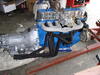
Hi,I usualy hang out in the dentside and FE forums,But I have decided to replace my dinosaur 360 with a 300I6.The truck was a 6cyl origionaly and I swaped it over years ago to the FE.I already know how to put it in and what needs to be swaped over.
My big question is what are the best years of blocks,heads,rods ect. for the most reliable and strong pieces.I have a 90% complets 78 engine that needs a complete rebuild.I also have a 92 model with a trashed crank and block but the head is great.I also have access to other years.
This is going to be a DD in a 77 f150 4x4 with a 4spd. I want to put a 4bbl intake on it and it will have headers.
My big question is what are the best years of blocks,heads,rods ect. for the most reliable and strong pieces.I have a 90% complets 78 engine that needs a complete rebuild.I also have a 92 model with a trashed crank and block but the head is great.I also have access to other years.
This is going to be a DD in a 77 f150 4x4 with a 4spd. I want to put a 4bbl intake on it and it will have headers.

Cargo Master
Joined: Sep 2007
Posts: 2,095
Likes: 2
From: Wahpeton ND
Ifr you live in a temprate climate I would recomend a 260 duration cam. Colder climate comps 252. A set of EFI manifolds, 240 head.
With a good stock reuild it should give you about 200 HP/300lbs with a 4bbl. The fast burn head from your 92 would be an improvement over the stock 78 but only marginaly.
As far as blocks and such go there is no real winner. They are all about the same from 65-96.
With a good stock reuild it should give you about 200 HP/300lbs with a 4bbl. The fast burn head from your 92 would be an improvement over the stock 78 but only marginaly.
As far as blocks and such go there is no real winner. They are all about the same from 65-96.
Thread Starter
|
Elder User
Joined: Mar 2008
Posts: 563
Likes: 0
Thanks for your reply,I will prob go with the 252 cam.Would the efi manifolds be better than a header?I had planned on useing the late model head for the hardened valve seats and the fact that it is in great condition(very low miles)What about pistons? are the newer ones better or worse than the 70s? thanks chris

Hotshot
Joined: Oct 2002
Posts: 18,488
Likes: 22
From: The Big, Oregon

The 78 head will still have hardened valve seats, and there is a common issue with cracks in the EFI heads due to the higher temps they operate at. Usually not a terminal problem, but something to be aware of anyways.
You should pull the head off that 78 engine and see how far over it is worn. If it will clean up at .050" over, then flat top 360 pistons are an option to boost your compression.
I would use the EFI manifolds for four real reasons: Neater packaging and routing, more and cheaper exhaust options, sealing ability, and starter access. Headers take up a lot of room running all over the place and some can be a real pain to install. You will need to have a full custom exhaust or at least a custom y-pipe made, while off-the-shelf parts work with the EFI manifolds. Exhaust shops like Meineke bend their own pipes for these trucks for the stock systems, so it would be very easy to have them substitute 3" pipe in the same pattern. Headers often have issues with the flanges bending causing leaks. For most brands of headers, at least one has to come off to change the starter.
You should pull the head off that 78 engine and see how far over it is worn. If it will clean up at .050" over, then flat top 360 pistons are an option to boost your compression.
I would use the EFI manifolds for four real reasons: Neater packaging and routing, more and cheaper exhaust options, sealing ability, and starter access. Headers take up a lot of room running all over the place and some can be a real pain to install. You will need to have a full custom exhaust or at least a custom y-pipe made, while off-the-shelf parts work with the EFI manifolds. Exhaust shops like Meineke bend their own pipes for these trucks for the stock systems, so it would be very easy to have them substitute 3" pipe in the same pattern. Headers often have issues with the flanges bending causing leaks. For most brands of headers, at least one has to come off to change the starter.
Lead Driver


Joined: Mar 2008
Posts: 7,182
Likes: 380
From: Near Los Angeles
The head is the bottle neck. If you want to wake up your mods, ie cam, intake, 4v carb, h.e. ign., then you need to port that head, with a good 3 angle v. job, and 30 degree back cut on the intakes. The difference is considerable. The larger size valves add another boost in hp. Buy them ONLY from SI valves. I would use the non efi head because of the cracking issue. The 360 pistons are a possibility, and will bump you up to medium grade gas. If you stay with the EFI pistons at 8.7:1, and shave deck .020, and head .020, you raise the compression for added hp but still stay on regular gas.
Have the head AND block magnfluxed.
Cams: The Comp cams 260 is great. If you want to hear it loping, you need more cam like the Comp 268. The Clifford cam 264 is a good loping cam, but there has been some negative write ups about that cam. Every cam is a give and take...bottom end, top end, .... Go to Summit racing site to the tech questions, and read up on how to find a good cam. Buy the kit with the cam. Use all metal gears, ONLY cloyes or Comp cams. Use ONLY the Felpro $60 head gasket, and the Mr. Gasket #260 for the in/exh. Convert oil pan to one piece gasket.
Have the head AND block magnfluxed.
Cams: The Comp cams 260 is great. If you want to hear it loping, you need more cam like the Comp 268. The Clifford cam 264 is a good loping cam, but there has been some negative write ups about that cam. Every cam is a give and take...bottom end, top end, .... Go to Summit racing site to the tech questions, and read up on how to find a good cam. Buy the kit with the cam. Use all metal gears, ONLY cloyes or Comp cams. Use ONLY the Felpro $60 head gasket, and the Mr. Gasket #260 for the in/exh. Convert oil pan to one piece gasket.
Thread Starter
|
Elder User
Joined: Mar 2008
Posts: 563
Likes: 0
thanks for the info! I pulled the pan on the 92 and found a thrown rod and it smacked the block.so thats a nogo. pulled the head on the 78 and found out the thing had water in it and froze.Cracked the #4 cyl wall. so the hunt is on again for a good block. Is there a better conn. rod to use?
Hotshot
Joined: Oct 2002
Posts: 18,488
Likes: 22
From: The Big, Oregon
I'm actually running 87 octane in mine with the timing at 13 BTDC, and no pinging. Technically that is mid grade here, since they also sell 85.
Trending Topics
Lead Driver
Joined: Mar 2008
Posts: 7,182
Likes: 380
From: Near Los Angeles
I have been told the newer blocks are better because of the alloy they use. I don't know if that is true. You should be able to pull a block at the boneyard for about $100, w/o head. A 240 head will boost c.r. by about half a point, so if you used the efi pistons and the 240 head, you should be at about 9.2:1 cr, about right where you need to be for inexpensive gas, or 87 octane.
I'm not trying to sound like a jerk, but all the info you need has been posted many times. You just need to do a search in this forum, and copy/paste the needed info.
note: I would use a post 84 block if I had the choice, simply because they have the dowel pen guides for the t. cover, which makes installation much easier. FOR THE HEAD I would use a pre 84 because IMHO it is easier to work on/modify.
PAW sells the reconditioned rods for a great price.
Another note: "Trust but verify" is a great policy to maintain with information gathered from the net. That goes double when building an engine!!
I'm not trying to sound like a jerk, but all the info you need has been posted many times. You just need to do a search in this forum, and copy/paste the needed info.
note: I would use a post 84 block if I had the choice, simply because they have the dowel pen guides for the t. cover, which makes installation much easier. FOR THE HEAD I would use a pre 84 because IMHO it is easier to work on/modify.
PAW sells the reconditioned rods for a great price.
Another note: "Trust but verify" is a great policy to maintain with information gathered from the net. That goes double when building an engine!!
FTE Stories
Ford Trucks for Ford Truck Enthusiasts

2027 Ford Super Duty Buyer's Guide (Every Model, Engine, & Package)
Brett Foote
Top 10 Ford Truck Tragedies
Joe Kucinski
AEV FXL Super Duty - the Super Duty Raptor Ford Doesn't Make
Brett Foote
Lobo Vs Lobo: Proof the F-150 Lobo Should Be Even Lower!
Michael S. Palmer
Ford's 2001 Explorer Sportsman Concept Looks For a New Home
Verdad Gallardo
10 Best Ford Truck Engines We Miss the Most!
Joe Kucinski
2026 Shelby F-150 Off-Road: Better Than a Raptor R?
Brett Foote
2027 Super Duty Carhartt Package First Look: 12 Things You NEED to Know!
Michael S. Palmer
10 Most Surprising 2026 Ford Truck Features!
Joe Kucinski
Lead Driver
Joined: Mar 2008
Posts: 7,182
Likes: 380
From: Near Los Angeles

Hotshot
Joined: Oct 2002
Posts: 18,488
Likes: 22
From: The Big, Oregon
The one piece rear main seal is post-68 or so. My 69 F250 had a one piece in the original block.
I relieved the sharp edge in the combustion chamber, so the main source for preignition is now gone. No sharp edges and a good sized quench area makes any engine much happier.
I relieved the sharp edge in the combustion chamber, so the main source for preignition is now gone. No sharp edges and a good sized quench area makes any engine much happier.
Lead Driver
Joined: Mar 2008
Posts: 7,182
Likes: 380
From: Near Los Angeles
No sharp edges and a good sized quench area makes any engine much happier.[/quote]
FordSix--can you explain that for me. I guess I need someone to define 'quench area'. And by 'sharp edges', do you mean around the perimeter of the chamber, where head meets block? Did you smooth that edge a bit? Your explanation is appreciated.
FordSix--can you explain that for me. I guess I need someone to define 'quench area'. And by 'sharp edges', do you mean around the perimeter of the chamber, where head meets block? Did you smooth that edge a bit? Your explanation is appreciated.
Hotshot
Joined: Oct 2002
Posts: 18,488
Likes: 22
From: The Big, Oregon
The flat part of the head surrounding the combustion chamber is the quench area. If this is too open, it will act as part of the combustion chamber and make the burn very violent and unpredictable. The transition between the quench and the combustion chamber is quite sharp from the factory, and a sharp point will become very hot and ignite the charge before it should be lit off. By smoothing this rough sharp edge, that source of ignition is eliminated.
Lead Driver
Joined: Mar 2008
Posts: 7,182
Likes: 380
From: Near Los Angeles
I didn't understand until I thought about the c.chamber with a gasket around it. So, If I understand correctly, the quench is the void between head and block created by a gasket with a circle the diameter of the bore. So it kind of makes the c.c. larger?
With my particular head, which is an 81, would taking the ridges out of the c.c. improve performance? I am told they are there for 'swirl', but I can't understand how that works. I've never seen a ported head that retained them.
<a href="http://s659.photobucket.com/albums/uu316/bobbyrogue/?action=view¤t=P1010114.jpg" target="_blank"><img src="http://i659.photobucket.com/albums/uu316/bobbyrogue/P1010114.jpg" border="0" alt="chebby valves in a FORD??"></a>
With my particular head, which is an 81, would taking the ridges out of the c.c. improve performance? I am told they are there for 'swirl', but I can't understand how that works. I've never seen a ported head that retained them.
<a href="http://s659.photobucket.com/albums/uu316/bobbyrogue/?action=view¤t=P1010114.jpg" target="_blank"><img src="http://i659.photobucket.com/albums/uu316/bobbyrogue/P1010114.jpg" border="0" alt="chebby valves in a FORD??"></a>
Hotshot
Joined: Oct 2002
Posts: 18,488
Likes: 22
From: The Big, Oregon
On my first one, I polished the combustion chamber and completely smoothed it, but left that razor sharp edge and did have lots of pinging even with the timing set low.
This one, I left the combustion chamber alone and just dulled that edge to get rid of hot spots. That was the only head work I did on this one.
This one, I left the combustion chamber alone and just dulled that edge to get rid of hot spots. That was the only head work I did on this one.

Thread
Thread Starter
Forum
Replies
Last Post
Ziegelsteinfaust
Big Block V8 - 385 Series (6.1/370, 7.0/429, 7.5/460)
3
May 23, 2011 02:47 PM
rexter
Big Block V8 - 385 Series (6.1/370, 7.0/429, 7.5/460)
4
Apr 20, 2011 08:45 PM
dogodell
1973 - 1979 F-100 & Larger F-Series Trucks
4
Jun 2, 2010 06:19 PM
69F-250
FE & FT Big Block V8 (332, 352, 360, 390, 406, 410, 427, 428)
23
Oct 30, 2009 06:34 AM
77fordguy
FE & FT Big Block V8 (332, 352, 360, 390, 406, 410, 427, 428)
34
Oct 28, 2005 01:04 AM
