




1966 Brake Help

Thread Starter
|
Freshman User
Joined: Aug 2010
Posts: 34
Likes: 0
From: North Alabama
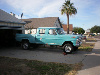
1966 Brake Help
I'm wondering if y'all can give me your thoughts on a brake problem I'm having on my '66. I just went through and redid pretty much the whole brake system. New pads, cylinders and hoses. The problem is is it takes a bunch of pressure to push the brake pedal when using the brakes. I'm not sure I could lock them up if I wanted to. A guy at the parts store said he thought it might be a blockage/stoppage in the brake line but they bled out good when I bled them.
Any ideas or suggestions?
Any ideas or suggestions?
Thread Starter
|
Freshman User
Joined: Aug 2010
Posts: 34
Likes: 0
From: North Alabama
We didn't change the main line so I'm going to assume it is. But seeing some of the other stuff that's been done to it in the past I know that's dangerous. The hoses we changed are.
Thread Starter
|
Freshman User
Joined: Aug 2010
Posts: 34
Likes: 0
From: North Alabama
Yep. Doublechecked shoes 'cause the PO had all the larger shoes on the left side (which BTW is part of the reason we had to redo everything). Had one drum that needed turning and got that done so rechecked the adjustments.

Elder User
Joined: Oct 2009
Posts: 825
Likes: 2
From: Dallas, Texas
Also shoes in the past were arched to match the drums. Don't think they do that any more, so it takes a little time to "wear in", then you need to re-adjust.
Last edited by OldHarley; Sep 27, 2010 at 10:13 AM. Reason: Revised location of where larger shoes go
Ford Parts Specialist
Joined: Nov 2006
Posts: 88,826
Likes: 784
From: Simi Valley, CA

A hard brake pedal is usually caused by a defective master cylinder.
I had the same problem on my '65...it was like stepping on a rock to get the darn thing to stop.
I had the same problem on my '65...it was like stepping on a rock to get the darn thing to stop.
Trending Topics
Thread Starter
|
Freshman User
Joined: Aug 2010
Posts: 34
Likes: 0
From: North Alabama
Greg, I thought the shorter pad (brake material) went on the forward side? That's what most references I've looked at showed.
Bill, I was afraid someone was gonna say that.
Bill, I was afraid someone was gonna say that.
FTE Stories
Ford Trucks for Ford Truck Enthusiasts

AEV FXL Super Duty - the Super Duty Raptor Ford Doesn't Make
Brett Foote
Lobo Vs Lobo: Proof the F-150 Lobo Should Be Even Lower!
Michael S. Palmer
Ford's 2001 Explorer Sportsman Concept Looks For a New Home
Verdad Gallardo
10 Best Ford Truck Engines We Miss the Most!
Joe Kucinski
2026 Shelby F-150 Off-Road: Better Than a Raptor R?
Brett Foote
2027 Super Duty Carhartt Package First Look: 12 Things You NEED to Know!
Michael S. Palmer
10 Most Surprising 2026 Ford Truck Features!
Joe Kucinski
Top 10 Ford Trucks Coming to Mecum Indy 2026
Brett Foote
5 Best / 5 Worst Ford Truck Wheels of All Time
Joe Kucinski
Elder User
Joined: Oct 2009
Posts: 825
Likes: 2
From: Dallas, Texas
The smaller brake shoe goes to the front, but not because of why you might think!
These guys say larger shoe on front; their braking theory is correct, but their conclusion is WRONG!: Note: I went in and changed this so it would be correct!
Answers.com - Where doe's the bigger size brake shoe go front or rear in drum
These guys opinions mostly say back, but one answer is front:
brake shoes [Archive] - DoItYourself.com Community Forums
Proponents of the 'large shoe to the front' base that location on the FACT that the front shoe gives the best braking. It's TRUE, so why instead of the larger, it gets the smaller shoe??
Heres the best, worst worded description I came across:
The front shoe tries to jam itself into the brake drum - which makes it the stronger shoe braking-wise - when the brakes are applied - so it's smaller to match the power of the larger secondary shoe.
It's probably easier to remember this if we don't use the terms 'smaller shoe' and 'larger shoe', but think in terms of 'front shoe' and 'rear compensating shoe' - the larger shoe being on the rear to 'compensate' for the reduced the braking effect.
These guys say larger shoe on front; their braking theory is correct, but their conclusion is WRONG!: Note: I went in and changed this so it would be correct!
Answers.com - Where doe's the bigger size brake shoe go front or rear in drum
These guys opinions mostly say back, but one answer is front:
brake shoes [Archive] - DoItYourself.com Community Forums
Proponents of the 'large shoe to the front' base that location on the FACT that the front shoe gives the best braking. It's TRUE, so why instead of the larger, it gets the smaller shoe??
Heres the best, worst worded description I came across:
The front shoe tries to jam itself into the brake drum - which makes it the stronger shoe braking-wise - when the brakes are applied - so it's smaller to match the power of the larger secondary shoe.
It's probably easier to remember this if we don't use the terms 'smaller shoe' and 'larger shoe', but think in terms of 'front shoe' and 'rear compensating shoe' - the larger shoe being on the rear to 'compensate' for the reduced the braking effect.
Last edited by OldHarley; Sep 27, 2010 at 10:34 AM. Reason: Correction to post

Senior User
Joined: Aug 2006
Posts: 207
Likes: 1
From: Ferndale, WA
The short shoe goes on the leading (front) side of each assembly. Master cylinder defect causing a HARD pedal? What kind of defect I must ask. Unless the piston is rusted solid in the bore, I don't think so.
I would want to know to what you are comparing this pedal effort. If you haven't driven one of these old trucks with normally operating brakes, it's not exactly like anything made in the last 30 years. You should be able to lock them up, but it takes a pretty good stomp. You might be experiencing "normal". You list a 2002 Ranger in your profile. That truck has disc brakes and I'm sure a power booster too.
If the truck stops straight, you've got the best sign of a properly operating system. If you run down the road 4-5 miles and you can slow the truck to a stop with minimal braking(use the tranny) I'd hop out and lay my hand on each drum or axle to check for a wheel with excessive heat. Then I'd drive it with several stops and check to see that each drum has generated the feel of equal heat. If you find a cold drum, you probably have a restricted hydraulic line to that wheel.
I would want to know to what you are comparing this pedal effort. If you haven't driven one of these old trucks with normally operating brakes, it's not exactly like anything made in the last 30 years. You should be able to lock them up, but it takes a pretty good stomp. You might be experiencing "normal". You list a 2002 Ranger in your profile. That truck has disc brakes and I'm sure a power booster too.
If the truck stops straight, you've got the best sign of a properly operating system. If you run down the road 4-5 miles and you can slow the truck to a stop with minimal braking(use the tranny) I'd hop out and lay my hand on each drum or axle to check for a wheel with excessive heat. Then I'd drive it with several stops and check to see that each drum has generated the feel of equal heat. If you find a cold drum, you probably have a restricted hydraulic line to that wheel.
Ford Parts Specialist
Joined: Nov 2006
Posts: 88,826
Likes: 784
From: Simi Valley, CA
The short shoe goes on the leading (front) side of each assembly. Master cylinder defect causing a HARD pedal? What kind of defect I must ask. Unless the piston is rusted solid in the bore, I don't think so.
I would want to know to what you are comparing this pedal effort. If you haven't driven one of these old trucks with normally operating brakes, it's not exactly like anything made in the last 30 years.
I would want to know to what you are comparing this pedal effort. If you haven't driven one of these old trucks with normally operating brakes, it's not exactly like anything made in the last 30 years.
I owned one of these trucks for 44 years (bought it new). When the pedal pressure became impossible, I asked the brake man at work what could be the cause. I replaced the master cylinder on his recommend...problem solved.

Postmaster
Joined: Mar 2004
Posts: 4,375
Likes: 5
From: seattle
Another thing could possibly be the rubber flex hoses having collapsed inside of themself...when it happens no fluid will get through..had that happen on a friends Cadillac hearse...drove it like that for a long time before realizing...after we were rebuilding brakes. The hose looked and felt perfectly fine on the outside....but totally plugged inside...no fun trying to stop a 68 Cadillac with half its brakes non functioning...
If you replaced the flex hoses front AND rear try bleeding each wheel...when you do if each wheel shoots fluid at about the same pressure when you crack the bleeder then its gotta be the Master cylinder...if what you have been bleeding out isnt clear...or nearly so or has alot of crap in it...rusty color etc...that could be from the metal lines themselves rusting/corroding away inside...remember...brake fluid will draw moisture out of the air...and thus into the trucks hydraulic system.
Hope this helps, cs65
If you replaced the flex hoses front AND rear try bleeding each wheel...when you do if each wheel shoots fluid at about the same pressure when you crack the bleeder then its gotta be the Master cylinder...if what you have been bleeding out isnt clear...or nearly so or has alot of crap in it...rusty color etc...that could be from the metal lines themselves rusting/corroding away inside...remember...brake fluid will draw moisture out of the air...and thus into the trucks hydraulic system.
Hope this helps, cs65
Thread Starter
|
Freshman User
Joined: Aug 2010
Posts: 34
Likes: 0
From: North Alabama
I would want to know to what you are comparing this pedal effort. If you haven't driven one of these old trucks with normally operating brakes, it's not exactly like anything made in the last 30 years. You should be able to lock them up, but it takes a pretty good stomp. You might be experiencing "normal". You list a 2002 Ranger in your profile. That truck has disc brakes and I'm sure a power booster too.
If the truck stops straight, you've got the best sign of a properly operating system.
If the truck stops straight, you've got the best sign of a properly operating system.
Thread Starter
|
Freshman User
Joined: Aug 2010
Posts: 34
Likes: 0
From: North Alabama
cs65, I'll look into that, too. Bleeding them again real good was gonna be my next try just to see if it would fix it before trying something more expensive. I'll check to see if the fluid is discolored in any way.
Okay, so if I have to try a new master cylinder - would y'all get a new one or is it worth trying one of the rebuild kits from the mailorder houses?
Also, I had been thinking about adding power. Is it worth it and would y'all go ahead and do it now while I'm working on the brake system?
Guys, I really appreciate all the help!
Okay, so if I have to try a new master cylinder - would y'all get a new one or is it worth trying one of the rebuild kits from the mailorder houses?
Also, I had been thinking about adding power. Is it worth it and would y'all go ahead and do it now while I'm working on the brake system?
Guys, I really appreciate all the help!