


15" wheel recommendations?

Postmaster
Joined: Oct 2009
Posts: 3,432
Likes: 7
Yes, but a Mustang doesn't weigh in at 6,000 lbs loaded either. The shop informed me that they are really only sensitive to this when they are first installed. Once they have been torqued and the lug nuts and the wheels have seated, they tend to stay that way. More weight can make them shift slightly and start to loosen.
I just say this because this cost me $1180.67 in repairs to my van, plus I'm sure my insurance might go up because of the damage to the other car that my wheel hit.
I just say this because this cost me $1180.67 in repairs to my van, plus I'm sure my insurance might go up because of the damage to the other car that my wheel hit.
Postmaster
Joined: Oct 2009
Posts: 3,432
Likes: 7
I'm thinking I'm gonna go with that Helwig sway bar kit. The ride witht he larger 5" wheels and 215/75 R15 tires is smoother than with the previous ones, but the slightly increased ride height exposed the body roll a little more. I followed my van the other day, had to go pick up my Focus from the shop. The roll in my van doesn't look like much from an outside perspective, but it feels more significant inside the van. I would prefer a little more stability. I will also need to replace my front shocks soon, one of my Gas-A-Justs has started leaking.

Senior User

Joined: Dec 2006
Posts: 194
Likes: 1
From: Surrey BC Canada

Go figure. The tires have rubbed a couple of times. Although the ride is quieter.
I need to replace the sagging front coil springs, so that my be why they rub.

Mountain Pass
Joined: Jan 2008
Posts: 193
Likes: 0
I also went with the spoked 15" Ranger rims shown earlier. I installed 225/65/15 Yokohama Avid Touring-S tires. No rubbing noticed so far. However, the Avid touring-S Yokohama's are just horrible. The sidewalls are paper thin and I've experienced 2 sidewall blowouts with less than 2000 miles on the tires so far. Also, one of the remaining tires went flat in the rear. I pumped the tire back up and it seems to hold air for now, but I'm paranoid taking this van anywhere anymore with these tires. I tried to get the dealer to take the tires back, but so far he's holding firm and denying my claim. Someone mentioned that Yokohama tires were s-h-i-t earlier in this thread. Wish I had read it then and taken their advice, I'm out about $600 bucks over these POS. 

Anyway, the 15 rims work fine. But be careful what tires you choose, it could prove to be a costly mistake.
Anyway, the 15 rims work fine. But be careful what tires you choose, it could prove to be a costly mistake.

Lead Driver


Joined: Sep 2003
Posts: 7,018
Likes: 210
From: SoCal

I think I was one of those people who mentioned they had problems with Yokohama tires; both my brother and myself had problem with the yokohamas we've gotten. In both cases, they were problems with durability.
In your case, the Touring-S is a passenger car tire, combined with the lower load rating of a 65 series (from the stock 75 series), on a heavy minivan, it may be overloaded. Of course, my friend's Mazda MPV uses 215/65/15 as stock, but I think it may be a lighter vehicle.
In your case, the Touring-S is a passenger car tire, combined with the lower load rating of a 65 series (from the stock 75 series), on a heavy minivan, it may be overloaded. Of course, my friend's Mazda MPV uses 215/65/15 as stock, but I think it may be a lighter vehicle.

FTE Community Team

Joined: Nov 2001
Posts: 1,873
Likes: 277
From: Oak Harbor, Washington

I would like to thank everybody who came before me and verified that the Explorer wheels are a bolt-on with no issues.
It took me a couple of tries but I managed to round up a very nice set of them.
The backstory is that I bought Michelin Harmony tires (P215/70R14 96S) from Costco in about 1997 for my '93, and when I gave that van to a friend in 2010, I moved the wheels to my newly-acquired '97.
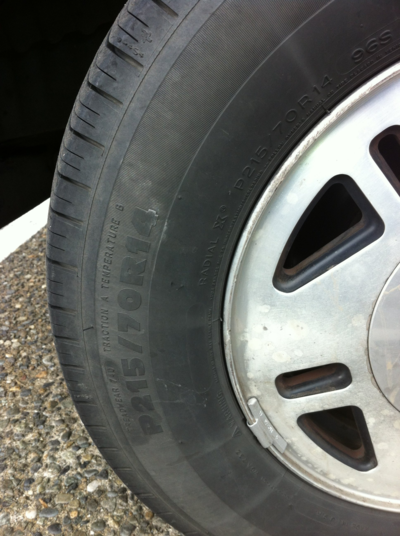
Last month, they had 93k miles on them, and while they weren't worn out yet (still legal), they did exhibit some weather checking and three were not as round as they could be, so I went hunting for replacement Michelins. No dice.
I let my tire store talk me into a set of Hankooks. What a nightmare. I had it back three times for rebalance in four days, and they finally put an entirely different set of Hankooks on: too much vibration at speed.
I went to a different branch of that tire store and explained the situation. They suggested moving to 15" wheels, which would put me back in Michelin territory. After reviewing this thread (or another one very similar, with almost the same players ), I purchased a couple of sets of 1991-94 Explorer wheels locally. Both turned out to be either not quite nice enough or in one case bent. I resorted to eBay and got a very nice set from Tennesee for $280 shipped that met my expectations. They came with a set of near-mint takeoff wheel caps -- as good as the new OEM ones I bought eight years ago for my 14" from Ford @ $40 each! But, two of them are "donuts" for the front hubs, so I had to scout out a couple of almost perfect ones off eBay, so I have a perfect set of caps.
The second tire branch credited me the Hankooks back entirely (not pro-rated, though I had driven on them for almost three weeks and 2000 miles), and sold me five Michelin Defenders (I had to replace the spare, too, of course: AWD). And now I have a smooth ride at 60-70 again.
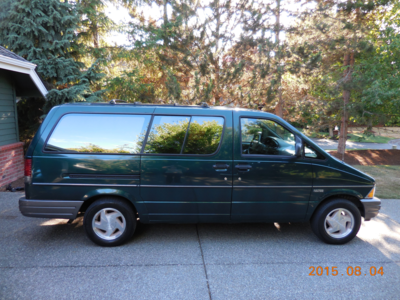
Michelin Defender 215/65R15

Meanwhile, I've got one nice set of four extra bare Explorer rims (painted silver)

One pair of fairly ratty ones with bad tires

A set of bare 14" factory alloys

A set of seven-year-old Ford caps for the 14" wheels (paid over $160)

A brand-new, never been on the ground since 2012 full-size spare on factory alloy, Kumho 14" tire


And a whole pile of meh Explorer wheel caps.
All of which I need to make go away.
It took me a couple of tries but I managed to round up a very nice set of them.
The backstory is that I bought Michelin Harmony tires (P215/70R14 96S) from Costco in about 1997 for my '93, and when I gave that van to a friend in 2010, I moved the wheels to my newly-acquired '97.
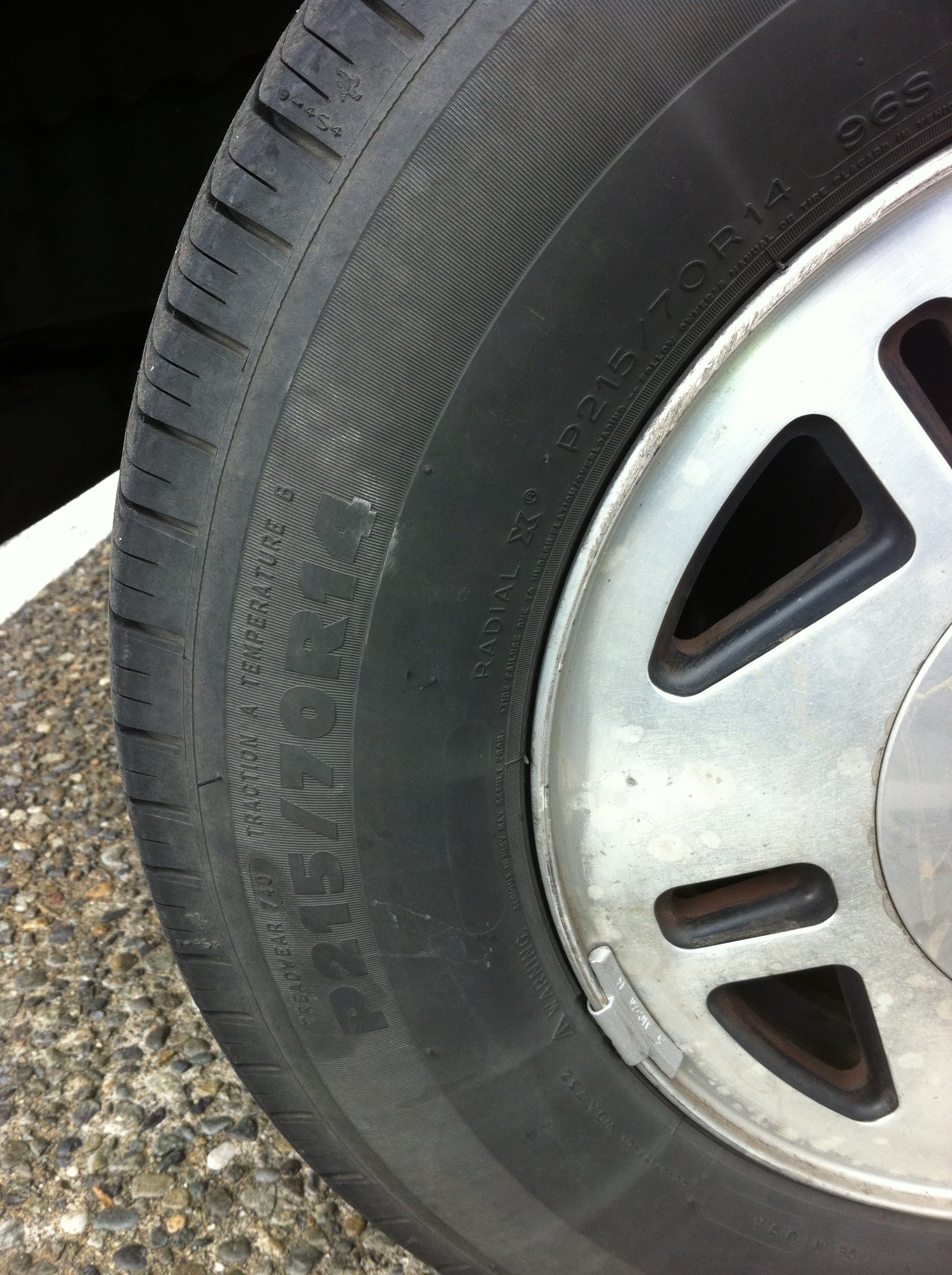
Last month, they had 93k miles on them, and while they weren't worn out yet (still legal), they did exhibit some weather checking and three were not as round as they could be, so I went hunting for replacement Michelins. No dice.
I let my tire store talk me into a set of Hankooks. What a nightmare. I had it back three times for rebalance in four days, and they finally put an entirely different set of Hankooks on: too much vibration at speed.
I went to a different branch of that tire store and explained the situation. They suggested moving to 15" wheels, which would put me back in Michelin territory. After reviewing this thread (or another one very similar, with almost the same players
), I purchased a couple of sets of 1991-94 Explorer wheels locally. Both turned out to be either not quite nice enough or in one case bent. I resorted to eBay and got a very nice set from Tennesee for $280 shipped that met my expectations. They came with a set of near-mint takeoff wheel caps -- as good as the new OEM ones I bought eight years ago for my 14" from Ford @ $40 each! But, two of them are "donuts" for the front hubs, so I had to scout out a couple of almost perfect ones off eBay, so I have a perfect set of caps.The second tire branch credited me the Hankooks back entirely (not pro-rated, though I had driven on them for almost three weeks and 2000 miles), and sold me five Michelin Defenders (I had to replace the spare, too, of course: AWD). And now I have a smooth ride at 60-70 again.
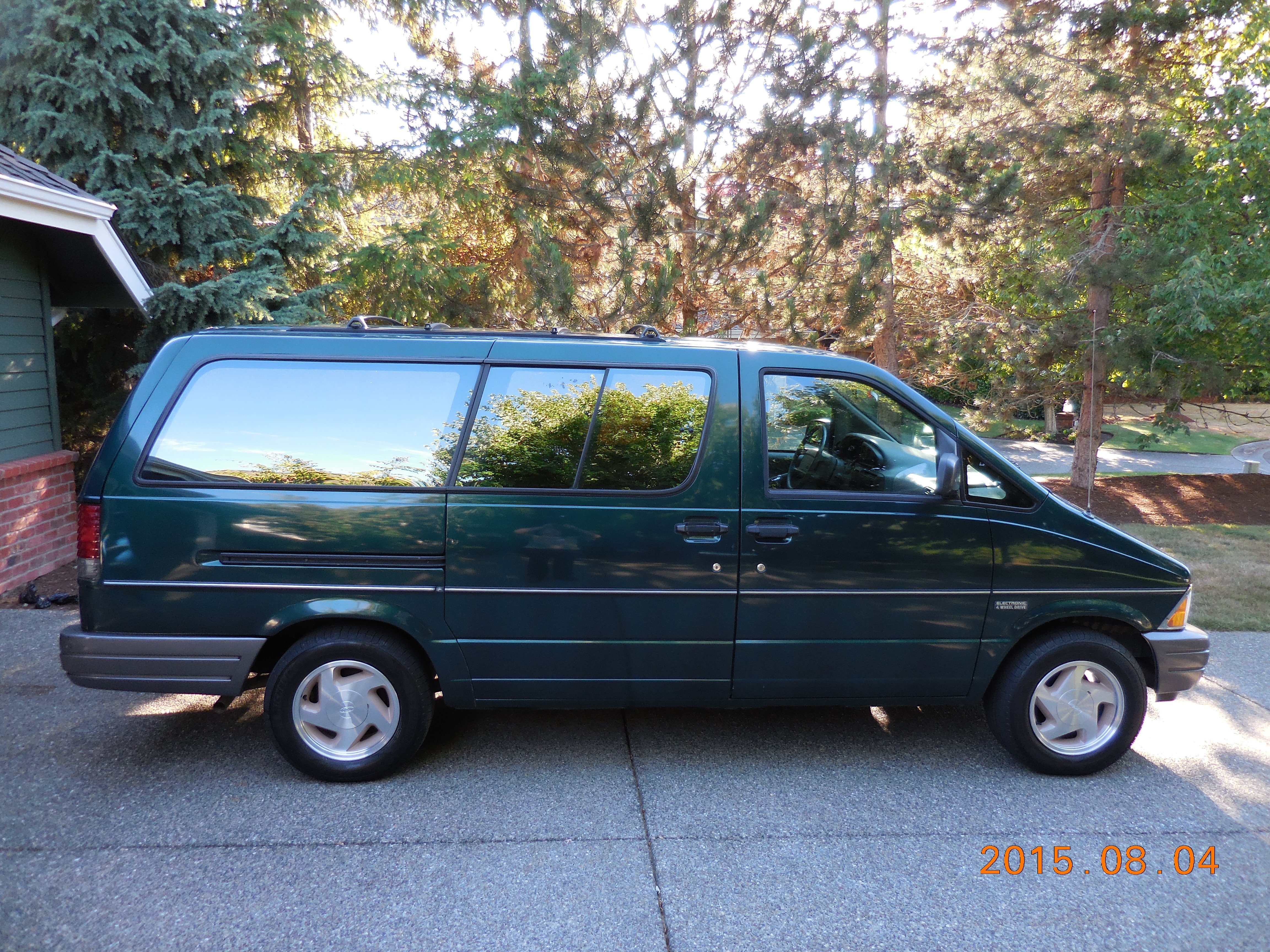
Michelin Defender 215/65R15

Meanwhile, I've got one nice set of four extra bare Explorer rims (painted silver)

One pair of fairly ratty ones with bad tires

A set of bare 14" factory alloys

A set of seven-year-old Ford caps for the 14" wheels (paid over $160)

A brand-new, never been on the ground since 2012 full-size spare on factory alloy, Kumho 14" tire


And a whole pile of meh Explorer wheel caps.
All of which I need to make go away.
Lead Driver
Joined: Sep 2003
Posts: 7,018
Likes: 210
From: SoCal
I just went the 15" route with a set of ~1996 Explorer 15x7 wheels:
https://photos.google.com/album/AF1Q...Pl5M6YWME6IqZf
https://photos.google.com/album/AF1Q...vwIDP7mUCYN_1B
It became a necessity when one of my tires decided to shed its tread at about 65 mph on the freeway. I was on a downhill, so it took some time to come to a stop, at which point the stock rim was ruined. The only set of 4 wheels of the same style I could find at my local salvage yard were those with the tear-drop shaped holes. I got a set of Sumitomo HTR something or other sized 215/65/15, which is just a shade taller than the 215/70/14 tires they replace, but may be a bit wider due to the lower profile.
There appears to be no clearance issues on the front except maybe if I hit a hard bump while turning. But it looked like the back tires would have been cut by the bent-in part of fender lips on deep suspension compressions, so I rolled up the inner lips. The "new" wheels stick out far enough that the tires may still rub, but at least they won't get cut.
I'm keeping one of the still usable 14" tire/wheel as a spare that's been strapped into the same place as the stock spare. It's a little heavier, and thicker, so I hope it stays put.
https://photos.google.com/album/AF1Q...Pl5M6YWME6IqZf
https://photos.google.com/album/AF1Q...vwIDP7mUCYN_1B
It became a necessity when one of my tires decided to shed its tread at about 65 mph on the freeway. I was on a downhill, so it took some time to come to a stop, at which point the stock rim was ruined. The only set of 4 wheels of the same style I could find at my local salvage yard were those with the tear-drop shaped holes. I got a set of Sumitomo HTR something or other sized 215/65/15, which is just a shade taller than the 215/70/14 tires they replace, but may be a bit wider due to the lower profile.
There appears to be no clearance issues on the front except maybe if I hit a hard bump while turning. But it looked like the back tires would have been cut by the bent-in part of fender lips on deep suspension compressions, so I rolled up the inner lips. The "new" wheels stick out far enough that the tires may still rub, but at least they won't get cut.
I'm keeping one of the still usable 14" tire/wheel as a spare that's been strapped into the same place as the stock spare. It's a little heavier, and thicker, so I hope it stays put.
FTE Stories
Ford Trucks for Ford Truck Enthusiasts

Top 6 Best Deals Available on New Fords & Lincolns Right Now
Brett Foote
This Hennessey Takes the Expedition Tremor's Off-Roading Capability to the Next Level
Verdad Gallardo
Top 10 Fords at 2026 Carlisle Ford Nationals
Joe Kucinski
3 Best / 3 Worst Parts of Modern Ford Ownership
Brett Foote
10 Amazing Upgrades That Solve Common Ford Truck Owner Headaches
Pouria Savadkouei
Every 2026 Ford Engine Explained
Brett Foote
10 Ugly Ford Trucks That We Still Kinda Love
Joe Kucinski
10 Things Every Truck Owner NEEDS (2026 Edition)
Michael S. Palmer
Rezvani's Latest Post-Apocalyptic Monster Is a Ford F-150 Raptor Underneath
Verdad Gallardo
FTE Community Team
Joined: Nov 2001
Posts: 1,873
Likes: 277
From: Oak Harbor, Washington
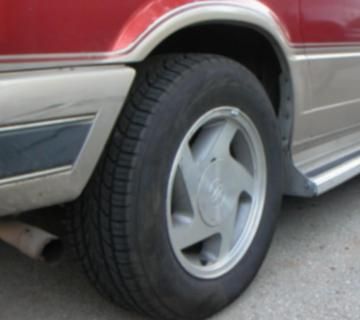
Hmmm. I went with the '91-94 wheels and I don't think I could make the tires contact anything. I've had a good load in it and didn't have the rears come close to the wells.
Tuned
Joined: Aug 2009
Posts: 402
Likes: 16
Agreed.
I've probably installed more wheels and tires than all the rest of you combined, and I consider 215/65-15's on Exp 91-94 to be the perfect baseline for y'all.
I've measured ET at around 11 or 12 mm and NO problems ever.
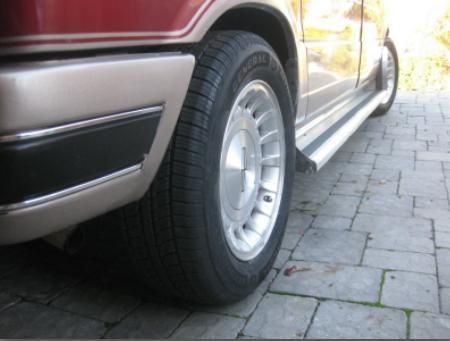
I start getting rubbed the wrong way at 225/60-16 on a Lincoln Town Car, ET 5mm.
This really puts you out at the limits with respect to fender collision.
Fronts rub when pulling G's in fast corners, and rears can rub on freeway dips while carrying load.
Solutions exist and I can still recommend for casual use.
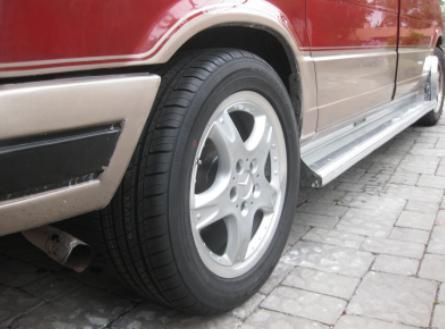
225/55-17 & 245/50-17's, still another long story, in progress.
I've probably installed more wheels and tires than all the rest of you combined, and I consider 215/65-15's on Exp 91-94 to be the perfect baseline for y'all.
I've measured ET at around 11 or 12 mm and NO problems ever.

I start getting rubbed the wrong way at 225/60-16 on a Lincoln Town Car, ET 5mm.
This really puts you out at the limits with respect to fender collision.
Fronts rub when pulling G's in fast corners, and rears can rub on freeway dips while carrying load.
Solutions exist and I can still recommend for casual use.

225/55-17 & 245/50-17's, still another long story, in progress.

Lead Driver
Joined: Sep 2003
Posts: 7,018
Likes: 210
From: SoCal
Can you remind me, what are you calling ET? Are the 91-94 wheels 6.5" or 7"? These I got are definitely 7", and supposedly -19mm offset, so almost the entire additional inch of width over stock is toward the outside.
The most obvious problem is in the rear. I put a straight edge up against the sidewall and followed it up. On one side, it just clears the inner edge of the fender. On the other side. it definitely intersects about 1/4" into the lip. But again, the rear suspension would have to be at full compression for the tire to hit the fender. I folded up the inner lip just to be safe. This also tells me that the axle is not sitting exactly centered under the van; it's shifted about 3/16" to one side.
Also, new instructions from google to use their new photo tool does not allow easy viewing. Here are links back to pacasaweb:
https://picasaweb.google.com/1155523...92621558498178
https://picasaweb.google.com/1155523...92623271793874
The most obvious problem is in the rear. I put a straight edge up against the sidewall and followed it up. On one side, it just clears the inner edge of the fender. On the other side. it definitely intersects about 1/4" into the lip. But again, the rear suspension would have to be at full compression for the tire to hit the fender. I folded up the inner lip just to be safe. This also tells me that the axle is not sitting exactly centered under the van; it's shifted about 3/16" to one side.
Also, new instructions from google to use their new photo tool does not allow easy viewing. Here are links back to pacasaweb:
https://picasaweb.google.com/1155523...92621558498178
https://picasaweb.google.com/1155523...92623271793874
Tuned
Joined: Aug 2009
Posts: 402
Likes: 16
- Your links can now be followed and I see what you have, and of course its a different wheel from mine and I don't have immediate knowledge of your specs.
- I'm not surprised by your rear axle offset. My axle is 5 to 10mm to the right. One would only notice and investigate when there is a fender conflict which is what happened to both of us. I suspect either a design flaw or manufacturing issue. I intend to do something about it, some way, some how.
- I wouldn't expect a difference in axle widths, but then again, I wouldn't expect an offset either. But there is. Mine is the 7.5 diff and has a WMS-WMS measured to be 62.150 inch +/- 0.050.
- The Explorer wheels in my pics are nominal 15x7. The "15" and the "by 7" would refer to the tire mounting surface inside the lips. A tape measure would tell you the outside dimensions are 16-1/2 x 8, a typical difference over nominal (but the concept is often lost on eBay sellers as they select shipping boxes).
- My example of these Explorer wheels are not stamped with dimensions. Just the Ford logo and part number. Strange way of life back then. Had to measure them myself.
- "et" is a common alias for "offset", and would be the distance that the wheel center line differs from the wheel mounting surface (commonly abbreviated WMS). This is easy to measure if the wheel is naked because we can confirm both the outside width (8-1/8" in my Exp example, pic below) and the setback {ed:backset} which is the distance from the lip to the WMS. (pic below). If the wheel has a tire on it, the setback is still doable, but it's difficult to confirm outside width.
- By convention, a center line more inward from the WMS produces a more negative number AND the negative sign is commonly dropped because it is understood. Therefore as we go from et (aka offset) of 19 to 11 to 5, the wheel is pushed further to the outside.
- (From my work building adapters) if you had a (minus) 19mm offset, that would be a good number also and is actually my target for some axle design work I'm doing. I would be VERY surprised if it gave you rubbing. Therefore I don't think you are at 19.
- The tire diameter may result in a difference in clearance. I was at 215/65-15 with no rubbing. There can be slight differences between brands and lines as to the tread width and shoulder sharpness.
******* Offset measurements***********
Outside width
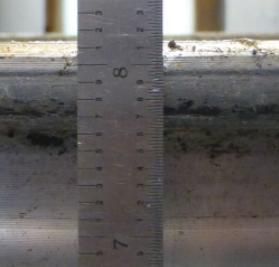
Setback {ed:backset}, using a cement encrusted level as a straight-edge.
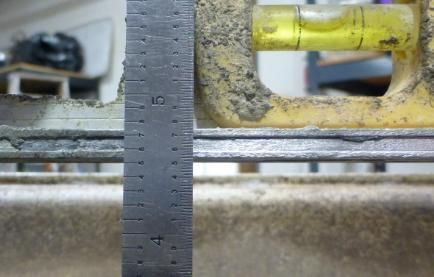
Offset = 1/2 width - setback = 1/2(8.15) - 4.5 = -0.425 in or -11mm
A typical assumption is that the outside lips are mirrored and therefore the tire sits centered on the wheel centerline.
- I'm not surprised by your rear axle offset. My axle is 5 to 10mm to the right. One would only notice and investigate when there is a fender conflict which is what happened to both of us. I suspect either a design flaw or manufacturing issue. I intend to do something about it, some way, some how.
- I wouldn't expect a difference in axle widths, but then again, I wouldn't expect an offset either. But there is. Mine is the 7.5 diff and has a WMS-WMS measured to be 62.150 inch +/- 0.050.
- The Explorer wheels in my pics are nominal 15x7. The "15" and the "by 7" would refer to the tire mounting surface inside the lips. A tape measure would tell you the outside dimensions are 16-1/2 x 8, a typical difference over nominal (but the concept is often lost on eBay sellers as they select shipping boxes).
- My example of these Explorer wheels are not stamped with dimensions. Just the Ford logo and part number. Strange way of life back then. Had to measure them myself.
- "et" is a common alias for "offset", and would be the distance that the wheel center line differs from the wheel mounting surface (commonly abbreviated WMS). This is easy to measure if the wheel is naked because we can confirm both the outside width (8-1/8" in my Exp example, pic below) and the setback {ed:backset} which is the distance from the lip to the WMS. (pic below). If the wheel has a tire on it, the setback is still doable, but it's difficult to confirm outside width.
- By convention, a center line more inward from the WMS produces a more negative number AND the negative sign is commonly dropped because it is understood. Therefore as we go from et (aka offset) of 19 to 11 to 5, the wheel is pushed further to the outside.
- (From my work building adapters) if you had a (minus) 19mm offset, that would be a good number also and is actually my target for some axle design work I'm doing. I would be VERY surprised if it gave you rubbing. Therefore I don't think you are at 19.
- The tire diameter may result in a difference in clearance. I was at 215/65-15 with no rubbing. There can be slight differences between brands and lines as to the tread width and shoulder sharpness.
******* Offset measurements***********
Outside width

Setback {ed:backset}, using a cement encrusted level as a straight-edge.

Offset = 1/2 width - setback = 1/2(8.15) - 4.5 = -0.425 in or -11mm
A typical assumption is that the outside lips are mirrored and therefore the tire sits centered on the wheel centerline.
Lead Driver
Joined: Sep 2003
Posts: 7,018
Likes: 210
From: SoCal
- I'm not surprised by your rear axle offset. My axle is 5 to 10mm to the right. One would only notice and investigate when there is a fender conflict which is what happened to both of us. I suspect either a design flaw or manufacturing issue. I intend to do something about it, some way, some how.
- The Explorer wheels in my pics are nominal 15x7. The "15" and the "by 7" would refer to the tire mounting surface inside the lips. A tape measure would tell you the outside dimensions are 16-1/2 x 8, a typical difference over nominal (but the concept is often lost on eBay sellers as they select shipping boxes).
- My example of these Explorer wheels are not stamped with dimensions. Just the Ford logo and part number. Strange way of life back then. Had to measure them myself.
- My example of these Explorer wheels are not stamped with dimensions. Just the Ford logo and part number. Strange way of life back then. Had to measure them myself.
- By convention, a center line more inward from the WMS produces a more negative number AND the negative sign is commonly dropped because it is understood. Therefore as we go from et (aka offset) of 19 to 11 to 5, the wheel is pushed further to the outside.
- (From my work building adapters) if you had a (minus) 19mm offset, that would be a good number also and is actually my target for some axle design work I'm doing. I would be VERY surprised if it gave you rubbing. Therefore I don't think you are at 19.
- (From my work building adapters) if you had a (minus) 19mm offset, that would be a good number also and is actually my target for some axle design work I'm doing. I would be VERY surprised if it gave you rubbing. Therefore I don't think you are at 19.
Wheel Tech Information - Offset
When you move the centerline (and therefore the wheel) more inboard by pushing the WMS outboard, it's called positive offset. Their offerings for stock sized replacements for those years of Explorer wheels show 15x7 with -19mm offset, so going by their definition, that would push the centerline outboard by 19mm. I'm almost certain that if the offset was 0, or pushed inboard 19mm, the tire would hit the brake line first, then the other parts. Whatever we call it, most of the added width of the wheel has to go outboard.
As I said, I hadn't experienced any actual rubbing yet, but I wanted to make sure that if I ever get a full load of passengers (6 * 150 lbs avg per), and the rear suspension is compressed a lot more than it is now, I don't want bumps to cause any problems.
Lead Driver
Joined: Sep 2003
Posts: 7,018
Likes: 210
From: SoCal
One remaining question on this upgrade. Should I replace the stock studs with longer studs?
The mounting flange of the Explorer alloy wheels are obviously thicker than the original steel wheels, so the stock studs seem to not extend past the Explorer nuts. Since the the studs have like 1/8" of cut-down at the tip to help guide the nut, I'm thinking the last of the threads on the stud may not get past the threads on the nut. Compare that to the stock Explorer studs that stick out almost 1/2" past the ledge of the nut. In aeronautic applications, we are required to make sure at least 3 threads show past the nut after tightening. I'm worried that there is not enough thread engagement in this configuration.
The mounting flange of the Explorer alloy wheels are obviously thicker than the original steel wheels, so the stock studs seem to not extend past the Explorer nuts. Since the the studs have like 1/8" of cut-down at the tip to help guide the nut, I'm thinking the last of the threads on the stud may not get past the threads on the nut. Compare that to the stock Explorer studs that stick out almost 1/2" past the ledge of the nut. In aeronautic applications, we are required to make sure at least 3 threads show past the nut after tightening. I'm worried that there is not enough thread engagement in this configuration.

Posting Guru
Joined: Jul 2004
Posts: 2,416
Likes: 1
From: Mitchell, SD
XLT, I have been running the explorer rims for almost 10 years now, no issues with the studs, I just make sure to torque them down. Also the Aero studs are 2" long, (Dorman# 610-358) and the Explorer's are 1.9375" long (Dorman# 610-379) so technically the Aero bolts are longer.