



Cb Antennas

Senior User
Joined: Dec 2009
Posts: 254
Likes: 0
From: Lake Greenwood, SC
I mounted mine like 1976and2001_250 did. I used the Firestik Firefly because it's thinner, lighter and would cause less stress on the cowl mount than the standard antenna. I have not noticed any wind noise from it and it does the job well for me. I used the 4' model and that puts a good chunk of it above the top of the cab. I've been through the touchless car wash a few times and the equipment slaps the antenna as it moves around the truck but all seems well.
Token Redneck


Joined: Jun 2007
Posts: 9,339
Likes: 350
From: Breckenridge, TX

I thought they were on the Wilson site, but they're the ones who say drivers side rear is the best place. Maybe it was Francis or Firestik and I just can't find them on their sites.
Senior User
Joined: Jan 2010
Posts: 392
Likes: 1
From: Listowel, Ont.
I'd like to have duals on mine, but I have a tonneau cover on my truck, and there doesn't seem to be enough room between the box and cab.
That's where I had them on my last truck, but there was lots of room.
That's where I had them on my last truck, but there was lots of room.
Cargo Master
Joined: Jul 2008
Posts: 2,585
Likes: 62

Guys,
The best route to go with a pickup truck, if you want to get really technical, is a 102" whip mounted at the physical center of the vehicle. This will allow the most omnidirectional performance.
Also, any antenna that is shorter than 102" is "loaded". This means that the antenna is made so that the physical length is shorter than 1/4 wave length but the electrical (what the radio sees) is still 1/4 wave length. The benefit - shoter antenna. The drawback - attenuation. The shorter the antenna is the more attenuation there is. You can't get around the laws of physics.
As for dual antennas - this has already been touched on to a certain extent. The "magic" length is 8.5', or very very close. If you can't get that length then screw it.
The reasoning is simple - that is 1/4 wave length on the CB band - 27mHz. What happens at this "magic" length is this: you "phase" the feed lines such that the RF from the radio reaches BOTH antennas IN PHASE. This means they are 0deg apart. When this happens the energy from BOTH antennas ADDS together. When you think about it - what is the most important area for the energy you are transmitting, or direction of receiver sensitivity when you are on the road? Easy - up the highway and down the highway (in front and behind). When you phase two vertical radiators together in phase their directivity becomes broad side, or away from the "line" the two antennas make (connect the dots - the radiation would be perpendicular to a line between the two antennas).
This, of course, ONLY happens when the antennas are 8.5' wide. If they are not precisely that (divide 234 by whatever channel frequency, 27.185mHz for channel 19 for example, if you want to get REALLY exact...) then you are not going to get the real benefit of having dual phased antennas. The fact of the matter is you will deteriorate your signal - both transmitted and received. Note - SWR has nothing to do with how your antennas are phased. You need far more sophisticated test gear to figure out what is going on, if you really want to. Or, just measure 8.5' and call it good.
If you don't want to screw with all the theory - do like I did and get you a 102" whip and mount it off a stake hole in the bed. It works fine. No loading. No phasing. Just make sure you GROUND IT WELL and GROUND THE REST OF THE TRUCK WELL (that means exhaust pipe to the frame near the rear axle, cab to bed, bed and cab to frame, hood to cab, and if you really want to go wild then ground the doors to the cab too). I will say the most important ground I have found is the exhaust pipe to the frame near the rear axle. Hard to explain but it cuts out the radiation of the exhaust pipe from the RF generated at the engine (injectors, spark plugs, etc). Really nifty trick
Enjoy! RF is fun - treat it with respect and you'll have loads of fun. I've been in radio communications for over 10 years and play with the "big guns". Ever bounced radio signals off the moon? Talked to Japan?
The best route to go with a pickup truck, if you want to get really technical, is a 102" whip mounted at the physical center of the vehicle. This will allow the most omnidirectional performance.
Also, any antenna that is shorter than 102" is "loaded". This means that the antenna is made so that the physical length is shorter than 1/4 wave length but the electrical (what the radio sees) is still 1/4 wave length. The benefit - shoter antenna. The drawback - attenuation. The shorter the antenna is the more attenuation there is. You can't get around the laws of physics.
As for dual antennas - this has already been touched on to a certain extent. The "magic" length is 8.5', or very very close. If you can't get that length then screw it.
The reasoning is simple - that is 1/4 wave length on the CB band - 27mHz. What happens at this "magic" length is this: you "phase" the feed lines such that the RF from the radio reaches BOTH antennas IN PHASE. This means they are 0deg apart. When this happens the energy from BOTH antennas ADDS together. When you think about it - what is the most important area for the energy you are transmitting, or direction of receiver sensitivity when you are on the road? Easy - up the highway and down the highway (in front and behind). When you phase two vertical radiators together in phase their directivity becomes broad side, or away from the "line" the two antennas make (connect the dots - the radiation would be perpendicular to a line between the two antennas).
This, of course, ONLY happens when the antennas are 8.5' wide. If they are not precisely that (divide 234 by whatever channel frequency, 27.185mHz for channel 19 for example, if you want to get REALLY exact...) then you are not going to get the real benefit of having dual phased antennas. The fact of the matter is you will deteriorate your signal - both transmitted and received. Note - SWR has nothing to do with how your antennas are phased. You need far more sophisticated test gear to figure out what is going on, if you really want to. Or, just measure 8.5' and call it good.
If you don't want to screw with all the theory - do like I did and get you a 102" whip and mount it off a stake hole in the bed. It works fine. No loading. No phasing. Just make sure you GROUND IT WELL and GROUND THE REST OF THE TRUCK WELL (that means exhaust pipe to the frame near the rear axle, cab to bed, bed and cab to frame, hood to cab, and if you really want to go wild then ground the doors to the cab too). I will say the most important ground I have found is the exhaust pipe to the frame near the rear axle. Hard to explain but it cuts out the radiation of the exhaust pipe from the RF generated at the engine (injectors, spark plugs, etc). Really nifty trick
Enjoy! RF is fun - treat it with respect and you'll have loads of fun. I've been in radio communications for over 10 years and play with the "big guns". Ever bounced radio signals off the moon? Talked to Japan?

Senior User
Joined: Apr 2010
Posts: 169
Likes: 1
From: Anchorage, Alaska
This, of course, ONLY happens when the antennas are 8.5' wide. If they are not precisely that (divide 234 by whatever channel frequency, 27.185mHz for channel 19 for example, if you want to get REALLY exact...) then you are not going to get the real benefit of having dual phased antennas. The fact of the matter is you will deteriorate your signal - both transmitted and received. Note - SWR has nothing to do with how your antennas are phased. You need far more sophisticated test gear to figure out what is going on, if you really want to. Or, just measure 8.5' and call it good.


Elder User
Joined: Jun 2006
Posts: 764
Likes: 1
From: Gulfport/Biloxi, MS
Do yourself a favor and DONT get a certain type because it looks better. Talk to someone that knows about CB's and get one that is the best functioning then figure where to mount it. I have a whip mounted on the drivers side of my tool box and think it looks great there.... Ill see if I have any pics.
Cargo Master
Joined: Jul 2008
Posts: 2,585
Likes: 62
If you can come up with a really good explaination of what that is and how it works maybe I will have a better understanding.
That said: you can't fool physics. You can't get something for nothing. Phasing has to do with how the radio waves match up (sine waves like AC is in your wall outlet in your house, only its RF and not electricity). What you are trying to do is lay the two signals (from the two antennas) on top of each other so that the sine waves of the two signals lie perfectly on top of each other. If they are "out of phase" this is because they are several degrees apart (a full cycle sine wave is 360 degrees, remember your trig? 90 degrees apart is 1/4 cycle, 180 degrees apart is 1/2 cycle, and 270 degrees apart is 3/4 cycle).
You could even phase your antennas 90deg apart, depending on which one was first and second (left or right), and get directivity to the left and right of your vehicle. Check out a "4 square" antenna. Thats the exact principle this type of antenna is based off of - only it uses 4 antennas, not 2, for low frequency shortwave bands on a large scale. They are just multi-phased 1/4w verticals. Depending on how you switch them together determines where your signal goes.
So how does a "phase compensator" make up for the fact that the RF sine waves have to match up? My assumption is you get in to some wild impedance matching. If you are anything other than 1/4 wave length the impedance has to change to match the sine waves together in-phase (whether that is 52deg or 123deg, whatever). Then again, we're talking about broad side directivity, not off the ends. But, I am open to any explaination you may have. This might be pretty interesting.
That said: you can't fool physics. You can't get something for nothing. Phasing has to do with how the radio waves match up (sine waves like AC is in your wall outlet in your house, only its RF and not electricity). What you are trying to do is lay the two signals (from the two antennas) on top of each other so that the sine waves of the two signals lie perfectly on top of each other. If they are "out of phase" this is because they are several degrees apart (a full cycle sine wave is 360 degrees, remember your trig? 90 degrees apart is 1/4 cycle, 180 degrees apart is 1/2 cycle, and 270 degrees apart is 3/4 cycle).
You could even phase your antennas 90deg apart, depending on which one was first and second (left or right), and get directivity to the left and right of your vehicle. Check out a "4 square" antenna. Thats the exact principle this type of antenna is based off of - only it uses 4 antennas, not 2, for low frequency shortwave bands on a large scale. They are just multi-phased 1/4w verticals. Depending on how you switch them together determines where your signal goes.
So how does a "phase compensator" make up for the fact that the RF sine waves have to match up? My assumption is you get in to some wild impedance matching. If you are anything other than 1/4 wave length the impedance has to change to match the sine waves together in-phase (whether that is 52deg or 123deg, whatever). Then again, we're talking about broad side directivity, not off the ends. But, I am open to any explaination you may have. This might be pretty interesting.
FTE Stories
Ford Trucks for Ford Truck Enthusiasts

Top 6 Best Deals Available on New Fords & Lincolns Right Now
Brett Foote
This Hennessey Takes the Expedition Tremor's Off-Roading Capability to the Next Level
Verdad Gallardo
Top 10 Fords at 2026 Carlisle Ford Nationals
Joe Kucinski
3 Best / 3 Worst Parts of Modern Ford Ownership
Brett Foote
10 Amazing Upgrades That Solve Common Ford Truck Owner Headaches
Pouria Savadkouei
Every 2026 Ford Engine Explained
Brett Foote
10 Ugly Ford Trucks That We Still Kinda Love
Joe Kucinski
10 Things Every Truck Owner NEEDS (2026 Edition)
Michael S. Palmer
Rezvani's Latest Post-Apocalyptic Monster Is a Ford F-150 Raptor Underneath
Verdad Gallardo
Senior User
Joined: Apr 2010
Posts: 169
Likes: 1
From: Anchorage, Alaska
A phase compensator can refer to an engineering tool or a component on Federation starships such as the Intrepid-class.


Thread Starter
|
Junior User
Joined: Aug 2010
Posts: 59
Likes: 0
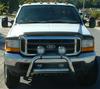
Thanks man! your truck looks good! i think im gonna go with the 102inch steel wip in the center. still thinking bout your set up. i will post a picture of my cb radio setup.
Thread Starter
|
Junior User
Joined: Aug 2010
Posts: 59
Likes: 0
My buddy has a cover on his and he mounted it on the railing of the cover inside of the bed. he cut a hole in it just big enough for it and stiched it back up so it doesnt tear.
Thread Starter
|
Junior User
Joined: Aug 2010
Posts: 59
Likes: 0

Cargo Master
Joined: Jul 2008
Posts: 2,585
Likes: 62
It's quite simple, at least in the 25th century:
Phase compensator - Memory Alpha, the Star Trek Wiki
Phase compensator - Memory Alpha, the Star Trek Wiki
Star Trek, eh? Funny. You bull $h.it well.
 I was thinking pretty hard about that one.