



front end alignment
Thread Starter
|
Junior User
Joined: Oct 2009
Posts: 79
Likes: 0
From: spring,tx.
front end alignment
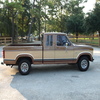
i have a 1986 f-150 302 f.i. supercab 2-wheel drive. i just replaced my tie rod ends. i counted the turns removing the old ones and counted the turns putting the new ones in. i have a slight pull to the right. can i ajust that with my sterring linkage clamps? does anyone have a home alignment method? also does my truck have camber and caster ajustment? thanks

Methanoholic
Joined: Mar 2009
Posts: 6,442
Likes: 8
From: Maine (NorCal Native)

Take it to an alignment shop else you'll pay beyond the cost of alignment in tires.
You can use a level for Camber fairly easy, Caster is a lot harder with a level, you really need a caster camber gauge... any real racers around that you know, most real racers have a camber caster gauge.
To do the toe in, set emergency brake, chock rear wheels, jack both tires off ground, using a pencil (or the like) spin the tire and put a line all the way around the tire (steady hand on ground or something), it doesn't matter where, I usually do it on the center rib.
Now that you have a line all the way around each tire, set it back on the ground and roll it forward 10 feet (Roll it backwards first if you need to), Set emergency brake, chock rear wheels, now take a tape measure and measure between the two lines on the front and rear of the tire (without moving anything), The closer you are too horizontal centerline the more accurate you can be.
The difference between the two measurements (front of tire and rear of tire) is the toe in or toe out.
-Enjoy
fh : )_~
You can use a level for Camber fairly easy, Caster is a lot harder with a level, you really need a caster camber gauge... any real racers around that you know, most real racers have a camber caster gauge.
To do the toe in, set emergency brake, chock rear wheels, jack both tires off ground, using a pencil (or the like) spin the tire and put a line all the way around the tire (steady hand on ground or something), it doesn't matter where, I usually do it on the center rib.
Now that you have a line all the way around each tire, set it back on the ground and roll it forward 10 feet (Roll it backwards first if you need to), Set emergency brake, chock rear wheels, now take a tape measure and measure between the two lines on the front and rear of the tire (without moving anything), The closer you are too horizontal centerline the more accurate you can be.
The difference between the two measurements (front of tire and rear of tire) is the toe in or toe out.
-Enjoy
fh : )_~

Post Fiend
Joined: Dec 2007
Posts: 8,521
Likes: 16
From: Lost
2 pieces of sheet metal, about 24" long & 12-14" wide. Bend a ~45* angle along the longer sides, and cut 2 slots 2-4" above the bend on both ends. Lay these against the outsides of the tires, and use 2 tape measures in the slots.
These can easily be made if you have access to sheet metal, a brake, and something to cut the slots. Otherwise, look at racer supply websites for "Toe plates" and spend upwards of $100 on pre-made plates.
Note: these are only useful in setting the toe. A camber/caster guage is still needed to adjust the camber/caster.
These can easily be made if you have access to sheet metal, a brake, and something to cut the slots. Otherwise, look at racer supply websites for "Toe plates" and spend upwards of $100 on pre-made plates.
Note: these are only useful in setting the toe. A camber/caster guage is still needed to adjust the camber/caster.

Postmaster
Joined: Oct 2008
Posts: 3,026
Likes: 0
From: Renton, WA
I have a better real easy way to adjust toe that I have been using for years with good success. Instead of drawing an unreliable line, or using the crooked sidewall of the tire, just stick a pin or finishing nail in each tire. You can then spin each tire so the pin is at the front and measure the distance between the pins, then spin to the back and measure again. If the pin/nail is sturdy enough you can even hook the tape measure on it so you don't need a second person to hold the other end.
I've also measured my camber with a magnetic digital angle gauge that is pretty accurate that I picked up at harbor freight. Indecently I found that both my front Dana 60 and rear 10.25 had positive camber, yeah the rear has positive camber, can't figure that one out but tire wear verifies it.
Theoretically I can use that digital angle gauge to measure caster and what's it called I think included angle it's the kingpin angle, with some fancy math by measuring the camber change as the wheel turns from lock to lock.
I've also measured my camber with a magnetic digital angle gauge that is pretty accurate that I picked up at harbor freight. Indecently I found that both my front Dana 60 and rear 10.25 had positive camber, yeah the rear has positive camber, can't figure that one out but tire wear verifies it.
Theoretically I can use that digital angle gauge to measure caster and what's it called I think included angle it's the kingpin angle, with some fancy math by measuring the camber change as the wheel turns from lock to lock.
Methanoholic
Joined: Mar 2009
Posts: 6,442
Likes: 8
From: Maine (NorCal Native)
Using a nail/pin in a single location is extremely inaccurate ... It relies in the trueness of the tire, wheel, hub, spindle, ball joints etc... etc... Including slop in any of the front end components.
Also with a single mark, you have to jack or roll the vehicle each time you want to go from the front to back and you will never get it accurate.
A single line drawn around the tire eliminates all those issues and is as accurate as you are with the line and tape measure, It can be done perfectly! And is the most accurate MANUAL method, even over toe plates.
You can measure at ground level, however the further down from hub centerline the more accurate you have to be when reading the tape measure, it is a shorter distance from vertical centerline.
Toe plates also rely on the trueness of wheels and tires, good toe plates that set on the wheel not tire are expensive, spindle toe plates are even more expensive.
If you pay attention to lettering and what not, your wheels and tires are true, regular toe plates work well.
And you don't need to be fancy creating toe plates, any pair of straight edges works just fine ... Even wood!
-Enjoy
fh : )_~
Also with a single mark, you have to jack or roll the vehicle each time you want to go from the front to back and you will never get it accurate.
A single line drawn around the tire eliminates all those issues and is as accurate as you are with the line and tape measure, It can be done perfectly! And is the most accurate MANUAL method, even over toe plates.
You can measure at ground level, however the further down from hub centerline the more accurate you have to be when reading the tape measure, it is a shorter distance from vertical centerline.
Toe plates also rely on the trueness of wheels and tires, good toe plates that set on the wheel not tire are expensive, spindle toe plates are even more expensive.
If you pay attention to lettering and what not, your wheels and tires are true, regular toe plates work well.
And you don't need to be fancy creating toe plates, any pair of straight edges works just fine ... Even wood!
-Enjoy
fh : )_~
Trending Topics

Moderator


Joined: Jan 2001
Posts: 56,950
Likes: 2,718
From: Virginia
Yes, you said you measure the nail or pin front and rear, but it still does not eliminate the problem of how to measure from one pin to the other in a straightline with the frame and suspension in the way.
And the other poster is correct, you can't lift and then lower the suspension and get an accurate measurement, without the roller plates under the tires. Lifting the suspension pulls it out of wack, and then sitting it back down leaves it out of wack unless you move the truck forward and backward.
If I could think up some way to mount one of those laser levels to each rim, I think you could do a pretty good job with a setup like that.
And the other poster is correct, you can't lift and then lower the suspension and get an accurate measurement, without the roller plates under the tires. Lifting the suspension pulls it out of wack, and then sitting it back down leaves it out of wack unless you move the truck forward and backward.
If I could think up some way to mount one of those laser levels to each rim, I think you could do a pretty good job with a setup like that.
FTE Stories
Ford Trucks for Ford Truck Enthusiasts

10 Best Ford Truck Engines We Miss the Most!
Joe Kucinski
2026 Shelby F-150 Off-Road: Better Than a Raptor R?
Brett Foote
2027 Super Duty Carhartt Package First Look: 12 Things You NEED to Know!
Michael S. Palmer
10 Most Surprising 2026 Ford Truck Features!
Joe Kucinski
Top 10 Ford Trucks Coming to Mecum Indy 2026
Brett Foote
5 Best / 5 Worst Ford Truck Wheels of All Time
Joe Kucinski
Ford Super Duty: 5 Things Owners LOVE, 5 Things They LOATHE!
Joe Kucinski
Every 2026 Ford Truck Engine RANKED from WORST to FIRST!
Michael S. Palmer
The Best F-150 Deal of Every Trim Level (XL through Raptor)
Joe Kucinski
Methanoholic
Joined: Mar 2009
Posts: 6,442
Likes: 8
From: Maine (NorCal Native)
Gotta go do some disassembly (I won't show it all, sorry, just can't show my racers edge!) and take pictures, I'll post them up shortly.
It will also show a bit of my machining abilities...

-Enjoy
fh : )_~
Methanoholic
Joined: Mar 2009
Posts: 6,442
Likes: 8
From: Maine (NorCal Native)
Probably should not have stated "I have just the ticket for you" more likely I have an idea for you...


I have them for 4 lug, 5 lug and wide 5 ... No I do not sell them, nor will I.
There is four each, two hold lasers, two hold .002 laser targets that feed the info into a PC with my own custom software.
They attach to the hubs, not wheels. I don't do setups with wheels on, I have machined triangle shaped plates that bolt on in place of tires and wheels. Exactly (as possible) the same every time! No wheels or tires to give variables.
Notice the magnets in the leg holes, those are rare earth magnets and it's some kinda tough to get those adapters off the hubs.
-Enjoy
fh : )_~
I have them for 4 lug, 5 lug and wide 5 ... No I do not sell them, nor will I.
There is four each, two hold lasers, two hold .002 laser targets that feed the info into a PC with my own custom software.
They attach to the hubs, not wheels. I don't do setups with wheels on, I have machined triangle shaped plates that bolt on in place of tires and wheels. Exactly (as possible) the same every time! No wheels or tires to give variables.
Notice the magnets in the leg holes, those are rare earth magnets and it's some kinda tough to get those adapters off the hubs.
-Enjoy
fh : )_~
Postmaster
Joined: Oct 2008
Posts: 3,026
Likes: 0
From: Renton, WA
Using a nail/pin in a single location is extremely inaccurate ... It relies in the trueness of the tire, wheel, hub, spindle, ball joints etc... etc... Including slop in any of the front end components.
Also with a single mark, you have to jack or roll the vehicle each time you want to go from the front to back and you will never get it accurate.
A single line drawn around the tire eliminates all those issues and is as accurate as you are with the line and tape measure, It can be done perfectly! And is the most accurate MANUAL method, even over toe plates.
Also with a single mark, you have to jack or roll the vehicle each time you want to go from the front to back and you will never get it accurate.
A single line drawn around the tire eliminates all those issues and is as accurate as you are with the line and tape measure, It can be done perfectly! And is the most accurate MANUAL method, even over toe plates.
I could also never get a strait line drawn on my big, not exactly round mud tires. Using the same point on the tire is the most accurate for me, it eleminates any trueness problems in the tire/wheel. And any slop in the spindle/hub/bearings is something to deal with before doing any alingment.
Also I guess the same could be said for getting the tape measure from one pin to the other in a strait line. I can manage that all under my leaf springs at the same level as the hub/axle. Again works well for me, probably won't for most others, just wanted to throw the idea out to to those it will work for.
It is really easy and accurate for me.
Methanoholic
Joined: Mar 2009
Posts: 6,442
Likes: 8
From: Maine (NorCal Native)
You will still have the same issue with a solid axle ... There is enough play in all the components (including links) that adds up allowing for inaccuracies, even with a solid axle it should be done on the ground after rolling the vehicle forward!
I personally have done the line technique to many vehicles with far bigger mudders than you can fit on a PU.
But like you said, to each their own and as long as you are comfortable with the method thats all that matters.
Honestly any method has it's faults, It really boils down to how accurate your goal is, In racing we don't really care what the measurement is as long as we can consistently get the same measurement accurately.
-Enjoy
fh : )_~
I personally have done the line technique to many vehicles with far bigger mudders than you can fit on a PU.
But like you said, to each their own and as long as you are comfortable with the method thats all that matters.
Honestly any method has it's faults, It really boils down to how accurate your goal is, In racing we don't really care what the measurement is as long as we can consistently get the same measurement accurately.
-Enjoy
fh : )_~

Thread
Thread Starter
Forum
Replies
Last Post
Pablo-UA
1983 - 2012 Ranger & B-Series
11
Jan 2, 2015 06:59 PM
miottimouse
1973 - 1979 F-100 & Larger F-Series Trucks
8
Sep 22, 2012 11:57 AM
coz
1973 - 1979 F-100 & Larger F-Series Trucks
4
Oct 9, 2010 11:29 AM
