


Brake problem

Laughing Gas

Joined: Apr 2009
Posts: 751
Likes: 1
From: orange county, ca.
what's happening is the first pedal push and your bttoming out the master BEFORE they fully engage the drum (limited stopping power), the second push the shoes are closer to the drum and you get regular braking. you'll bleed yours at the junction block on the master (the brass block bolted to the master), just remove the 2 brake lines and install your bleeder lines. your brake adjustment is pretty straight forward......
Drum brake - Wikipedia, the free encyclopedia
this is a newer car but the same idea:
YouTube - How to Adjust Brake Drums on Cars : How to Make Final Adjustments to Car Brakes
Drum brake - Wikipedia, the free encyclopedia
this is a newer car but the same idea:
YouTube - How to Adjust Brake Drums on Cars : How to Make Final Adjustments to Car Brakes
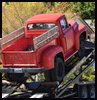
Thread Starter
|
Cargo Master


Joined: Aug 2008
Posts: 2,661
Likes: 23
Well thats completely different than what I thought I had to do, i thought I would have to open up the drum and everything. Thanks for posting that. What I came across I guess is what you have to do to the pads and everything else. lol I couldn't figure out why everyone was suggesting it like it was a little thing, lol cause it was.
I'll check that out tomorrow, maybe before I bleed the MC (just so I don't have to rebleed the whole thing again).
What a relief. Hopefully that should do the trick... and hopefully it's just the breaker I need to fix for my lights so I can go for my first real drive!
Thanks guys!
Oh side note on the bleeding, on the rear drums I have two spouts on each. One is up higher and towards the front, the other is down lower and right next to where the line goes in. I drained from the one up top, I figured the other was to do the line not the whole drum. I would have just done both but on the DR wheel it seems the spouts where replaced (cause they're clean and not brown, lol) but the one next to the line doesn't have a hole in the middle at all.
Good thing these trucks are simple cause they sure are different than everything I'm use to!
I'll check that out tomorrow, maybe before I bleed the MC (just so I don't have to rebleed the whole thing again).
What a relief. Hopefully that should do the trick... and hopefully it's just the breaker I need to fix for my lights so I can go for my first real drive!
Thanks guys!
Oh side note on the bleeding, on the rear drums I have two spouts on each. One is up higher and towards the front, the other is down lower and right next to where the line goes in. I drained from the one up top, I figured the other was to do the line not the whole drum. I would have just done both but on the DR wheel it seems the spouts where replaced (cause they're clean and not brown, lol) but the one next to the line doesn't have a hole in the middle at all.
Good thing these trucks are simple cause they sure are different than everything I'm use to!
Thread Starter
|
Cargo Master
Joined: Aug 2008
Posts: 2,661
Likes: 23
I think it's there, I saw it in a picture I had taken of the front ones at least. I don't remember seeing anything on the wheel side of the drum when I had the wheel off earlier.
Thanks for the help, hopefully it really just will be this easy, lol
Thanks for the help, hopefully it really just will be this easy, lol

Elder User
Joined: Jun 2008
Posts: 693
Likes: 6
From: N E Ohio
On your brakes, power brakes? The sound you hear might be from the brake booster air muffler. The brake booster is under the driver side of the cab, and usually the air vent line goes up through the cab floor to a small muffler behind the seat. this can make a hiss or grunt when you use the brakes.
And those rears can be hard to bleed. I have tried all kinds of "one man" bleeders, and none have worked. The only way I have been able to completely purge the air from the rears (fronts are easy, a vacuum bleeder works well) is have someone in the cab to work the pedal while I bleed the rears. And whoever works the pedal has to push really hard, you need a very strong stream of fluid coming out of the bleeder to get all of the air out. Every old Ford I have seen with dual cylinder rears has had the bleeder on the lower cylinder - makes it hard to get all of the air out.
Check out the tech folder in the Large Truck area, https://www.ford-trucks.com/forums/8...ke-system.html
here is an excerpt:
I have never been able to properly bleed a systen with a remote booster with a vacuum bleeder.
If you have no pedal at all, I suggest doing a part by part test -
1 - remove brake line at master cyl and plug master cyl. If pedal is good, master cyl is good.
2 - Reconnect master cyl, ans disconnect the lines to all wheel cylinders from remote booster, plug remote booster. Bleed remote booster and then check pedal, if it is good remote booster is good.
3 - Reconnect front <NOBR style="FONT-FAMILY: inherit; COLOR: darkgreen; FONT-SIZE: 100%; FONT-WEIGHT: normal" id=itxt_nobr_10_0>brakes </NOBR>, plug/cap lines to rear brakes. Bleed front brakes. Check pedal, if it is good, front brakes are OK.
4 - Reconnect rear brakes, and bleed them. For dual cylinder brakes I have found that you need a helper who can really apply the brakes hard. Make sure you open the bleeders as much as possible to get a strong stream. If the wheel cylinders are good, this should result in a good pedal. You may then want to rebleed the fronts to make sure all air is removed.
If you start with a "pedal to the floor" and a simple bleed has no effect, I have found that the above procedure and a helper is the only way to go. Good luck.
<!-- / message -->
And those rears can be hard to bleed. I have tried all kinds of "one man" bleeders, and none have worked. The only way I have been able to completely purge the air from the rears (fronts are easy, a vacuum bleeder works well) is have someone in the cab to work the pedal while I bleed the rears. And whoever works the pedal has to push really hard, you need a very strong stream of fluid coming out of the bleeder to get all of the air out. Every old Ford I have seen with dual cylinder rears has had the bleeder on the lower cylinder - makes it hard to get all of the air out.
Check out the tech folder in the Large Truck area, https://www.ford-trucks.com/forums/8...ke-system.html
here is an excerpt:
I have never been able to properly bleed a systen with a remote booster with a vacuum bleeder.
If you have no pedal at all, I suggest doing a part by part test -
1 - remove brake line at master cyl and plug master cyl. If pedal is good, master cyl is good.
2 - Reconnect master cyl, ans disconnect the lines to all wheel cylinders from remote booster, plug remote booster. Bleed remote booster and then check pedal, if it is good remote booster is good.
3 - Reconnect front <NOBR style="FONT-FAMILY: inherit; COLOR: darkgreen; FONT-SIZE: 100%; FONT-WEIGHT: normal" id=itxt_nobr_10_0>brakes
</NOBR>, plug/cap lines to rear brakes. Bleed front brakes. Check pedal, if it is good, front brakes are OK. 4 - Reconnect rear brakes, and bleed them. For dual cylinder brakes I have found that you need a helper who can really apply the brakes hard. Make sure you open the bleeders as much as possible to get a strong stream. If the wheel cylinders are good, this should result in a good pedal. You may then want to rebleed the fronts to make sure all air is removed.
If you start with a "pedal to the floor" and a simple bleed has no effect, I have found that the above procedure and a helper is the only way to go. Good luck.
<!-- / message -->
Thread Starter
|
Cargo Master
Joined: Aug 2008
Posts: 2,661
Likes: 23
I adjusted the brakes, it did help, but didn't completely fix it.
The brake no longer hits the floor, but I can still get a rise of about 1-1.5" or so with a pump.
I adjusted the front wheels as well, when I tested it the first time the wheel spun around about 4 times on it's own without much push...
I'm trying to decied what is too tight on them, they still move but on the examples I've seen the wheels aren't nearly as big, or heavy, so I don't know if that effects how they measured it (being able to get about one turn out of the wheel), cause well, it's killing my elbows already just tossing these things, lol (dually 38" with 22.5" rims makes things a bit heavier and I'm not sure what all that effects).
It did have the dual cylinders in the back, any trick in getting them the same? I adjusted one till the wheel stopped, then backed it up, then tried to do the same with the other side, but I don't know how much slop came from going back and forwth trying to fine tune things.
Also, if they are put on too tight I take it it will be sluggish to move correct?
I tested the pedal again, after pumping and holding it doesn't drop, so that should mean there is no air in it correct? After pumping, releasing then hitting it again right after there is about a 1/2-1" drop or so
Thanks
The brake no longer hits the floor, but I can still get a rise of about 1-1.5" or so with a pump.
I adjusted the front wheels as well, when I tested it the first time the wheel spun around about 4 times on it's own without much push...
I'm trying to decied what is too tight on them, they still move but on the examples I've seen the wheels aren't nearly as big, or heavy, so I don't know if that effects how they measured it (being able to get about one turn out of the wheel), cause well, it's killing my elbows already just tossing these things, lol (dually 38" with 22.5" rims makes things a bit heavier and I'm not sure what all that effects).
It did have the dual cylinders in the back, any trick in getting them the same? I adjusted one till the wheel stopped, then backed it up, then tried to do the same with the other side, but I don't know how much slop came from going back and forwth trying to fine tune things.
Also, if they are put on too tight I take it it will be sluggish to move correct?
I tested the pedal again, after pumping and holding it doesn't drop, so that should mean there is no air in it correct? After pumping, releasing then hitting it again right after there is about a 1/2-1" drop or so
Thanks

Elder User
Joined: Jan 2007
Posts: 831
Likes: 1
From: San Antonio, Texas
Stephen, that video gives the basics of the shoe adjustment. But to take it a few steps further, I always adjust the shoes out until they are tight against the drums and I am unable to rotate the wheel by hand. This will allow the shoes to seat properly and completely inside the drum. After that, I go through the process of backing off the star adjuster until the wheel turns with some resistance from the shoes as shown in the video. Also, while a screw driver will work, using a brake "spoon" makes the job much more easy. The brake adjustment tool (spoon) should be available at any parts store for a couple of bucks.
Gil
Gil
FTE Stories
Ford Trucks for Ford Truck Enthusiasts

3 Best / 3 Worst Parts of Modern Ford Ownership
Brett Foote
10 Amazing Upgrades That Solve Common Ford Truck Owner Headaches
Pouria Savadkouei
Every 2026 Ford Engine Explained
Brett Foote
10 Ugly Ford Trucks That We Still Kinda Love
Joe Kucinski
10 Things Every Truck Owner NEEDS (2026 Edition)
Michael S. Palmer
Rezvani's Latest Post-Apocalyptic Monster Is a Ford F-150 Raptor Underneath
Verdad Gallardo
Top 10 Most Expensive Ford Trucks Ever Sold on Bring a Trailer
Joe Kucinski
2027 Ford Super Duty Buyer's Guide (Every Model, Engine, & Package)
Brett Foote
Top 10 Ford Truck Tragedies
Joe Kucinski
Thread Starter
|
Cargo Master
Joined: Aug 2008
Posts: 2,661
Likes: 23
Thanks
I went back out and played with it, tightened things till they didn't move, then backed it up just slightly so I could move the wheel. Drove it back and forwth a bit, stops a lot better, but I still have that play a bit.
I dunno, maybe I'll go back and re-bleed everything, right now I'm feeling a bit too beat up,ha
I went back out and played with it, tightened things till they didn't move, then backed it up just slightly so I could move the wheel. Drove it back and forwth a bit, stops a lot better, but I still have that play a bit.
I dunno, maybe I'll go back and re-bleed everything, right now I'm feeling a bit too beat up,ha
Laughing Gas
Joined: Apr 2009
Posts: 751
Likes: 1
From: orange county, ca.
yea i'm sure those wheels make everything tougher. if you over tighten them they'll drag but eventually find their spot (with some shoe wear), i would go about 1 rotation on the front. if you get it in the 1/2" pedal drop window i would call it good......your going to get some slight drop/difference. also you need to fine tune them after driving if they pull to one side or the other.
Thread Starter
|
Cargo Master
Joined: Aug 2008
Posts: 2,661
Likes: 23
I did try driving it a little (only back and forth a few feet as I don't have brake lights, lol), right now the brakes feel sorta like a whip instead of a spear if that makes any sense. I can feel things building and then it starts to hit harder or snap like a whip rather than just 'BAM! brakes!', they do seem to work pretty well when they do hit though, course that could be my lack of a shoulder belt too lol
It didn't feel like any drag. Course I haven't driven it enough to tell nor do I have anything I knew from before.
I think what I will do tomorrow is tighten everything to the point the wheels will not turn, all of them, then check the brake again. If it still does it I guess it's something else, sorta running out of ideas.
I mean if I pump the brakes and hold them and it doesn't sink after a minute, I don't have any air right? Or could it just be such a small amount of air that I'm not really noticing?
Maybe I'll just have to start from square one again if it doesn't show any change after tightening everything all the way down.
Plus I have to fix my brake lights! lol... what a mess. All I want to do is just drive it around a little, go get some supplies, make a trip to the dump or something, lol.
It didn't feel like any drag. Course I haven't driven it enough to tell nor do I have anything I knew from before.
I think what I will do tomorrow is tighten everything to the point the wheels will not turn, all of them, then check the brake again. If it still does it I guess it's something else, sorta running out of ideas.
I mean if I pump the brakes and hold them and it doesn't sink after a minute, I don't have any air right? Or could it just be such a small amount of air that I'm not really noticing?
Maybe I'll just have to start from square one again if it doesn't show any change after tightening everything all the way down.
Plus I have to fix my brake lights! lol... what a mess. All I want to do is just drive it around a little, go get some supplies, make a trip to the dump or something, lol.

Post Fiend
Joined: Mar 2007
Posts: 5,776
Likes: 2
From: springfield il
if it does sink your m/c is prolly bad . these old systems when in tip top shape work quite well , but if anythings marginal well ....................my newly rebuilt one on the 53 just before i parked it was getting " soft " on me and everything was up to snuff . couldn't figure it out then noticed a little fluid seeping past the seals in it . just before i got too it it let go in a panic stop , and not too long after she was parked for the reasons of wiring and replacing the valve springs . check your brake light pressure switch stephen . it's the round thing on the back of the m/c and i'd be willing to bet that's why you got no brake lights if everything else is in order . i fumbled around for a month with mine on the 53 trying to figure out why they only worked when they wanted , and finally i had a brain fart bought a new { low pressure one as the oe takes a min of 60 lbs of pressure to activate }one from m.f and walla we have brake lights if i just think about touching the pedal . now i gotta go throught the whole dain thing again , replace everything as i don't trust anything after sitting for a year and change .............. gotta be safe !!! oh yeah get some residual pressure valves from speedway or the place of your choosing and put them inline , 10 pounders for drums , one for the front , one for the rear , and they will make a HUGE difference in the feel of your brake pedal !!!!!!!!!!!!!!!!!!! keeps the fluid from all seeping back down out of your wheel cylinders and lines into the m/c as it is below the level of the aforementioned parts . keeps some in the lines and gives you much quicker " response " and feels much better !!!!!!!!!!!!!!!!! i'll shut up now .............
i'll shut up now .............
Elder User
Joined: Jun 2008
Posts: 693
Likes: 6
From: N E Ohio
You check for air with the first "pump" of the brake pedal. When you first push down on the pedal there should be no "spongieness" or excessive travel. If there is spongieness, or the pedal goes all the way to the floor on the first push, you still have air.
Also, do you have power brakes? if you do, and they are the typical remote booster style of the 50s/60s, you must bleed the booster, bleeding just the wheels may not get all of the air out. I know that it is a pain, but sometimes the only way to get things completely bled, and to find where your problem is if there is one is by using the procedure in the tech section in the large truck forum. I have chased these same problems multiple times on Ford mediums, and following that procedure took less effort than randomly chasing things as I had done before.
But, here is another trick I learned from a truck fleet mechanic - adjust all brakes until they are tight (wheels hard to turn by hand) and then check the pedal. It should be solid and not drift, if not, you still have air, a bad MC, or a bad booster cylinder. If it is solid, back off on the adjustment of the front brakes until they will turn with about no drag. Check the pedal again, it should still be solid, but with some additional travel. Then back off on one of the rears, and check the pedal again - still should be solid. Then the other rear. By now there will be more pedal travel, but it should still be solid.
If you get more than about 1.5 to 2 inches of travel, someone may have replaced the MC with a smaller bore unit sometime in the past. This happens, as the MC for the lighter trucks will fit, and is more readily available, but has a smaller bore, giving less fluid per stroke.
Also, do you have power brakes? if you do, and they are the typical remote booster style of the 50s/60s, you must bleed the booster, bleeding just the wheels may not get all of the air out. I know that it is a pain, but sometimes the only way to get things completely bled, and to find where your problem is if there is one is by using the procedure in the tech section in the large truck forum. I have chased these same problems multiple times on Ford mediums, and following that procedure took less effort than randomly chasing things as I had done before.
But, here is another trick I learned from a truck fleet mechanic - adjust all brakes until they are tight (wheels hard to turn by hand) and then check the pedal. It should be solid and not drift, if not, you still have air, a bad MC, or a bad booster cylinder. If it is solid, back off on the adjustment of the front brakes until they will turn with about no drag. Check the pedal again, it should still be solid, but with some additional travel. Then back off on one of the rears, and check the pedal again - still should be solid. Then the other rear. By now there will be more pedal travel, but it should still be solid.
If you get more than about 1.5 to 2 inches of travel, someone may have replaced the MC with a smaller bore unit sometime in the past. This happens, as the MC for the lighter trucks will fit, and is more readily available, but has a smaller bore, giving less fluid per stroke.
Thread Starter
|
Cargo Master
Joined: Aug 2008
Posts: 2,661
Likes: 23
I tightened the brakes at the wheels all the way down (past where the wheel wouldn't turn, all the way till the gear wouldn't turn) and the brake was identical.
So once it cools off (hot enough right now I had to come in cause I was getting sick) I'll bleed the MC and re-bleed the lines. Hopefully that will fix it. If not I guess I know I need a new MC.
Didn't see any sort of boster. Pedal still improves on the second pump, I'm hoping it's air...
So once it cools off (hot enough right now I had to come in cause I was getting sick) I'll bleed the MC and re-bleed the lines. Hopefully that will fix it. If not I guess I know I need a new MC.
Didn't see any sort of boster. Pedal still improves on the second pump, I'm hoping it's air...

Thread
Thread Starter
Forum
Replies
Last Post
CopenGrizz01
1980 - 1986 Bullnose F100, F150 & Larger F-Series Trucks
13
Feb 24, 2012 07:48 AM
ydaveitsu
Brakes, Steering, Suspension, Tires, & Wheels
4
Aug 5, 2011 12:29 PM
bullgearinc
1948 - 1956 F1, F100 & Larger F-Series Trucks
16
Sep 29, 2006 05:48 PM
bartok
1980 - 1986 Bullnose F100, F150 & Larger F-Series Trucks
5
May 2, 2004 09:39 PM
