


Coolant filter

Thread Starter
|
Senior User
Joined: Feb 2004
Posts: 254
Likes: 0
From: Webb, MS
Coolant filter
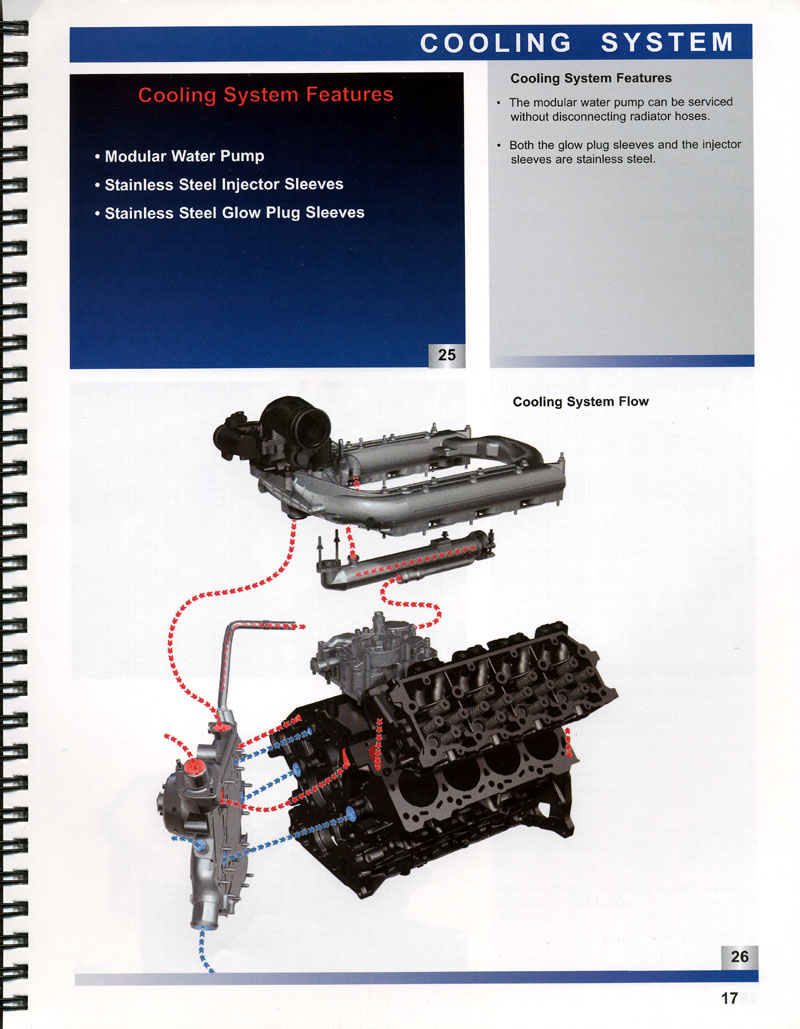
A couple of years ago, I didn't think a coolant filter was important.Now, after monitoring oil temp and coolant temp, I see that it may be important. I'm starting to see that 30, 40, or 50 degree difference between oil temp and coolant temp. I must be having some oil cooler plugging. I can source the parts for a coolant filter, but where exactly is the best place for it. All the recent threads talk about what brand to go with and the like. Where is the info on exactly were to plumb it? The reason I ask is if its plumbed after the coolant has already gone through the block and through the oil cooler what good is it. How do you plumb it between the block and the oil cooler?

Postmaster
Joined: Apr 2009
Posts: 3,839
Likes: 2
It is a bypass system and does not go between the oil cooler and the engine block directly. The popular choice here is the Dieselsite.com system. Very complete kit with great instructions. If you are now seeing 30+ degrees difference in ect/eot it is time for a new oil cooler now. You do not want to see the mess that is made when the oil cooler ruptures. You are on borrowed time. You still need the coolant filter after the oil cooler repair.
Thread Starter
|
Senior User
Joined: Feb 2004
Posts: 254
Likes: 0
From: Webb, MS
So the source of the problem, the block(casting sand) and the thing you are trying to protect, (oil cooler) do not have a filter between them. The big particulates are allowed to block the oil cooler and the small stuff is allowed to pass through the oil cooler to be picked up by a coolant filter located in a heater hose or somewhere else. Is that how it works?

Laughing Gas
Joined: May 2006
Posts: 1,192
Likes: 0
From: Oakville, Ontario

No, that's not exactly what he is saying. The by-pass filter will trap eventually all the sand in the system but first it is circulated through. By putting this filter in it will take awhile before all the sand is removed. Look at it this way about 5% of all the coolant is by-passed through the filter at any one time while circulating. so eventually the whole system will be cleaned. In my case I just changed the coolant filter for the fourth time in approximately 50,000KLM (30,000 miles). I am still finding sand in the filter. I removed the filter and poured out the fluid from the filter through a coffee filter and sand is still present. My truck has had three oil coolers replaced ( two cooler kits and one full cooler replacement) The replacement was due to a oil cooler leak. In my oppinion get the by-pass filter but first due a complete coolant flush.
Thread Starter
|
Senior User
Joined: Feb 2004
Posts: 254
Likes: 0
From: Webb, MS
It can't trap the sand that was already trapped in the cooler because it was to big to get through.
I'm all for coolant filters but if you can't put it between the source of the problem and what you are trying to protect its useless.
It seems that the best coolant filter for the 6.0 is indeed the oil cooler itself. Its the first thing to trap stuff from the block. I guess just put a new one in every couple of years while monitering oil temp and coolant temp.
I'm all for coolant filters but if you can't put it between the source of the problem and what you are trying to protect its useless.
It seems that the best coolant filter for the 6.0 is indeed the oil cooler itself. Its the first thing to trap stuff from the block. I guess just put a new one in every couple of years while monitering oil temp and coolant temp.
Laughing Gas
Joined: May 2006
Posts: 1,192
Likes: 0
From: Oakville, Ontario
The sand granules are small enough to pass through the cooler,but when they start to build up and backing up. That's when the problems start. This will not unclog the oil cooler but will help in further clogging, with additional replacement of oil/EGR cooler the potential of a problem is slowly removed.
Or
May I wasted my money and effort with this thing.
I dono I'm starting to fill up a sand box in the yard. Better out then in, I alway say. Exception would be beer.
Or
May I wasted my money and effort with this thing.
I dono I'm starting to fill up a sand box in the yard. Better out then in, I alway say. Exception would be beer.
Posting Guru
Joined: Feb 2009
Posts: 1,170
Likes: 1
From: Moyock, NC
It can't trap the sand that was already trapped in the cooler because it was to big to get through.
I'm all for coolant filters but if you can't put it between the source of the problem and what you are trying to protect its useless.
It seems that the best coolant filter for the 6.0 is indeed the oil cooler itself. Its the first thing to trap stuff from the block. I guess just put a new one in every couple of years while monitering oil temp and coolant temp.
I'm all for coolant filters but if you can't put it between the source of the problem and what you are trying to protect its useless.
It seems that the best coolant filter for the 6.0 is indeed the oil cooler itself. Its the first thing to trap stuff from the block. I guess just put a new one in every couple of years while monitering oil temp and coolant temp.
Trending Topics
Thread Starter
|
Senior User
Joined: Feb 2004
Posts: 254
Likes: 0
From: Webb, MS
Yes, they are beneficial if you can get it plumbed in the right spot like other engines that already come with them.
Cooler kit is about $175.00 and it can be done under three hours, and I meant every six years instead of a couple.
I'm going to put one on for the hell of it. Coolant filter bases are everywhere.
I wish somebody would machine a billet drop in piece to take the place of the oil cooler and than you could route the water and the oil the way you wanted to.
Cooler kit is about $175.00 and it can be done under three hours, and I meant every six years instead of a couple.
I'm going to put one on for the hell of it. Coolant filter bases are everywhere.
I wish somebody would machine a billet drop in piece to take the place of the oil cooler and than you could route the water and the oil the way you wanted to.
FTE Stories
Ford Trucks for Ford Truck Enthusiasts

3 Best / 3 Worst Parts of Modern Ford Ownership
Brett Foote
10 Amazing Upgrades That Solve Common Ford Truck Owner Headaches
Pouria Savadkouei
Every 2026 Ford Engine Explained
Brett Foote
10 Ugly Ford Trucks That We Still Kinda Love
Joe Kucinski
10 Things Every Truck Owner NEEDS (2026 Edition)
Michael S. Palmer
Rezvani's Latest Post-Apocalyptic Monster Is a Ford F-150 Raptor Underneath
Verdad Gallardo
Top 10 Most Expensive Ford Trucks Ever Sold on Bring a Trailer
Joe Kucinski
2027 Ford Super Duty Buyer's Guide (Every Model, Engine, & Package)
Brett Foote
Top 10 Ford Truck Tragedies
Joe Kucinski
Elder User
Joined: Aug 2009
Posts: 905
Likes: 0
From: Inverness, Fl
Most popular coolant filter is the one from dieselsite. Cost 119.00 bucks...Easy install.
https://www.dieselsite.com/index.asp...ROD&ProdID=324
https://www.dieselsite.com/index.asp...ROD&ProdID=324

Postmaster
Joined: Jan 2005
Posts: 4,424
Likes: 12
From: BC Canada
brady, all heavy diesels with coolant filtration use a bypass filter kit, most heavy trucks and equipment it is installed from stock. Putting the filter between would not solve your problem of all the other places where the sand causes problems. Also, a filter that is not a bypass, if plugged would interupt the flow which would then cause the same overheating issues as a plugged oil cooler. That is why a bypass system is used. Most blocks will find little sand, and changeing coolant often helps, but the best for sure solution is the by pass which is always filtering some coolant and removing anything mvoing in the system. What these guys are saying is even if you replace oil coolers, you still need it, what about hte sand in the water pump bearings, binding the thermostat, plugging coolant passages in the heads, ect?
Elder User
Joined: Aug 2009
Posts: 905
Likes: 0
From: Inverness, Fl
I would think that is a good way to plumb it. You DO want just a bypass. It you plumb it between a main line (NOT BEING A BYPASS) than if it clogs while on the road you will overheat and may cause other problems..Just My .02
I'm hitting easy street


Joined: Nov 2009
Posts: 6,395
Likes: 27
From: Central Oregon
I don't see where it could be plumbed to filter before the oil cooler. Would be nice though. Unless you filtered at the lower radiator hose? I'm sure somewhere someone has checked that out. Maybe a by-pass there?

Thread
Thread Starter
Forum
Replies
Last Post
GreenMM
1968-Present E-Series Van/Cutaway/Chassis
39
Jun 17, 2024 01:08 PM
BryanStein
6.0L Power Stroke Diesel
23
Sep 23, 2015 10:54 PM
2004, 250, 60, 96, changeing, coolant, coolers, dieselsite, egt, f150, f250, filter, ford, fordtruckscom, instructions, mess, oil, powerstroke
