


Wheres it from?


Methanoholic
Joined: Mar 2009
Posts: 6,442
Likes: 8
From: Maine (NorCal Native)

Best thing to do is set the intake dry, look at the gap you'll need to fill, pull it, then put a narrow bead just a tiny bit higher then the width (height/thickness) of the gap.
-Enjoy
fh : )_~
-Enjoy
fh : )_~

Thread Starter
|
Posting Guru

Joined: Apr 2009
Posts: 1,089
Likes: 1
From: Illernois
Thanks alot for the info yall.
Now Ctu, you mentioned checking the EGR valve while i had the chance. But what is this valve and how do i make sure its working correctly? Also is there anything else yall think i should check out while i got this stuff off??
Since im draining the anti freeze i figured id replace the lower radiator hose since its the only one thats not been replaced. Would it hurt or even do any good for me to run water through the radiator to try and clean it out or push any debri through it?
Thanks!
Now Ctu, you mentioned checking the EGR valve while i had the chance. But what is this valve and how do i make sure its working correctly? Also is there anything else yall think i should check out while i got this stuff off??
Since im draining the anti freeze i figured id replace the lower radiator hose since its the only one thats not been replaced. Would it hurt or even do any good for me to run water through the radiator to try and clean it out or push any debri through it?
Thanks!

pedant
Joined: Jan 2008
Posts: 23,576
Likes: 40
From: EXTREME southwest CT

Be sure to get a lower radiator hose with a spring inside so that the waterpump cannot suck it flat and cause overheating.

Moderator


Joined: Nov 2007
Posts: 22,415
Likes: 92
From: Denver Metro Area, CO

This device is sandwiched between the carb & intake manifold , here is that
part removed but without the diaphragm attached:

To test it, get yourself a hand-held vacuum pump like this (auto parts store
might let you borrow one):
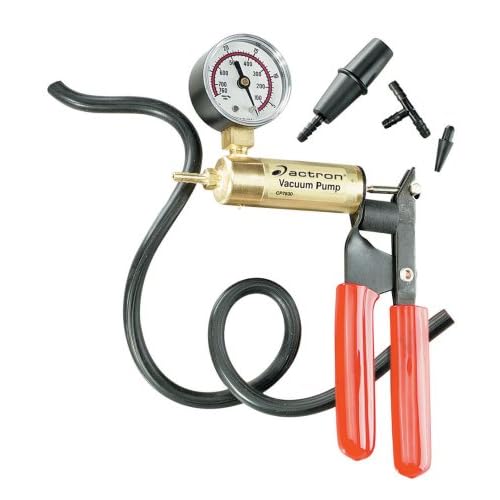
Apply vacuum to the diaphragm and make sure the valve opens & closes. I
suggest first leaning everything with carb cleaner or some such, there's likely a
carbon build-up inside.
An alternative to a vacuum pump is a vacuum source from a different, running
engine; all you're interested in doing is making sure the mechanism isn't stuck.

Thread
Thread Starter
Forum
Replies
Last Post
minnesotafisherman
1987 - 1996 F150 & Larger F-Series Trucks
15
Jun 7, 2012 09:19 PM
orange_x_crush
1997 - 2006 Expedition & Navigator
7
Sep 6, 2008 04:00 PM


