





SAS maybe a dumb question...
Post Fiend
Joined: Jul 2006
Posts: 6,948
Likes: 44
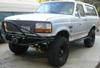
Ive built several (have to take shoes off to count) of these rigs, and the leaf sprung trucks have distinct advantages over the coil sprung ones.
With the right spring, they can flex as much or more than a typical coil sprung truck with a stock length radius arm.
Id be willing wager and compare flex as well as ride quality of any leaf sprung rigs I have built against any coil sprung SAS truck with equal lift.

[IMG]
 [/IMG]

Lead Driver


Joined: Sep 2002
Posts: 9,182
Likes: 12
From: Gateway to the West

No, leaf springs are inferior for many reasons particularly out front. Which is why most vehicles use coils these days. They don't allow the suspension to follow its natural arc as it articulates (thus putting unnecessary stress on the spring eyes and the bushings)... a condition that simply does not exist in a coil sprung setup. For this reason they actually work to inhibit full articulation. The only limit to the travel on a coil sprung axle is the drive line geometry and shock length. A coil spring will expand and continue to do so far beyond any leaf spring in the same application. Coil sprung vehicles typically must use limiting straps to keep from getting too much articulation... yes its possible.
And in particular, front leaves must either be pulled so far inboard that the unsprung weight and leverage is compounded unnecessarily due to the fact that front leaves must be set far enough inboard to clear tires that are swinging left to right... Can't really put a lateral bend in a leaf spring to leave room for tires to swing like you can with a radius arm.
Sorry cannot agree with this one at all. And your reference is a stock length radius arm? You are asking us to disregard the one component of a coil sprung axle that defines it superiority? I guess that is how you get away with a statement that says leaves are better. Of course they are if you refuse to compare to anything but an OEM configuration but then, front leaves were thankfully NEVER OEM in a Bronco!
And in particular, front leaves must either be pulled so far inboard that the unsprung weight and leverage is compounded unnecessarily due to the fact that front leaves must be set far enough inboard to clear tires that are swinging left to right... Can't really put a lateral bend in a leaf spring to leave room for tires to swing like you can with a radius arm.
Sorry cannot agree with this one at all. And your reference is a stock length radius arm? You are asking us to disregard the one component of a coil sprung axle that defines it superiority? I guess that is how you get away with a statement that says leaves are better. Of course they are if you refuse to compare to anything but an OEM configuration but then, front leaves were thankfully NEVER OEM in a Bronco!
Post Fiend
Joined: Jul 2006
Posts: 6,948
Likes: 44
What is a natural arch of movement for an axle?
The arch or movement of the axle during any given suspension cycle varies with the way the axle is mounted to the frame. I mean a leaf spring typically moves the axle towards the shackle, and even this varies with the amount of arch that the spring has. Flat springs minimize this.
Even link suspensions and even the radius arms will permit the axle to move in a direction other than perfectly vertical.
My argument was not that one was superior over the other, but that leafs up front are not as bad as you had suggested.
Many applications or vehicles are currently using coil springs, and for the most part these coils are much easier to wind in a more progressive manner to achieve a better ride quality but this does not make it superior. Most of these factory set ups lack any amount of articulation and the bumps are set way to close to do any good off road. Sure they ride decent on road, but really do lack in any off road performance.
You have to ride in one or any of my leaf sprung conversion Broncos to see for yourself that they ride like Cadillacs on the highway and flex like champs off road.
Inherent problems with most factory radius arms set ups is wheel hop and over all strentgh. Some ground clearance with a radius are can also be a problem as well.
Compound bends in an arm are a real problem as they really bring on the weak.
For 1 ton swaps, I choose to use the simplistic leaf spring up front for the reasons listed above. I have tried to use radius arms and links, and these seem to fail during vehicle recover after the front axle is buried in heavy mud. Link suspension does not like vehicle recovery in the mud. They seem to fail, and we have seem this on more than enough occasion to support this statement.
With a typical link design there are only small points of contact attaching the axle to the frame. The pressure of the axle is pressed upon the frame at such a small point, this becomes the point of failure. Side loads are always a problem since the trac bar is also mounted with such a small area of contact.
Your argument is that the leaf spring bushing is a problem because it twists or (thus putting unnecessary stress on the spring eyes and the bushings). Well this too occurs with a radius arm configuration, and the bushings fail. Unfortunately so does the radius arm.
If your comparison is based upon a stock leaf spring VS a modified link suspension, then you can find superiority in a re- engineered system, but of you make a general statement that "leafs springs in the front suck" then you have over generalized and this makes the statement a little biased and 'not true'.
Here is a problem with a coil design using a single point of contact:

I stil believe that the reason the leaf spring gets bad publicity is because many are being used or set up incorrectly. Too much spring for a given application will provide a rough ride, and bring limited flex, but the correct spring in the right application can perform as well or better than other designs, and still provide a great ride.
Ive built and been in several rides with coil overs that will still rattle your filings out of your head. While these vehicles were designed for super high speed travel, and the downside was that slow speed travel was very rough, it was only superior to ther designs at speed.
I feel that superiority is largely based upon the application. What may work well for one application is not always the best for another.
The arch or movement of the axle during any given suspension cycle varies with the way the axle is mounted to the frame. I mean a leaf spring typically moves the axle towards the shackle, and even this varies with the amount of arch that the spring has. Flat springs minimize this.
Even link suspensions and even the radius arms will permit the axle to move in a direction other than perfectly vertical.
My argument was not that one was superior over the other, but that leafs up front are not as bad as you had suggested.
Many applications or vehicles are currently using coil springs, and for the most part these coils are much easier to wind in a more progressive manner to achieve a better ride quality but this does not make it superior. Most of these factory set ups lack any amount of articulation and the bumps are set way to close to do any good off road. Sure they ride decent on road, but really do lack in any off road performance.
You have to ride in one or any of my leaf sprung conversion Broncos to see for yourself that they ride like Cadillacs on the highway and flex like champs off road.
Inherent problems with most factory radius arms set ups is wheel hop and over all strentgh. Some ground clearance with a radius are can also be a problem as well.
Compound bends in an arm are a real problem as they really bring on the weak.
For 1 ton swaps, I choose to use the simplistic leaf spring up front for the reasons listed above. I have tried to use radius arms and links, and these seem to fail during vehicle recover after the front axle is buried in heavy mud. Link suspension does not like vehicle recovery in the mud. They seem to fail, and we have seem this on more than enough occasion to support this statement.
With a typical link design there are only small points of contact attaching the axle to the frame. The pressure of the axle is pressed upon the frame at such a small point, this becomes the point of failure. Side loads are always a problem since the trac bar is also mounted with such a small area of contact.
Your argument is that the leaf spring bushing is a problem because it twists or (thus putting unnecessary stress on the spring eyes and the bushings). Well this too occurs with a radius arm configuration, and the bushings fail. Unfortunately so does the radius arm.
If your comparison is based upon a stock leaf spring VS a modified link suspension, then you can find superiority in a re- engineered system, but of you make a general statement that "leafs springs in the front suck" then you have over generalized and this makes the statement a little biased and 'not true'.
Here is a problem with a coil design using a single point of contact:
I stil believe that the reason the leaf spring gets bad publicity is because many are being used or set up incorrectly. Too much spring for a given application will provide a rough ride, and bring limited flex, but the correct spring in the right application can perform as well or better than other designs, and still provide a great ride.
Ive built and been in several rides with coil overs that will still rattle your filings out of your head. While these vehicles were designed for super high speed travel, and the downside was that slow speed travel was very rough, it was only superior to ther designs at speed.
I feel that superiority is largely based upon the application. What may work well for one application is not always the best for another.

Elder User
Joined: Apr 2009
Posts: 725
Likes: 1
From: Upstate New York
I liked the front leafs on my F250s, it rode pretty good, didn't fail on me, and it was simple. I like simple. I'm not really sure if coils ride better than leaves or not, I've never swapped and compared the difference, it's always been 2 totally different trucks with the different spring systems, so it's really hard to tell. But for the sake of simplicity, I would definitely consider a leaf spring swap along with the 60s in my Bronco. I don't use my beasty for crazy offroading, just occasional forays and snow driving, so I'm not so much concerned with flex, just ride quality(to an extent), tire wear issues, durability and simplicity. (I've found those last 2 things to be mutually inclusive)

Posting Guru
Joined: Apr 2006
Posts: 1,274
Likes: 1
I was the original poster of the "Front leafs suck".
1. I dont care about flex. It is highly overrated.
2. I dont care about ride. I do, but as you said a well enginared leaf will ride as good.
3. I dont think theres much to be gained with "the arc of the wheel". Sorry Greystreak.
4. The "single point of mounting" argument does not hold water because the reality is there are two solid points of contact with leafs and three with arms. (only one end of a leaf is solid and as you mentioned the arms have the track bar as a third solid point) And if you want to split hairs, the arms have much larger bolts than the leafs. But all that is debatible because both systems are strong enough.
This all comes down to turning circle. When you turn, the front of the tire hits first. (the outside tire turns more than the inside) With the arms, even if they are in the same place as leafs, there is nothing in the front to hit, so it turns that much further til the inside tire hits in back. Of course, with bent arms, it can be made to turn really sharp. The turning circle is one of the main reasons I like Broncos.
1. I dont care about flex. It is highly overrated.
2. I dont care about ride. I do, but as you said a well enginared leaf will ride as good.
3. I dont think theres much to be gained with "the arc of the wheel". Sorry Greystreak.
4. The "single point of mounting" argument does not hold water because the reality is there are two solid points of contact with leafs and three with arms. (only one end of a leaf is solid and as you mentioned the arms have the track bar as a third solid point) And if you want to split hairs, the arms have much larger bolts than the leafs. But all that is debatible because both systems are strong enough.
This all comes down to turning circle. When you turn, the front of the tire hits first. (the outside tire turns more than the inside) With the arms, even if they are in the same place as leafs, there is nothing in the front to hit, so it turns that much further til the inside tire hits in back. Of course, with bent arms, it can be made to turn really sharp. The turning circle is one of the main reasons I like Broncos.
Lead Driver
Joined: Sep 2002
Posts: 9,182
Likes: 12
From: Gateway to the West
I'm with Kem on that particular failure there. I've seen far too many spring eyes and shackle bolts fail the exact same way. That is a maintenance issue there.
Of course leaf springs work and work well. I have no argument there. And this banter could go on for weeks. I am simply of the opinion that leaf springs up front are counterproductive for too many reasons to make them effective under a front axle. I've listed those reasons so I won't bore anyone by reiterating.
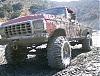
My point about the natural movement arc of the axle is simply this. When the axle swings up or down it does not move in a purely linear direction. Camber changes unless both wheels on that axle are subject to identical road conditions at the same time. Since this rarely occurs, the result of one wheel hitting a bump or hole moves one side of the axle more or less than the other creating a change that forces the axle to not only cycle up and down, but as it does so, it swings in an arc across the short axis of the truck (camber change). Leaf springs have a near zero capacity to twist in this manner. Now with the relatively limited articulation of stock suspension, this doesn't pose a very large issue. However, in lifted trucks with much greater articulation, the result is increased rotational pressure on the spring immediately behind the eyes and the bushings because these two locations mark the weakest (and therefore most likely to flex/twist) points in a leaf spring setup. Other than the eye bushings, no part of a leaf spring is designed or capable of allowing the the radial movement of the axle across the short axis of the frame because a leaf spring does not allow for rotational movement from side to side. This is a problem for me because I hate replacing bushings especially when the cause for the dead bushing is pressure applied at the wrong angle (90 degrees off). By example I will reference your photo above... with the spring in that situation, what part of that setup allows the axle to move like that and NOT apply crushing side (twist) force to the springs and eye bushings? The answer is NOTHING.
Before anyone can take me to task on this, yes, I am aware that there is a product out there to alleviate this condition. But it adds at least another 1.5" of lift and many folks don't use them or know about them.
On the other hand, the coil spring and radius arm allows for this natural arc to be maintained without undue stress on ANY component in the front end. I make reference to the bayonet mounting of the radius arm to the frame and the omni-directional flex capacity of a coil spring thus allowing the radius arm to not only cycle up and down but provide the twist that is associated with the movement of the axle when one wheel experiences something different that the other on the same axle. This is true even with solid axle coil spring conversions.
Of course leaf springs work and work well. I have no argument there. And this banter could go on for weeks. I am simply of the opinion that leaf springs up front are counterproductive for too many reasons to make them effective under a front axle. I've listed those reasons so I won't bore anyone by reiterating.
My point about the natural movement arc of the axle is simply this. When the axle swings up or down it does not move in a purely linear direction. Camber changes unless both wheels on that axle are subject to identical road conditions at the same time. Since this rarely occurs, the result of one wheel hitting a bump or hole moves one side of the axle more or less than the other creating a change that forces the axle to not only cycle up and down, but as it does so, it swings in an arc across the short axis of the truck (camber change). Leaf springs have a near zero capacity to twist in this manner. Now with the relatively limited articulation of stock suspension, this doesn't pose a very large issue. However, in lifted trucks with much greater articulation, the result is increased rotational pressure on the spring immediately behind the eyes and the bushings because these two locations mark the weakest (and therefore most likely to flex/twist) points in a leaf spring setup. Other than the eye bushings, no part of a leaf spring is designed or capable of allowing the the radial movement of the axle across the short axis of the frame because a leaf spring does not allow for rotational movement from side to side. This is a problem for me because I hate replacing bushings especially when the cause for the dead bushing is pressure applied at the wrong angle (90 degrees off). By example I will reference your photo above... with the spring in that situation, what part of that setup allows the axle to move like that and NOT apply crushing side (twist) force to the springs and eye bushings? The answer is NOTHING.
Before anyone can take me to task on this, yes, I am aware that there is a product out there to alleviate this condition. But it adds at least another 1.5" of lift and many folks don't use them or know about them.
On the other hand, the coil spring and radius arm allows for this natural arc to be maintained without undue stress on ANY component in the front end. I make reference to the bayonet mounting of the radius arm to the frame and the omni-directional flex capacity of a coil spring thus allowing the radius arm to not only cycle up and down but provide the twist that is associated with the movement of the axle when one wheel experiences something different that the other on the same axle. This is true even with solid axle coil spring conversions.
FTE Stories
Ford Trucks for Ford Truck Enthusiasts

Rezvani's Latest Post-Apocalytic Monster Is a Ford F-150 Raptor Underneath
Verdad Gallardo
Top 10 Most Expensive Ford Trucks Ever Sold on Bring a Trailer
Joe Kucinski
2027 Ford Super Duty Buyer's Guide (Every Model, Engine, & Package)
Brett Foote
Top 10 Ford Truck Tragedies
Joe Kucinski
AEV FXL Super Duty - the Super Duty Raptor Ford Doesn't Make
Brett Foote
Lobo Vs Lobo: Proof the F-150 Lobo Should Be Even Lower!
Michael S. Palmer
Ford's 2001 Explorer Sportsman Concept Looks For a New Home
Verdad Gallardo
10 Best Ford Truck Engines We Miss the Most!
Joe Kucinski
2026 Shelby F-150 Off-Road: Better Than a Raptor R?
Brett Foote
Elder User
Joined: Apr 2009
Posts: 725
Likes: 1
From: Upstate New York
This all comes down to turning circle. When you turn, the front of the tire hits first. (the outside tire turns more than the inside) With the arms, even if they are in the same place as leafs, there is nothing in the front to hit, so it turns that much further til the inside tire hits in back. Of course, with bent arms, it can be made to turn really sharp. The turning circle is one of the main reasons I like Broncos.

Thread
Thread Starter
Forum
Replies
Last Post
