


brake help

Thread Starter
|
Junior User
Joined: Jun 2007
Posts: 55
Likes: 0
brake help
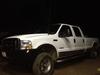
I own a 1994 F250 IDI, I put a 6" lift and a solid axle swap and 37" tires, I will post some pics later, but I am leaking brake fluid, at a fairly slow rate. I have spent hours trying to find the leak, I have followed the lines right from the master cylinder to every wheel, and along the frame the entire way and there is no visible leaks. I have the truck super clean and in the shop in an attempt to find the leak, but in 2 days of sitting there is not a drop of fluid on the floor, yet my brake fluid is slowly draining. I have bled all the lines at the wheels, with no air coming out, yet the brake pedal will still fully compress to the floor, indicating a loss of pressure. Right now I am going to take my rear drums off to see if it is leaking inside, other then that I am at a loss of where this fluid is going, has anyone else had this happen to them? Any ideas?
Postmaster
Joined: Aug 2008
Posts: 4,092
Likes: 0
From: Olympia
So are you seeing a fluid loss or just assume that its losing fluid because of the pressure?
Also, paper towels show fluid pretty well. You might try putting them under any fittings, master cylinder, ect..
One more thing; it probably won't just drip out sitting right? Pump the brakes a bit and see if the fluid comes out anywhere while doing that.
Also, paper towels show fluid pretty well. You might try putting them under any fittings, master cylinder, ect..
One more thing; it probably won't just drip out sitting right? Pump the brakes a bit and see if the fluid comes out anywhere while doing that.
Thread Starter
|
Junior User
Joined: Jun 2007
Posts: 55
Likes: 0
it is losing fluid very slowly while sitting, as the resevoir is going down. While pumping the brakes I was under the truck inspecting all the lines, I forgot to add that in the previous post, but it was also losing fluid at a faster rate, I will put paper towels along all the fittings, master cylinder and such.
thanks.
thanks.
Thread Starter
|
Junior User
Joined: Jun 2007
Posts: 55
Likes: 0
if the master cylinder is gone if I pull the master cylinder, I am to understand there is a rod/plunger in there with a snap ring before it? if I remove this I should be able to tell if the cylinder is gone? If it is drawing brake fluid in the vacuum line then the booster is gone?
Trending Topics
Thread Starter
|
Junior User
Joined: Jun 2007
Posts: 55
Likes: 0
theres is fluid leaking from the master cylinder into the booster where it attaches, so the seals must be gone on the plunger. I have pulled the master cylinder apart and the inside looks fine. Can i just replace the seals or do I have to get a whole new master cylinder? The truck sits during winters as I live in Northern Canada and I hate rust!, could the sitting during the winters be the culprit for the seals going?
FTE Stories
Ford Trucks for Ford Truck Enthusiasts

3 Best / 3 Worst Parts of Modern Ford Ownership
Brett Foote
10 Amazing Upgrades That Solve Common Ford Truck Owner Headaches
Pouria Savadkouei
Every 2026 Ford Engine Explained
Brett Foote
10 Ugly Ford Trucks That We Still Kinda Love
Joe Kucinski
10 Things Every Truck Owner NEEDS (2026 Edition)
Michael S. Palmer
Rezvani's Latest Post-Apocalyptic Monster Is a Ford F-150 Raptor Underneath
Verdad Gallardo
Top 10 Most Expensive Ford Trucks Ever Sold on Bring a Trailer
Joe Kucinski
2027 Ford Super Duty Buyer's Guide (Every Model, Engine, & Package)
Brett Foote
Top 10 Ford Truck Tragedies
Joe Kucinski
Posting Guru
Joined: Sep 2008
Posts: 1,123
Likes: 4
From: Baltimore
The only thing with the repair kits is making sure the cylinder bore is free of corrosion. Altho I have never rebuilt them, (or wheel cylinders for that matter,) I would see no problem using the kit. Be sure to bench bleed it before installing the M/C...
Thread Starter
|
Junior User
Joined: Jun 2007
Posts: 55
Likes: 0
I had some extended brake lines sitting around and decided to install them, as well as some brake tube. I am replacing the line from the front driver side hose in the fender that goes to the master cylinder, do I have to rebend the line in the spiral? if so, why can't I just have a line running straight down?
Posting Guru
Joined: Sep 2008
Posts: 1,123
Likes: 4
From: Baltimore
Old mechanics would probably tell you the spiral is for flex, or for extra line in case of needing a repair, or for ease of removing the line and replacing when you need to replace the M/C so you dont cross-thread the brake line. I personally have adopted all those ideas many times. (Blame it on an old mechanic...)
A straight line is ok, just make sure there is sufficient length for flex, and ease of installing the line so as not to cross-thread, and keep it away from the exhaust.
Double-Flare is the Rule. Single flare is dangerous and illegal.
A straight line is ok, just make sure there is sufficient length for flex, and ease of installing the line so as not to cross-thread, and keep it away from the exhaust.
Double-Flare is the Rule. Single flare is dangerous and illegal.
Thread Starter
|
Junior User
Joined: Jun 2007
Posts: 55
Likes: 0
Thanks for all the help. After installing the new master cylinder and my new lines I hopped in the truck and started it and found that the brake pedal was still losing pressure!!! There is only one possible thing that I think it could be, and that is the ABS module. I ended up talking to one of the technicians at the local ford dealership and he informed me that this is a very common problem for these trucks. I would have to pay 350$ and wait atleast 10 days to get a new one, so my question is can i just delete this from the system?.
I am to understand that it is not a true abs system, and only relieves pressure to the rear brakes by relaying it through that module? I am ok with losing the rear abs, so can i just run a line in place of the module? what about the wiring? and do I have to install a proportional valve? or is there already one in place? I am guessing that one would be required to stop the same amount of pressure going to the back as the front, as the back brakes would lock up well before the front?
Thanks.
I am to understand that it is not a true abs system, and only relieves pressure to the rear brakes by relaying it through that module? I am ok with losing the rear abs, so can i just run a line in place of the module? what about the wiring? and do I have to install a proportional valve? or is there already one in place? I am guessing that one would be required to stop the same amount of pressure going to the back as the front, as the back brakes would lock up well before the front?
Thanks.

Post Fiend
Joined: Jan 2005
Posts: 8,402
Likes: 10
You are right it is not ABS but rear brake system only (RABS).
There is an easy test. IF you look at the RABS module you will see a big hex bung on the end of it. Unscrew that bung (under spring pressure all the way) and remove the spring from inside the chamber (no fluid will come out). Replace the bung and pump the pedal a few times to fill the chamber with fluid. See if that solves the sinking pedal. If it does then you can just leave it like that or bypass the module with a short length of hard line. If it does not solve the problem then replace the spring and look else where.
There is an easy test. IF you look at the RABS module you will see a big hex bung on the end of it. Unscrew that bung (under spring pressure all the way) and remove the spring from inside the chamber (no fluid will come out). Replace the bung and pump the pedal a few times to fill the chamber with fluid. See if that solves the sinking pedal. If it does then you can just leave it like that or bypass the module with a short length of hard line. If it does not solve the problem then replace the spring and look else where.
Thread Starter
|
Junior User
Joined: Jun 2007
Posts: 55
Likes: 0
I am pretty much at the point of throwing tools around the shop. I removed the abs module and when i turn the truck on the brakes still sink to the floor. I have replaced all the brake lines, new master cylinder, new rear wheel cylinders, the calipers where replaced about 6 months ago, and the all new rear brake shoes and drums. I have plugged the lines going from the master cylinder, and it holds when the truck is running. I then plugged only the line going to the rear and bled the front brakes. When running the pedal compresses to the floor with only the front brakes attached. I am going to plug the front and open the rear to see if the pedal compresses in an attempt to isolate the problem. Does anyone have any idea what is going on? I have adjusted the rear brakes and put the drum on properly as well as bled the system numerous times for extended periods of time. I also bench bled the master cylinder properly. I am stumped as to what the problem is. Could it be a caliper?