


Converting from propane

Thread Starter
|
Junior User
Joined: Nov 2005
Posts: 54
Likes: 0
Converting from propane
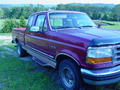
I just bought a 97 F350 that was converted to propane when new. All of the liquid fuel components seem to be intact ( I doubt they will work after all these years, but...) and I'd like to see if it will fire up on gasoline. Does anyone have any idea what the propane installer might have done to disable the fuel injection system?
Thanks
Thanks

Freshman User
Joined: Mar 2010
Posts: 47
Likes: 0
From: Berea, KY
I work for a forklift manufacturer. Usually LPG kits on use a LPG carb in place of the throttle body. I am not familar enough on how LPG would have been set up on your truck, but some things may be about the same. You may want to check the throttle body to see if it is a Ford or an aftermarket. The big name on LPG kits is Impco. Pictures would be helpful.
Last edited by 4sabre; Apr 21, 2010 at 11:03 AM. Reason: Mentioned CNG instead of LPG
Thread Starter
|
Junior User
Joined: Nov 2005
Posts: 54
Likes: 0
I am not at all familiar with LPG but it looks to me like the TB is stock Ford. Over by the brake booster there's a unit that looks like a diaphragm regulator with a high presure line to the tank and a rubber hose like heater hose going to the induction system. The hose splits and terminates in the sides of an aluminum plate sandwiched between the front of the throttle body and the tubes from the air cleaner. Or is that not the entrance point for the LPG and just an air line back to the regulator? I'll try and get pictures this afternoon.
Between the FI system, the LPG system and all the sensors and stuff, the under hood is a nightmare jumble of crap! I don't know where to start. If I thought it would get by emissions inspection the whole mess would go in the trash and be replaced with a carburetor. Maybe a big ol' pair of side draft SUs !! ,
,
A little more background. The truck was a utility body service truck for a LPG supplier. It came from Ford as a cab and chassis and as near as we can see the LPG system was installed at the same time as the utility body. The body wasn't post manufacture modified to fit the tank, and the tank couldn't be removed with the body on.
Thanks!
Between the FI system, the LPG system and all the sensors and stuff, the under hood is a nightmare jumble of crap! I don't know where to start. If I thought it would get by emissions inspection the whole mess would go in the trash and be replaced with a carburetor. Maybe a big ol' pair of side draft SUs !!
,A little more background. The truck was a utility body service truck for a LPG supplier. It came from Ford as a cab and chassis and as near as we can see the LPG system was installed at the same time as the utility body. The body wasn't post manufacture modified to fit the tank, and the tank couldn't be removed with the body on.
Thanks!
Freshman User
Joined: Mar 2010
Posts: 47
Likes: 0
From: Berea, KY
Converting from propane
I am not at all familiar with LPG but it looks to me like the TB is stock Ford. Over by the brake booster there's a unit that looks like a diaphragm regulator with a high presure line to the tank and a rubber hose like heater hose going to the induction system. The hose splits and terminates in the sides of an aluminum plate sandwiched between the front of the throttle body and the tubes from the air cleaner. Or is that not the entrance point for the LPG and just an air line back to the regulator? I'll try and get pictures this afternoon.
From what it sounds like, the plate between the throttle body and the intake is probably the mixer (kind of like a nitrous plate system that mounts between a carb / intake).
Between the FI system, the LPG system and all the sensors and stuff, the under hood is a nightmare jumble of crap! I don't know where to start. If I thought it would get by emissions inspection the whole mess would go in the trash and be replaced with a carburetor. Maybe a big ol' pair of side draft SUs !!,
On forklifts, a lot of the hoses are either pressure lines (normally braided but sometimes just a regular hose) or coolant lines (similar to a heater hose).
A little more background. The truck was a utility body service truck for a LPG supplier. It came from Ford as a cab and chassis and as near as we can see the LPG system was installed at the same time as the utility body. The body wasn't post manufacture modified to fit the tank, and the tank couldn't be removed with the body on.
Thanks!
From what it sounds like, the plate between the throttle body and the intake is probably the mixer (kind of like a nitrous plate system that mounts between a carb / intake).
Between the FI system, the LPG system and all the sensors and stuff, the under hood is a nightmare jumble of crap! I don't know where to start. If I thought it would get by emissions inspection the whole mess would go in the trash and be replaced with a carburetor. Maybe a big ol' pair of side draft SUs !!
,On forklifts, a lot of the hoses are either pressure lines (normally braided but sometimes just a regular hose) or coolant lines (similar to a heater hose).
A little more background. The truck was a utility body service truck for a LPG supplier. It came from Ford as a cab and chassis and as near as we can see the LPG system was installed at the same time as the utility body. The body wasn't post manufacture modified to fit the tank, and the tank couldn't be removed with the body on.
Thanks!
Freshman User
Joined: Mar 2010
Posts: 47
Likes: 0
From: Berea, KY
If the truck came as a cab n chassis, is there a gasoline fuel tank still under the truck? Any signs of the gasoline fuel lines under the hood / body? On CNG conversions to forklifts at the factory, the old fuel system would be removed / pitched prior to installing the conversion kit. Any extra switches / wiring in the cab that looks like it goes to the LPG stuff under the hood?
Thread Starter
|
Junior User
Joined: Nov 2005
Posts: 54
Likes: 0
It does kind of look like a nitrous setup.
As for the original set up, yes it's all there. Tanks, pumps, lines, wiring, throttle body and injectors. It looks like if I stripped off all the LPG (and could figure out how they disabled the liquid fuel setup) it would run on the original FI setup. Except that it's hard to believe that the OEM stuff would work after sitting dry for 13 years.
As for the original set up, yes it's all there. Tanks, pumps, lines, wiring, throttle body and injectors. It looks like if I stripped off all the LPG (and could figure out how they disabled the liquid fuel setup) it would run on the original FI setup. Except that it's hard to believe that the OEM stuff would work after sitting dry for 13 years.
Freshman User
Joined: Mar 2010
Posts: 47
Likes: 0
From: Berea, KY
It is good that all of the original is still there. If they disabled the origanal system, it could be something as simple as pulling the fuel pump fuse, unhooking the fuel pump wires at the tank, or plugging the fuel lines (somewhere). I would suspect that it will be something simple / quick. In theory, you should be able to remove the LPG plate, put gas in it and run it. The only problem that I see is that the fuel tank could have water / rust in it from setting for 13 years. I would definately check out the tank prior to putting anything in it. The fuel pump could be gummed up from setting with no gas in it.
Trending Topics
Fleet Owner


Joined: Aug 2005
Posts: 23,667
Likes: 301
From: Easton,Ks
Do you know what brand the LPG system is?
Is there a plug with wires where the SPOUT jumper is suppose to be?
Do you have and added computer module for the LPG system (it would use both)?
Is there a plug with wires where the SPOUT jumper is suppose to be?
Do you have and added computer module for the LPG system (it would use both)?
FTE Stories
Ford Trucks for Ford Truck Enthusiasts

3 Best / 3 Worst Parts of Modern Ford Ownership
Brett Foote
10 Amazing Upgrades That Solve Common Ford Truck Owner Headaches
Pouria Savadkouei
Every 2026 Ford Engine Explained
Brett Foote
10 Ugly Ford Trucks That We Still Kinda Love
Joe Kucinski
10 Things Every Truck Owner NEEDS (2026 Edition)
Michael S. Palmer
Rezvani's Latest Post-Apocalyptic Monster Is a Ford F-150 Raptor Underneath
Verdad Gallardo
Top 10 Most Expensive Ford Trucks Ever Sold on Bring a Trailer
Joe Kucinski
2027 Ford Super Duty Buyer's Guide (Every Model, Engine, & Package)
Brett Foote
Top 10 Ford Truck Tragedies
Joe Kucinski
Thread Starter
|
Junior User
Joined: Nov 2005
Posts: 54
Likes: 0
Well I spent some time looking at this beast and I can't find what they disconnected. I have no idea what brand the system is, whatever info there is seems to be underneath the unit. The SPOUT jumper I am not familiar with, what / where is it? There doesn't seem to be any electronic module for the propane, and it definatly does not feed into the throttle body. The whole system seem so basic that I don't understand how it works, especially how it integrates with the egine management system. Also there is no sign of a switch that would make it dual fuel, just a bunch of hoses and a couple wires; all in the engine bay.
The propane works fine, it's just that the tank is way too bulky (20" x 60") and it would be a pain to find a place to fill it, especially on a road trip.
I did get a couple pictures, anybody know how to post pictures on this forum?
The propane works fine, it's just that the tank is way too bulky (20" x 60") and it would be a pain to find a place to fill it, especially on a road trip.
I did get a couple pictures, anybody know how to post pictures on this forum?
Fleet Owner
Joined: Aug 2005
Posts: 23,667
Likes: 301
From: Easton,Ks
You can email the pictures to me and I will post them for you or you can put them on a remote site and link them in your post. This site also has a place you can put them and link them to your post but I have not done that in a long time as I do not want to use this sites memory space up.
The SPOUT (SPark OUTput) jumper is located on the fender at the LH rear of engine compartment, taped to harness, near ignition control module (ICM). The computer uses the SPOUT wire to adjust the engine Ignition timing. The SPOUT wire runs from the computer to the ICM.

/
The SPOUT (SPark OUTput) jumper is located on the fender at the LH rear of engine compartment, taped to harness, near ignition control module (ICM). The computer uses the SPOUT wire to adjust the engine Ignition timing. The SPOUT wire runs from the computer to the ICM.
/

Thread
Thread Starter
Forum
Replies
Last Post
PaulsEdge
Alternative Fuels, Hybrids & Mileage
7
Jan 9, 2017 07:09 AM
jonnybronco
Bio-diesel, Propane & Alternative Diesel Engine Fuels
2
Mar 6, 2014 11:27 PM
69F250CrewCab4x4
FE & FT Big Block V8 (332, 352, 360, 390, 406, 410, 427, 428)
23
Dec 4, 2011 10:57 PM
blueeyedfordguy
1980 - 1986 Bullnose F100, F150 & Larger F-Series Trucks
88
Mar 13, 2010 01:53 PM
