


Tuning-Tranny Impacts

Thread Starter
|
Tuned
Joined: Jul 2009
Posts: 489
Likes: 4
Tuning-Tranny Impacts
Hi,
I am using SCT with custom tunes. Regarding tuning in general, is it common to experience your trans shifting firmer with tuning vs stock? From what I've been told, not sure if its accurate or not, the firmer shifting is actually better on your trans than the stock shifting which is a lot smoother. Is this correct?? Seems like it would be the other way around. Tuning seems to be great but I DO NOT want to sacrifice the longevity of my transmission for a little additional HP. If someone could explain this or clear it up for me it would be greatly appreciated.
2005 Ford Fx4, 124k miles, ARP studs, AFE intake, 4" silverline TB, diesel site coolant filter
I am using SCT with custom tunes. Regarding tuning in general, is it common to experience your trans shifting firmer with tuning vs stock? From what I've been told, not sure if its accurate or not, the firmer shifting is actually better on your trans than the stock shifting which is a lot smoother. Is this correct?? Seems like it would be the other way around. Tuning seems to be great but I DO NOT want to sacrifice the longevity of my transmission for a little additional HP. If someone could explain this or clear it up for me it would be greatly appreciated.
2005 Ford Fx4, 124k miles, ARP studs, AFE intake, 4" silverline TB, diesel site coolant filter

Lead Driver
Joined: Nov 2007
Posts: 5,139
Likes: 209

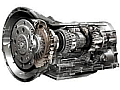
A firmer shift is better for the trans clutches/frictions as they are engaging quicker. A slow, smooth shift means they are slipping and wearing as they engage slower.
To help visualize what's happening, imagine a manual transmission with a clutch and flexplate. If you were to let the clutch out quickly, you'd have less wear on the clutch than if you let it out slowly and let the clutch and flexplate surfaces burn against each other until they were engaged.
With an auto, the tuners job is to minimize wear without breaking hard parts(and your back) because of shifts that are too firm.
To help visualize what's happening, imagine a manual transmission with a clutch and flexplate. If you were to let the clutch out quickly, you'd have less wear on the clutch than if you let it out slowly and let the clutch and flexplate surfaces burn against each other until they were engaged.
With an auto, the tuners job is to minimize wear without breaking hard parts(and your back) because of shifts that are too firm.
Frmr Ford Trans Engr


Joined: Aug 1999
Posts: 24,725
Likes: 2,651
From: SE Florida
More horsepower to the transmission equals a shorter transmission life. Period. It does not matter if the shifts are shorter, when you run more horsepower you have a shorter transmission life.

Elder User
Joined: Jul 2009
Posts: 919
Likes: 0
From: Smiths Grove, KY
Now it doesn't get any clearer than that.

Fleet Mechanic
Joined: Jun 2006
Posts: 1,589
Likes: 20
Hi,
I am using SCT with custom tunes. Regarding tuning in general, is it common to experience your trans shifting firmer with tuning vs stock? From what I've been told, not sure if its accurate or not, the firmer shifting is actually better on your trans than the stock shifting which is a lot smoother. Is this correct?? Seems like it would be the other way around. Tuning seems to be great but I DO NOT want to sacrifice the longevity of my transmission for a little additional HP. If someone could explain this or clear it up for me it would be greatly appreciated.
2005 Ford Fx4, 124k miles, ARP studs, AFE intake, 4" silverline TB, diesel site coolant filter
I am using SCT with custom tunes. Regarding tuning in general, is it common to experience your trans shifting firmer with tuning vs stock? From what I've been told, not sure if its accurate or not, the firmer shifting is actually better on your trans than the stock shifting which is a lot smoother. Is this correct?? Seems like it would be the other way around. Tuning seems to be great but I DO NOT want to sacrifice the longevity of my transmission for a little additional HP. If someone could explain this or clear it up for me it would be greatly appreciated.
2005 Ford Fx4, 124k miles, ARP studs, AFE intake, 4" silverline TB, diesel site coolant filter
DSMMH

Post Fiend
Joined: Oct 2005
Posts: 10,626
Likes: 7
From: Plano TX and Brentwood TN
Now, the good thing about the SCT is that you can firm up those shifts without toughing HP/TQ output(which is the best thing for longevity in my opinion) as no one can explain it to to where I would believe smooth shifts are better then firm crisp fast(or quick) shifts.
Hotshot


Joined: Jul 2005
Posts: 13,834
Likes: 25
From: Middle Tn.
One other thing to consider and once again is relative to the numbers spread but harder shifts and more horsepower will also shorten the life of your U joints and 3rd member.
Trending Topics
Hotshot
Joined: Jul 2005
Posts: 13,834
Likes: 25
From: Middle Tn.
If I run across a busy highway 5 times and make it that doesn't guaranty that I'll make it the 6th time. He may have just been lucky.
FTE Stories
Ford Trucks for Ford Truck Enthusiasts

10 Things Every Truck Owner NEEDS (2026 Edition)
Michael S. Palmer
Rezvani's Latest Post-Apocalyptic Monster Is a Ford F-150 Raptor Underneath
Verdad Gallardo
Top 10 Most Expensive Ford Trucks Ever Sold on Bring a Trailer
Joe Kucinski
2027 Ford Super Duty Buyer's Guide (Every Model, Engine, & Package)
Brett Foote
Top 10 Ford Truck Tragedies
Joe Kucinski
AEV FXL Super Duty - the Super Duty Raptor Ford Doesn't Make
Brett Foote
Lobo Vs Lobo: Proof the F-150 Lobo Should Be Even Lower!
Michael S. Palmer
Ford's 2001 Explorer Sportsman Concept Looks For a New Home
Verdad Gallardo
10 Best Ford Truck Engines We Miss the Most!
Joe Kucinski

Frmr Ford Trans Engr
Joined: Aug 1999
Posts: 24,725
Likes: 2,651
From: SE Florida
If we are talking a stock tranny in a stock truck that can go 400k(I'm pulling numbers for examples only here to illustrate a point) and with the little bit of extra hp, it goes to 375k, well that's shorter, but not by much(relatively speaking). Dont' really need to focus on what mileage numbers I put up there, it's the spread in mileage numbers that's the important thing or the "sunk mileage"(my own little take on "sunk cost") if you will.
I have no data to be able to estimate any specific relationship between more power and shorter life. As you pointed out it might be 1% less life, or it could break something as soon as you add more power. There is no good way to predict it.
Thread Starter
|
Tuned
Joined: Jul 2009
Posts: 489
Likes: 4
Good point. I agree completely.
I have no data to be able to estimate any specific relationship between more power and shorter life. As you pointed out it might be 1% less life, or it could break something as soon as you add more power. There is no good way to predict it.
I have no data to be able to estimate any specific relationship between more power and shorter life. As you pointed out it might be 1% less life, or it could break something as soon as you add more power. There is no good way to predict it.
Post Fiend
Joined: Oct 2005
Posts: 10,626
Likes: 7
From: Plano TX and Brentwood TN
I for one would(and I know you didn't ask me, but it's just me) do tranny tuning. Smooth, slow shifts that people like to experience for comfort reasons aren't exactly the best thing for the tranny. To me, that means there is some slippage going on there. Now I could be wrong and if I am, Mark please correct. Plus you can do just tranny tuning to fit specific applications that the stock, one size fits all tuning that Ford puts on these trucks can't completely fit everyone.
You can do that with custom tunes without changing hp/tq levels. Most don't, but you can. You can in fact detune the truck as well(even smaller minority has done that).
I think Mark would suggest against tunes that increase HP/TQ output in general. I don't know for sure, but that's the msg I seem to be getting.
You can do that with custom tunes without changing hp/tq levels. Most don't, but you can. You can in fact detune the truck as well(even smaller minority has done that).
I think Mark would suggest against tunes that increase HP/TQ output in general. I don't know for sure, but that's the msg I seem to be getting.
Frmr Ford Trans Engr
Joined: Aug 1999
Posts: 24,725
Likes: 2,651
From: SE Florida
I wouldn't install a modified tune in my truck. To each his own....
The stock slip times on a TorqShift are in the 400 millisecond range. That's one of the shortest slip times in the industry. Some of the shifts in the this trans are synchronous shifts. If you shorten the slip time of the oncoming clutch you better also make the offgoing clutch release faster or you get a tie up. A tie up is when all the parts of the rotating assembly are locked to the case. The shafts stop turning RIGHT NOW. That tends to break hard parts inside the transmission. Broken shafts don't make for a happy camper.
The stock slip times on a TorqShift are in the 400 millisecond range. That's one of the shortest slip times in the industry. Some of the shifts in the this trans are synchronous shifts. If you shorten the slip time of the oncoming clutch you better also make the offgoing clutch release faster or you get a tie up. A tie up is when all the parts of the rotating assembly are locked to the case. The shafts stop turning RIGHT NOW. That tends to break hard parts inside the transmission. Broken shafts don't make for a happy camper.