


Problems with Shifting Gears


Thread Starter
|
New User
Joined: Dec 2009
Posts: 13
Likes: 0
Problems with Shifting Gears
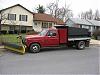
I have a 1980 stepside f100 v8 302 with an automatic transmission. I have just recently gotten this truck running again and have noticed a few things that concern me when shifting gears.
1) When I put it in reverse sometimes it takes a while for the gear to shift; up to 10 seconds. It seems to be less pronounced once the engine is warm.
2) When I go from park to drive/reverse it has a tendancy to "dump" it real heavy into the gear. Typically there is a loud clunk and the engine idle drops real low temporarily. If the engine is cold it will even quit.
3) When I hit the gas while stopped, the engine falters then for a second it sounds like it has even died, then suddenly bursts back to life as though I had gunned it. This doesn't tend to happen so much when moving. Also, if I am in park/neutral it does not do this.
4) When at cruising speed the engine runs high and sounds as though it may still be in too low of a gear. Since these old trucks don't have overdrive is this normal, or am I not reaching a final gear?
Thanks for any help you can give on these problems. Hopefully I don't need a new tranny.
Leland
1) When I put it in reverse sometimes it takes a while for the gear to shift; up to 10 seconds. It seems to be less pronounced once the engine is warm.
2) When I go from park to drive/reverse it has a tendancy to "dump" it real heavy into the gear. Typically there is a loud clunk and the engine idle drops real low temporarily. If the engine is cold it will even quit.
3) When I hit the gas while stopped, the engine falters then for a second it sounds like it has even died, then suddenly bursts back to life as though I had gunned it. This doesn't tend to happen so much when moving. Also, if I am in park/neutral it does not do this.
4) When at cruising speed the engine runs high and sounds as though it may still be in too low of a gear. Since these old trucks don't have overdrive is this normal, or am I not reaching a final gear?
Thanks for any help you can give on these problems. Hopefully I don't need a new tranny.
Leland


Thread Starter
|
New User
Joined: Dec 2009
Posts: 13
Likes: 0
Should I actually change the transmission fluid or just top it off. I came across this article that said in older high milage vehicles that are showing any transmission problems then I should not change the fluid anymore since it is possible that the gritty fluid is acting like liquid sandpaper and keeping the transmission from slipping. Is this good advise? I don't like the idea of just deciding to never again change the tran. fluid. Here is the article for those interested Is Your Transmission Slipping? Should You Change Your Transmission Fluid?
How? Also, someone said that all the vacuum systems are connected and so the fact that I lost all the break fluid in my rear master cylinder resevoir is an indication that a vacuum leak is present. Is this correct? And does it imply that leaking break lines could translate into engine idle to take off problems?
How? Also, someone said that all the vacuum systems are connected and so the fact that I lost all the break fluid in my rear master cylinder resevoir is an indication that a vacuum leak is present. Is this correct? And does it imply that leaking break lines could translate into engine idle to take off problems?

Moderator


Joined: Nov 2007
Posts: 22,415
Likes: 92
From: Denver Metro Area, CO

I would just top off the fluid and wouldn't change it just yet unless it's discolored (normal color
is sort of bright red) and/or smells burnt.
You or "someone" must be confused about a brake leak and engine vacuum, the only place
the two systems converge is where the engine supplies vacuum to the power brake booster
and, unless your master cylinder is leaking fluid into the diaphragm (which is reason enough
to rebuild or replace your master cylinder) then the two systems are not otherwise related.
is sort of bright red) and/or smells burnt.
You or "someone" must be confused about a brake leak and engine vacuum, the only place
the two systems converge is where the engine supplies vacuum to the power brake booster
and, unless your master cylinder is leaking fluid into the diaphragm (which is reason enough
to rebuild or replace your master cylinder) then the two systems are not otherwise related.

Thread
Thread Starter
Forum
Replies
Last Post
William525
1987 - 1996 F150 & Larger F-Series Trucks
8
Jun 13, 2013 07:47 AM
Thumper19
1967 - 1972 F-100 & Larger F-Series Trucks
2
Aug 7, 2012 03:53 PM
JHowey1989
Clutch, Transmission, Differential, Axle & Transfer Case
5
Jul 22, 2010 12:46 AM
JHowey1989
1980 - 1986 Bullnose F100, F150 & Larger F-Series Trucks
16
Jul 10, 2010 12:16 PM







