Calling Engine Gurus, Help with 302 Explorer Engine


Thread Starter
|
Junior User
Joined: Nov 2007
Posts: 57
Likes: 0
Calling Engine Gurus, Help with 302 Explorer Engine
I put this in an Explorer section but thought it should really be here.
I have a '74 Glastron with 350 hours on it. It was powered by a 302, 200 hp V-8 ford, Volvo 270 drive. I bought it new and we used to live on a lake hence the few hours.
 In the meantime I had bought a new crate mid 90's Explorer Long block which would give me roller tappets and GT40 heads (Below). It is a beauty.
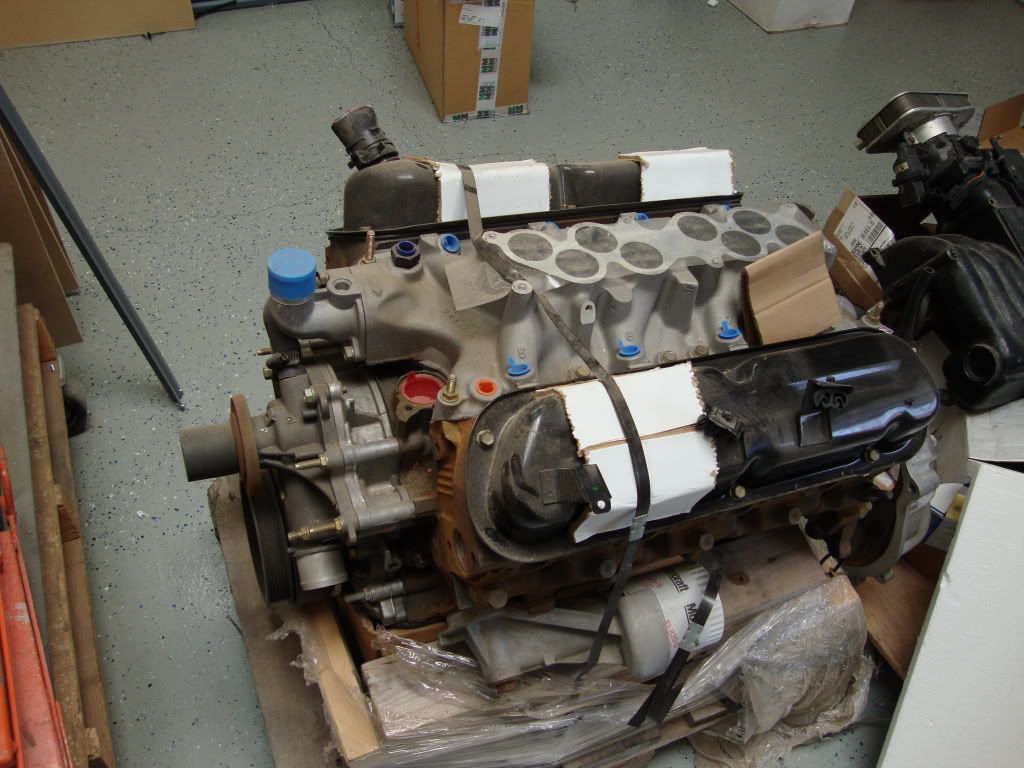
I rounded up some OMC EFI components and thought I would put together an EFI Explorer 302 engine.
Then I got the cautions from a local mechanic. Marine engines, I was told are fit with looser tolerances because of the lower block temperatures. I was told that the explorer would last only a few hundred hour.
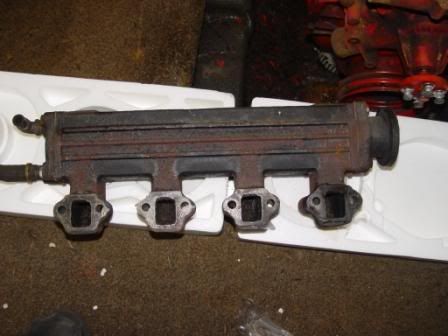
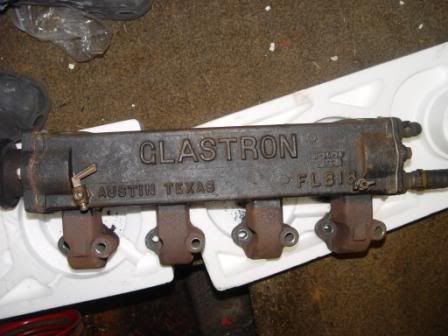
Then I found the old 302 was in pretty good shape with hardly a ridge in the cylinders. It's weaknesses were that it was an older engine, it had a Glastron. One of its weaknesses is that it has a log style exhaust manifold with "Glastron" embossed in the casting. Nobody seems to know much about it and gaskets seem impossible to get, that is gaskets beyond the ford head bolt-up manifold.
In the meantime I decided that the boat EFI is too complicated to retrofit (I put them on Ebay, if anyone is interested." Now, I wonder whether I should stick in the later Explorer engine or go back to the original. I think I could get a few more horsepower out of the Explorer plus have an newer engine. I had previously bought a Lunati Boat cam with std lifters.
So, here I sit, wondering which way to go. Rebuild the older engine or go to the newer one. If you could tell me more about the 1995's explorer I would appreciate it. I guess it has a roller cam, gt40 heads, etc. Would the Lunati Cam work on the explorer?
Ideas, anyone? Here is your chance to throw in your two cents and help me sort this thing out.
Jim
<!-- / message --><!-- / message --><!-- BEGIN TEMPLATE: ad_showthread_firstpost_sig --><!-- END TEMPLATE: ad_showthread_firstpost_sig -->
I have a '74 Glastron with 350 hours on it. It was powered by a 302, 200 hp V-8 ford, Volvo 270 drive. I bought it new and we used to live on a lake hence the few hours.
In the meantime I had bought a new crate mid 90's Explorer Long block which would give me roller tappets and GT40 heads (Below). It is a beauty.I rounded up some OMC EFI components and thought I would put together an EFI Explorer 302 engine.
Then I got the cautions from a local mechanic. Marine engines, I was told are fit with looser tolerances because of the lower block temperatures. I was told that the explorer would last only a few hundred hour.
Then I found the old 302 was in pretty good shape with hardly a ridge in the cylinders. It's weaknesses were that it was an older engine, it had a Glastron. One of its weaknesses is that it has a log style exhaust manifold with "Glastron" embossed in the casting. Nobody seems to know much about it and gaskets seem impossible to get, that is gaskets beyond the ford head bolt-up manifold.
In the meantime I decided that the boat EFI is too complicated to retrofit (I put them on Ebay, if anyone is interested." Now, I wonder whether I should stick in the later Explorer engine or go back to the original. I think I could get a few more horsepower out of the Explorer plus have an newer engine. I had previously bought a Lunati Boat cam with std lifters.
So, here I sit, wondering which way to go. Rebuild the older engine or go to the newer one.
If you could tell me more about the 1995's explorer I would appreciate it. I guess it has a roller cam, gt40 heads, etc. Would the Lunati Cam work on the explorer?Ideas, anyone? Here is your chance to throw in your two cents and help me sort this thing out.
Jim
<!-- / message --><!-- / message --><!-- BEGIN TEMPLATE: ad_showthread_firstpost_sig --><!-- END TEMPLATE: ad_showthread_firstpost_sig -->
FTE Legend


Joined: Jun 2006
Posts: 31,930
Likes: 1,499
From: Ottawa, Ontario
You can have a 300hp motor with very little work, I'd put a Ford E303 roller cam in it and whatever induction you like, the EFI setup would certaily be nice but it will be more complicated than a carb for sure. That motor there has the GT40P heads on it(4 bars on the end of the casting) which are very good, but the stock cam is heavily compromised to deliver low emissions in a street vehicle and is not a good choice at all for any performance application. Otherwise the bottom end is identical to any other 5.0 including a marine 5.0, no differernce in tolerances that I'm aware of.
Thread Starter
|
Junior User
Joined: Nov 2007
Posts: 57
Likes: 0
Conanski,
Thanks for the response. 300 is a little better than my current 200.
I will look into the cam. Where would I buy the Ford cam?
What do you think about a Lunati? I got one for my old engine but it is for standard lifters.
I also have to get a flywheel (50 oz?) to match and maybe a starter. I think the old bell housing should match up.
Performance products makes a pretty nice EFI system. I talked with them. It turns out they are getting Coast Guard approval. The oxygen sensor has to be positioned in an area without water. Hmmmm, that could be fun.
Jim
Thanks for the response. 300 is a little better than my current 200.
I will look into the cam. Where would I buy the Ford cam?
What do you think about a Lunati? I got one for my old engine but it is for standard lifters.
I also have to get a flywheel (50 oz?) to match and maybe a starter. I think the old bell housing should match up.
Performance products makes a pretty nice EFI system. I talked with them. It turns out they are getting Coast Guard approval. The oxygen sensor has to be positioned in an area without water. Hmmmm, that could be fun.
Jim
FTE Legend
Joined: Jun 2006
Posts: 31,930
Likes: 1,499
From: Ottawa, Ontario
The ford cams are available at any performance shop like Jegs or Summit. Lunati makes good cams but a flat tappet is a step backwords from the roller, it will require different pushrods and a cam breakin procedure at first startup, while the roller cam requires none of the above. Without the actual cam grind number it's impossible to say exactly how the Lunati compares but I'd be willing to bet it's similar to that Ford cam, post up the cam number if you have it and I'll run them both through Desktop Dyno for comparison sake.
And yes that Explorer motor is 50oz imbalance.
And yes that Explorer motor is 50oz imbalance.
FTE Legend
Joined: Jun 2006
Posts: 31,930
Likes: 1,499
From: Ottawa, Ontario
With the engine sitting there on the floor it's not too bad. Valve covers, Intake, water pump and timing cover all have to come off, if you were going to convert to a carb this was all comming off anyway. Then you remove the rockers, pushrods, and lifters, remove the cam retainer and it will slide out and you can install the replacement and then reverse the assembly order. This roller motor will also have a spider and dogbones assembly in the lifter valley that prevents the lifters from rotating in the bores, there are only 2 small bolts holding it all in though. Besides new gaskets all you need to do this are common hand tools and a TQ wrench, the valvetrain is non adjustable on this motor too so all bolts including the rockers simply get torqued to spec.
Thread Starter
|
Junior User
Joined: Nov 2007
Posts: 57
Likes: 0
Sounds like something I can handle. I pulled down the old '74 ford. It has 350 hours on it. I was looking at the std tappets versus the roller tappet version. I guess the spider would have to have holes drilled to accommodate it if you used that old block.
I imagine the heads on the old engine are pretty meager compared to the GT heads. Then I will have to make sure the marine exhaust is not throttling the devil out of it.
Jim
I imagine the heads on the old engine are pretty meager compared to the GT heads. Then I will have to make sure the marine exhaust is not throttling the devil out of it.
Jim
Trending Topics
FTE Legend
Joined: Jun 2006
Posts: 31,930
Likes: 1,499
From: Ottawa, Ontario
To use a roller cam in the older block you have two options and neither is cheap. One option is to use factory Ford roller lifters with the spider assembly, but the block has to be drilled and tapped to retain the spider and this is best done before the cam bearing are installed because the holes will be right over the bearings. Then you have to use a small base circle cam otherwsie the lifters stick too far out of the bores.
The other opton allows the use a standard roller cams but uses link bar roller lifters instead of the factory setup.. the lifter pairs are linked by a bar that prevents them from rotating, and these are much more expensive of course.
The old marine motor may have decent heads on it but they won't be as good as the GT40p's, post up the casting number that you find near one of the center intake ports on the head gasket side.
The other opton allows the use a standard roller cams but uses link bar roller lifters instead of the factory setup.. the lifter pairs are linked by a bar that prevents them from rotating, and these are much more expensive of course.
The old marine motor may have decent heads on it but they won't be as good as the GT40p's, post up the casting number that you find near one of the center intake ports on the head gasket side.
Thread Starter
|
Junior User
Joined: Nov 2007
Posts: 57
Likes: 0
Here is something kind of interesting. My project was postponed a couple of years while I was building a commercial building. This is a copy I dug up from a guy at boat wrench.
Does this sound reasonable?
Jim
Gonzo,
As I understand it, the Explorer(High Torque) HO cam was developed in the late 1990,s for use in the Ford Explorer only.
Specs are:
Valve Lift .422 I , .448 E
Specs @ .050 lift
IVO -25 deg BTDC, IVC 31 deg ABDC Duration 186 deg
EVO 32 deg BBDC, EVC -15 deg ATDC Duration 197 deg
Lobe Centers 115.8 deg, Valve overlap -40 deg.
Jim,
I see no reason why you couldn't use the STD. 5.0 Truck injection, which, by the way is larger than the std Mustang or Full sized Car.
I purchased a "New" 2000, 5.0 Block and installed the Explorer cam, together with Windsor Jr Heads and a 750CFM Edelbrock Carb.*
Engine produced over 300HP and over 350 lb-ft Torque from 1500 - 4500rpm. I have since "opened " the 302 to 327 cu in, added Alum Hds and a Trick Flow Stage One cam with Execellent results. See:
http://www.glen-l.com/weblettr/weble...94.html#monaco
John (jango)
* 5.0 Fords "like" alot of carburation
Reply With Quote
Does this sound reasonable?
Jim
Gonzo,
As I understand it, the Explorer(High Torque) HO cam was developed in the late 1990,s for use in the Ford Explorer only.
Specs are:
Valve Lift .422 I , .448 E
Specs @ .050 lift
IVO -25 deg BTDC, IVC 31 deg ABDC Duration 186 deg
EVO 32 deg BBDC, EVC -15 deg ATDC Duration 197 deg
Lobe Centers 115.8 deg, Valve overlap -40 deg.
Jim,
I see no reason why you couldn't use the STD. 5.0 Truck injection, which, by the way is larger than the std Mustang or Full sized Car.
I purchased a "New" 2000, 5.0 Block and installed the Explorer cam, together with Windsor Jr Heads and a 750CFM Edelbrock Carb.*
Engine produced over 300HP and over 350 lb-ft Torque from 1500 - 4500rpm. I have since "opened " the 302 to 327 cu in, added Alum Hds and a Trick Flow Stage One cam with Execellent results. See:
http://www.glen-l.com/weblettr/weble...94.html#monaco
John (jango)
* 5.0 Fords "like" alot of carburation
Reply With Quote
FTE Legend
Joined: Jun 2006
Posts: 31,930
Likes: 1,499
From: Ottawa, Ontario
Yeah that's the explorer cam spec all right. I have to take back my suggestion on the cam however, I was skeptical that the Explorer cam could produce 300hp so I ran it through the software and sure enough it does with this combo. The World Products heads produce almost identical curves as the GT40p's though it requires the 58cc version which produces a bit more static compression to do it. Nominal chamber volume on the Ford heads is about 60cc and it has a superior port design so the heads flow better even with smaller valves. I also don't buy the comment about these motors needing a big carb, 600cfm is plenty and more will just hurt low rpm response IMO. Here are some graphs for comparison, first the combos here with GT40p and World heads..
http://farm3.static.flickr.com/2772/...8f3a4e20_o.jpg
And the Explorer motor with the E303 cam. It really improves peak HP but just kills low rpm TQ which may not be such a good idea in a heavy boat.
http://farm5.static.flickr.com/4021/...61f57026_o.jpg
Of course all this depends largly on how well those exhaust manifolds flow and they don't exactly look too "high performance" with those nice right angle turns.
http://farm3.static.flickr.com/2772/...8f3a4e20_o.jpg
And the Explorer motor with the E303 cam. It really improves peak HP but just kills low rpm TQ which may not be such a good idea in a heavy boat.
http://farm5.static.flickr.com/4021/...61f57026_o.jpg
Of course all this depends largly on how well those exhaust manifolds flow and they don't exactly look too "high performance" with those nice right angle turns.
Thread Starter
|
Junior User
Joined: Nov 2007
Posts: 57
Likes: 0
I agree. If those don't kill it the exhaust below the water line probably does.
There is something interesting in the picture. EFI would need an oxygen sensor. The upper picture shows a place that could be drilled and tapped at the back of the exhaust.
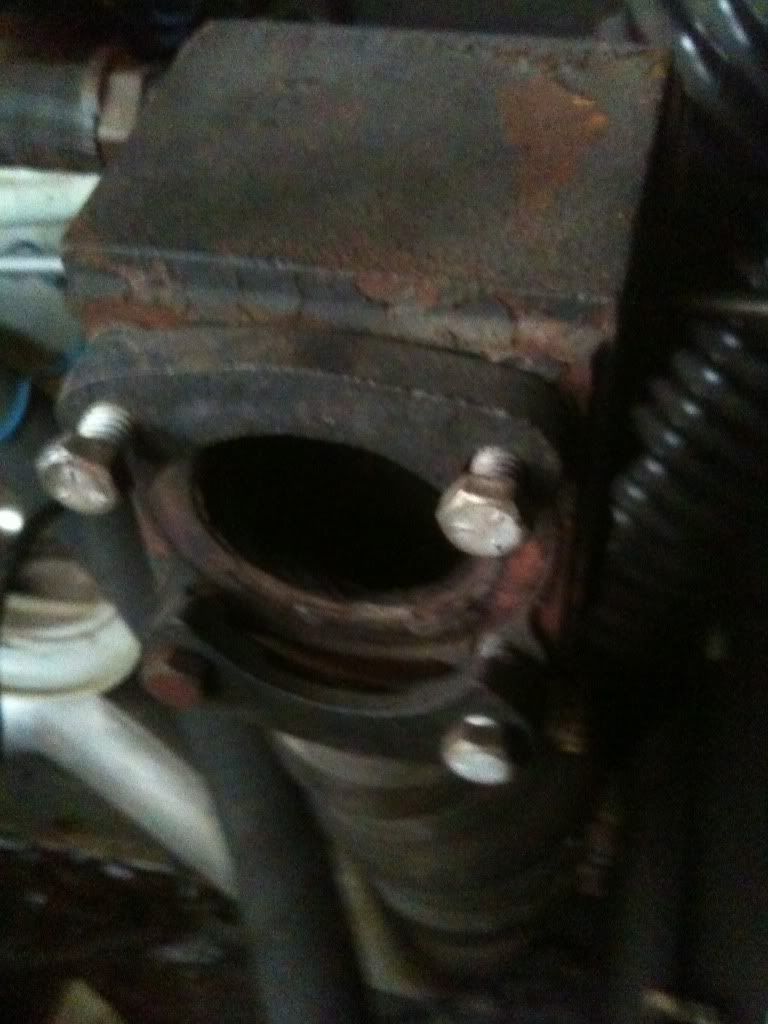
The lower picture shows the 90 degree bend. There is a water hose that injects the water below the bend (two holes about 5/8" in dia)
I don't know where the oxygen sensor goes but the short transition area in picture one is dry.
Jim
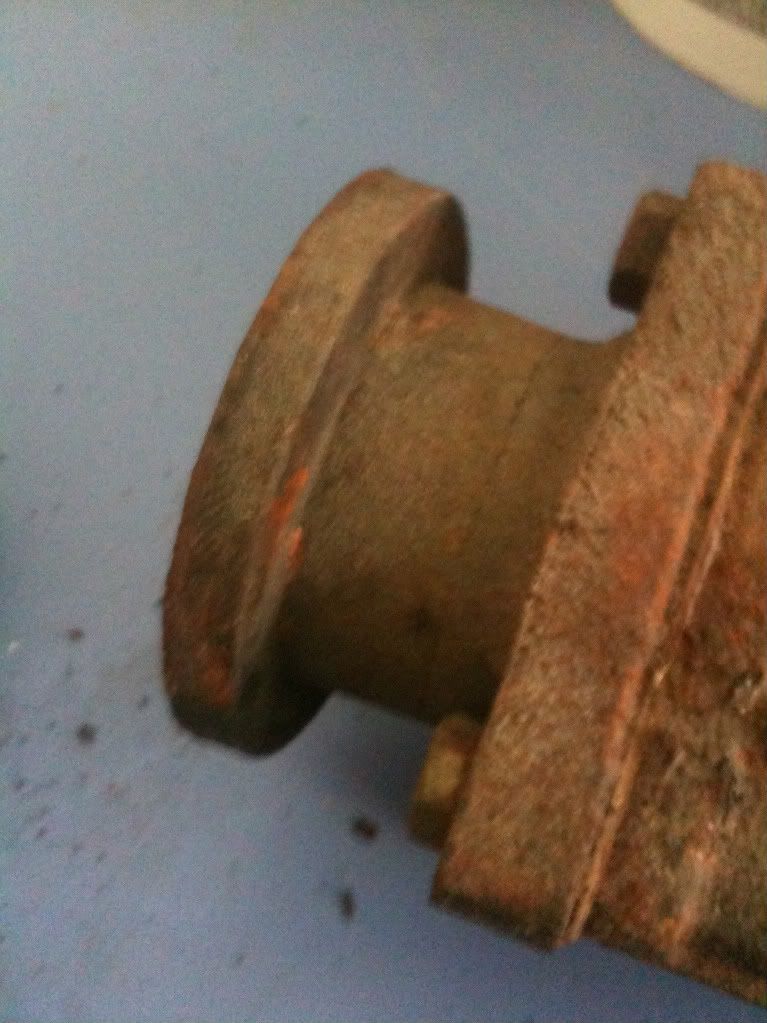

There is something interesting in the picture. EFI would need an oxygen sensor. The upper picture shows a place that could be drilled and tapped at the back of the exhaust.
The lower picture shows the 90 degree bend. There is a water hose that injects the water below the bend (two holes about 5/8" in dia)
I don't know where the oxygen sensor goes but the short transition area in picture one is dry.
Jim