






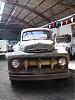
cab metal work

Senior User
Joined: Jul 2006
Posts: 391
Likes: 0
From: Peterborough, Ontario
Looks good, from swiss cheese to nice shiny metal. Isn't it fun drilling out spot welds. I just went throught the same thing. One thing I put in mine was an extra brace across the floor, really stiffened the floor up. Formed a piece of 1/8" into a " U " and welded it in between the front seat mount and the back rib.
Keep the pictures coming
Keep the pictures coming
Thread Starter
|
New User
Joined: Sep 2008
Posts: 23
Likes: 0
From: Netherlands
the floor is quite stiff already. I'm going to put the original reinforments back in to create extra stiffness. the spotweld weren't to hard because the metal was very thin and friable. This weekend I'm going to make some more progress on the other corner and floor.

Hotshot


Joined: Oct 2004
Posts: 15,882
Likes: 88
From: Durham NC
Really nice work, but might I suggest some simplification in forming your patch panels?
Rather than making then welding up a lot of pie cuts to turn a flange, it is a lot easier and cleaner to make the flange a seperate piece then weld together at the "bend" welding from the inside will make a corner fillet bead that will allow you to clean up the outside of the corner easily, with minimum excess bead to remove. If the inside of the corner needs to be clean then weld from the outside of the corner. If you want a rolled edge such as at the cab bottom, cut the edge short (no more than 3/8" overhang) turn the edge over a radiused dolly then weld the next piece after the bend (if any of this is unclear just ask, I'll be glad to explain). A shrinker/stretcher machine would make forming those shapes in one piece a piece of cake and I think well worth the investment (you could always resell it for near what you paid if you think you'll never do another project), but shrinking and stretching can also be done by hand. If you are interested in learning how, I can do a how-to topic rather than burying it in this topic. Metal is quite "plastic" and it doesn't require a large press or drop forge to create elaborate shapes. Making wooden hammer forms is another way to form panels. See the way this guy used them very effectively: metalworking
Rather than making then welding up a lot of pie cuts to turn a flange, it is a lot easier and cleaner to make the flange a seperate piece then weld together at the "bend" welding from the inside will make a corner fillet bead that will allow you to clean up the outside of the corner easily, with minimum excess bead to remove. If the inside of the corner needs to be clean then weld from the outside of the corner. If you want a rolled edge such as at the cab bottom, cut the edge short (no more than 3/8" overhang) turn the edge over a radiused dolly then weld the next piece after the bend (if any of this is unclear just ask, I'll be glad to explain). A shrinker/stretcher machine would make forming those shapes in one piece a piece of cake and I think well worth the investment (you could always resell it for near what you paid if you think you'll never do another project), but shrinking and stretching can also be done by hand. If you are interested in learning how, I can do a how-to topic rather than burying it in this topic. Metal is quite "plastic" and it doesn't require a large press or drop forge to create elaborate shapes. Making wooden hammer forms is another way to form panels. See the way this guy used them very effectively: metalworking
Thread Starter
|
New User
Joined: Sep 2008
Posts: 23
Likes: 0
From: Netherlands
thanks for the advice but I don't really understand the 'easier way'of making the patch panels. I haven't got a lot of experience with metal work because I'm just 17.
The site you mentioned shows some very nice ways to shape the metal which I probably can use.
The site you mentioned shows some very nice ways to shape the metal which I probably can use.
Trending Topics

Freshman User
Joined: Mar 2009
Posts: 28
Likes: 0
From: Vancouver, B.C. Canada
Great job, wish I could have done that good a job at 17. Come to think about it; I can't do that good a job now at 46.
FTE Stories
Ford Trucks for Ford Truck Enthusiasts

3 Best / 3 Worst Parts of Modern Ford Ownership
Brett Foote
10 Amazing Upgrades That Solve Common Ford Truck Owner Headaches
Pouria Savadkouei
Every 2026 Ford Engine Explained
Brett Foote
10 Ugly Ford Trucks That We Still Kinda Love
Joe Kucinski
10 Things Every Truck Owner NEEDS (2026 Edition)
Michael S. Palmer
Rezvani's Latest Post-Apocalyptic Monster Is a Ford F-150 Raptor Underneath
Verdad Gallardo
Top 10 Most Expensive Ford Trucks Ever Sold on Bring a Trailer
Joe Kucinski
2027 Ford Super Duty Buyer's Guide (Every Model, Engine, & Package)
Brett Foote
Top 10 Ford Truck Tragedies
Joe Kucinski
Hotshot
Joined: Oct 2004
Posts: 15,882
Likes: 88
From: Durham NC
I'll do a post soon on making patch panels. I wish I had some I needed to make to take pictures of, but Gracie doesn't have a spot of rust on her, and the custom panels I did make (buckets for my frenched tallights, antenna and backup lights, cowl louver blanking panel dashboard ashtray and glove compartment filler etc are already completed. Drawings will have to do.
Here's a tip awhile: The cab corner outer panel you made was cut in a kind of L shape where it joined to the original metal. Next time instead of cutting square corners try cutting 1/4 circles as large as possible around the corners, so instead of having 3 sharp corners you would have an S shaped line. Same goes for a hole, cut out in and oval or round shape rather than a rectangle or square (I use a hole saw to cut a circle or cut two round holes with hole saw and connect with straight lines to make and oval). A circle (or portion of one) is significantly shorter distance to weld around than a square the same size, and when you weld a square corner you get much more heat buildup and shrinkage in the corner which is more likely to cause a warp, Finally a smooth curve is easier to metal finish without telegraphing through than two weld beads meeting at a corner.
I also try to make my welds from the back of the panel wherever possible, a lot less grinding and cleanup will be required on the more important face side.
Get yourself a rattle can of "weld thru primer" (available from Easwood and some welding or auto paint stores) Spray the back sides and understructure where it will be inaccessable after skinning before welding on the outer skins to reduce future rusting of the freshly cleaned and welded metal. Don't try to use standard primer or use the weld thru for exterior surfaces that will be finish painted, it is not meant to be painted over.
Here's a tip awhile: The cab corner outer panel you made was cut in a kind of L shape where it joined to the original metal. Next time instead of cutting square corners try cutting 1/4 circles as large as possible around the corners, so instead of having 3 sharp corners you would have an S shaped line. Same goes for a hole, cut out in and oval or round shape rather than a rectangle or square (I use a hole saw to cut a circle or cut two round holes with hole saw and connect with straight lines to make and oval). A circle (or portion of one) is significantly shorter distance to weld around than a square the same size, and when you weld a square corner you get much more heat buildup and shrinkage in the corner which is more likely to cause a warp, Finally a smooth curve is easier to metal finish without telegraphing through than two weld beads meeting at a corner.
I also try to make my welds from the back of the panel wherever possible, a lot less grinding and cleanup will be required on the more important face side.
Get yourself a rattle can of "weld thru primer" (available from Easwood and some welding or auto paint stores) Spray the back sides and understructure where it will be inaccessable after skinning before welding on the outer skins to reduce future rusting of the freshly cleaned and welded metal. Don't try to use standard primer or use the weld thru for exterior surfaces that will be finish painted, it is not meant to be painted over.

Cargo Master


Joined: Apr 2005
Posts: 3,337
Likes: 165
From: Harpswell Maine
Very nice work and you are only 17! You should be proud of your work. I am spoiled, Willard my 49 required almost no rear cab corner work. I have owned Willard for almost twice your years on earth!
Thread Starter
|
New User
Joined: Sep 2008
Posts: 23
Likes: 0
From: Netherlands
thanks
the "weld thru primer" is a good solution for further rust on inaccesable places. I live in the Netherlands so I have to find out what it's called in dutch. Also we've got a lot of bad weather so I really need good rust protection.
the "weld thru primer" is a good solution for further rust on inaccesable places. I live in the Netherlands so I have to find out what it's called in dutch. Also we've got a lot of bad weather so I really need good rust protection.
Hotshot
Joined: Oct 2004
Posts: 15,882
Likes: 88
From: Durham NC
Two of the major manufacturers here in the states are 3M and SEM. U-Pol and Krylon brands also seem to be popular. I'd assume BASF and other major paint suppliers have a similar product in their lines. Now you can find it in a copper rich as well as a zinc rich formula. I plan on trying the copper next time I need some.
Thread Starter
|
New User
Joined: Sep 2008
Posts: 23
Likes: 0
From: Netherlands
alright, those brands sound familiar. I will have a look at the local car parts shop if they've got anything like it. which one is better the copper based primer or the zinc one?
kyle
kyle

Hotshot
Joined: Oct 2004
Posts: 15,882
Likes: 88
From: Durham NC
The copper being a higher melting point metal and an excellent heat conductor ought to not burn back away from the weld and conducts the welder current across the weld better, so I'm going to try the copper next time. IMHO if it wasn't better then the manufacturers wouldn't have come out with it since copper is more expensive than zinc and body shops don't want to spend a dime more than they have to to meet the requirements of the manufacturer's repair specs.