


Another electrical/wiring question
Thread Starter
|
FTE Chapter Leader


Joined: Dec 2001
Posts: 3,636
Likes: 11
From: Crossville, Tn

Another electrical/wiring question
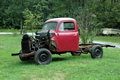
I got the F5 home on October 29th and then had rotator cuff surgery on November 2, so i am now finally getting to do some work on the truck. The wiring is all original and in bad shape and i plan to rewire it, but that will come a little later. When I looked at the truck, the PO was using a 12 volt deep cycle battery to run and start it. Of course, he could not get it running for the last 2 months that he had it, but my buddy and I cleaned up and tightened the battery cables, rewired the starter switch and we got it running. I had it hauled home and they got it running to load it.
Since it was still positive ground and had the 6 volt generator, starter and regulator it seems logical that it really is all 6 volt. I installed a new 6 volt battery (Napa's best for this truck) and it barely turned the starter. Well, my buddy pulled the starter and I had it rebuilt at a local shop. It now turns over great, but it won't fire. I followed what the PO or the one before him did to run this thing, they wired the battery to an amp gauge and then to the ignition switch. They disconnected the line from the generator to the coil and disconnected the lines from the regulator to the solenoid. They also had a ballast resister between the coil and the distributor. I had spark in the distributor but none going to the plugs. The plug wires are all relatively new and seem to be good as are the points, cap and rotor.
I installed a new coil and bypassed the resister and still no fire.
Any thoughts here gang? What am I missing?
Since it was still positive ground and had the 6 volt generator, starter and regulator it seems logical that it really is all 6 volt. I installed a new 6 volt battery (Napa's best for this truck) and it barely turned the starter. Well, my buddy pulled the starter and I had it rebuilt at a local shop. It now turns over great, but it won't fire. I followed what the PO or the one before him did to run this thing, they wired the battery to an amp gauge and then to the ignition switch. They disconnected the line from the generator to the coil and disconnected the lines from the regulator to the solenoid. They also had a ballast resister between the coil and the distributor. I had spark in the distributor but none going to the plugs. The plug wires are all relatively new and seem to be good as are the points, cap and rotor.
I installed a new coil and bypassed the resister and still no fire.
Any thoughts here gang? What am I missing?

Senior User
Joined: Oct 2008
Posts: 137
Likes: 0
From: Brandon MS
If your distributor has two wires it should have one ground and one hot for the coil I believe. On many vehicles the hot went through what some people call a resistor wire or a ballast resistor to keep the coil from getting twelve volts all the time. I have heard if you dont have this it can fry your coil prematurely.
Thread Starter
|
FTE Chapter Leader
Joined: Dec 2001
Posts: 3,636
Likes: 11
From: Crossville, Tn
If your distributor has two wires it should have one ground and one hot for the coil I believe. On many vehicles the hot went through what some people call a resistor wire or a ballast resistor to keep the coil from getting twelve volts all the time. I have heard if you dont have this it can fry your coil prematurely.
Joe
Senior User
Joined: Oct 2008
Posts: 137
Likes: 0
From: Brandon MS
Sorry I had a brain Fart. If you have fire at your distributor and none at the plugs I would check my point clearances and timing. Im puzzled too. Hopefully someone else will pipe in a few. I have done mechanic work for years but I have not worked on much of the older stuff with points and carbs and such. when I started all of that was becoming a thing of the past, unfortunately.
Thread Starter
|
FTE Chapter Leader
Joined: Dec 2001
Posts: 3,636
Likes: 11
From: Crossville, Tn
Sorry I had a brain Fart. If you have fire at your distributor and none at the plugs I would check my point clearances and timing. Im puzzled too. Hopefully someone else will pipe in a few. I have done mechanic work for years but I have not worked on much of the older stuff with points and carbs and such. when I started all of that was becoming a thing of the past, unfortunately.

Post Fiend
Joined: May 2008
Posts: 7,641
Likes: 21
From: Poway, Ca.
Oye - so many thoughts.
First, yes all that is new is the coil and the battery. BUT when you installed those, you physically moved wires that might have been brittle or had poor connections. If you have spark at the points it sounds as though your distrubutir wiring is ok.
I tried to follow your description of the wiring signal flow on your truck - sounds like a mess. You will have charging and power distribution problems to accessories with it wired this way.
We can fix that later - frankly if it runs like that then, hey, it's not broken don't fix it (yet)
But First, you need to positively ascertain that the electrical system is 6 or 12 volts. And I'll give you a hint: If it had a 12 volt battery in it then it's a 12 volt system, whether intentional or not - irregardless of whether or not the components are rated for 12 volt. Your light will probably tell the story when you try to turn them on withthe 6 volt battery.
In this set up the ballast resistor was installed to reduce the 12 volts down to about 6 or 7 (to the coil) to preserve the burning of the points on a 12 volt system. With a 6 volt battery (and the return to the 6 volt system) the ballast resistor is no longer needed or desired it will drop the voltage to about 2-3 volts.
Also, with a 6 volt system you need to have a 6 volt coil, some 12 volt coils have built in ballast resistors, and some coil wires have resistors as well. You need to make sure all three of these resistance producing items are NOT on your truck. I'd be willing to bet that the ignition components on the truck were 12 volt. Having the resistor between the coil and distributor is wrong, it needed to be between the power source and the coil.
Hey if all else fails, put the old coil and battery back in re connectt th eballast resistor and see what happens.
You will need to decide whether to run this truck at 6 volts positive ground or 12 volts negative ground. Once you decide, you will need to install the correct ignition components (coil, points, condenser) for that voltage and polarity. Then you will need to wire your charging and ignition circuits correctly.
As far as the correct electrical distribution and signal flow, look at my diagrams in my album marked "Electrical Drawings" and specifically the ones with the circuit breakers for 51/52 to show the correct wiring.
It sounds like with the old wiring being brittle it's time to rewire. It's one thing you really need to do right or it will haunt you forever. We're here to help with that when you are ready.
Good luck and MERRY CHRISTMAS!
First, yes all that is new is the coil and the battery. BUT when you installed those, you physically moved wires that might have been brittle or had poor connections. If you have spark at the points it sounds as though your distrubutir wiring is ok.
I tried to follow your description of the wiring signal flow on your truck - sounds like a mess. You will have charging and power distribution problems to accessories with it wired this way.
We can fix that later - frankly if it runs like that then, hey, it's not broken don't fix it (yet)
But First, you need to positively ascertain that the electrical system is 6 or 12 volts. And I'll give you a hint: If it had a 12 volt battery in it then it's a 12 volt system, whether intentional or not - irregardless of whether or not the components are rated for 12 volt. Your light will probably tell the story when you try to turn them on withthe 6 volt battery.
In this set up the ballast resistor was installed to reduce the 12 volts down to about 6 or 7 (to the coil) to preserve the burning of the points on a 12 volt system. With a 6 volt battery (and the return to the 6 volt system) the ballast resistor is no longer needed or desired it will drop the voltage to about 2-3 volts.
Also, with a 6 volt system you need to have a 6 volt coil, some 12 volt coils have built in ballast resistors, and some coil wires have resistors as well. You need to make sure all three of these resistance producing items are NOT on your truck. I'd be willing to bet that the ignition components on the truck were 12 volt. Having the resistor between the coil and distributor is wrong, it needed to be between the power source and the coil.
Hey if all else fails, put the old coil and battery back in re connectt th eballast resistor and see what happens.
You will need to decide whether to run this truck at 6 volts positive ground or 12 volts negative ground. Once you decide, you will need to install the correct ignition components (coil, points, condenser) for that voltage and polarity. Then you will need to wire your charging and ignition circuits correctly.
As far as the correct electrical distribution and signal flow, look at my diagrams in my album marked "Electrical Drawings" and specifically the ones with the circuit breakers for 51/52 to show the correct wiring.
It sounds like with the old wiring being brittle it's time to rewire. It's one thing you really need to do right or it will haunt you forever. We're here to help with that when you are ready.
Good luck and MERRY CHRISTMAS!
Thread Starter
|
FTE Chapter Leader
Joined: Dec 2001
Posts: 3,636
Likes: 11
From: Crossville, Tn
Oye - so many thoughts.
First, yes all that is new is the coil and the battery. BUT when you installed those, you physically moved wires that might have been brittle or had poor connections. If you have spark at the points it sounds as though your distrubutir wiring is ok.
I tried to follow your description of the wiring signal flow on your truck - sounds like a mess. You will have charging and power distribution problems to accessories with it wired this way.
We can fix that later - frankly if it runs like that then, hey, it's not broken don't fix it (yet)
But First, you need to positively ascertain that the electrical system is 6 or 12 volts. And I'll give you a hint: If it had a 12 volt battery in it then it's a 12 volt system, whether intentional or not - irregardless of whether or not the components are rated for 12 volt. Your light will probably tell the story when you try to turn them on withthe 6 volt battery.
In this set up the ballast resistor was installed to reduce the 12 volts down to about 6 or 7 (to the coil) to preserve the burning of the points on a 12 volt system. With a 6 volt battery (and the return to the 6 volt system) the ballast resistor is no longer needed or desired it will drop the voltage to about 2-3 volts.
Also, with a 6 volt system you need to have a 6 volt coil, some 12 volt coils have built in ballast resistors, and some coil wires have resistors as well. You need to make sure all three of these resistance producing items are NOT on your truck. I'd be willing to bet that the ignition components on the truck were 12 volt. Having the resistor between the coil and distributor is wrong, it needed to be between the power source and the coil.
Hey if all else fails, put the old coil and battery back in re connectt th eballast resistor and see what happens.
You will need to decide whether to run this truck at 6 volts positive ground or 12 volts negative ground. Once you decide, you will need to install the correct ignition components (coil, points, condenser) for that voltage and polarity. Then you will need to wire your charging and ignition circuits correctly.
As far as the correct electrical distribution and signal flow, look at my diagrams in my album marked "Electrical Drawings" and specifically the ones with the circuit breakers for 51/52 to show the correct wiring.
It sounds like with the old wiring being brittle it's time to rewire. It's one thing you really need to do right or it will haunt you forever. We're here to help with that when you are ready.
Good luck and MERRY CHRISTMAS!
First, yes all that is new is the coil and the battery. BUT when you installed those, you physically moved wires that might have been brittle or had poor connections. If you have spark at the points it sounds as though your distrubutir wiring is ok.
I tried to follow your description of the wiring signal flow on your truck - sounds like a mess. You will have charging and power distribution problems to accessories with it wired this way.
We can fix that later - frankly if it runs like that then, hey, it's not broken don't fix it (yet)
But First, you need to positively ascertain that the electrical system is 6 or 12 volts. And I'll give you a hint: If it had a 12 volt battery in it then it's a 12 volt system, whether intentional or not - irregardless of whether or not the components are rated for 12 volt. Your light will probably tell the story when you try to turn them on withthe 6 volt battery.
In this set up the ballast resistor was installed to reduce the 12 volts down to about 6 or 7 (to the coil) to preserve the burning of the points on a 12 volt system. With a 6 volt battery (and the return to the 6 volt system) the ballast resistor is no longer needed or desired it will drop the voltage to about 2-3 volts.
Also, with a 6 volt system you need to have a 6 volt coil, some 12 volt coils have built in ballast resistors, and some coil wires have resistors as well. You need to make sure all three of these resistance producing items are NOT on your truck. I'd be willing to bet that the ignition components on the truck were 12 volt. Having the resistor between the coil and distributor is wrong, it needed to be between the power source and the coil.
Hey if all else fails, put the old coil and battery back in re connectt th eballast resistor and see what happens.
You will need to decide whether to run this truck at 6 volts positive ground or 12 volts negative ground. Once you decide, you will need to install the correct ignition components (coil, points, condenser) for that voltage and polarity. Then you will need to wire your charging and ignition circuits correctly.
As far as the correct electrical distribution and signal flow, look at my diagrams in my album marked "Electrical Drawings" and specifically the ones with the circuit breakers for 51/52 to show the correct wiring.
It sounds like with the old wiring being brittle it's time to rewire. It's one thing you really need to do right or it will haunt you forever. We're here to help with that when you are ready.
Good luck and MERRY CHRISTMAS!
As far as if the system is 6V or 12V, that has me totally bewildered, but one thing I do know for sure is that it is wired for a positive ground. The headlights are 6V, I actually pulled them and verified that. It has the original 6V tail light, but it also has newer style (mid 50's) tail lights, none of which work. The headlights work but are very dim, I have new 6V sealed beams and they too are very dim.
As for the coil, I bought a new Flame Thrower coil and that was a screwy deal too. I went to their website and they showed that the 45xxx series was correct for the 6V V-8 to be used with points or electronic ignition. When I got the coil, the first thing I read was that it could not be used with a points system. I called Pertronics and talked to the tech guy who said that it could in fact Not be used with points and said that the 40xxx series was the one to use. I asked about the difference between 6V and 12V and he said, "The coil does not know 6V from 12V, they work with either. The paperwork with the coil stated that you needed a resister for 4 and 6 cylinder but not with 8 cylinder. Now, I did put the old coil back in and tried it with and without the resistor, but still no difference.
In the mean time, I pulled the generator and had it bench tested and it works good, which makes my decision to convert to 12 volt a little harder, but after talking to the guy at the starter shop, I may just have to go the 12V route. I guess the first thing I need to do is to get a 12V battery and try hooking that up, but if I am going to go 12V negative, I need to make sure that I get that right. according to the guy at the starter shop, the only thing really effected by the +/- ground is the regulator and if I install an alternator, I won't need the regulator. (I guess that will simplify the wiring some)

Trending Topics

Cargo Master
Joined: Jun 2001
Posts: 2,571
Likes: 22
From: Oxford, Indiana
Let's cut out a bunch of the PO's handiwork and get to the meat 'n taters of the thing so you can figure out what's really wrong here. With a rat's nest of tattered, original wire and a handful of "modifications", you could be chasing your tail forever. You also need a VOM meter. This is mandatory. Without one, you aren't troubleshooting. You're guessing and shotgunning parts at the problem. Even a cheap $10 one from the auto parts store will work for what you want to do. I wouldn't jack with the flamethrower coils, either. Between your account of your conversation with their tech and the description you gave of the instruction sheet contents, I can only draw the conclusion that the Pertronix people are idiots and I wouldn't use their stuff on my lawnmower. Actually, I already had that opinion, but your experience has reinforced it - 
OK, so you've got a new 6V battery already. Let's go with it. Make sure that it's FULLY charged and get it hooked up in the truck WITH A POSITIVE GROUND and verify that the starter will crank it like it ought to. Take the original coil that was marked "12V For use with external resistor only." and check for resistance between the "+" and "-" posts and also between both of those posts and the coil wire tower. The exact resistance at this point isn't important. It will be a large value. You're just confirming that it isn't "open".
If the coil shows resistance between all three points, put it back in so that the wire from the distributor is attached to the "+" post on the coil. That's important. The coil is polarity sensitive. If you hook it up backwards, it will produce a spark and the engine might even run, but it will be weak. Keep the ballast resistor a minimum of 10 feet from the truck and completely disconnected. You don't need it. (Here's a secret - that type of coil is really a 6V coil in disguise if you use it without a resistor.) Pop the distributor cap and carefully turn the engine over by hand until the points are closed. Button up the distributor. Grab a jumper wire and run it directly from the NEGATIVE post of the battery to the "-" post of the coil. Don't attach any other wires with it. Just the direct jumper. When you make the final connection, you should get a spark as you connect it. If you do, try to start it. If it starts, then the problem is smewhere in the wiring mess in the rest of the truck.
If it doesn't start, check for a spark at the plugs. Nothing? Unwire the jumper from the battery to the coil, pull the cap, and roll the points closed again. Reconnect the jumper and follow the circuit with a meter until you find the fault. Ground the meter on the positive battery post and go through the circuit from the negative battery post to the points. You should see ~6V at the negative post on the battery and the "-" post on the coil, but if everything is working right, you should have nuthin' between the positive battery post and the "+" post on the coil with the points closed. If you show a voltage around 6V there, then the points aren't fully closing or aren't making good electrical contact.
If those readings all check out like they're supposed to, then it's possible that something is constantly grounding the circuit. You can check this by pulling the jumper to the battery, rolling the points OPEN, and then reconnecting your jumper. Now run through the circuit in the same order. This time you should see ~6V on both sides of the coil instead of just at the "-" post. You should also see ~6V all the way to the movable arm of the points. If not and you still show ~6V at the coil "-" but nothing at the "+" or the points, then the circuit is shorted. The most likely culprits are a bad condenser or a bad insulator at the points.
OK, so you've got a new 6V battery already. Let's go with it. Make sure that it's FULLY charged and get it hooked up in the truck WITH A POSITIVE GROUND and verify that the starter will crank it like it ought to. Take the original coil that was marked "12V For use with external resistor only." and check for resistance between the "+" and "-" posts and also between both of those posts and the coil wire tower. The exact resistance at this point isn't important. It will be a large value. You're just confirming that it isn't "open".
If the coil shows resistance between all three points, put it back in so that the wire from the distributor is attached to the "+" post on the coil. That's important. The coil is polarity sensitive. If you hook it up backwards, it will produce a spark and the engine might even run, but it will be weak. Keep the ballast resistor a minimum of 10 feet from the truck and completely disconnected. You don't need it. (Here's a secret - that type of coil is really a 6V coil in disguise if you use it without a resistor.) Pop the distributor cap and carefully turn the engine over by hand until the points are closed. Button up the distributor. Grab a jumper wire and run it directly from the NEGATIVE post of the battery to the "-" post of the coil. Don't attach any other wires with it. Just the direct jumper. When you make the final connection, you should get a spark as you connect it. If you do, try to start it. If it starts, then the problem is smewhere in the wiring mess in the rest of the truck.
If it doesn't start, check for a spark at the plugs. Nothing? Unwire the jumper from the battery to the coil, pull the cap, and roll the points closed again. Reconnect the jumper and follow the circuit with a meter until you find the fault. Ground the meter on the positive battery post and go through the circuit from the negative battery post to the points. You should see ~6V at the negative post on the battery and the "-" post on the coil, but if everything is working right, you should have nuthin' between the positive battery post and the "+" post on the coil with the points closed. If you show a voltage around 6V there, then the points aren't fully closing or aren't making good electrical contact.
If those readings all check out like they're supposed to, then it's possible that something is constantly grounding the circuit. You can check this by pulling the jumper to the battery, rolling the points OPEN, and then reconnecting your jumper. Now run through the circuit in the same order. This time you should see ~6V on both sides of the coil instead of just at the "-" post. You should also see ~6V all the way to the movable arm of the points. If not and you still show ~6V at the coil "-" but nothing at the "+" or the points, then the circuit is shorted. The most likely culprits are a bad condenser or a bad insulator at the points.
FTE Stories
Ford Trucks for Ford Truck Enthusiasts

3 Best / 3 Worst Parts of Modern Ford Ownership
Brett Foote
10 Amazing Upgrades That Solve Common Ford Truck Owner Headaches
Pouria Savadkouei
Every 2026 Ford Engine Explained
Brett Foote
10 Ugly Ford Trucks That We Still Kinda Love
Joe Kucinski
10 Things Every Truck Owner NEEDS (2026 Edition)
Michael S. Palmer
Rezvani's Latest Post-Apocalyptic Monster Is a Ford F-150 Raptor Underneath
Verdad Gallardo
Top 10 Most Expensive Ford Trucks Ever Sold on Bring a Trailer
Joe Kucinski
2027 Ford Super Duty Buyer's Guide (Every Model, Engine, & Package)
Brett Foote
Top 10 Ford Truck Tragedies
Joe Kucinski
Post Fiend
Joined: May 2008
Posts: 7,641
Likes: 21
From: Poway, Ca.
I'll have to get back to this in the morning. This is one of those PO frankenmonster nightmares that I just can't digest tonight. I Agree with BOR in that it's time to stop talking to the PO, as it is obvious he was someone who went WAY out of his way to make a *******ized set up work rather than do it right....... 3 tylenol....talk to you tomorrow.
Ps. this electrical scenario is the result of a 6 volt gnerator set up that didn't charge or start the truck well enough, and the PO "fixed it" to work with a 12 volt battery and ahlf components.
For all of you 6 volt **** guys out there who keep telling me the 6 volt system is just fine , this is what I'm talking about. Manana!
Ps. this electrical scenario is the result of a 6 volt gnerator set up that didn't charge or start the truck well enough, and the PO "fixed it" to work with a 12 volt battery and ahlf components.
For all of you 6 volt **** guys out there who keep telling me the 6 volt system is just fine , this is what I'm talking about. Manana!
Thread Starter
|
FTE Chapter Leader
Joined: Dec 2001
Posts: 3,636
Likes: 11
From: Crossville, Tn
BlueOvalRage, thanks for the information, I'll get to town sometime after Christmas and get a VOM Meter and try your suggested test.
The battery hookup does in fact turn the starter OK, better than it did with the 12V since I had the starter rebuilt.
When you mention checking the resistance between the - + and tower, are you saying to do it without the coil being hooked up? And when you said to check between both post and the tower, do you mean between each post separately or both post together and the tower? BTW, the old coil actually doesn't have - or + it is labeled Batt and Dist. (which further confused me with the new coil which is labeled - and +. I figured that the battery side would be the -)
Thanks for the help. Joe
Julie, I haven't actually talked to the PO about this because I think it was done before he got it. As for the the 6V generator being the reason, I would disagree, since the starter was pretty well worn out, I suspect that the 12V was to avoid fixing the starter.
But I am still considering going the 12V route. Joe
The battery hookup does in fact turn the starter OK, better than it did with the 12V since I had the starter rebuilt.
When you mention checking the resistance between the - + and tower, are you saying to do it without the coil being hooked up? And when you said to check between both post and the tower, do you mean between each post separately or both post together and the tower? BTW, the old coil actually doesn't have - or + it is labeled Batt and Dist. (which further confused me with the new coil which is labeled - and +. I figured that the battery side would be the -)
Thanks for the help. Joe
Julie, I haven't actually talked to the PO about this because I think it was done before he got it. As for the the 6V generator being the reason, I would disagree, since the starter was pretty well worn out, I suspect that the 12V was to avoid fixing the starter.
But I am still considering going the 12V route. Joe

Postmaster

Joined: Mar 2000
Posts: 3,730
Likes: 13
From: Waynesville, OH
BlueOvalRage, thanks for the information, I'll get to town sometime after Christmas and get a VOM Meter and try your suggested test.
The battery hookup does in fact turn the starter OK, better than it did with the 12V since I had the starter rebuilt.
When you mention checking the resistance between the - + and tower, are you saying to do it without the coil being hooked up? And when you said to check between both post and the tower, do you mean between each post separately or both post together and the tower? BTW, the old coil actually doesn't have - or + it is labeled Batt and Dist. (which further confused me with the new coil which is labeled - and +. I figured that the battery side would be the -)
Thanks for the help. Joe
Julie, I haven't actually talked to the PO about this because I think it was done before he got it. As for the the 6V generator being the reason, I would disagree, since the starter was pretty well worn out, I suspect that the 12V was to avoid fixing the starter.
But I am still considering going the 12V route. Joe
The battery hookup does in fact turn the starter OK, better than it did with the 12V since I had the starter rebuilt.
When you mention checking the resistance between the - + and tower, are you saying to do it without the coil being hooked up? And when you said to check between both post and the tower, do you mean between each post separately or both post together and the tower? BTW, the old coil actually doesn't have - or + it is labeled Batt and Dist. (which further confused me with the new coil which is labeled - and +. I figured that the battery side would be the -)
Thanks for the help. Joe
Julie, I haven't actually talked to the PO about this because I think it was done before he got it. As for the the 6V generator being the reason, I would disagree, since the starter was pretty well worn out, I suspect that the 12V was to avoid fixing the starter.
But I am still considering going the 12V route. Joe
The secondary coil is much finer wire and has many more turns that the primary coil. This means it will have a higher resistance than the primary coil. The secondary coil produces a high voltage for the spark plugs as the points open and close. Some coil units have one end of the secondary coil wire connected to the coil unit - terminal. Others have one end of the secondary coil connected to the coil unit case. In either case, the other end of the secondary coil wire is connected to the tower (high voltage) terminal on the coil unit.
The resistance of my coil unit secondary coil is ... oh dammit!!!
 I just bought and installed a brand new coil in Earl to replace my old coil in which the secondary coil had failed. Now I find that the secondary coil of the new unit is an open circuit RIGHT OUT OF THE BOX!!!
Somebody else will have to help with the secondary coil resistance as I'm too ticked off right now to write a thought out reply.
Oh, one thing I can still write without swear words is that ALL measurements should be made with ALL connections to the coil unit removed. Hope that helps a bit.

Thread Starter
|
FTE Chapter Leader
Joined: Dec 2001
Posts: 3,636
Likes: 11
From: Crossville, Tn
OK, I picked up a meter today and here is what I have found.
I checked both the old coil and the new one.
The old one has 1.5 resistance between the +and - but I can't get a reading between those terminals and the top post.
The new one has 1.3 resistance between the + and - but again, no reading between those terminals and the top post.
I took the ballast resister off and put it in my tool box.
The wiring to the coil from the ignition definitely needs to be replaced. I have about 6.5 volts at the battery and at the ignition switch, but I have only about 4 volts going to the coil. I hooked up a jumper from the battery to the coils and have a full 6.5 volts. but I still can't get it to fire.
With the points closed, I get 6.5V at the - terminal of the coil and .15 at the + terminal.
I checked both the old coil and the new one.
The old one has 1.5 resistance between the +and - but I can't get a reading between those terminals and the top post.
The new one has 1.3 resistance between the + and - but again, no reading between those terminals and the top post.
I took the ballast resister off and put it in my tool box.
The wiring to the coil from the ignition definitely needs to be replaced. I have about 6.5 volts at the battery and at the ignition switch, but I have only about 4 volts going to the coil. I hooked up a jumper from the battery to the coils and have a full 6.5 volts. but I still can't get it to fire.
With the points closed, I get 6.5V at the - terminal of the coil and .15 at the + terminal.
Post Fiend
Joined: May 2008
Posts: 7,641
Likes: 21
From: Poway, Ca.
Well, I've read back through all the posts, and I'm just not sure what to tell you will make this work.
My first suggestion is that if the iginitin wire needs to be replaced then bypass it with a temp jumper wire to see if that takes care of it.
I guess second, I'd have to recommend trying it with the 12 volt battery again. We don't know what this guys done or what he's stuck up under the dash, etc, what parts were marginal (like your starter to begin with) that prompted him to do this; or for that matter, the condition of his connections or wire sizes.
But I will tell you this: If you use this electrical system - even if you do get it to run - this truck is going to have you stalled on the side of the road; using jumper cables to start regularly; and maybe even a fire or two. Don't fool with it.
The electrical systems on these trucks are very simple and reliable when stock, rewired correctly and maintained correctly.
But, the moment someone does this kind of stuff, you have a system that will probably be a nightmare for you and make you hate your truck. There may be only one weak link - a frayed wire in the harness, a bad crimp on a connector, some "aircraft part" forced into working, or just stress from a bad configuration - and you'll probably never find it. So:
My advice (and I know this is not what you are gonna want to hear, but....) I'd decide whether on not to convert to 12 volt (and you should if you are making this a driver), then strip every wire out of the truck and rewire it completely and correctly. It's not that hard, and considering the cost of a restoration, it's relatively not that expensive.
The electrical system is the single one on the truck that if not done correctly will haunt you forever. But if done right will be safe and reliable - do it right.
My first suggestion is that if the iginitin wire needs to be replaced then bypass it with a temp jumper wire to see if that takes care of it.
I guess second, I'd have to recommend trying it with the 12 volt battery again. We don't know what this guys done or what he's stuck up under the dash, etc, what parts were marginal (like your starter to begin with) that prompted him to do this; or for that matter, the condition of his connections or wire sizes.
But I will tell you this: If you use this electrical system - even if you do get it to run - this truck is going to have you stalled on the side of the road; using jumper cables to start regularly; and maybe even a fire or two. Don't fool with it.
The electrical systems on these trucks are very simple and reliable when stock, rewired correctly and maintained correctly.
But, the moment someone does this kind of stuff, you have a system that will probably be a nightmare for you and make you hate your truck. There may be only one weak link - a frayed wire in the harness, a bad crimp on a connector, some "aircraft part" forced into working, or just stress from a bad configuration - and you'll probably never find it. So:
My advice (and I know this is not what you are gonna want to hear, but....) I'd decide whether on not to convert to 12 volt (and you should if you are making this a driver), then strip every wire out of the truck and rewire it completely and correctly. It's not that hard, and considering the cost of a restoration, it's relatively not that expensive.
The electrical system is the single one on the truck that if not done correctly will haunt you forever. But if done right will be safe and reliable - do it right.

Laughing Gas
Joined: Aug 2006
Posts: 815
Likes: 4
From: mountaintop, Pa
My advice (and I know this is not what you are gonna want to hear, but....) I'd decide whether on not to convert to 12 volt (and you should if you are making this a driver), then strip every wire out of the truck and rewire it completely and correctly. It's not that hard, and considering the cost of a restoration, it's relatively not that expensive.
The electrical system is the single one on the truck that if not done correctly will haunt you forever. But if done right will be safe and reliable - do it right.
Julie, is a wiring goddess. Listen to her, I used EZ wiring but, If I was to do it again I'd make my own. It's simple, just do it. I was in the same position, and now that I look at my old harness and 2 months ago thought "it's not to bad" it was ridiculous for me to even think it. what a mess, not a single inch of the original harness was any good. Even though it was still in cloth and plastic, the wires were all coroded and brittle.
Cargo Master
Joined: Jun 2001
Posts: 2,571
Likes: 22
From: Oxford, Indiana
Joe,
Here's a few other things to check and consider:
First of all, my comments on checking the resistance of the coil may have been a bit confusing or inaccurate. When I posted, I was at work and my notes were at home so I was only working from memory. I've been playing with EFI stuff lately and I'm getting a little fuzzy on the old technology. George is absolutely correct that there are actually two separate windings inside your coil. They interconnect internally and that's why it's critical to make sure your external connections are made correctly. Here is a drawing of the CORRECT way to hook up the coil. Keep in mind that this drawing only pertains to 6V coils or 12V coils used with an external ballast resistor. A 12V coil with an internal resistor is a different animal.

With it wired this way, the two windings are in parallel as they should be. You shouldn't trust the markings on the posts if you have a meter now. You can figure out for yourself how to properly connect it and also whether or not the thing is any good. Notice in the drawing that the two windings are connected at one end. Measure the resistance of your coil again with no wires attached. You should see a resistance between one of the small posts and BOTH the other small post and the tower. This post is ALWAYS the one that gets connected to the battery or ignition switch regardless of voltage or ground polarity. The other small post will only show a resistance to the opposite small post but NOT the tower. This post is ALWAYS the one that goes to the points in the distributor. Now, here is a drawing of the WRONG way to hook things up. Notice that the windings are in series instead of parallel. This is not good. It will severely limit the energy generated for a spark and may not even generate a spark at all.

You mentioned that you aren't seeing any resistance from either post to the tower. I think George was seeing the same thing on his. That normally indicates that the secondary winding is open and the coil is bad. It could also mean that the resistance of the winding is so high that your meter can't read it. I'm heading for the shop after bit and I'll check a couple known good ones and pass along my readings for you to compare yours to.
You mentioned that you were seeing 6.5V on the post of the coil that was connected to the battery and nothing on the post connected to the distributor with the points closed. That indicates that you are dropping all the voltage across the coil and that's exactly what you want. It means that the coil is charging. But charging the coil isn't what creates a spark. As the points open, the magnetic field in the primary circuit collapses and THAT is what causes it to chuck a spark out of the secondary circuit. You actually get the spark when the points break open instead of when they close. You need to roll the points open and recheck to make sure the circuit is breaking. With the points open, you should see 6.5V on BOTH sides of the coil. If you don't, then there is a short somewhere between the coil and the points and the coil is charging all the time. No sparkies!
Last note: If you've got a good 6V generator and regulator and all your bulbs are 6V as well, then I'd leave it 6V unless you're going to be driving it daily or at night often. The 6V system is just as reliable as a 12V system when it's kept up. Anybody that says otherwise either doesn't understand the minor differences in a 6V charging system and doesn't know how to fix it or they're just too lazy to keep it maintained so it operates at peak efficiency. Staying 6V is a lot less work, too. No dropping resistors to mess with for your guages, heater, etc. All my old tractors are still 6V. I cranked my 860 up the other night to plow off the driveway when it was 17 degrees. She sleeps outside and hasn't been touched in over a month. It popped off on about the second revolution. Food for thought!
Here's a few other things to check and consider:
First of all, my comments on checking the resistance of the coil may have been a bit confusing or inaccurate. When I posted, I was at work and my notes were at home so I was only working from memory. I've been playing with EFI stuff lately and I'm getting a little fuzzy on the old technology. George is absolutely correct that there are actually two separate windings inside your coil. They interconnect internally and that's why it's critical to make sure your external connections are made correctly. Here is a drawing of the CORRECT way to hook up the coil. Keep in mind that this drawing only pertains to 6V coils or 12V coils used with an external ballast resistor. A 12V coil with an internal resistor is a different animal.
With it wired this way, the two windings are in parallel as they should be. You shouldn't trust the markings on the posts if you have a meter now. You can figure out for yourself how to properly connect it and also whether or not the thing is any good. Notice in the drawing that the two windings are connected at one end. Measure the resistance of your coil again with no wires attached. You should see a resistance between one of the small posts and BOTH the other small post and the tower. This post is ALWAYS the one that gets connected to the battery or ignition switch regardless of voltage or ground polarity. The other small post will only show a resistance to the opposite small post but NOT the tower. This post is ALWAYS the one that goes to the points in the distributor. Now, here is a drawing of the WRONG way to hook things up. Notice that the windings are in series instead of parallel. This is not good. It will severely limit the energy generated for a spark and may not even generate a spark at all.
You mentioned that you aren't seeing any resistance from either post to the tower. I think George was seeing the same thing on his. That normally indicates that the secondary winding is open and the coil is bad. It could also mean that the resistance of the winding is so high that your meter can't read it. I'm heading for the shop after bit and I'll check a couple known good ones and pass along my readings for you to compare yours to.
You mentioned that you were seeing 6.5V on the post of the coil that was connected to the battery and nothing on the post connected to the distributor with the points closed. That indicates that you are dropping all the voltage across the coil and that's exactly what you want. It means that the coil is charging. But charging the coil isn't what creates a spark. As the points open, the magnetic field in the primary circuit collapses and THAT is what causes it to chuck a spark out of the secondary circuit. You actually get the spark when the points break open instead of when they close. You need to roll the points open and recheck to make sure the circuit is breaking. With the points open, you should see 6.5V on BOTH sides of the coil. If you don't, then there is a short somewhere between the coil and the points and the coil is charging all the time. No sparkies!
Last note: If you've got a good 6V generator and regulator and all your bulbs are 6V as well, then I'd leave it 6V unless you're going to be driving it daily or at night often. The 6V system is just as reliable as a 12V system when it's kept up. Anybody that says otherwise either doesn't understand the minor differences in a 6V charging system and doesn't know how to fix it or they're just too lazy to keep it maintained so it operates at peak efficiency. Staying 6V is a lot less work, too. No dropping resistors to mess with for your guages, heater, etc. All my old tractors are still 6V. I cranked my 860 up the other night to plow off the driveway when it was 17 degrees. She sleeps outside and hasn't been touched in over a month. It popped off on about the second revolution. Food for thought!