


Important tune up information

Thread Starter
|
Postmaster
Joined: Oct 2009
Posts: 3,432
Likes: 7
I have mine own opinion on plug wires, but following the recommendations upthread will work.
Mainly, you want to keep oil off of them, use the diaelectric grease on the spark plug end of the boots to prevent them welding themselves to the ceramic, and route them in the OEM clips (or get creative with nylon ties) to keep them off the manifolds.
A tip: I don't know what others do, but the wires routing for the left bank (driver's side) plugs runs through/between the legs of the plastic intake plenum. I used the baling wire fishing method to fish mine through there, as I couldn't find another way to duplicate the OEM routing, and the wires on that side do not have sufficient slack to allow routing over the top of the plenum.
IOW, don't just yank the old left-side wires out; tie a length of wire or string or floss or something to the old wire before fishing it out, so you have a way to fish the new wire in.
This is only an issue with driver's side wires.
Mainly, you want to keep oil off of them, use the diaelectric grease on the spark plug end of the boots to prevent them welding themselves to the ceramic, and route them in the OEM clips (or get creative with nylon ties) to keep them off the manifolds.
A tip: I don't know what others do, but the wires routing for the left bank (driver's side) plugs runs through/between the legs of the plastic intake plenum. I used the baling wire fishing method to fish mine through there, as I couldn't find another way to duplicate the OEM routing, and the wires on that side do not have sufficient slack to allow routing over the top of the plenum.
IOW, don't just yank the old left-side wires out; tie a length of wire or string or floss or something to the old wire before fishing it out, so you have a way to fish the new wire in.
This is only an issue with driver's side wires.

FTE Community Team


Joined: Nov 2001
Posts: 1,837
Likes: 252
From: Oak Harbor, Washington

Hmmm. My '97 sure looked like it had Motorcraft wires on it when I changed them, and they were routed through the plenum, but I suppose they might have been replaced with something else.
The through-the-plenum-legs routing is a PITA to replace. Good to hear that the can be routed behind with some brands.
The through-the-plenum-legs routing is a PITA to replace. Good to hear that the can be routed behind with some brands.

Fleet Mechanic

Joined: Apr 2003
Posts: 1,460
Likes: 6
From: Florida
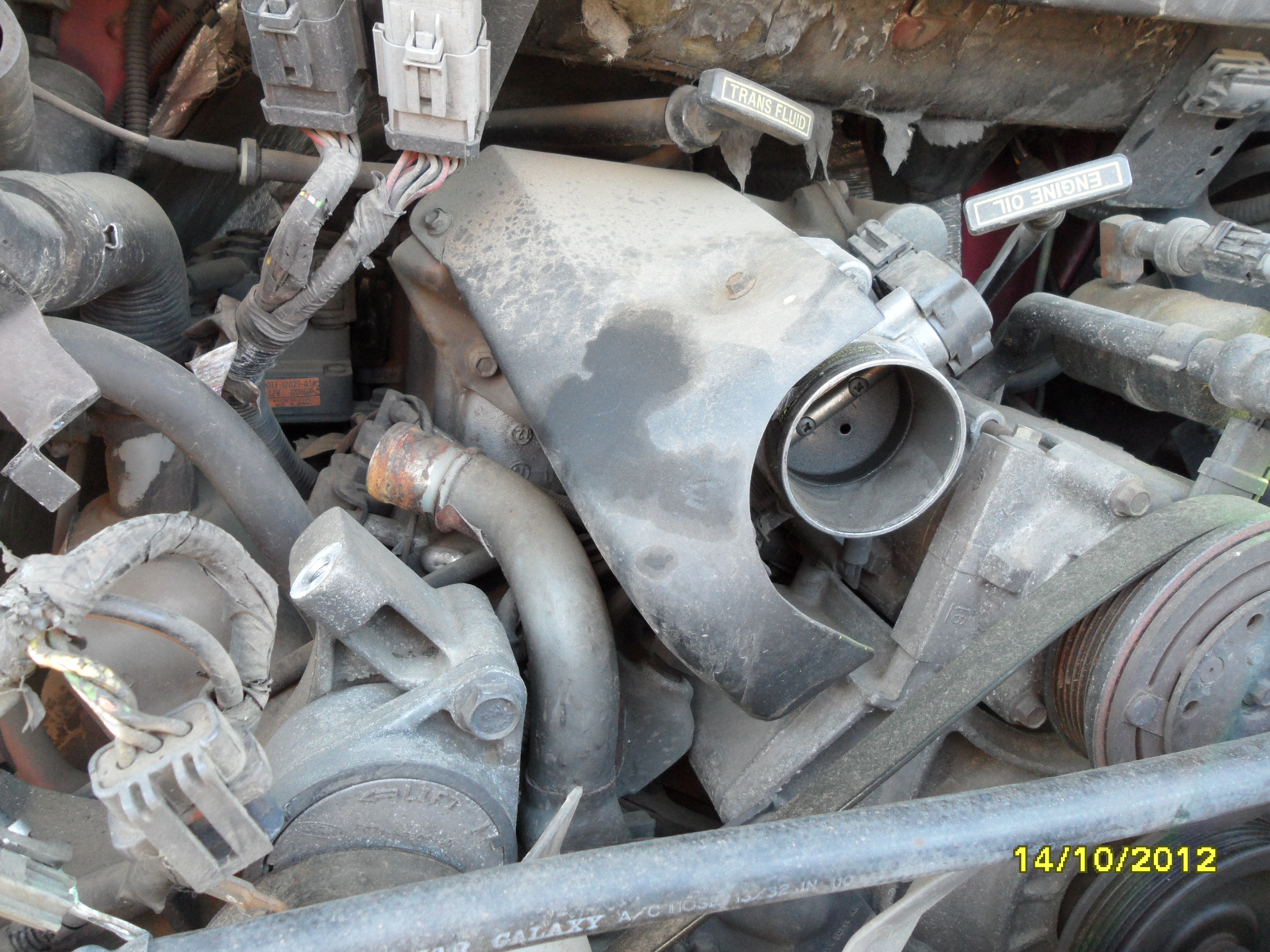
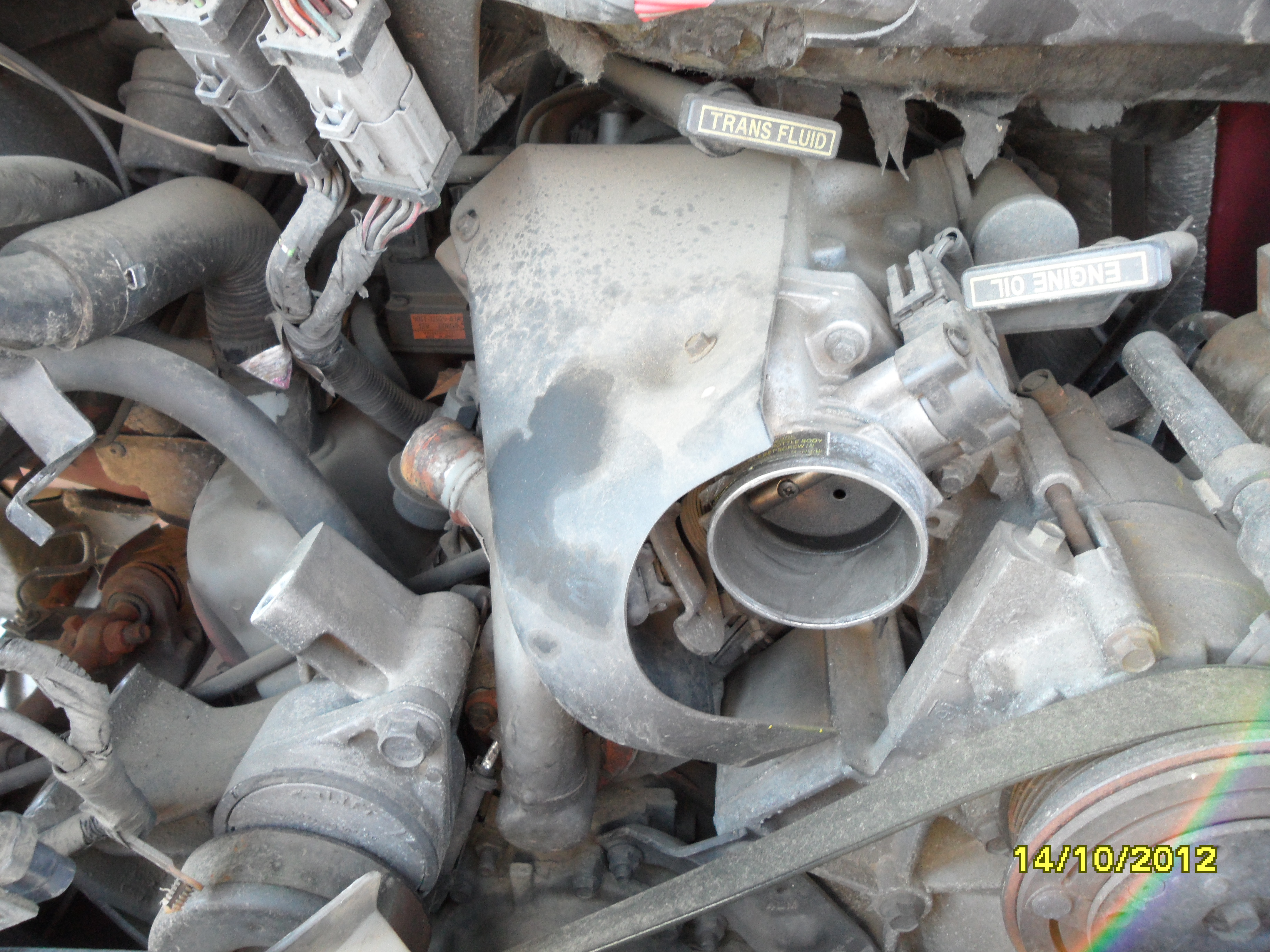
does anybody have a picture or a drawing of the black plastic Cover which is bolted to the top of the engine in the '97 4.0 liter?? (it partially covers the throttle/cruise cables at the intake, I believe mine was broken in the past, trying to find out how it should look to get another one).
Thread Starter
|
Postmaster
Joined: Oct 2009
Posts: 3,432
Likes: 7
I don't bother putting the cover on, I take it off on mine, makes it much easier to work on.
Ford puts the cover to prevent liability issues with sticking throttle, which Ford had a few cases of in the 80's and 90's, mostly due to faults in the cruise control system (a cover does not prevent this). Apparently there is a remote possibility that the wiper motor could loosen and fall on top of the throttle linkage. I have never seen this happen, and I have never had a wiper motor loosen, or even come close to doing so. I suppose if someone removed the motor and didn't use blue locktite, then it could in theory happen, Ford used locktite from the factory.
It just much easier to see and work on things without a useless cover in the way. Not having it also improves airflow over the top of the engine, which helps prevent and overcome things like fuel rail heat soak.
Ford puts the cover to prevent liability issues with sticking throttle, which Ford had a few cases of in the 80's and 90's, mostly due to faults in the cruise control system (a cover does not prevent this). Apparently there is a remote possibility that the wiper motor could loosen and fall on top of the throttle linkage. I have never seen this happen, and I have never had a wiper motor loosen, or even come close to doing so. I suppose if someone removed the motor and didn't use blue locktite, then it could in theory happen, Ford used locktite from the factory.
It just much easier to see and work on things without a useless cover in the way. Not having it also improves airflow over the top of the engine, which helps prevent and overcome things like fuel rail heat soak.
Fleet Mechanic
Joined: Apr 2003
Posts: 1,460
Likes: 6
From: Florida
I don't bother putting the cover on, I take it off on mine, makes it much easier to work on.
Ford puts the cover to prevent liability issues with sticking throttle, which Ford had a few cases of in the 80's and 90's, mostly due to faults in the cruise control system (a cover does not prevent this). Apparently there is a remote possibility that the wiper motor could loosen and fall on top of the throttle linkage. I have never seen this happen, and I have never had a wiper motor loosen, or even come close to doing so. I suppose if someone removed the motor and didn't use blue locktite, then it could in theory happen, Ford used locktite from the factory.
It just much easier to see and work on things without a useless cover in the way. Not having it also improves airflow over the top of the engine, which helps prevent and overcome things like fuel rail heat soak.
Ford puts the cover to prevent liability issues with sticking throttle, which Ford had a few cases of in the 80's and 90's, mostly due to faults in the cruise control system (a cover does not prevent this). Apparently there is a remote possibility that the wiper motor could loosen and fall on top of the throttle linkage. I have never seen this happen, and I have never had a wiper motor loosen, or even come close to doing so. I suppose if someone removed the motor and didn't use blue locktite, then it could in theory happen, Ford used locktite from the factory.
It just much easier to see and work on things without a useless cover in the way. Not having it also improves airflow over the top of the engine, which helps prevent and overcome things like fuel rail heat soak.

Laughing Gas
Joined: Jun 2004
Posts: 1,240
Likes: 3
From: Dallas, Texas
I don't bother putting the cover on, I take it off on mine, makes it much easier to work on.
Ford puts the cover to prevent liability issues with sticking throttle, which Ford had a few cases of in the 80's and 90's, mostly due to faults in the cruise control system (a cover does not prevent this). Apparently there is a remote possibility that the wiper motor could loosen and fall on top of the throttle linkage. I have never seen this happen, and I have never had a wiper motor loosen, or even come close to doing so. I suppose if someone removed the motor and didn't use blue locktite, then it could in theory happen, Ford used locktite from the factory.
It just much easier to see and work on things without a useless cover in the way. Not having it also improves airflow over the top of the engine, which helps prevent and overcome things like fuel rail heat soak.
Ford puts the cover to prevent liability issues with sticking throttle, which Ford had a few cases of in the 80's and 90's, mostly due to faults in the cruise control system (a cover does not prevent this). Apparently there is a remote possibility that the wiper motor could loosen and fall on top of the throttle linkage. I have never seen this happen, and I have never had a wiper motor loosen, or even come close to doing so. I suppose if someone removed the motor and didn't use blue locktite, then it could in theory happen, Ford used locktite from the factory.
It just much easier to see and work on things without a useless cover in the way. Not having it also improves airflow over the top of the engine, which helps prevent and overcome things like fuel rail heat soak.
That cover is the ice shield. You need it if you live in cold climates as it can freeze the cables up if enough water and ice get on it, it will stick them closed or open.
Thread Starter
|
Postmaster
Joined: Oct 2009
Posts: 3,432
Likes: 7
I live in a cold climate. I do not see any possible way water and ice could get there as:
1. The throttle is far enough back that ice and water cannot get there by gravity, even if the rubber seal along the cowl were to fail.
2. If you have that much water coming through your radiator while moving, you are probably parking in a lake
3. Regardless of either of the above, I have never seen any evidence that water of moisture ever gets there.
4. If the engine is running, it creates heat, which would melt any ice and water trapped there. If the engine is not running, the only opportunity for ice to form, then a stuck throttle is not a real concern. Sticking throttle is only an issue if it happens while you are moving.
1. The throttle is far enough back that ice and water cannot get there by gravity, even if the rubber seal along the cowl were to fail.
2. If you have that much water coming through your radiator while moving, you are probably parking in a lake
3. Regardless of either of the above, I have never seen any evidence that water of moisture ever gets there.
4. If the engine is running, it creates heat, which would melt any ice and water trapped there. If the engine is not running, the only opportunity for ice to form, then a stuck throttle is not a real concern. Sticking throttle is only an issue if it happens while you are moving.

Post Fiend
Joined: Apr 2005
Posts: 5,720
Likes: 5
From: Washington state
Climate change, hell, Ice Age more like it.
February 05, 2011 DALLAS, Texas – Bundle up, football fans. Two of the next three Super Bowls are likely to be super cold, just like this one.
I've driven in deep snow with my AWD Aero
No Problemos.

February 05, 2011 DALLAS, Texas – Bundle up, football fans. Two of the next three Super Bowls are likely to be super cold, just like this one.
I've driven in deep snow with my AWD Aero
No Problemos.
FTE Stories
Ford Trucks for Ford Truck Enthusiasts

Top 10 Most Expensive Ford Trucks Ever Sold on Bring a Trailer
Joe Kucinski
2027 Ford Super Duty Buyer's Guide (Every Model, Engine, & Package)
Brett Foote
Top 10 Ford Truck Tragedies
Joe Kucinski
AEV FXL Super Duty - the Super Duty Raptor Ford Doesn't Make
Brett Foote
Lobo Vs Lobo: Proof the F-150 Lobo Should Be Even Lower!
Michael S. Palmer
Ford's 2001 Explorer Sportsman Concept Looks For a New Home
Verdad Gallardo
10 Best Ford Truck Engines We Miss the Most!
Joe Kucinski
2026 Shelby F-150 Off-Road: Better Than a Raptor R?
Brett Foote
2027 Super Duty Carhartt Package First Look: 12 Things You NEED to Know!
Michael S. Palmer
Laughing Gas
Joined: Jun 2004
Posts: 1,240
Likes: 3
From: Dallas, Texas
I live in a cold climate. I do not see any possible way water and ice could get there as:
1. The throttle is far enough back that ice and water cannot get there by gravity, even if the rubber seal along the cowl were to fail.
2. If you have that much water coming through your radiator while moving, you are probably parking in a lake
3. Regardless of either of the above, I have never seen any evidence that water of moisture ever gets there.
4. If the engine is running, it creates heat, which would melt any ice and water trapped there. If the engine is not running, the only opportunity for ice to form, then a stuck throttle is not a real concern. Sticking throttle is only an issue if it happens while you are moving.
1. The throttle is far enough back that ice and water cannot get there by gravity, even if the rubber seal along the cowl were to fail.
2. If you have that much water coming through your radiator while moving, you are probably parking in a lake
3. Regardless of either of the above, I have never seen any evidence that water of moisture ever gets there.
4. If the engine is running, it creates heat, which would melt any ice and water trapped there. If the engine is not running, the only opportunity for ice to form, then a stuck throttle is not a real concern. Sticking throttle is only an issue if it happens while you are moving.
Reqaurdless that is why its on there. The ford service manual calls it the ice shield when you have to service any part where it is removed.
I would not remove it since car makers do not put stuff on cars that are not needed.
Fleet Mechanic
Joined: Apr 2003
Posts: 1,460
Likes: 6
From: Florida
ok I removed the "accelerator control splash shield", 2 screws. it is cracked anyway, and missing half of it. I cannot read the complete part number, all I can read is F69A and the rest is gone, missing the other half. Can anybody get me the complete part number?
the good news, I got to see the plastic intake, whatever you call it, and the shield is easy to remove and replace.
I can see everybody's point of view: The way this shield is mounted, I can see how it retains and increases heat, not good. I can also see how it protects the plastic throttle and cruise clamps. Maybe the trick is to drill 1/4" inch diameter holes so any heat will dissipate and at the same time air will circulate. I'm not in a Northern Climate, so the chances of ice building up are minus zero.
the good news, I got to see the plastic intake, whatever you call it, and the shield is easy to remove and replace.
I can see everybody's point of view: The way this shield is mounted, I can see how it retains and increases heat, not good. I can also see how it protects the plastic throttle and cruise clamps. Maybe the trick is to drill 1/4" inch diameter holes so any heat will dissipate and at the same time air will circulate. I'm not in a Northern Climate, so the chances of ice building up are minus zero.
FTE Community Team
Joined: Nov 2001
Posts: 1,837
Likes: 252
From: Oak Harbor, Washington
On all my Aeros, I remove that POS snow shield immediately, as it's always in the way.
I might have the one off my '97 back in Duvall, and I think it's in good condition. I'll look when I'm back home in December. If you want it, you can have it.
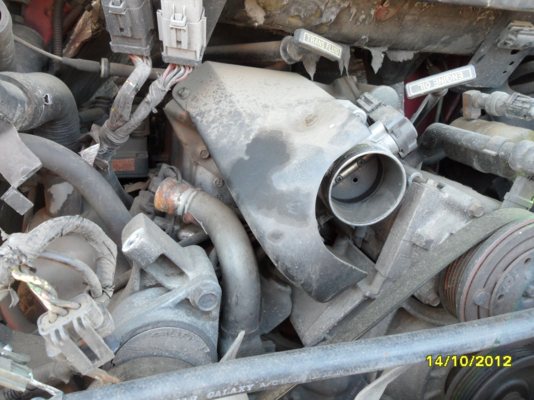
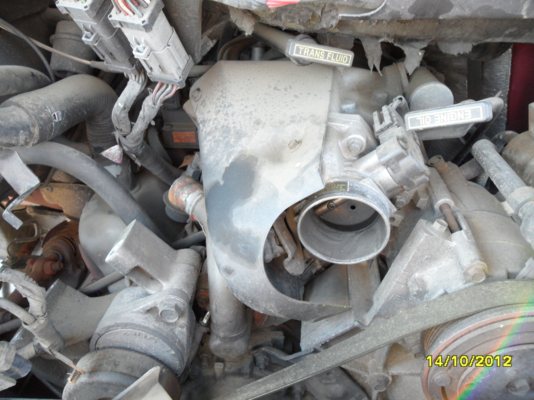
I was at the JY today, and there was a cracked one on the '95 I was working on, so I took a couple of pics:
(click on any image for larger)
I might have the one off my '97 back in Duvall, and I think it's in good condition. I'll look when I'm back home in December. If you want it, you can have it.
I was at the JY today, and there was a cracked one on the '95 I was working on, so I took a couple of pics:
(click on any image for larger)

Thread
Thread Starter
Forum
Replies
Last Post
BaronVonAutomatc
Ford Inline Six, 200, 250, 4.9L / 300
12
Aug 26, 2015 12:57 PM
abelmoreno
Ford Inline Six, 200, 250, 4.9L / 300
3
Jul 3, 2009 12:25 AM
