



love bugs

Thread Starter
|
Tuned

Joined: Mar 2007
Posts: 305
Likes: 0
From: Havana Fla
love bugs
Its that time of year again in North Florida and South Georgia, what method do you use to get them off your truck, I tried the drier sheet trick, and was amazed at how good it worked. I have heard of pam, but dont want to spray it on my paint. Any body have any new methods?
Post Fiend
Joined: Oct 2002
Posts: 11,314
Likes: 4
Ewww - boy do I NOT miss those !!!!
What a stence when cleaning them off !!!
When I was still in their area of attack I found a $3 car wash that I talked to the mgr and bought a months worth of washes cheaper..... then I would run it thru there each day I needed it...
but have heard the pam thing works well....
how about one of those clear car bras that stick to the paint ?
What a stence when cleaning them off !!!
When I was still in their area of attack I found a $3 car wash that I talked to the mgr and bought a months worth of washes cheaper..... then I would run it thru there each day I needed it...
but have heard the pam thing works well....
how about one of those clear car bras that stick to the paint ?

You Keep What You Kill
Joined: Dec 2006
Posts: 4,902
Likes: 2
From: Huntersville, NC
Are you talking about those "undocumented immigrants" in the State of Florida? 

I lived in FL for 15 years and hated (HA!) those love bugs!
I lived in FL for 15 years and hated (HA!) those love bugs!
Trending Topics

Elder User
Joined: Mar 2007
Posts: 620
Likes: 0
From: Canyon Country
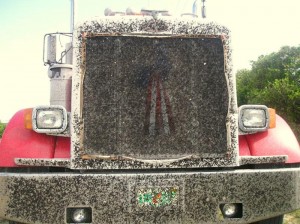
remind me never to drive through florida!!! damm that is alot of bugs on that truck and bike! Hope the guy riding the bike was wearing a full face helmet!
what is a love bug? don't think we have those here in cali...
what is a love bug? don't think we have those here in cali...
FTE Stories
Ford Trucks for Ford Truck Enthusiasts

10 Ugly Ford Trucks That We Still Kinda Love
Joe Kucinski
10 Things Every Truck Owner NEEDS (2026 Edition)
Michael S. Palmer
Rezvani's Latest Post-Apocalyptic Monster Is a Ford F-150 Raptor Underneath
Verdad Gallardo
Top 10 Most Expensive Ford Trucks Ever Sold on Bring a Trailer
Joe Kucinski
2027 Ford Super Duty Buyer's Guide (Every Model, Engine, & Package)
Brett Foote
Top 10 Ford Truck Tragedies
Joe Kucinski
AEV FXL Super Duty - the Super Duty Raptor Ford Doesn't Make
Brett Foote
Lobo Vs Lobo: Proof the F-150 Lobo Should Be Even Lower!
Michael S. Palmer
Ford's 2001 Explorer Sportsman Concept Looks For a New Home
Verdad Gallardo



Freshman User
Joined: May 2009
Posts: 37
Likes: 0
Redneck
this may not be up to par with your standards but it works for the most part... sprinkler mounted side ways on a saw horse. park in front of it, treat with soap or bug remover, turn water on, go inside for a while...
I lived in Eufaula AL and that is how I kept it from ruining my paint. Weekly washing by hand also.
I lived in Eufaula AL and that is how I kept it from ruining my paint. Weekly washing by hand also.
You Keep What You Kill
Joined: Dec 2006
Posts: 4,902
Likes: 2
From: Huntersville, NC
http://en.wikipedia.org/wiki/Lovebug
Lovebug
From Wikipedia, the free encyclopedia
Jump to: navigation, search
<!-- start content -->"Love bug" redirects here. For other uses, see Love bug (disambiguation).
<TABLE style="TEXT-ALIGN: center; PADDING-BOTTOM: 2px; PADDING-LEFT: 2px; WIDTH: 200px; PADDING-RIGHT: 2px; PADDING-TOP: 2px" class="infobox biota"><TBODY><TR style="TEXT-ALIGN: center"><TH style="BACKGROUND: #d3d3a4">Lovebug</TH></TR><TR style="TEXT-ALIGN: center"><TD>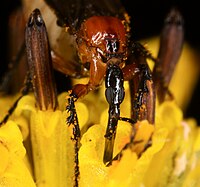

</TD></TR><TR style="TEXT-ALIGN: center"><TH style="BACKGROUND: #d3d3a4">Scientific classification</TH></TR><TR style="TEXT-ALIGN: center"><TD><TABLE style="TEXT-ALIGN: left; MARGIN: 0px auto; BACKGROUND: none transparent scroll repeat 0% 0%" cellPadding=2><TBODY><TR vAlign=top><TD>Kingdom:</TD><TD>Animalia
</TD></TR><TR vAlign=top><TD>Phylum:</TD><TD>Arthropoda
</TD></TR><TR vAlign=top><TD>Class:</TD><TD>Insecta
</TD></TR><TR vAlign=top><TD>Subclass:</TD><TD>Pterygota
</TD></TR><TR vAlign=top><TD>Infraclass:</TD><TD>Neoptera
</TD></TR><TR vAlign=top><TD>Superorder:</TD><TD>Endopterygota
</TD></TR><TR vAlign=top><TD>Order:</TD><TD>Diptera
</TD></TR><TR vAlign=top><TD>Suborder:</TD><TD>Nematocera
</TD></TR><TR vAlign=top><TD>Infraorder:</TD><TD>Bibionomorpha
</TD></TR><TR vAlign=top><TD>Superfamily:</TD><TD>Bibionoidea
</TD></TR><TR vAlign=top><TD>Family:</TD><TD>Bibionidae
</TD></TR><TR vAlign=top><TD>Genus:</TD><TD>Plecia
</TD></TR><TR vAlign=top><TD>Species:</TD><TD>P. nearctica
</TD></TR></TBODY></TABLE></TD></TR><TR style="BACKGROUND: #d3d3a4"><TH>Binomial name</TH></TR><TR style="TEXT-ALIGN: center"><TD>Plecia nearctica
<SMALL>Hardy, 1940</SMALL></TD></TR></TBODY></TABLE>The lovebug, Plecia nearctica, is a member of the family of march flies. It is also known as the honeymoon fly, telephonebug, kissybug or double-headedbug. The adult is a small, flying insect common to parts of Central America and the southeastern United States, especially along the Gulf Coast.<SUP id=cite_ref-denmark_0-0 class=reference>[1]</SUP>
The lovebug was first described in 1940 by D. E. Hardy from Galveston, Texas. At that time, he reported the incidence of lovebugs to be widespread, but most common in Texas and Louisiana.<SUP id=cite_ref-denmark_0-1 class=reference>[1]</SUP> However, by the end of the 20th century the species had spread heavily to all areas bordering the Gulf of Mexico, as well as Georgia, and South Carolina. L. A. Hetrick, writing in 1970, found it very widespread in Florida and described its flights as reaching altitudes of 300 m to 450 m and extending several kilometers over the Gulf.<SUP id=cite_ref-Hetrick_1-0 class=reference>[2]</SUP> In 2006, it was reported as far north as Wilmington, North Carolina.
Biology and Behavior
For most of the year, lovebugs are beneficial in that the larvae (maggots) live in grassy areas and feed on dead vegetation within the thatch.<SUP id=cite_ref-denmark_0-3 class=reference>[1]</SUP> This results in not only the eventual release of nutrients back into the soil, but also decreases excessive thatch which can be detrimental to grass growth and serve as a protective cover for serious grass pests.
The adult lovebug feeds on the nectar of flowering plants. Upon reaching maturity the lovebug spends almost the entirety of its remaining life copulating with its mate, hence its numerous romantic nicknames. The male and female attach themselves at the rear of the abdomen and remain that way at all times, even in flight. In fact, after mating, the male dies and is dragged around by the female until she lays her eggs. Females lay up to 350 eggs in debris, and about 20 days later the eggs hatch into larvae. The larval stage may last up to nine months.<SUP id=cite_ref-denmark_0-4 class=reference>[1]</SUP>
Commercial use of cut sod for "instant" green lawns can result in the transportation of the larvae to other areas.
Lovebug flights can number in the hundreds of thousands. The slow, drifting movement of the insects is almost reminiscent of snow fall. Two major flights occur each year, first in late spring, then again in late summer. In south Florida, a third (but smaller) flight can occur in December.<SUP id=cite_ref-denmark_0-5 class=reference>[1]</SUP> The spring flight occurs during late April and May, the summer during late August and September. Flights extend over periods of four to five weeks.<SUP id=cite_ref-Hetrick_1-1 class=reference>[2]</SUP>
Mating takes place almost immediately after emergence of the females. Adult females live only three to four days.
Semi-annual Pest Status
Its reputation as a public nuisance is due not to its bite or sting (as it is not capable of either), but to its slightly acidic body chemistry.<SUP id=cite_ref-denmark_0-6 class=reference>[1]</SUP> Because airborne lovebugs can exist in enormous numbers near highways, they die en masse on automobile windshields, hoods, and radiator grills when the vehicles travel at high speeds. If left for more than an hour or two, the remains become dried and extremely difficult to remove. In the past, the acidity of the dead adult body, especially the female's egg masses, often resulted in pits and etches in automotive paint and chrome if not quickly removed.<SUP id=cite_ref-snopes_2-0 class=reference>[3]</SUP> However, advances in automotive paints and protective coatings have reduced this threat significantly. Now the greatest concern is excessive clogging of vehicle radiator air passages with the bodies of the adults, with the reduction of the cooling effect on engines, and the obstruction of windshields when the remains of the adults and egg masses are smeared on the glass.<SUP id=cite_ref-denmark_0-7 class=reference>[1]</SUP>
Lovebug adults are attracted to light-colored surfaces, especially if they are freshly painted, but the adults can congregate almost anywhere by reacting to the effects of sunlight on automobile fumes, asphalt, and other products affected by environmental factors still not completely understood.<SUP id=cite_ref-denmark_0-8 class=reference>[1]</SUP>
Insect remains may be scrubbed from cars using a simple solution of soap and water. However, if the smashed egg masses dry on the vehicle, a sponge with a scrubbing surface or a soft brush may be needed to remove them.
The use of a low cost screen fabric sold by local automotive part and supply stores, and especially designed to attach to the front of the car, will protect the radiator grill and paint on the front of the vehicle when large flights are encountered. This fabric is easily removed for washing with a waterhose. As lovebugs are present in some numbers for most of the year, some automobile and truck owners, especially those who travel constantly, purchase a permanent wind deflector for the front of their vehicles to deflect the lovebugs from impacting on windshields. However, this does not prevent the flies from clogging radiators if the flights are heavy.
[edit] Folklore
Urban legend holds that lovebugs are synthetic — the result of a University of Florida genetics experiment gone wrong.<SUP id=cite_ref-snopes_2-1 class=reference>[3]</SUP> Speculation about the lovebug abounds. This is partly due to the fact that this insect is an unseen beneficial (lives and feeds in the thatch of grasses) for most of the year. As a result, most scientists are not as concerned with the details of this insect's life cycle, biology and other facets of its existence as they are with more serious pests. For example, while various fungi are known or suspected of being natural controls for this species<SUP id=cite_ref-denmark_0-9 class=reference>[1]</SUP>, time and funding do not allow for more study, except as a side interest.
Research of L. L. Buschman showed that migration explained the introduction of the lovebug into Florida and other southeastern states, contrary to the urban myth that the University of Florida created them by manipulating DNA to control mosquito populations.<SUP id=cite_ref-3 class=reference>[4]</SUP>
[edit] Management
Lovebugs are subject to some significant natural controls, such as various parasitic fungi<SUP id=cite_ref-denmark_0-10 class=reference>[1]</SUP>; and dry weather, which dries out the thatch resulting in a higher mortality rate for the larvae. As the lovebug migrated around the Gulf Coast, first to Texas, then Louisiana, then further eastward, the initial populations for many years were so excessive as to cause public concern and rumors of their origin. However, as pest populations migrate naturally, their natural controls, are usually not far behind. While it often took years (as in decades), lovebug flights are no longer present in the huge numbers that once existed simply because their natural controls (mostly fungi) caught up with established populations. In many areas, local lovebug flights may only be present in excessively large numbers due to occasional local conditions that may not be repeated in successive years
While lovebugs are not a favored food of most insectivores due to their acidic taste, lovebug larvae — and some adults — are food for birds such as quail and robins, and also, spiders and some predatory insects. Insect predators include earwigs, at least two species of beetle larvae and a centipede.<SUP id=cite_ref-short_4-0 class=reference>[5]</SUP>
Some think that the apparent population explosion may be explained due to increasing automobile use and rising human population. Lovebugs may have come to more widespread notice since, at the time of Hardy's study, the density of the road network and the extent of personal transport ownership in the species' area of occurrence was much lower than it is today. This has some validity in that beginning in the late 1940s, state and national programs increased the road network. These roads included grassy areas which were regularly mowed for safety reasons and perhaps facilitated the movement of lovebugs into new areas. Many states now practice selective mowing along highways to conserve fuel and equipment (saving money), and have programs where local wildflowers and concern for ground-nesting wildlife dictate when grassy areas are mowed. This results in less thatch and less food and cover for lovebug larvae.
Lovebug
From Wikipedia, the free encyclopedia
Jump to: navigation, search
<!-- start content -->"Love bug" redirects here. For other uses, see Love bug (disambiguation).
<TABLE style="TEXT-ALIGN: center; PADDING-BOTTOM: 2px; PADDING-LEFT: 2px; WIDTH: 200px; PADDING-RIGHT: 2px; PADDING-TOP: 2px" class="infobox biota"><TBODY><TR style="TEXT-ALIGN: center"><TH style="BACKGROUND: #d3d3a4">Lovebug</TH></TR><TR style="TEXT-ALIGN: center"><TD>


</TD></TR><TR style="TEXT-ALIGN: center"><TH style="BACKGROUND: #d3d3a4">Scientific classification</TH></TR><TR style="TEXT-ALIGN: center"><TD><TABLE style="TEXT-ALIGN: left; MARGIN: 0px auto; BACKGROUND: none transparent scroll repeat 0% 0%" cellPadding=2><TBODY><TR vAlign=top><TD>Kingdom:</TD><TD>Animalia
</TD></TR><TR vAlign=top><TD>Phylum:</TD><TD>Arthropoda
</TD></TR><TR vAlign=top><TD>Class:</TD><TD>Insecta
</TD></TR><TR vAlign=top><TD>Subclass:</TD><TD>Pterygota
</TD></TR><TR vAlign=top><TD>Infraclass:</TD><TD>Neoptera
</TD></TR><TR vAlign=top><TD>Superorder:</TD><TD>Endopterygota
</TD></TR><TR vAlign=top><TD>Order:</TD><TD>Diptera
</TD></TR><TR vAlign=top><TD>Suborder:</TD><TD>Nematocera
</TD></TR><TR vAlign=top><TD>Infraorder:</TD><TD>Bibionomorpha
</TD></TR><TR vAlign=top><TD>Superfamily:</TD><TD>Bibionoidea
</TD></TR><TR vAlign=top><TD>Family:</TD><TD>Bibionidae
</TD></TR><TR vAlign=top><TD>Genus:</TD><TD>Plecia
</TD></TR><TR vAlign=top><TD>Species:</TD><TD>P. nearctica
</TD></TR></TBODY></TABLE></TD></TR><TR style="BACKGROUND: #d3d3a4"><TH>Binomial name</TH></TR><TR style="TEXT-ALIGN: center"><TD>Plecia nearctica
<SMALL>Hardy, 1940</SMALL></TD></TR></TBODY></TABLE>The lovebug, Plecia nearctica, is a member of the family of march flies. It is also known as the honeymoon fly, telephonebug, kissybug or double-headedbug. The adult is a small, flying insect common to parts of Central America and the southeastern United States, especially along the Gulf Coast.<SUP id=cite_ref-denmark_0-0 class=reference>[1]</SUP>
The lovebug was first described in 1940 by D. E. Hardy from Galveston, Texas. At that time, he reported the incidence of lovebugs to be widespread, but most common in Texas and Louisiana.<SUP id=cite_ref-denmark_0-1 class=reference>[1]</SUP> However, by the end of the 20th century the species had spread heavily to all areas bordering the Gulf of Mexico, as well as Georgia, and South Carolina. L. A. Hetrick, writing in 1970, found it very widespread in Florida and described its flights as reaching altitudes of 300 m to 450 m and extending several kilometers over the Gulf.<SUP id=cite_ref-Hetrick_1-0 class=reference>[2]</SUP> In 2006, it was reported as far north as Wilmington, North Carolina.
Biology and Behavior
For most of the year, lovebugs are beneficial in that the larvae (maggots) live in grassy areas and feed on dead vegetation within the thatch.<SUP id=cite_ref-denmark_0-3 class=reference>[1]</SUP> This results in not only the eventual release of nutrients back into the soil, but also decreases excessive thatch which can be detrimental to grass growth and serve as a protective cover for serious grass pests.
The adult lovebug feeds on the nectar of flowering plants. Upon reaching maturity the lovebug spends almost the entirety of its remaining life copulating with its mate, hence its numerous romantic nicknames. The male and female attach themselves at the rear of the abdomen and remain that way at all times, even in flight. In fact, after mating, the male dies and is dragged around by the female until she lays her eggs. Females lay up to 350 eggs in debris, and about 20 days later the eggs hatch into larvae. The larval stage may last up to nine months.<SUP id=cite_ref-denmark_0-4 class=reference>[1]</SUP>
Commercial use of cut sod for "instant" green lawns can result in the transportation of the larvae to other areas.
Lovebug flights can number in the hundreds of thousands. The slow, drifting movement of the insects is almost reminiscent of snow fall. Two major flights occur each year, first in late spring, then again in late summer. In south Florida, a third (but smaller) flight can occur in December.<SUP id=cite_ref-denmark_0-5 class=reference>[1]</SUP> The spring flight occurs during late April and May, the summer during late August and September. Flights extend over periods of four to five weeks.<SUP id=cite_ref-Hetrick_1-1 class=reference>[2]</SUP>
Mating takes place almost immediately after emergence of the females. Adult females live only three to four days.
Semi-annual Pest Status
Its reputation as a public nuisance is due not to its bite or sting (as it is not capable of either), but to its slightly acidic body chemistry.<SUP id=cite_ref-denmark_0-6 class=reference>[1]</SUP> Because airborne lovebugs can exist in enormous numbers near highways, they die en masse on automobile windshields, hoods, and radiator grills when the vehicles travel at high speeds. If left for more than an hour or two, the remains become dried and extremely difficult to remove. In the past, the acidity of the dead adult body, especially the female's egg masses, often resulted in pits and etches in automotive paint and chrome if not quickly removed.<SUP id=cite_ref-snopes_2-0 class=reference>[3]</SUP> However, advances in automotive paints and protective coatings have reduced this threat significantly. Now the greatest concern is excessive clogging of vehicle radiator air passages with the bodies of the adults, with the reduction of the cooling effect on engines, and the obstruction of windshields when the remains of the adults and egg masses are smeared on the glass.<SUP id=cite_ref-denmark_0-7 class=reference>[1]</SUP>
Lovebug adults are attracted to light-colored surfaces, especially if they are freshly painted, but the adults can congregate almost anywhere by reacting to the effects of sunlight on automobile fumes, asphalt, and other products affected by environmental factors still not completely understood.<SUP id=cite_ref-denmark_0-8 class=reference>[1]</SUP>
Insect remains may be scrubbed from cars using a simple solution of soap and water. However, if the smashed egg masses dry on the vehicle, a sponge with a scrubbing surface or a soft brush may be needed to remove them.
The use of a low cost screen fabric sold by local automotive part and supply stores, and especially designed to attach to the front of the car, will protect the radiator grill and paint on the front of the vehicle when large flights are encountered. This fabric is easily removed for washing with a waterhose. As lovebugs are present in some numbers for most of the year, some automobile and truck owners, especially those who travel constantly, purchase a permanent wind deflector for the front of their vehicles to deflect the lovebugs from impacting on windshields. However, this does not prevent the flies from clogging radiators if the flights are heavy.
[edit] Folklore
Urban legend holds that lovebugs are synthetic — the result of a University of Florida genetics experiment gone wrong.<SUP id=cite_ref-snopes_2-1 class=reference>[3]</SUP> Speculation about the lovebug abounds. This is partly due to the fact that this insect is an unseen beneficial (lives and feeds in the thatch of grasses) for most of the year. As a result, most scientists are not as concerned with the details of this insect's life cycle, biology and other facets of its existence as they are with more serious pests. For example, while various fungi are known or suspected of being natural controls for this species<SUP id=cite_ref-denmark_0-9 class=reference>[1]</SUP>, time and funding do not allow for more study, except as a side interest.
Research of L. L. Buschman showed that migration explained the introduction of the lovebug into Florida and other southeastern states, contrary to the urban myth that the University of Florida created them by manipulating DNA to control mosquito populations.<SUP id=cite_ref-3 class=reference>[4]</SUP>
[edit] Management
Lovebugs are subject to some significant natural controls, such as various parasitic fungi<SUP id=cite_ref-denmark_0-10 class=reference>[1]</SUP>; and dry weather, which dries out the thatch resulting in a higher mortality rate for the larvae. As the lovebug migrated around the Gulf Coast, first to Texas, then Louisiana, then further eastward, the initial populations for many years were so excessive as to cause public concern and rumors of their origin. However, as pest populations migrate naturally, their natural controls, are usually not far behind. While it often took years (as in decades), lovebug flights are no longer present in the huge numbers that once existed simply because their natural controls (mostly fungi) caught up with established populations. In many areas, local lovebug flights may only be present in excessively large numbers due to occasional local conditions that may not be repeated in successive years
While lovebugs are not a favored food of most insectivores due to their acidic taste, lovebug larvae — and some adults — are food for birds such as quail and robins, and also, spiders and some predatory insects. Insect predators include earwigs, at least two species of beetle larvae and a centipede.<SUP id=cite_ref-short_4-0 class=reference>[5]</SUP>
Some think that the apparent population explosion may be explained due to increasing automobile use and rising human population. Lovebugs may have come to more widespread notice since, at the time of Hardy's study, the density of the road network and the extent of personal transport ownership in the species' area of occurrence was much lower than it is today. This has some validity in that beginning in the late 1940s, state and national programs increased the road network. These roads included grassy areas which were regularly mowed for safety reasons and perhaps facilitated the movement of lovebugs into new areas. Many states now practice selective mowing along highways to conserve fuel and equipment (saving money), and have programs where local wildflowers and concern for ground-nesting wildlife dictate when grassy areas are mowed. This results in less thatch and less food and cover for lovebug larvae.


FTE Leadership Emeritus


Joined: Sep 2003
Posts: 12,252
Likes: 762
From: Houston, Texas

Ewww - boy do I NOT miss those !!!!
What a stence when cleaning them off !!!
When I was still in their area of attack I found a $3 car wash that I talked to the mgr and bought a months worth of washes cheaper..... then I would run it thru there each day I needed it...
but have heard the pam thing works well....
how about one of those clear car bras that stick to the paint ?
What a stence when cleaning them off !!!
When I was still in their area of attack I found a $3 car wash that I talked to the mgr and bought a months worth of washes cheaper..... then I would run it thru there each day I needed it...
but have heard the pam thing works well....
how about one of those clear car bras that stick to the paint ?