




Do you need a commerical liscense.....
Super Moderator


Joined: Aug 2003
Posts: 25,479
Likes: 742
From: Isanti, MN

No.
Max GVW for an F-550 is 19,000 lbs, which is under the 26,000 lb limit. You can drive it with a regular license.
The exception here is if you are towing a trailer that would put the max gross weight over 26,000 lbs. For example, if you are towing a trailer with a 10,000 lb weight rating, you technically would have to have a CDL.
Also, if you are hauling a placarded amount of Hazmat...but that's another matter altogether.
Max GVW for an F-550 is 19,000 lbs, which is under the 26,000 lb limit. You can drive it with a regular license.
The exception here is if you are towing a trailer that would put the max gross weight over 26,000 lbs. For example, if you are towing a trailer with a 10,000 lb weight rating, you technically would have to have a CDL.
Also, if you are hauling a placarded amount of Hazmat...but that's another matter altogether.
Mountain Pass


Joined: Apr 2006
Posts: 153
Likes: 51
From: Vienna Georgia

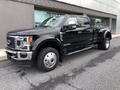
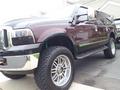
 Here's a pic of my truck.
Posting Guru
Joined: Dec 2007
Posts: 1,361
Likes: 0
No you don't. (CDL stands for "commercial drivers lisence") You are not required to have a CDL with any kind of truck unless you are hauling commercially. I have been driving a 2005 Freightliner classic XL w/475 twinscrew CAT @ 80,000+lbs all day and I don't have a CDL! Here's a pic of my truck.
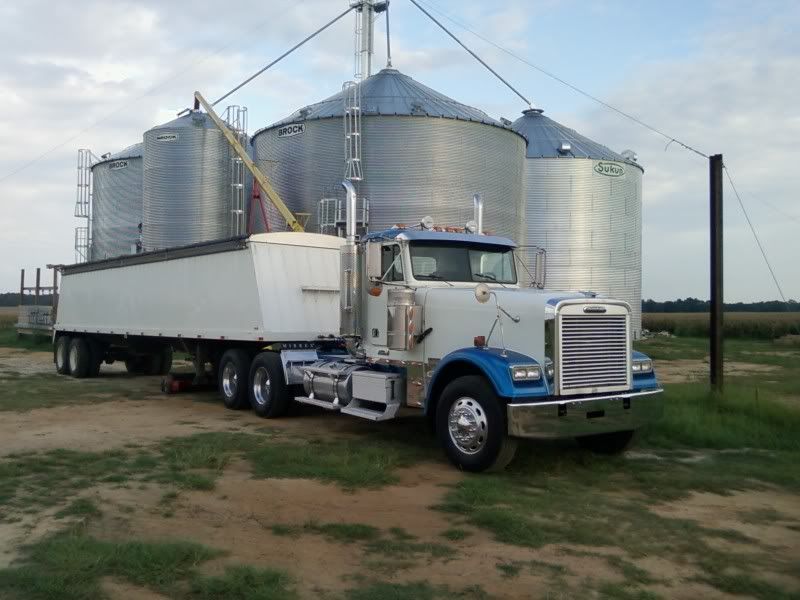
Here's a pic of my truck.
Cargo Master
Joined: Jun 2008
Posts: 2,752
Likes: 5
From: Stillwater, OK
Can anyone say Ag. Exemption?
Federal law says, if your tow vehicle has a GVWR of 10,000 or more and the sum of your truck and trailer GVWR is 26,000 or more... a CDL is required...
with some exemptions for recreational vehicles, and ag setups.
Federal law says, if your tow vehicle has a GVWR of 10,000 or more and the sum of your truck and trailer GVWR is 26,000 or more... a CDL is required...
with some exemptions for recreational vehicles, and ag setups.
Super Moderator

Joined: Aug 2008
Posts: 37,379
Likes: 1,863
From: Frederick, MD
Farm is generally exempt.
Even here in MD if you go over 26K gotta get the CDL. I think that is standard in every state that I have checked into.
Even here in MD if you go over 26K gotta get the CDL. I think that is standard in every state that I have checked into.
Trending Topics

Senior User
Joined: Mar 2009
Posts: 150
Likes: 0
From: Western Mass
No you don't. (CDL stands for "commercial drivers lisence") You are not required to have a CDL with any kind of truck unless you are hauling commercially. I have been driving a 2005 Freightliner classic XL w/475 twinscrew CAT @ 80,000+lbs all day and I don't have a CDL! Here's a pic of my truck.
Here's a pic of my truck.FTE Stories
Ford Trucks for Ford Truck Enthusiasts

10 Things Every Truck Owner NEEDS (2026 Edition)
Michael S. Palmer
Rezvani's Latest Post-Apocalyptic Monster Is a Ford F-150 Raptor Underneath
Verdad Gallardo
Top 10 Most Expensive Ford Trucks Ever Sold on Bring a Trailer
Joe Kucinski
2027 Ford Super Duty Buyer's Guide (Every Model, Engine, & Package)
Brett Foote
Top 10 Ford Truck Tragedies
Joe Kucinski
AEV FXL Super Duty - the Super Duty Raptor Ford Doesn't Make
Brett Foote
Lobo Vs Lobo: Proof the F-150 Lobo Should Be Even Lower!
Michael S. Palmer
Ford's 2001 Explorer Sportsman Concept Looks For a New Home
Verdad Gallardo
10 Best Ford Truck Engines We Miss the Most!
Joe Kucinski
Super Moderator
Joined: Aug 2003
Posts: 25,479
Likes: 742
From: Isanti, MN
That's great! Very misleading, Chester!
There are some exemptions, such as agricultural and RVs. But many times that varies by state law, and as soon as you do cross state lines you engage in "interstate commerce", in which case I believe exemptions do not apply. Just try and drive that across state lines!
Back to the OP again...
To be honest, I don't think I'd want an F550. I bought my F250 to tow my trailer, which has a GVW of 10,000 lbs. With my "little" F250, I can drag that thing around anywhere I want, without a problem. If I were to tow my trailer with an F550, it'd technically require a CDL unless it met one of the exemptions like Chester pointed out. I do have a Class A CDL, but I think you need commercial insurance and registration. I don't think you need operating authority or a DOT# if you're not a motor carrier, but I'm not sure...
Opens a lot of problems when you break 26,000 lbs...I wouldn't!
There are some exemptions, such as agricultural and RVs. But many times that varies by state law, and as soon as you do cross state lines you engage in "interstate commerce", in which case I believe exemptions do not apply. Just try and drive that across state lines!
Back to the OP again...
To be honest, I don't think I'd want an F550. I bought my F250 to tow my trailer, which has a GVW of 10,000 lbs. With my "little" F250, I can drag that thing around anywhere I want, without a problem. If I were to tow my trailer with an F550, it'd technically require a CDL unless it met one of the exemptions like Chester pointed out. I do have a Class A CDL, but I think you need commercial insurance and registration. I don't think you need operating authority or a DOT# if you're not a motor carrier, but I'm not sure...
Opens a lot of problems when you break 26,000 lbs...I wouldn't!
Cargo Master
Joined: Jun 2008
Posts: 2,752
Likes: 5
From: Stillwater, OK
My '08 F250 has a GVWR of 8,800#
being a single cab I have a max cargo + passenger weight of 2,918#
I weigh 180#, and allowing for fuel and equpiment I won't drive far without, we'll call it 2,500#
So technically, I can have a pin weight of 2,500# (RAWR is 5,892#)...which puts a properly loaded trailer (15% weight on tounge) at just over 16,500# with 14,000# on the trailer axles
However! I could hitch up a 20,000# GVWR trailer (28,800# combination) and not need a CDL, since the tow vehicle is less than 10,000# GVWR
being a single cab I have a max cargo + passenger weight of 2,918#
I weigh 180#, and allowing for fuel and equpiment I won't drive far without, we'll call it 2,500#
So technically, I can have a pin weight of 2,500# (RAWR is 5,892#)...which puts a properly loaded trailer (15% weight on tounge) at just over 16,500# with 14,000# on the trailer axles
However! I could hitch up a 20,000# GVWR trailer (28,800# combination) and not need a CDL, since the tow vehicle is less than 10,000# GVWR
Postmaster
Joined: Oct 2005
Posts: 3,620
Likes: 3
From: WARRINGTON, PA
I dont know about all other states but here in pennsylvania, which I have a class A CDL, a vehicle with a weight of 26000# or less and towing a 10000# or less trailer only requires a class c license. when you step over the 26001# to 80000# straight truck and towing 10000# or less, you need a class B. the last difference being driving any vehicle greater than 26001# AND towing more than 10000# is where you NEED a class A license. THATS THE LAW IN PA. I WOULDNT TRY AND DARE TO DO OTHERWISE. YOU WILL RISK THOUSANDS OF $$$ IN FINES... AND HAVING THE TRUCK TOWED. CDL does mean commercial drivers license but just because you aren't driving a "commercial" vehicle, doesn't mean you don't need a CDL. and i am talking all gvw's. and I know that you will need an air brake endorsement for a tractor trailer. I have never seen a heavy truck of 80000#gvw without air brakes.
Cargo Master
Joined: Jun 2008
Posts: 2,752
Likes: 5
From: Stillwater, OK
you don't need a CDL or air-brake endorsement to drive a Semi from farm to market in some states
ftp://ftp.txdps.state.tx.us/forms/cdl-2.pdf
ftp://ftp.txdps.state.tx.us/forms/cdl-2.pdf
Super Moderator
Joined: Aug 2003
Posts: 25,479
Likes: 742
From: Isanti, MN
Either way, the air brake endorsement is not required if the truck doesn't require a CDL. For example, a straight truck with a 25,000 lb GVW that has air brakes can still be driven with a regular license. A truck with a 30,000 lb GVW with air brakes will require both a class B CDL AND an air brake endorsement.
Cargo Master
Joined: Jun 2008
Posts: 2,752
Likes: 5
From: Stillwater, OK
FMCSA §383.91 Commercial motor vehicle groups. (a) Vehicle group descriptions. Each driver applicant must possess and be tested on his/her knowledge and skills, described in subpart G of this part, for the commercial motor vehicle group(s) for which he/she desires a CDL. The commercial motor vehicle groups are as follows:
(a)(1) Combination vehicle (Group A)—Any combination of vehicles with a gross combination weight rating (GCWR) of 11,794 kilograms or more (26,001 pounds or more) provided the GVWR of the vehicle(s) being towed is in excess of 4,536 kilograms (10,000 pounds).
(a)(2) Heavy Straight Vehicle (Group B)—Any single vehicle with a GVWR of 11,794 kilograms or more (26,001 pounds or more), or any such vehicle towing a vehicle not in excess of 4,536 kilograms (10,000 pounds) GVWR.
(a)(3) Small Vehicle (Group C)—Any single vehicle, or combination of vehicles, that meets neither the definition of Group A nor that of Group B as contained in this section, but that either is designed to transport 16 or more passengers including the driver, or is used in the transportation of materials found to be hazardous for the purposes of the Hazardous Materials Transportation Act and which require the motor vehicle to be placarded under the Hazardous Materials Regulations (49 CFR part 172, subpart F).
(a)(1) Combination vehicle (Group A)—Any combination of vehicles with a gross combination weight rating (GCWR) of 11,794 kilograms or more (26,001 pounds or more) provided the GVWR of the vehicle(s) being towed is in excess of 4,536 kilograms (10,000 pounds).
(a)(2) Heavy Straight Vehicle (Group B)—Any single vehicle with a GVWR of 11,794 kilograms or more (26,001 pounds or more), or any such vehicle towing a vehicle not in excess of 4,536 kilograms (10,000 pounds) GVWR.
(a)(3) Small Vehicle (Group C)—Any single vehicle, or combination of vehicles, that meets neither the definition of Group A nor that of Group B as contained in this section, but that either is designed to transport 16 or more passengers including the driver, or is used in the transportation of materials found to be hazardous for the purposes of the Hazardous Materials Transportation Act and which require the motor vehicle to be placarded under the Hazardous Materials Regulations (49 CFR part 172, subpart F).
group 1 is a combination of vehicles that has a GCWR of more than 26,000# in which the vehicle being towed has a GVWR of no greater than 10,000#
For example, a truck with a 25,000# GVWR could pull a trailer with a 9,000# GVWR, weigh in at 34,000# and not need a CDL.