


Front Hitch Receiver Mounting..

Thread Starter
|
Senior User
Joined: Jan 2003
Posts: 310
Likes: 0
Front Hitch Receiver Mounting..
Hello all, I was wondering if any you have mounted a front hitch on a 77.5-79 f250/350? I have seen them mounted on 150's or ealier leaf spring trucks, but they have different spring mounting dimensions. I want to bolt the end of the hitch on the inside of the vertical part of the frame near the spring mounts, but the very front of the frame actually "bows" in so that I wont be able to slip the assembly it between. (sorry no pics) Anyway, I could mount in on top of the frame, then have plates coming down to bolt to the outside (i have a body lift so I can do this and clear the rad. mount) but do not know if this will be as strong as my first idea. I could always cut the frame for clearance in the front, then reweld, but want to avoid this. Anyone have any ideas for me? I have seen many trucks like this from 75F350 so I will value your input if you read this. I have always respected you opinions on these types of subjects! Thanks!!
Post Fiend
Joined: Jul 2006
Posts: 6,948
Likes: 44
Thank you for the kind words. Yes, I have installed several of these, and there are several ways to accomplish this. Because of the lip at the end of the frame horn, you will have to get creative. By that I mean that the width of the reciever is slightly too wide to fit between those edges.
Ok, you can remove the edges as they offer little strength that wont be provided my the addition of the square tubing that you are about to install,
Thats one way, next you can cut the reciever short as you are making it. If you cut it short by about 1/2 an inch on each side, you will then be able to turn the reciever slightly sideways to gain the clearance needed to get it inside of the frame. NExt you will have to make two 1/2 inch solid plate spacers that will fit in between the reciever and the frame on both sides to take up the additional space.
Thats two, next you can weld the darn thing to the inside of the frame and be done.
Thats three;
Another optio would be to make a sleeve that attaches to the end of each tube, and leave some slop in the end of the reciever so that you can slide the ends close together and expand them once installed. You will have to bolt this up completely if you ever intend to maintian any strength or wish to remove it ever again.
Another option is to make a hole in the frame to pass the reciever through, then weld the inside and the outside of the frame. Big square hole is not easy, nor is it pretty, but I have seen this done.
Things to look out for:
Grill shell gets darn close.
A/C condenser may prove to be difficult to clear.
78/9 trucks use bolt on spring hangers so you may have to use the original bolts in addition to some that you make. This is so you dont have to push the reciever so far back to clear anything that you run out of room. You just do not have the room under the truck to do this, so the reciever has to be located as far forward as possible.
73/77 truks have an added crossmember and a brace that also makes this difficult, as well as some bumper mounting stuff that can get in the way.
Either way with some carefull math and decent fab skills, you can make a clean install.
If you decide to cheat and install it below the bumper, it can make like a bit easier, but thats up to you.
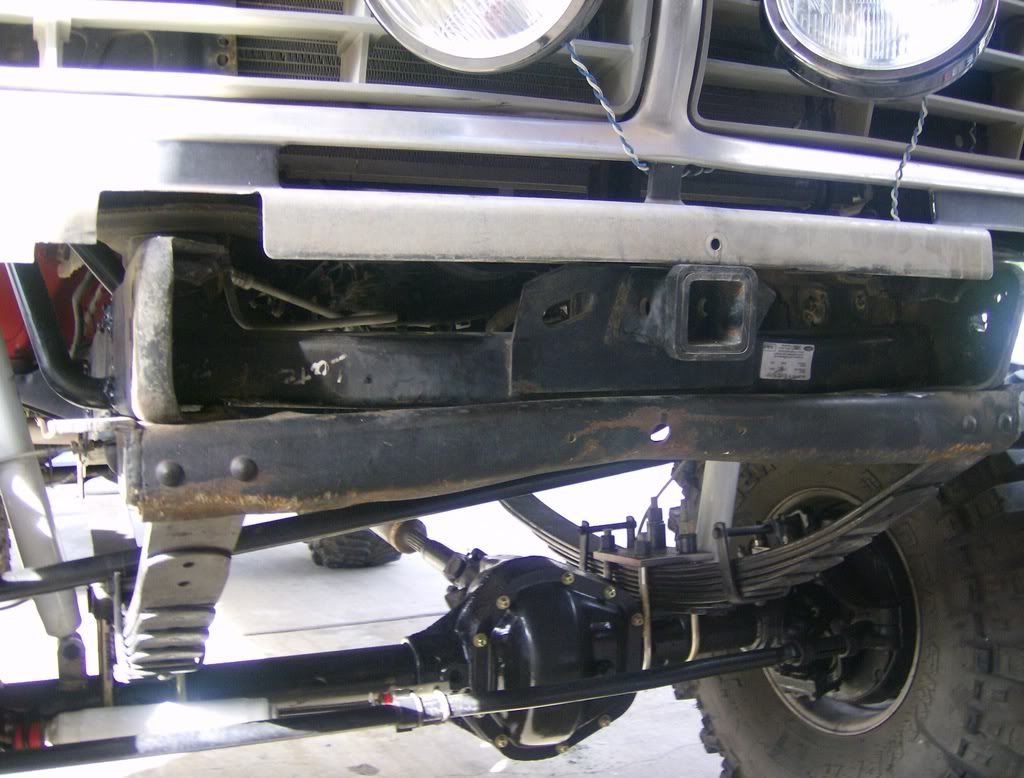
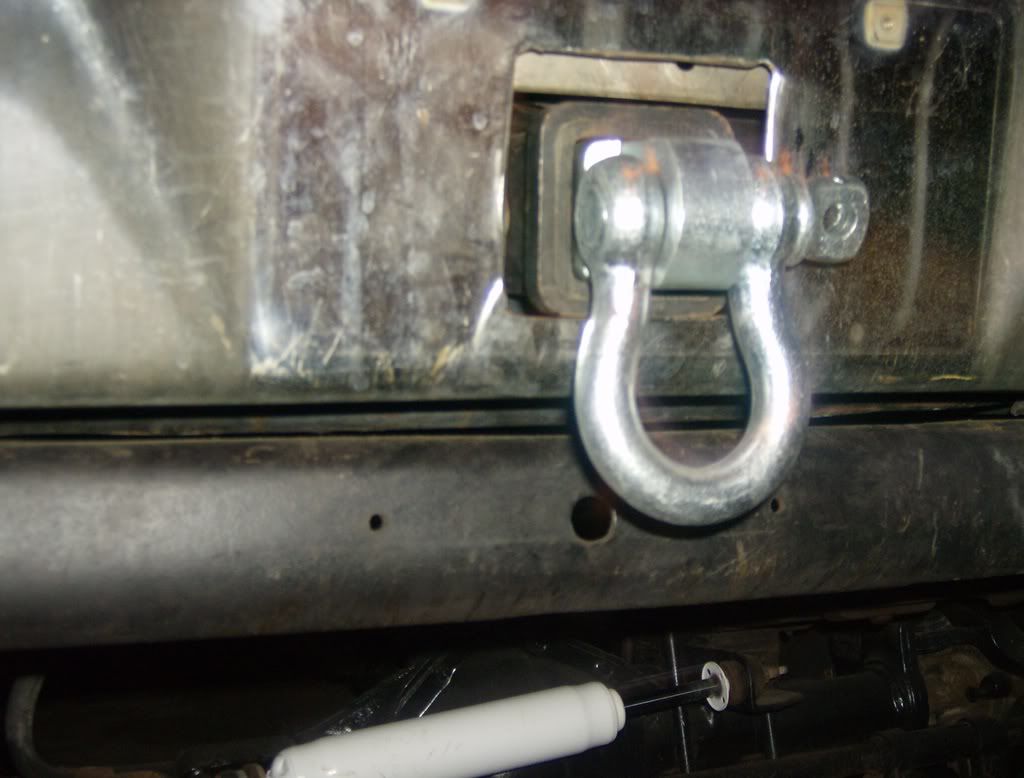

I wanted a clean and concealed look. My license plate is attached to another piece of plate and tube that slides right into the reciever so the plate can reside in the factory location. This was important to me.
Ok, you can remove the edges as they offer little strength that wont be provided my the addition of the square tubing that you are about to install,
Thats one way, next you can cut the reciever short as you are making it. If you cut it short by about 1/2 an inch on each side, you will then be able to turn the reciever slightly sideways to gain the clearance needed to get it inside of the frame. NExt you will have to make two 1/2 inch solid plate spacers that will fit in between the reciever and the frame on both sides to take up the additional space.
Thats two, next you can weld the darn thing to the inside of the frame and be done.
Thats three;
Another optio would be to make a sleeve that attaches to the end of each tube, and leave some slop in the end of the reciever so that you can slide the ends close together and expand them once installed. You will have to bolt this up completely if you ever intend to maintian any strength or wish to remove it ever again.
Another option is to make a hole in the frame to pass the reciever through, then weld the inside and the outside of the frame. Big square hole is not easy, nor is it pretty, but I have seen this done.
Things to look out for:
Grill shell gets darn close.
A/C condenser may prove to be difficult to clear.
78/9 trucks use bolt on spring hangers so you may have to use the original bolts in addition to some that you make. This is so you dont have to push the reciever so far back to clear anything that you run out of room. You just do not have the room under the truck to do this, so the reciever has to be located as far forward as possible.
73/77 truks have an added crossmember and a brace that also makes this difficult, as well as some bumper mounting stuff that can get in the way.
Either way with some carefull math and decent fab skills, you can make a clean install.
If you decide to cheat and install it below the bumper, it can make like a bit easier, but thats up to you.
I wanted a clean and concealed look. My license plate is attached to another piece of plate and tube that slides right into the reciever so the plate can reside in the factory location. This was important to me.

Logistics Pro

Joined: Aug 2003
Posts: 4,701
Likes: 6
When I did mine, I pulled the radiator and slightly ground out the notch on the one front frame rail. My hitch then angled in because of the flare of the frame at the body mount. Once I had it inside the frame, then I squared it up and slid it forward. Here's a shot of how mine sits in the frame:

Thread Starter
|
Senior User
Joined: Jan 2003
Posts: 310
Likes: 0
Ok, so one thing that you said 75F350 ws to cut it short than have spacers to make up the difference was going to be my original plan, but not only does the frame have the edges to go in, but the actual frame "bows" back in also, I was thinking that I would need somewhere arond 3/4" spacers. Would this be too much using say 4, 1/2" grade 8 bolt? How about 5/8" bolts? Also, I was thinking about going with some drop spring hangers out of some 4x6" tube, Could I weld a receiver between the two spring hangers either stock or dropped? Would that be strong enough? or would bolted to the frame be better? Lastly, I saw a truck once on the board, and I believe the picture was posted by you with a 78/79 f250 that had custom drop hangers like I described, and a hitch in between. The truck was green, but I can't find the pic now. Can you get me some details on that setup? Thanks again!!
Post Fiend
Joined: Jul 2006
Posts: 6,948
Likes: 44
That would be my buddy Rob. He does have some giant drop hangers and a regular old reciever installed between the frame rails. In this pic:
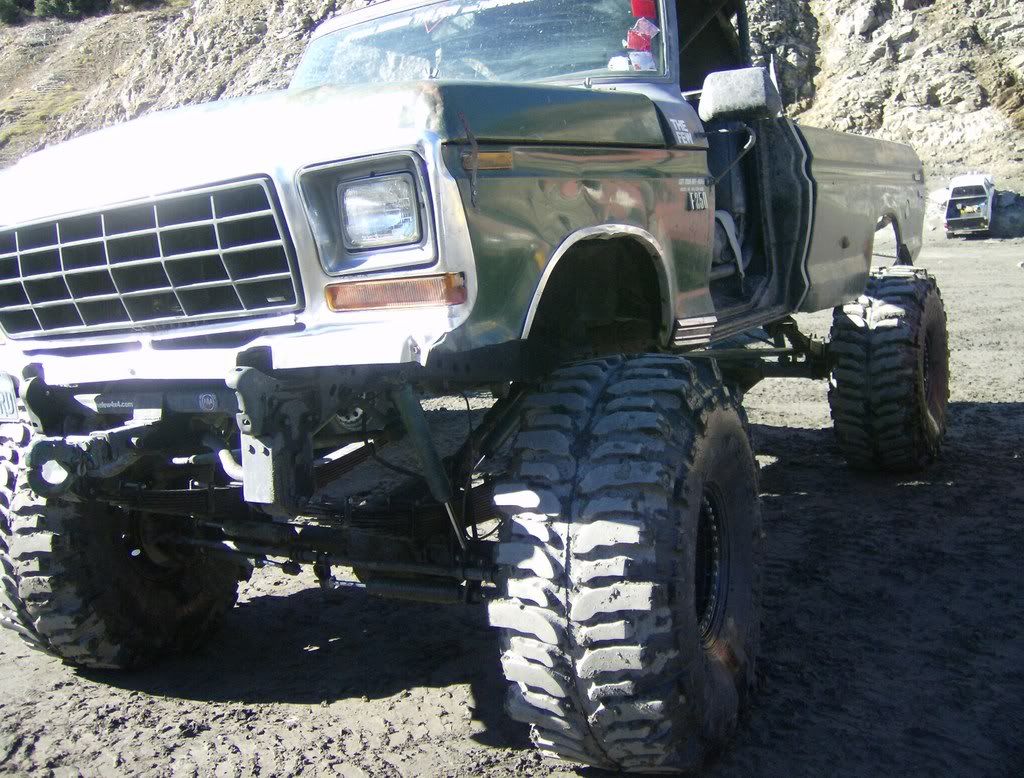
You will notice that the frame was cut at the very ends so that he could slide the reciever in. The hangers are tied into the recoever to add strength and support to the hangers so they do not fold.
As long as it is strong, there is no right way or wrong way, it will just depend upon how you want it to end up.
You can fab up a crossmember that has a reciever incorperated into it and you can add some longer hangers should you desire.
Read here to see what others are doing:
https://www.ford-trucks.com/forums/8...g-hangers.html
When this was built:
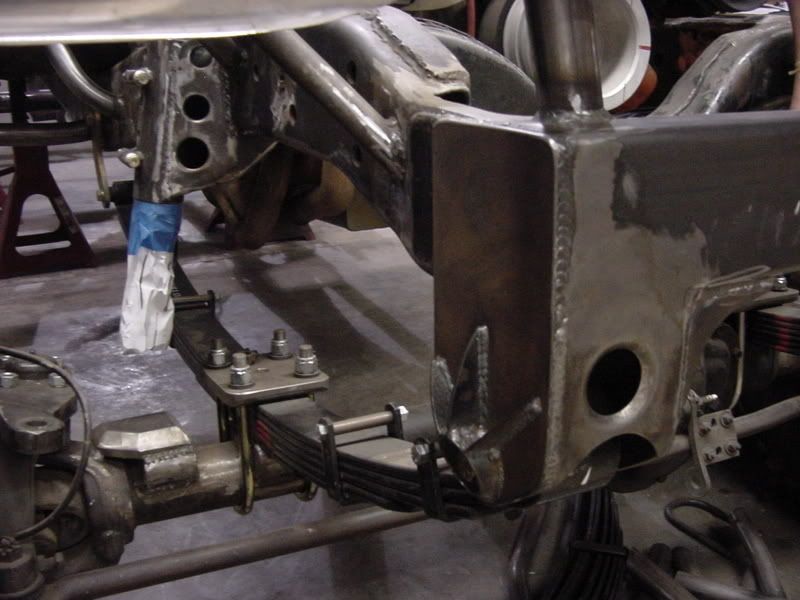
it was built with the idea of bolting up a single pintle hook mount right to the crossmember to take any fasteners out of "sheer" for added strength.
You will notice that the frame was cut at the very ends so that he could slide the reciever in. The hangers are tied into the recoever to add strength and support to the hangers so they do not fold.
As long as it is strong, there is no right way or wrong way, it will just depend upon how you want it to end up.
You can fab up a crossmember that has a reciever incorperated into it and you can add some longer hangers should you desire.
Read here to see what others are doing:
https://www.ford-trucks.com/forums/8...g-hangers.html
When this was built:
it was built with the idea of bolting up a single pintle hook mount right to the crossmember to take any fasteners out of "sheer" for added strength.
Thread Starter
|
Senior User
Joined: Jan 2003
Posts: 310
Likes: 0
Ha, I've been all over that thread, if you notice I posted a very similar question a few days ago. Also, you mention shear, the thing I was worried about with using spacers between the hitch mounting points would be placing a bending moment upon the bolts should the hitch be used with a big tug. If the mounting plate was solidly mounted against the frame, this would almost completely eliminate any bending moments, and place the bolts in "pure" shear. If you get my drift.....Also, that first truck was exactly what I was talking about thanks...any more info on that setup? Looks killer, along with your trucks....
Post Fiend
Joined: Jul 2006
Posts: 6,948
Likes: 44
I wheel with the guy just about every weekend, and I have some more pics I can try to dig up.
As far as your question regarding the sheer of the bolts, yes yours would be in sheer, but you have 4 of them per side, and if you use 1/2" or better. it will allow you to apply enough clamping force or torque to minimize the problem of them letting go. This means a direct fit with no gaps or any ability for the thing to come loose.
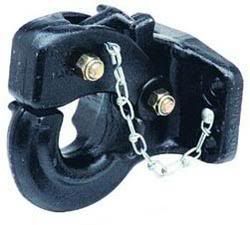
Without getting into the whole grade 5 grade 8 thing, I will say that with this many fasteners you will be just fine. With the "Getter" we eliminated many fasteners by welding all of the custome stuff together and wanter to just bolt up the recovery point:
As far as your question regarding the sheer of the bolts, yes yours would be in sheer, but you have 4 of them per side, and if you use 1/2" or better. it will allow you to apply enough clamping force or torque to minimize the problem of them letting go. This means a direct fit with no gaps or any ability for the thing to come loose.
Without getting into the whole grade 5 grade 8 thing, I will say that with this many fasteners you will be just fine. With the "Getter" we eliminated many fasteners by welding all of the custome stuff together and wanter to just bolt up the recovery point:
Trending Topics
Thread Starter
|
Senior User
Joined: Jan 2003
Posts: 310
Likes: 0
Hey thanks for the help 75F350. Also Ted, thanks for the close up pic that helped also. I think I may mount it with some spacers, since the hitch I have has a longer part that stick way out, so I may either cut it, or just place it back further.
P.S. 75F350 I thought you may be interested, I will be putting some stock superduty springs on the front my truck to see how much lift it gives me soon...thought you may be interested...this is why I am not sure if I will need to build longer mounts or not...I only have a shackle flip in the rear.
P.S. 75F350 I thought you may be interested, I will be putting some stock superduty springs on the front my truck to see how much lift it gives me soon...thought you may be interested...this is why I am not sure if I will need to build longer mounts or not...I only have a shackle flip in the rear.
FTE Stories
Ford Trucks for Ford Truck Enthusiasts

Top 6 Best Deals Available on New Fords & Lincolns Right Now
Brett Foote
This Hennessey Takes the Expedition Tremor's Off-Roading Capability to the Next Level
Verdad Gallardo
Top 10 Fords at 2026 Carlisle Ford Nationals
Joe Kucinski
3 Best / 3 Worst Parts of Modern Ford Ownership
Brett Foote
10 Amazing Upgrades That Solve Common Ford Truck Owner Headaches
Pouria Savadkouei
Every 2026 Ford Engine Explained
Brett Foote
10 Ugly Ford Trucks That We Still Kinda Love
Joe Kucinski
10 Things Every Truck Owner NEEDS (2026 Edition)
Michael S. Palmer
Rezvani's Latest Post-Apocalyptic Monster Is a Ford F-150 Raptor Underneath
Verdad Gallardo
Post Fiend
Joined: Jul 2006
Posts: 6,948
Likes: 44
I am very interested in this As you know I have offered to do this work for free and have had no takers on this. I just need to have an answer to this question. Though I believe that I already know, I must have verification. I am kind of crazy like that but whatever right.
You can teach me. I am interested in the results.
Much luck
You can teach me. I am interested in the results.
Much luck
Thread Starter
|
Senior User
Joined: Jan 2003
Posts: 310
Likes: 0
So what do you think will happen with the new spring? Also, what are the differences in the superduty spring codes? I know you always say go with the "V" code springs, but what others are there? And the differences. In the mean time, I will go and see what "code" the ones I have are.
Post Fiend
Joined: Jul 2006
Posts: 6,948
Likes: 44
The spring codes will determine the rate of the spring which will have an effect upon the actual arch of the spring. What this means to us is that the greater the rate, the greater the arch, so this should net more lift.
Light springs less than the V code that I mention might not net any lift whatsoever. It is possible that this spring or a higher rate spring may net additional lift but the spring that is designed for a greater capacity might not ride as well as it should. Much of this depends upon the engine combo and the amount of weigh that it has compared to the vehicle it was designed for.
In other words a high rate spring designed for the diesel engine may provide some lift but may produce a ride that is poor, and may not offer the articulation that one might consider reasonable.
This is where the variables come into play.
Understanding springs is difficult. These things are like simple converters. They convert energy into heat, and a good spring has to get rid of the heat without fatigue. This is where multi leaf packs are banificial. The larger packs can dissipate a greater amount of heat than any leaf with less material. This produces a linear rate spring that can stay consistant throught the cycle, and maintain a reasonable amount of consistancy.
The life of the spring is expected to be longer as well.
Some of this is why I am uncertain as to how the stock spring will react. I have only used aftermarket leaf packs with the above theory applied.
Hopefully we can find out and put some questions to rest.
Light springs less than the V code that I mention might not net any lift whatsoever. It is possible that this spring or a higher rate spring may net additional lift but the spring that is designed for a greater capacity might not ride as well as it should. Much of this depends upon the engine combo and the amount of weigh that it has compared to the vehicle it was designed for.
In other words a high rate spring designed for the diesel engine may provide some lift but may produce a ride that is poor, and may not offer the articulation that one might consider reasonable.
This is where the variables come into play.
Understanding springs is difficult. These things are like simple converters. They convert energy into heat, and a good spring has to get rid of the heat without fatigue. This is where multi leaf packs are banificial. The larger packs can dissipate a greater amount of heat than any leaf with less material. This produces a linear rate spring that can stay consistant throught the cycle, and maintain a reasonable amount of consistancy.
The life of the spring is expected to be longer as well.
Some of this is why I am uncertain as to how the stock spring will react. I have only used aftermarket leaf packs with the above theory applied.
Hopefully we can find out and put some questions to rest.




Post Fiend
Joined: Oct 2003
Posts: 6,949
Likes: 1
From: utica il
i have a simple flat mount receiver that i picked up at a garage sale for $5 that i have always planned on using for the front. i figured between the 4 bolts and some welds, it would be stout enough on some plate, either under a winch, or in place of one. are you guys using 78-79 rear receivers for the front mounts, or are they from a different vehicle?
Post Fiend
Joined: Jul 2006
Posts: 6,948
Likes: 44
Mine is actually a factory receiver from a 97 F 150 i think. For dads truck I believe that I used something from a Nissan titan.
I needed one that had a bend so they would clear the A/C stuff, and fit flush with the bumper.
I needed one that had a bend so they would clear the A/C stuff, and fit flush with the bumper.