



HydroBoost on F150

Thread Starter
|
Elder User
Joined: Nov 2006
Posts: 973
Likes: 2
From: Texas
HydroBoost on F150
Hey all,
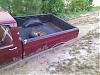
With all the towning i do, i have decided it might be nice to have more powerful brakes. Although i dont overload the truck as it is now and it stops fine, its just always better to be able to stop faster, esspecialy if trailer brakes go out.
Im just wandering if i got a hydroboost from a same year F350 if it would work with my stock pump and gear. And how exactly does it hook up? The impression iv got from looking at parts descriptions is that there is a high pressure line from pump to booster, booster to gear. Is there a return line from each? or just a return from the gear?
And i know it would be better to just buy an F250, but i cant do that right now and im making the best of what iv got.
thanks for any info!
With all the towning i do, i have decided it might be nice to have more powerful brakes. Although i dont overload the truck as it is now and it stops fine, its just always better to be able to stop faster, esspecialy if trailer brakes go out.
Im just wandering if i got a hydroboost from a same year F350 if it would work with my stock pump and gear. And how exactly does it hook up? The impression iv got from looking at parts descriptions is that there is a high pressure line from pump to booster, booster to gear. Is there a return line from each? or just a return from the gear?
And i know it would be better to just buy an F250, but i cant do that right now and im making the best of what iv got.
thanks for any info!

Senior User
Joined: Oct 2008
Posts: 137
Likes: 0
From: Brandon MS
I think that the extra stopping power you would get would probably cause you to work your brakes tooo hard and warp your rotors and drums due to overheating and such. The parts on an f250 i believe are a little more heavy duty as far as thickness of rotors and may have bigger drums but thats just my two cents. It may work out okay.

Postmaster
Joined: Apr 2008
Posts: 4,802
Likes: 1
Oh boy, here we go again - to have stupid amounts of braking power don't mean you'll be warping rotors left and right. Yes you can warp them easy, sue you can, but that usually only happens when you get on the pedal hard like your life depends on it, and if that is indeed the case then warping the rotors will be the least of your worries. If you use the brakes like you should to begin with, nice and easy and smooth, then it really don't matter if you have halfton brakes or ones that came off a big rig. Will they feel different at the pedal - definitely, they will be much easier to lock up, so you gotta learn to modulate your pedal force better - but if you do that you will have no issues with damaging parts and stuff.
To the original poster - F350s did not have hydroboost till '99 or so, the F-superduty trucks tho did, and their parts are almost direct bolt-in for your F150. An F-superduty truck is the late-'80s and early-'90s version of the current F450s and F550s, and it can be easily identified by the 10-lug wheels and the solid I-beam front axle. The hydroboost does in fact connect like you said - the high-pressure hose from the PS pump goes to it first, then there is another high-pressure hose running from the hydroboost to the steering box. Additionally both the hydroboost and the steering gear have return lines leading to the PS pump tank, hence why the hydroboost-specific pump has a tank that has two return ports on it - you can actually purchase just the tank from Ford or a parts store, it runs for like $35, and it's very easy to replace on your factory pump. The biggest issue with the hydroboost conversion is the master cylinder - the F-superduty master is way too big for your truck due to the fact the big truck has rear disc brakes and you have drums, so it is best to reuse your factory master cylinder - to make that work tho you may have to elongate the mounting holes in its flange that bolts up to your factory brake booster, a very easy job with a Dremel tool and a good grinding bit. Additionally, some people with '92-'96 cabs have reported their factory brake pedal don't work well with the hydroboost linkage, so it's highly recommended that you also grab the brake pedal assembly from the F-superduty. Overall it's really a pretty easy swap, and results are more than impressing.
To the original poster - F350s did not have hydroboost till '99 or so, the F-superduty trucks tho did, and their parts are almost direct bolt-in for your F150. An F-superduty truck is the late-'80s and early-'90s version of the current F450s and F550s, and it can be easily identified by the 10-lug wheels and the solid I-beam front axle. The hydroboost does in fact connect like you said - the high-pressure hose from the PS pump goes to it first, then there is another high-pressure hose running from the hydroboost to the steering box. Additionally both the hydroboost and the steering gear have return lines leading to the PS pump tank, hence why the hydroboost-specific pump has a tank that has two return ports on it - you can actually purchase just the tank from Ford or a parts store, it runs for like $35, and it's very easy to replace on your factory pump. The biggest issue with the hydroboost conversion is the master cylinder - the F-superduty master is way too big for your truck due to the fact the big truck has rear disc brakes and you have drums, so it is best to reuse your factory master cylinder - to make that work tho you may have to elongate the mounting holes in its flange that bolts up to your factory brake booster, a very easy job with a Dremel tool and a good grinding bit. Additionally, some people with '92-'96 cabs have reported their factory brake pedal don't work well with the hydroboost linkage, so it's highly recommended that you also grab the brake pedal assembly from the F-superduty. Overall it's really a pretty easy swap, and results are more than impressing.
Thread Starter
|
Elder User
Joined: Nov 2006
Posts: 973
Likes: 2
From: Texas
thanks for the replies.
And as for warping the rotors, the extra power would only be needed in emergency. Under normal driving i can usually engine brake down to a slow roll without using brakes anyways. But thanks for the concern, that is something that could easily be overlooked.
MLSC- The reason i had suggested the hydroboost from an F350 is because napa online has it for them. But that could just be where they list them for the F-series. I have been thinking about ordering the parts from them as new or rebuilt(iv never been much of a pick n pull guy). the whole setup from napa with hoses and everything runs about $200, which isnt too bad. Any idea what they go for out of the junk yards?
Thanks for all the info, im really looking forward to this conversion. And im really interested to see how the braking improves.
And as for warping the rotors, the extra power would only be needed in emergency. Under normal driving i can usually engine brake down to a slow roll without using brakes anyways. But thanks for the concern, that is something that could easily be overlooked.
MLSC- The reason i had suggested the hydroboost from an F350 is because napa online has it for them. But that could just be where they list them for the F-series. I have been thinking about ordering the parts from them as new or rebuilt(iv never been much of a pick n pull guy). the whole setup from napa with hoses and everything runs about $200, which isnt too bad. Any idea what they go for out of the junk yards?
Thanks for all the info, im really looking forward to this conversion. And im really interested to see how the braking improves.
Thread Starter
|
Elder User
Joined: Nov 2006
Posts: 973
Likes: 2
From: Texas
And Tbird, i didnt mean to forget about you.
ya, even with stock rotors my will stop on a dime. and i have thought about drilled and slotted rotors in the future. But the reason for hydroboost is to increase the break pressure, allowing it to stop more weight by squeezing the brakes harder.
and when im loaded i need the rear to do alot of the braking because that is where the weight is and the front disks lock up well before the rears will.
Again, thanks for the replies.
Please keep the advice coming!
ya, even with stock rotors my will stop on a dime. and i have thought about drilled and slotted rotors in the future. But the reason for hydroboost is to increase the break pressure, allowing it to stop more weight by squeezing the brakes harder.
and when im loaded i need the rear to do alot of the braking because that is where the weight is and the front disks lock up well before the rears will.
Again, thanks for the replies.
Please keep the advice coming!
Trending Topics
Postmaster
Joined: Apr 2008
Posts: 4,802
Likes: 1
For a complete system that is rebuilt and with warranty $200 is very good. How much it runs from a Junkyard depends on the junkyard itself, also F-Superduty trucks ain't all that common to come across that way - which is actually why I run a Chevrolet-specific hydroboost, I can easily source out replacements in about any junkyard. And no, the Chevy booster ain't no direct replacement, not really close either.
FTE Stories
Ford Trucks for Ford Truck Enthusiasts

Rezvani's Latest Post-Apocalytic Monster Is a Ford F-150 Raptor Underneath
Verdad Gallardo
Top 10 Most Expensive Ford Trucks Ever Sold on Bring a Trailer
Joe Kucinski
2027 Ford Super Duty Buyer's Guide (Every Model, Engine, & Package)
Brett Foote
Top 10 Ford Truck Tragedies
Joe Kucinski
AEV FXL Super Duty - the Super Duty Raptor Ford Doesn't Make
Brett Foote
Lobo Vs Lobo: Proof the F-150 Lobo Should Be Even Lower!
Michael S. Palmer
Ford's 2001 Explorer Sportsman Concept Looks For a New Home
Verdad Gallardo
10 Best Ford Truck Engines We Miss the Most!
Joe Kucinski
2026 Shelby F-150 Off-Road: Better Than a Raptor R?
Brett Foote
Thread Starter
|
Elder User
Joined: Nov 2006
Posts: 973
Likes: 2
From: Texas
awesome, i plan on order the parts the next time i have a little free time. Im really looking forward to the power. I dont know if my vac booster is worn(177000 miles on original maybe?), messed up, or was replaced with one from a smaller car(looks small if replaced???), but it never has seemed right. It works fine unloaded, but it took more pedal force to lock up the tire then i thought it should.
thanks for the help, its great!
thanks for the help, its great!

More Turbo
Joined: Sep 2003
Posts: 630
Likes: 4
From: Northeast
The Fronts Locking First = Bad REAR Brakes
And Tbird, i didnt mean to forget about you.
ya, even with stock rotors my will stop on a dime. and i have thought about drilled and slotted rotors in the future. But the reason for hydroboost is to increase the break pressure, allowing it to stop more weight by squeezing the brakes harder.
and when im loaded i need the rear to do alot of the braking because that is where the weight is and the front disks lock up well before the rears will.
Again, thanks for the replies.
Please keep the advice coming!
ya, even with stock rotors my will stop on a dime. and i have thought about drilled and slotted rotors in the future. But the reason for hydroboost is to increase the break pressure, allowing it to stop more weight by squeezing the brakes harder.
and when im loaded i need the rear to do alot of the braking because that is where the weight is and the front disks lock up well before the rears will.
Again, thanks for the replies.
Please keep the advice coming!
If your front brakes are locking before the rears, adding "big truck" parts (to "increase the pressure") will only make your front brakes do what they are already doing (locking up before the rears) but they will do it even sooner. Think about it....
That will do nothing to solve your problem, right?
Making your front brakes work harder is not the answer--it's your rear brakes that need your attention.
Please see the bolded portion of your text, above. If that's true, it's safe to day your rear brakes are either completely inop, or grossly underperforming.
Due to weight transfer under braking (the back unloads dramatically) the front brakes are DESIGNED to do 70+% of the braking, with the rears doing the remainder. That's with all vehicles, not just pickups.
With pickups, due to the heavy front weight bias, the rears lock prematurely normally, unless you have a full, 4-wheel ABS system. I think your drum brakes are either out of adjustment, (frozen star adjusters? broken/unhooked hardware?) contaminated (brake fluid?) or massively worn (thin/detached shoe material?).
You should check the rears out, do a brake job if need be, including GETTING THE DRUMS TURNED, and properly adjust them. You can also get "semi-metallic" brake shoes (little flecks of brass-looking metal embedded into the pad material) for increased braking performance. Then try it.
Jury-rigging some "big truck" brake parts onto your truck is NOT the way to do it, and will probably result in no net gain, while allowing your under-performing rear brakes to continue to under-perform. This could eventually cause your front rotors to overheat, and warp, (from being overworked) necessitating their premature replacement.
If you are not crystal clear on how to properly set up rear drum brakes, so that the automatic adjusters (star wheels) actually automatically adjust, either read up on it or pay someone who REALLY knows, how to do it. It's not difficult, but it's time-consuming, and involves manually adjusting them through the backing plate, after the drums are on, to get them "close," so that the star wheels will actually do their thing.
The star wheels are LEFT/RIGHT-SPECIFIC, so don't mix them up. A small amount of hi-temp lube is required under the edges of the shoes, on the raised "lands" or pads in the backing plate (three pads per shoe/six per side/12 pads total). The star wheels' threads need to be either wire-wheeled to remove 100% of the rust, or replaced, and the threads need to be lubed with a small amount of Neverseize. The backing plates themselves need to be wire-wheeled vigorously, to remove the heavy rust, so that they allow the shoe edges to slide easily on the (lubricated) raised "pad" areas. The auto-adjusters' actuating cables need to be routed correctly, and the sequence in which you attach the return springs and other hardware must be followed EXACTLY. It's a process, as I say and, if done incorrectly, will result in this:
by fordman:
"...and the front disks lock up well before the rears will."
"...and the front disks lock up well before the rears will."
Get a GOOD shop manual and follow it to the letter, leaving one side intact, for reference. Take digi-pics as you go, in case you screw up the order of assembly. (This assumes that they were correctly assembled last time, which may not be the case, so read the shop manual CLOSELY).
Oh, yeah--the brake shoes are position-specific (there's a primary and secondary shoe) and consequently, it's also possible to screw that up as well, side-to-side. IOW, you can end up with both primaries on one side or vice versa, and/or possibly have them reversed but on the correct sides. Hence the importance of the shop manual.
And regarding your vacuum booster, you said this:
by fordman:
Im really looking forward to the power. I dont know if my vac booster is worn(177000 miles on original maybe?), messed up, or was replaced with one from a smaller car(looks small if replaced???), but it never has seemed right. It works fine unloaded, but it took more pedal force to lock up the tire then i thought it should.
Im really looking forward to the power. I dont know if my vac booster is worn(177000 miles on original maybe?), messed up, or was replaced with one from a smaller car(looks small if replaced???), but it never has seemed right. It works fine unloaded, but it took more pedal force to lock up the tire then i thought it should.
Now rapidly pump your brakes, lightly, (but not hard enough to actually do any braking) just to remove any stored-up vacuum boost, and then try applying the brakes, as you roll, at 40mph. If your brakes are much harder to apply, and work much less effectively, with the engine off, then you can be fairly confident that your vacuum booster is working normally, and is not part of your current problems (which I doubt it is, anyway).
If you suspect the wrong booster is installed, why don't you call the stealership and verify the part number of your booster--is it correct for your truck?
Just my .02--YMMV.
BigSix
Thread Starter
|
Elder User
Joined: Nov 2006
Posts: 973
Likes: 2
From: Texas
BigSix- Thanks for all the info. I really do understand what your saying about the rear brake not performing well. But i know the rear brakes are in adjustment and working fine. The reason they are not locking up it because of a 6K trailer and 100 gallon diesel tank in the bed. There is simply to much weight on the rear axle to lock it up with the pressure from a vac booster. And because so much weight is behind the rear axle(not the ideal setup, but will be changed) there is less weight on the front so they lock up earlier.
And as for the hydro-boost setup. Im not really jurry riggin the setup. The parts are all interchangeable without any issues. That is why i am going to use f-series parts and not chevy or some other brand.
And if i really wanted "big truck" brake parts, i could always grab some of the leftover stuff from our haul truck. Talk about some real stopping power
I know its easy to over look the small problems and throw new parts on there in hope it will help. But i understand the way the weight shifts and the brake pressure works. and i know that at this point the vac boost is the weak point.
Thanks again for all the info.
And as for the hydro-boost setup. Im not really jurry riggin the setup. The parts are all interchangeable without any issues. That is why i am going to use f-series parts and not chevy or some other brand.
And if i really wanted "big truck" brake parts, i could always grab some of the leftover stuff from our haul truck. Talk about some real stopping power
I know its easy to over look the small problems and throw new parts on there in hope it will help. But i understand the way the weight shifts and the brake pressure works. and i know that at this point the vac boost is the weak point.
Thanks again for all the info.
More Turbo
Joined: Sep 2003
Posts: 630
Likes: 4
From: Northeast
Not at all, man. In fact, now that you've explained a little more about the weight your truck is carrying, I realized I should not have sounded so "dead certain" about your truck--my bad. Obviously, you've given this some thought, and I didn't mean to come off as "lecturing."
I hope you find some more brakes, one way or another.
BigSix
Thread Starter
|
Elder User
Joined: Nov 2006
Posts: 973
Likes: 2
From: Texas
Bigsix- its all cool. I didnt give all that much info to begin with. I didnt want to get the "thats to much for a 1/2 ton"/"buy a f250" lecturing. And trust me if i could get a 250, or 350 i would in a heartbeat. But that's out of the question, for now
and that is some great advice and i wish all i needed to do was adjust the rear brakes, mainly because its a whole lot cheaper then hydro-boost. But i think hydro-boost is the only way all get the pressure i need to really lock up the rear. But any other ideas are welcomed.
Thanks again,
and that is some great advice and i wish all i needed to do was adjust the rear brakes, mainly because its a whole lot cheaper then hydro-boost. But i think hydro-boost is the only way all get the pressure i need to really lock up the rear. But any other ideas are welcomed.
Thanks again,