


back on the MPG thing

Cargo Master

Joined: Nov 2003
Posts: 2,585
Likes: 1
From: Duluth, Mn.
If it isn't, turn Us all on to the magic pills.

Junior User
Joined: Oct 2008
Posts: 62
Likes: 0
From: Ludlow MA
filled up right off the highway, pretty much a flat straight shot, tires were inflated to 75/80 psi, plus filters and other maintence BS were just done. at 57 mph, 3.55/E4od, 327 miles by 11.4 gallons of fuel. I may be horrible at math but its not hard to punch those numbers into a calculator 

Senior User
Joined: Oct 2006
Posts: 152
Likes: 0
From: Bath, Michigan
Non-turbo IDI here: I have frequently averaged over 21mpg on long highway trips. The trips where you almost never alter speed unless you stop to pee or get fuel. I have never broken 23mpg (average), but I'm working on it. Going from Michigan to the east coast (CT, RI, MA, NY, PA) and back starting the 18th (next week), so we will see what the ole girl will do with the new 3" catback exhaust system on it. I try hard to fuel the truck to exactly the same amount every time.
Cargo Master
Joined: Nov 2003
Posts: 2,585
Likes: 1
From: Duluth, Mn.
filled up right off the highway, pretty much a flat straight shot, tires were inflated to 75/80 psi, plus filters and other maintence BS were just done. at 57 mph, 3.55/E4od, 327 miles by 11.4 gallons of fuel. I may be horrible at math but its not hard to punch those numbers into a calculator
You prolly have a tank siphoning front to back, or back to front.
Lead Driver
Joined: Nov 2003
Posts: 6,900
Likes: 3
From: Campbell River, B.C.
You need to average 3 tanks to make sure the fuel nozzle isn't shutting off too early. I nearly got fooled into thinking I got 35 MPG once. It bothered me so much that I went back to the cardlock and it too another few gallons bringing the average below 20.
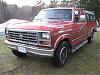
However having said that, and knowing what my truck is capable of, I'm not going to dismiss ~28 MPG completely. The flatbed looks like it doesn't have any vertical walls on top or below it, so that could make it produce less drag then the OEM box.
cruising below 60 MPH also helps a lot to reduce fuel consumption.
Maybe try the other tank on the same run to make sure you are not siphoning fuel over to throw off the number (as if you have nothing better to do than shut up the skeptics LOL).
However having said that, and knowing what my truck is capable of, I'm not going to dismiss ~28 MPG completely. The flatbed looks like it doesn't have any vertical walls on top or below it, so that could make it produce less drag then the OEM box.
cruising below 60 MPH also helps a lot to reduce fuel consumption.
Maybe try the other tank on the same run to make sure you are not siphoning fuel over to throw off the number (as if you have nothing better to do than shut up the skeptics LOL).
Senior User
Joined: Oct 2006
Posts: 152
Likes: 0
From: Bath, Michigan
As for your 10 yrs of ownership, and 8 yrs of reading, all I can say is to quote my father who rightfully told me, "a bricklayer can lay bricks for 40 yrs, and it doesn't make him a good bricklayer".
Oh, and by the way, I HAVE no 2nd tank to siphon from. My figures incidentally, were based on 2,200 miles of (continuous) driving.

Post Fiend
Joined: Oct 2007
Posts: 10,501
Likes: 5
From: Faibanks Ak.
Kleenax don't ever get rid of this truck.
What are you running for exhaust.
If I could get that kind of mileage I would not do the bio thing after you change to 3.55 gears you can sell the extra diesel you will be making to your friends. LOL.
Tell us more about the nitrogen in your tires. What is the purpose of this.
What are you running for exhaust.
If I could get that kind of mileage I would not do the bio thing after you change to 3.55 gears you can sell the extra diesel you will be making to your friends. LOL.
Tell us more about the nitrogen in your tires. What is the purpose of this.
Lead Driver
Joined: Nov 2003
Posts: 6,900
Likes: 3
From: Campbell River, B.C.
FTE Stories
Ford Trucks for Ford Truck Enthusiasts

Top 10 Most Expensive Ford Trucks Ever Sold on Bring a Trailer
Joe Kucinski
2027 Ford Super Duty Buyer's Guide (Every Model, Engine, & Package)
Brett Foote
Top 10 Ford Truck Tragedies
Joe Kucinski
AEV FXL Super Duty - the Super Duty Raptor Ford Doesn't Make
Brett Foote
Lobo Vs Lobo: Proof the F-150 Lobo Should Be Even Lower!
Michael S. Palmer
Ford's 2001 Explorer Sportsman Concept Looks For a New Home
Verdad Gallardo
10 Best Ford Truck Engines We Miss the Most!
Joe Kucinski
2026 Shelby F-150 Off-Road: Better Than a Raptor R?
Brett Foote
2027 Super Duty Carhartt Package First Look: 12 Things You NEED to Know!
Michael S. Palmer
Postmaster
Joined: Dec 2002
Posts: 3,594
Likes: 2
From: Southern Oregon USA
I know how to accurately figure mpg consumption.
As for your 10 yrs of ownership, and 8 yrs of reading, all I can say is to quote my father who rightfully told me, "a bricklayer can lay bricks for 40 yrs, and it doesn't make him a good bricklayer".
Oh, and by the way, I HAVE no 2nd tank to siphon from. My figures incidentally, were based on 2,200 miles of (continuous) driving.
As for your 10 yrs of ownership, and 8 yrs of reading, all I can say is to quote my father who rightfully told me, "a bricklayer can lay bricks for 40 yrs, and it doesn't make him a good bricklayer".
Oh, and by the way, I HAVE no 2nd tank to siphon from. My figures incidentally, were based on 2,200 miles of (continuous) driving.
Jason
Postmaster
Joined: Dec 2002
Posts: 3,594
Likes: 2
From: Southern Oregon USA
Less moisture in the tire, which makes for a more predictable pressure change when the tires are at temp. AFAIK, the tires are not put under a vacuum, so there is no way to install 100% nitrogen.
And nitrogen is supposed to keep set pressures for longer periods because the nitrogen molecules are larger than oxygen molecules.
Works good in a automotive application where you stay at a constant pressure. But it would be hard in a pickup where you are changing PSI regularly.
Jason
And nitrogen is supposed to keep set pressures for longer periods because the nitrogen molecules are larger than oxygen molecules.
Works good in a automotive application where you stay at a constant pressure. But it would be hard in a pickup where you are changing PSI regularly.
Jason
Post Fiend
Joined: Oct 2007
Posts: 10,501
Likes: 5
From: Faibanks Ak.
I know about the stability of the nitrogen on the newer multi axle heavy haul trailers it is used in the air bags on the boosters instead of air never changes unless you change it.
I never heard of using it in tires though. I never change the pressure in my pu tires 80 psi and leave them. On a 4 wheelin rig that is differant though.
I never heard of using it in tires though. I never change the pressure in my pu tires 80 psi and leave them. On a 4 wheelin rig that is differant though.

Freshman User
Joined: Jan 2009
Posts: 33
Likes: 0
From: Near a cornfield in Iowa
I only get 13.25 mpg average with my non turbo IDI.......would love to break 20. Would a turbo make that much of a difference?

Cargo Master
Joined: Nov 2003
Posts: 2,585
Likes: 1
From: Duluth, Mn.
The Nitrogen, in all reality, doesn't do much for MPG. It just doesn't expand/contract like air does. So You jsut get a more consistent pressure. If Your like Me, check tire pressures every 3-4 days, You won't see any MPG difference.
I still say Kleenax's numbers are way off. I have a 7.3/sidewinder ZF5 also, I have the rotunda timing meter and have tuned this thing to the best MPG I can get. When I had My 4.10's, the best mileage I ever got was 17 MPG. That was unloaded, Traveling 65 MPH for 460 miles. Now,with 3.55's I can get 17 MPG, loaded, traveling 70-75 MPH
I still say Kleenax's numbers are way off. I have a 7.3/sidewinder ZF5 also, I have the rotunda timing meter and have tuned this thing to the best MPG I can get. When I had My 4.10's, the best mileage I ever got was 17 MPG. That was unloaded, Traveling 65 MPH for 460 miles. Now,with 3.55's I can get 17 MPG, loaded, traveling 70-75 MPH
Post Fiend
Joined: Oct 2007
Posts: 10,501
Likes: 5
From: Faibanks Ak.
When I was driving my old highboy with a 6.9 4spd 4.10 the sped limit was 55 and that was mostly how I drove it I would consistently get 19 and 20 empty.
The best I have ever done with my 86 is 16 and it has a turbo and gearvenders.
Now the highboy was nonturbo but had tru duals with large pipes and the fuel was better those days.
Now the 86 has a dually kit not as good of fuel and single usually run 65 to 70 but has gv
and have played with the timing 16 is my best and it is on flat ground.
So what do you think makes such a big difference in the mileage.
I am thinking a combo of 10 mph faster dually and ulsd.
The best I have ever done with my 86 is 16 and it has a turbo and gearvenders.
Now the highboy was nonturbo but had tru duals with large pipes and the fuel was better those days.
Now the 86 has a dually kit not as good of fuel and single usually run 65 to 70 but has gv
and have played with the timing 16 is my best and it is on flat ground.
So what do you think makes such a big difference in the mileage.
I am thinking a combo of 10 mph faster dually and ulsd.
Senior User
Joined: Oct 2006
Posts: 152
Likes: 0
From: Bath, Michigan
Kleenax don't ever get rid of this truck.
What are you running for exhaust.
If I could get that kind of mileage I would not do the bio thing after you change to 3.55 gears you can sell the extra diesel you will be making to your friends. LOL.
Tell us more about the nitrogen in your tires. What is the purpose of this.
What are you running for exhaust.
If I could get that kind of mileage I would not do the bio thing after you change to 3.55 gears you can sell the extra diesel you will be making to your friends. LOL.
Tell us more about the nitrogen in your tires. What is the purpose of this.
Here's a paraphrased blurb from an article that I read on nitrogen in tires.
Most tires are filled with compressed air, which when dry consists of about 78 percent nitrogen, 21 percent oxygen, and 1 percent other gases by volume. Water vapor (humidity) can make up as much as 5 percent of the volume of air under worst-case conditions. Filling your tires with nitrogen mainly does two things: it eliminates moisture, and it replaces skinny oxygen molecules with fat nitrogen molecules, reducing the rate at which compressed gas diffuses through porous tire walls.
That means, theoretically at least, that a tire filled with nitrogen retains optimal pressure longer, leading to more uniform tire wear and better fuel mileage. The commonly quoted figure is that truck tires inflated to 70 psi get 3 percent better mileage than at 55 psi.
Exhaust is a Banks Stinger Y-Pipe mated to (right at the Y) 3" stainless pipe running all the way back to a 3" straight-thru oval MagnaFlow stainless muffler, with a 3" tailpipe.
Ran stainless all-the-way, since I've put 2 of those regular steel ones on there and had them rust off in these Michigan winters! I got 2 - 6' lengths of 3" HD stainless (14ga) pipe for $4.00 at a yard sale, and the muffler was $90.00 delivered! Oh, and $56.00 for a MaganFlow lifetime warranty tailpipe made of 3" stainless.