





What would you do?
Thread Starter
|
Senior User
Joined: Nov 2007
Posts: 490
Likes: 0
What would you do?
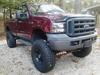
I Have been wanting to buy 38.5 ground hawgs but I came across a good deal on 4 38 inch radial TSL's on nice 8 bolt aluminum rims. So I couldn't pass on them for 300 bucks! Two are new, two are bald and need to be replaced.I wanted ground hawgs for tire life and are great in the mud. How good are TSL's in the mud compared to ground hawgs? Cause I kinda wanna replace the two bald ones with some hawgs. What tires would you replace them with if the choices Hawgs, Boggers or just match them with TSL's? These are going on a 91 shortbed F150 302, Dana 44hd sas, dana 60 rear. Doesnt see a whole lot of road, pretty much just to get where ever i wheel it
Post Fiend
Joined: Jul 2006
Posts: 6,948
Likes: 44
Well, know that the ground hawgs are shorter than any of the other two tires listed. I mean a 38" hawg actually measures under 36 inches, so you probably do not want to mix these around with larger, or tires that are closer to being true to the advertised tire size.
This will leave you with trying to decide on whether or not to run a bogger or standard TSL combo.
My fear here is that this little 302 wil not have enough pop to turn the bogger, and the bogger in the 38 inch diamater is not all that great. See the 38" bogger is just small and the lug spacing is a big too tight making this tire less than desireable, unless you cut it.
I am not real sure I would run a radial tire for a vehicle that does not see too much on road use, but I do think that I would run the same TSL design on all corners of this rig.
This will leave you with trying to decide on whether or not to run a bogger or standard TSL combo.
My fear here is that this little 302 wil not have enough pop to turn the bogger, and the bogger in the 38 inch diamater is not all that great. See the 38" bogger is just small and the lug spacing is a big too tight making this tire less than desireable, unless you cut it.
I am not real sure I would run a radial tire for a vehicle that does not see too much on road use, but I do think that I would run the same TSL design on all corners of this rig.
Thread Starter
|
Senior User
Joined: Nov 2007
Posts: 490
Likes: 0
Well, know that the ground hawgs are shorter than any of the other two tires listed. I mean a 38" hawg actually measures under 36 inches, so you probably do not want to mix these around with larger, or tires that are closer to being true to the advertised tire size.
This will leave you with trying to decide on whether or not to run a bogger or standard TSL combo.
My fear here is that this little 302 wil not have enough pop to turn the bogger, and the bogger in the 38 inch diamater is not all that great. See the 38" bogger is just small and the lug spacing is a big too tight making this tire less than desireable, unless you cut it.
I am not real sure I would run a radial tire for a vehicle that does not see too much on road use, but I do think that I would run the same TSL design on all corners of this rig.
This will leave you with trying to decide on whether or not to run a bogger or standard TSL combo.
My fear here is that this little 302 wil not have enough pop to turn the bogger, and the bogger in the 38 inch diamater is not all that great. See the 38" bogger is just small and the lug spacing is a big too tight making this tire less than desireable, unless you cut it.
I am not real sure I would run a radial tire for a vehicle that does not see too much on road use, but I do think that I would run the same TSL design on all corners of this rig.
Post Fiend
Joined: Jul 2006
Posts: 6,948
Likes: 44
Either way, I am not a real fan of the hawg. These tires do measure differently, and you can purchase larger ones to try to compansate, but they will still not be the same. Maybe the slight difference will be no problem, but it is not something that I would do. The TSL is a good tire, and since you do not see so much road use, these should be fine.
As far as your desire to make horsepower and you are going to opt for a more desirable gear ratio, you might ditch the rear D60. With just about any tire combo, that D60 rear is not really worth throwing any money at. These small spline axle shafts are tough, but not as tough as any shafts that measure 1.5". Before you throw money at the rear axle, consider upgrading to a larger axle.
Still just my opinion, but having the lightest tires I could find would be the best. Heavy aggressive tires are really going to turn a low powered vehicle into a bigger problem once you are in the mud.
As far as your desire to make horsepower and you are going to opt for a more desirable gear ratio, you might ditch the rear D60. With just about any tire combo, that D60 rear is not really worth throwing any money at. These small spline axle shafts are tough, but not as tough as any shafts that measure 1.5". Before you throw money at the rear axle, consider upgrading to a larger axle.
Still just my opinion, but having the lightest tires I could find would be the best. Heavy aggressive tires are really going to turn a low powered vehicle into a bigger problem once you are in the mud.
Thread Starter
|
Senior User
Joined: Nov 2007
Posts: 490
Likes: 0
I have thought about getting a 10.25 in the rear but thought that I would be ok with the d60 with 38's and 350 to 400 horse, or am i wrong? Why do you think i should consider lighter weight tires? Remember this truck isnt gonna be 302 powered for ever.
Post Fiend
Joined: Jul 2006
Posts: 6,948
Likes: 44
Any time anyone throws money at a D60 rear, I have to question the value. I have a rather rare D60 HD rear axle, and this is a 35 spline axle. It is basically a D60 with D70 shafts. I still break the axle shafts in this rig, and I only run 40" tires and have a small engine too. 400 hp is easy to obtain, and this really is quite a bit of power.
Lets see if I can word this differently. Right now you agree that the D60 rear might be at its limits with your current combo and tires size etc. I am confident that there is no dispute there. In time you will add horsepower and you will add tire size, in addition to that, you will undoubtedly add gears. All of this creates a greater chance of breakage to your existing axle. If you have reached the threshold already, you will be on the razors edge all of the time, and you run the risk of breakage each time you take the truck out.
Before you spend money on after market parts, think about just getting the strongest components available. This is within reason of course, but consider what a D60 is gonna cost, and compare it to a larger 1 ton axle.
You will find that the costs are about equal. Now I understand that you will still have to go out and buy a larger axle, but truth is, that other than time and patience, the actual purchase costs are abput the same. Once you sell your rear axle, you are really talking about nickels and dimes.
If I said that you could build a 1 ton axle that was virtually bullet proof, and you could have your 4.56 gears, and a detroit locker, and disc brakes for less money than it would cost to build your 60. You would have almost twice the strength, and would have to really try to destroy it, and still probably could not. You would jump all over that right, and probably run right out and buy that.
Well, then build a Corp 14 bolt. Many of these already have Detroit lockers, and the mil spec units have 4.56 gears in them already. You can piece together a disc brake kit for pennies (a couple of hundred bucks) and you will be set. Building this axle is way less than any dana will ever be, and to be honest, I feel they are stronger.
The bottom line here, is that you will constantly upgrade you truck, and eventually you will want larger tires, and eventually you will have a larger engine. That is just normal, as long as you are going to spenf money, spend it once and build an axle that will hold up and last year in and year out. This way you are not on the threshold of breakage, and you will never outgrow the axle.
Spend money once, and the rest becomes preventative maintenance, and not replacement. Replacement means twice the cost and that the first selection of parts was incorrect.
Now, tire weight. Even a large engine has an easier time turning a lighter tire. I mean lets get down to brass tacks here. Take any one of your current 38" tire, and find a friend with a similar size hawg or bogger, and roll one up the street as fast as you can, the do the same for the other and tell me which one is more difficult roll around. You will undoubtedly choose the lightest tire you have. This is true for your truck regardless of engine size. "Light is right" and the only time you sacrifice weight is to obtain more traction. You are not there yet, and this is probably quite a ways off.
Lets be honest, how long will it take you to build this 460, get it installed, build your axles, and all of that good stuff? How many tires will you have gone through before you are actually ready for tire combos? My bet is that this will be a ways down the road.
I have said this many times, but many guys build there trucks backwards. I mean most build in the wrong order. Just about everyone runs right out and buys a lift kit, then buys tires and wheels, and has to struggle with poor steering, inadequate brakes, small axles with open diffs that have terrible passenger car gear ratios, all being turned by a stock transmission, and a bone stock engine,,,,oh yeah,,, with a K&N and a flowmaster muffler. Sound about right?

If the entire build cant be completed at one time it would make more sense (to me) to start with axles and gears first.
Instead it would make more sense to take the money that was spent on tires and a lift and get some traction.
Give me a truck with small stock tires with one ton axles and lockers, and I will be at the top of the hill, I will be the further up the trail deeper in the mud, and waiting for the truck with open diffs and 38's with no gears. Heak Imight even have to pull the bigger truck with my rope. Big truck without any real wheeling gear might not even make it where I can with my little tires, as long as I have some big axles, gears and lockers.
Then as money comes around, I can upgrade, and lift the truck, and then I can think about tires. This was the truck stays as capable as it can be, and will always be bullet proof.
Too many guys that do the opposite spend good money repairing trucks just trying to keep them on the road simply because they built things a little out of order.
My apologies for the long winded post, and please know, that this was a general statement, and in no way was directled at you Bender.
In fact it was not directed at anyone, it is just a true set of statements that has come from my own mistakes when building.
I could have had a better and stronger truck sooner with less money spent if I would have had this type of advice when I started.
I have wasted a bunch of money over the years because I did not understand that preparing for the long haul would actually save time and money.
Guess dad was right when he told me to "do it right the first time son".
Trending Topics
Thread Starter
|
Senior User
Joined: Nov 2007
Posts: 490
Likes: 0
I agree 100%. Thanks for the insight. This is the first real wheelin truck Ive tried to build so I'm pretty green and I just keep trying to rush into it, buying any kind of decent deals I find which turns into building in the wrong order of prioritys. But I'm learning! Thanks 75f350!
FTE Stories
Ford Trucks for Ford Truck Enthusiasts

2027 Ford Super Duty Buyer's Guide (Every Model, Engine, & Package)
Brett Foote
Top 10 Ford Truck Tragedies
Joe Kucinski
AEV FXL Super Duty - the Super Duty Raptor Ford Doesn't Make
Brett Foote
Lobo Vs Lobo: Proof the F-150 Lobo Should Be Even Lower!
Michael S. Palmer
Ford's 2001 Explorer Sportsman Concept Looks For a New Home
Verdad Gallardo
10 Best Ford Truck Engines We Miss the Most!
Joe Kucinski
2026 Shelby F-150 Off-Road: Better Than a Raptor R?
Brett Foote
2027 Super Duty Carhartt Package First Look: 12 Things You NEED to Know!
Michael S. Palmer
10 Most Surprising 2026 Ford Truck Features!
Joe Kucinski
Hotshot
Joined: Oct 2002
Posts: 18,488
Likes: 22
From: The Big, Oregon

The problem with the 14bolt is the extra meat in the housing- they have horrible ground clearance, same with the larger Dana axles. The D60 can be built strong and still give you ground clearance.
Any axle has it's limits, if you want strong with clearance then portals are the answer, but be ready to drop $20k on a custom set, or maybe you could pick up Mog axles cheaper.
Any axle has it's limits, if you want strong with clearance then portals are the answer, but be ready to drop $20k on a custom set, or maybe you could pick up Mog axles cheaper.
Post Fiend
Joined: Jul 2006
Posts: 6,948
Likes: 44
The problem with the 14bolt is the extra meat in the housing- they have horrible ground clearance, same with the larger Dana axles. The D60 can be built strong and still give you ground clearance.
Any axle has it's limits, if you want strong with clearance then portals are the answer, but be ready to drop $20k on a custom set, or maybe you could pick up Mog axles cheaper.
Any axle has it's limits, if you want strong with clearance then portals are the answer, but be ready to drop $20k on a custom set, or maybe you could pick up Mog axles cheaper.
There is always a trade off for strength, and while the 14B gets a bad wrap for being a "rock magnet" the truth is that many do not ever encounter such clearance problems. I mean the difference in ground clearance is minimal. The 14B is the easiest to shave, and can permit more clearance than a D44. If one can weld, and is not afriad of a little labor the 14B can still provide greater clearance and more strength that an dana (in the same category) ever will. That third bearing on the pinion is hard to beat. Part of what makes the 9 inch so desireable, and so strong. The offset pinion provides a much better pinion to ring gear contact than the dana will, and the pinion deflection os minimized based upon its larger diameter, and shorter length. This also helps with driveshaft angles as well.
Wow, I have almost forgotten many of these advantages. Kind of makes me want to go build another.
You are right, the 60 can be built to be pretty strong, however, based upon the small spindle ID, the cost associated with this upgrade, is not justifiable. Now I would perform this spindle modification and shaft upgrade before I purchased a low spline Dana 70, like the 70U, which is only marginally stronger than a 60, but I would surely build a 14B from the get go, before I even considered spending the cash on something that thought I might have to replace later down the road.
Here is a busted 35 spline D70 shaft, I have done this a little too often, and have changed the entire axle to a 14B and have yet to bust a stock axle. Cant explain it, but I cant break it either. This shaft was broken with only 39.5" tires. Been running strong with the 14B though.
All of the money spent on the 70 is pretty much down the tubes. Still worth something, but not anything that I will use again.
Ahhh, let me re-phrase that, maybe I would not use this D70 in such extreme off-road conditions, but might put it in my crew cab with only 35 to 37 inch tires.
Just a preferance maybe......