


Fuel Gelling

Fleet Owner


Joined: Nov 2003
Posts: 27,900
Likes: 3,617

Just to re-iterate - the cost of fuel additives is MAYBE a couple of hundred a year. I use the expensive stuff, go 20k miles a year and only spend $100 a year. Practically ANY injector / coking problem will cost you over $500 to resolve (not to mention having a vehicle out of commission for awhile). For this kind of cheap insurance, no one can REALLY say for 100% sure it is or isn't worth it (especially the impact of low cetane which takes its toll slowly). That is what makes it emotional.
All I know is it is cheap - certainly not like a major investment in a heated facility ............... (although I wish I had one of those too).
I have read threads about poor fuel quality, I have friends who have recently got bad fuel and I have personally experienced it (although it was only once). My issues, and those of my friends, were water and dirt, not gelling. Personally, the water removal help and the assurance that the cetane levels will more likely be in the target range is enough for me.
All I know is it is cheap - certainly not like a major investment in a heated facility ............... (although I wish I had one of those too).
I have read threads about poor fuel quality, I have friends who have recently got bad fuel and I have personally experienced it (although it was only once). My issues, and those of my friends, were water and dirt, not gelling. Personally, the water removal help and the assurance that the cetane levels will more likely be in the target range is enough for me.

Senior User
Joined: Mar 2005
Posts: 400
Likes: 0
From: Colorado
s
Beachbum, I do not by any means knock the use of additives....I use them, just not to the extent that you do (doubling up). Have never doubled up, and in 125K miles I have had one trip to the shop for stiction issues (approx 112K) and they replaced 1 injector. Although the flu shot analogy may not be very good, neither is saying that if you don't use additives you will have problems. That would be like saying if you don't get a flu shot, you will get the flu. Simply not true. Sure you are taking a chance either way. I believe there are those out there that never add any kind of additives to this beast we call the 6.0, and put many many trouble miles on them. I am also very sure that there are people who use additives religously and still end up having problems. We on this forum only tip the scales of the total number of 6.0 owners. Why do most people on this forum (most may be overdoing it), have problems?? Well because its a forum and this is where you go to find answers. You have had x amount of miles trouble free, and you use additives. That is not to say that you would have had any problems had you not used them. We will never know. I drove around as I stated in -7 last weekend without any anti-gelling additives with no problem. I have a friend who drives that other brand of truck and never puts anything but fuel in it and has never had a gelling problem. Granted that other brand isn't configured the way our trucks are. You and I having no or very few issues with our trucks should consider ourselves lucky. Additives or not, this is a very finicky beast.
Fleet Owner
Joined: Nov 2003
Posts: 27,900
Likes: 3,617
There have definitely seen posts on confirmed fuel gelling. I would agree that there aren't a whole lot of them.
Here is one recent post on gelling:
Diesel Gelling Up - Diesel Forum - The Diesel Stop.com
Here is one recent post on gelling:
Diesel Gelling Up - Diesel Forum - The Diesel Stop.com

Thread Starter
|
Senior User
Joined: Dec 2003
Posts: 410
Likes: 0
[QUOTE=bismic;6908081]Just to re-iterate - the cost of fuel additives is MAYBE a couple of hundred a year. I use the expensive stuff, go 20k miles a year and only spend $100 a year. Practically ANY injector / coking problem will cost you over $500 to resolve (not to mention having a vehicle out of commission for awhile). For this kind of cheap insurance, no one can REALLY say for 100% sure it is or isn't worth it (especially the impact of low cetane which takes its toll slowly). That is what makes it emotional.
All I know is it is cheap - certainly not like a major investment in a heated facility ............... (although I wish I had one of those too).
QUOTE]
Good point. I guess the issue really then comes down to one of causality. And if we are not experiencing any fuel-related injector issues, then it seems like a cure to a problem we do not have.
Of course I realize that by recognizing this fact, I will go out tomorrow morning, unplug my truck and find it starting on 4 cylinders and running on 6.5 ...
-m
All I know is it is cheap - certainly not like a major investment in a heated facility ............... (although I wish I had one of those too).
QUOTE]
Good point. I guess the issue really then comes down to one of causality. And if we are not experiencing any fuel-related injector issues, then it seems like a cure to a problem we do not have.
Of course I realize that by recognizing this fact, I will go out tomorrow morning, unplug my truck and find it starting on 4 cylinders and running on 6.5 ...
-m

More Turbo

Joined: Feb 2007
Posts: 713
Likes: 0
From: KS
i don't know. i use the motorcraft stuff. i'm new to this northern winter thing (from kansas, in NY this winter), so i'm mixing 50/50 with the summer and winter stuff and using the recommended dose for each in every tank (4 oz per 25 gal fuel, so 8oz total per fill). i used power service last winter and grey bottle over the summer. from some of the tests posted here, i'll always use it. sure, many don't have any problems, but i find it a worthwhile bit of cash spent to help protect the most expensive investment i've made thus in life.
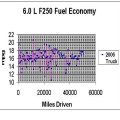
i'm not worried about gelling at all. i add the summer blend additive for the extra cetane boost, and i found that PS grey bottle and stanadyne performance gave me an extra MPG. verdict is still out on the ford stuff, but since i'm pretty sure that they switched to winter fuel up north here, that would account for the loss of ~1 - 1.5 MPG.
some say why, i say why not? it doesn't cost much and takes an extra 30 seconds to add at the pump, and might help a guy's engine last a little longer. just my humble opinion.
i'm not worried about gelling at all. i add the summer blend additive for the extra cetane boost, and i found that PS grey bottle and stanadyne performance gave me an extra MPG. verdict is still out on the ford stuff, but since i'm pretty sure that they switched to winter fuel up north here, that would account for the loss of ~1 - 1.5 MPG.
some say why, i say why not? it doesn't cost much and takes an extra 30 seconds to add at the pump, and might help a guy's engine last a little longer. just my humble opinion.

Logistics Pro

Joined: Sep 2006
Posts: 4,863
Likes: 4
From: Airdrie Alberta

Once I started using the stanadyne in the summer my mileage went from about 18L/100km's to 15L/100km's, that is going by my over head display but the reading is average for last 30k km's so it should be pretty close. With the winter fuel it has gone up to 16L/100km's and with the cold we have now will probably make its way up to about 17L/100km's I imagine.

Thread
Thread Starter
Forum
Replies
Last Post







