


200amp alt external regulator

Thread Starter
|
Junior User
Joined: Oct 2007
Posts: 93
Likes: 0
200amp alt external regulator
I'm going to put a 200 or 300 amp alt in place of the stock 60 amp alt.
My question is will the stock voltage regulator be able to handle the larger alt? If not then how do i make it able to handle it?
Thanks in advance for any and all your help.
My question is will the stock voltage regulator be able to handle the larger alt? If not then how do i make it able to handle it?
Thanks in advance for any and all your help.

Moderator


Joined: Jan 2001
Posts: 57,025
Likes: 2,756
From: Virginia

just the alt harness or all the wiring?
But, what are you going to be doing with all this power? If you plan on adding a bunch of stuff in the original fuse box, than that is a no no, the stock wiring can't handle it. But if you plan on adding lights, a winch, a plow, invertor, compressor, etc., then you will need to come off the battery + with a new heavy wire to feed another fuse box, which will have large fuses to feed all this extra stuff you add.
So really it depends on what you are planning to do. With all that power, something is going to have to be upgraded somewhere to use it, unless you really don't need a 200 amp alternator.
Thread Starter
|
Junior User
Joined: Oct 2007
Posts: 93
Likes: 0
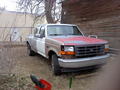
The set up for my 83 4x4 F-150. Set of fog lights on the front bumper and a winch later. In the cab three amps, one cb , sirius radio, gps (for my mother when she use the truck) and a small computer for long trips. the bed will have a custom made headache rack to support the stack and mount the air horns to plus a new cargo light. Under the bed four batteries, compresser, air tank and new wiring for trailer. the rear bumper will have a set of fog lights for hooking up a trailer at night.

Junior User
Joined: Dec 2007
Posts: 59
Likes: 0
Trending Topics
Moderator
Joined: Jan 2001
Posts: 57,025
Likes: 2,756
From: Virginia
I would go ahead an plan another aux fuse box under the hood or near the extra batteries you are going to mount. Are these extra batteries going to be deep cycle,and are you going to run a battery isolator?
FTE Stories
Ford Trucks for Ford Truck Enthusiasts

Top 6 Best Deals Available on New Fords & Lincolns Right Now
Brett Foote
This Hennessey Takes the Expedition Tremor's Off-Roading Capability to the Next Level
Verdad Gallardo
Top 10 Fords at 2026 Carlisle Ford Nationals
Joe Kucinski
3 Best / 3 Worst Parts of Modern Ford Ownership
Brett Foote
10 Amazing Upgrades That Solve Common Ford Truck Owner Headaches
Pouria Savadkouei
Every 2026 Ford Engine Explained
Brett Foote
10 Ugly Ford Trucks That We Still Kinda Love
Joe Kucinski
10 Things Every Truck Owner NEEDS (2026 Edition)
Michael S. Palmer
Rezvani's Latest Post-Apocalyptic Monster Is a Ford F-150 Raptor Underneath
Verdad Gallardo
Thread Starter
|
Junior User
Joined: Oct 2007
Posts: 93
Likes: 0
Fuse block i'm going to use http://store.summitracing.com/partde...5&autoview=sku
Yes on the deep cycle. Any suggestions for a good deep cycle battery?
Any draw back to just connecting them to the battery in the engine compartment besides
one day all five are dead.
Yes on the deep cycle. Any suggestions for a good deep cycle battery?
Any draw back to just connecting them to the battery in the engine compartment besides
one day all five are dead.
Moderator
Joined: Jan 2001
Posts: 57,025
Likes: 2,756
From: Virginia
Any draw back to just connecting them to the battery in the engine compartment besides
one day all five are dead.
one day all five are dead.
The best way to do it is use an isolator for the deep cycle batteries. That way they will be charged by the alternator, but they will only be drained by the aux equipment you hook to them, the engine starting battery will not be drained. And the engine starting battery will still be charged by the battery too. So you can actually run some of your equipment with the engine off, and then when you are finished, start the truck and drive on, because the engine starting battery will isolated from the deep cycle battery loads.
Post Fiend
Joined: Sep 2004
Posts: 11,676
Likes: 20
From: Pine Level NC
Look at the links below
Dave
3G will be just fine
http://fordfuelinjection.com/index.php?p=75
http://fordfuelinjection.com/?p=63
http://rjminjectiontech.com/?p=6
http://rjminjectiontech.com/?p=7
Dave
3G will be just fine
http://fordfuelinjection.com/index.php?p=75
http://fordfuelinjection.com/?p=63
http://rjminjectiontech.com/?p=6
http://rjminjectiontech.com/?p=7

Senior User
Joined: Dec 2007
Posts: 104
Likes: 0

Read my post first to help with the problem:
Quick tests for charging systems-basic
If this is what you are doing then add it up as follows.
Fog lights 50 watts each x two lights = 7 amps
3 amps, 100 watts average, that much alone you will
need a hearing aid in 1 month = 21 amps
CB = 1 amp
Sirius radio = 1 amp
GPS = .25 amps
Computer = 4 amps
Air horns, if they run on an air compressor off the
engine it does not count. If they have an electric compressor then it runs very little so average is 8 lets say = 8 amps
Cargo light, 5 amps if it runs for more than 30 minutes = 5 amps
Fog lights = 7 amps
This comes to around 50 amps and that is with everything on at once.
Why all the batteries? Why 200 amps?
Quick tests for charging systems-basic
If this is what you are doing then add it up as follows.
Originally Posted by 1983 3004x4
The set up for my 83 4x4 F-150. Set of fog lights on the front bumper and a winch later. In the cab three amps, one cb , sirius radio, gps (for my mother when she use the truck) and a small computer for long trips. the bed will have a custom made headache rack to support the stack and mount the air horns to plus a new cargo light. Under the bed four batteries, compresser, air tank and new wiring for trailer. the rear bumper will have a set of fog lights for hooking up a trailer at night.
3 amps, 100 watts average, that much alone you will
need a hearing aid in 1 month = 21 amps
CB = 1 amp
Sirius radio = 1 amp
GPS = .25 amps
Computer = 4 amps
Air horns, if they run on an air compressor off the
engine it does not count. If they have an electric compressor then it runs very little so average is 8 lets say = 8 amps
Cargo light, 5 amps if it runs for more than 30 minutes = 5 amps
Fog lights = 7 amps
This comes to around 50 amps and that is with everything on at once.
Why all the batteries? Why 200 amps?
Post Fiend
Joined: Sep 2004
Posts: 11,676
Likes: 20
From: Pine Level NC
If you haven't looked at these links then you should. The phone number for the company is there call them and ask for Ryan McCormick and if you don't want to listen to anyone who is advising you about this I'm sorry but why ask.
1st you don't need a 200 amp alt. What kind anyway.
2nd you don't need that many batteries. I work on RV's for a living and
believe me you don't need that many. I guess next your going to mount
solar panels on the roof.
You will need...an isolator. If you don't you will run down all the batteries. Electricity does not discriminate unless you cutoff the flow. Battery minders are also nice to have.
You will also need a mega fuse on that charge line. One spike and everything is toast.
Like you were told, you should run a completely seperate aux setup.
Computers just like stereo equipment also needs a clean input supply.
By the way is there room to sit in this truck or move comfortably?
Dave
1st you don't need a 200 amp alt. What kind anyway.
2nd you don't need that many batteries. I work on RV's for a living and
believe me you don't need that many. I guess next your going to mount
solar panels on the roof.
You will need...an isolator. If you don't you will run down all the batteries. Electricity does not discriminate unless you cutoff the flow. Battery minders are also nice to have.
You will also need a mega fuse on that charge line. One spike and everything is toast.
Like you were told, you should run a completely seperate aux setup.
Computers just like stereo equipment also needs a clean input supply.
By the way is there room to sit in this truck or move comfortably?
Dave
Originally Posted by 80351
Look at the links below
Dave
3G will be just fine
http://fordfuelinjection.com/index.php?p=75
http://fordfuelinjection.com/?p=63
http://rjminjectiontech.com/?p=6
http://rjminjectiontech.com/?p=7
Dave
3G will be just fine
http://fordfuelinjection.com/index.php?p=75
http://fordfuelinjection.com/?p=63
http://rjminjectiontech.com/?p=6
http://rjminjectiontech.com/?p=7
