



Brighter Headlight options..

Senior User
Joined: Jan 2007
Posts: 173
Likes: 1
That's how HID lights have come to be known, incorrectly, as xenon even though xenon isn't what produces the characteristic blue-white color.
Xenon, which ignites easier and faster than other HID gases, acts as a starter. It accelerates HID lights' start-up process, making it suitable where waiting a few minutes for lighting is impractical. High-intensity-discharge (HID) headlights would take a few minutes to get bright if xenon were not added to the gas inside the bulbs. With xenon involved, HID lights are on after 1 second, and are fully bright in a few seconds. Xenon is responsible for the bright flash as the headlights are turned on, and it's xenon that glows brightly temporarily until the harder to ignite gases are fully going.
Halogen to xenon conversions can be installed into almost any car that uses a headlight design where the bulb can be replaced independently of the headlight assembly. Although beam pattern correct conversions are easier to do on headlights that use a bulb that has a axial filament i.e., the filament is parallel to the length of the bulb, rather than the width. (The H13s which are found in 2006 F250s have a axial filament.) The physical dimensions of the bulb also need to be similar to the physical dimensions of the replacement xenon light source.
If designed and manufactured correctly a halogen to xenon conversion will have a corrected beam pattern that is very usable and produces no added glare and will not be dangerous. Although a beam correct conversion could be done on a 9007, 9004, H4, or 9003 it would probably require a some custom work to the headlight housing. This custom work can be a real chalange fore-aft, lateral, and angular positioning have a very profound impact on the beam pattern.
Not all halogen to xenon conversions are created equal. There are several things to look out for. Is the conversion beam pattern correct? Is the conversion tested to ensure beam pattern correctness? If not can it be easily fixed? Is it reversible if a correct beam can not be achieved?
There are way too many companies out there that make a “will fit xenon conversion“ with profit being the only consideration. These companies have given all xenon lights a bad name and have even pushed some states into considering outlawing all HID lights. NHTSA has received thousands of complaints with regards to the glare from HID/xenon headlights and is attempting to stop the import of these inferior products.
Xenon, which ignites easier and faster than other HID gases, acts as a starter. It accelerates HID lights' start-up process, making it suitable where waiting a few minutes for lighting is impractical. High-intensity-discharge (HID) headlights would take a few minutes to get bright if xenon were not added to the gas inside the bulbs. With xenon involved, HID lights are on after 1 second, and are fully bright in a few seconds. Xenon is responsible for the bright flash as the headlights are turned on, and it's xenon that glows brightly temporarily until the harder to ignite gases are fully going.
Halogen to xenon conversions can be installed into almost any car that uses a headlight design where the bulb can be replaced independently of the headlight assembly. Although beam pattern correct conversions are easier to do on headlights that use a bulb that has a axial filament i.e., the filament is parallel to the length of the bulb, rather than the width. (The H13s which are found in 2006 F250s have a axial filament.) The physical dimensions of the bulb also need to be similar to the physical dimensions of the replacement xenon light source.
If designed and manufactured correctly a halogen to xenon conversion will have a corrected beam pattern that is very usable and produces no added glare and will not be dangerous. Although a beam correct conversion could be done on a 9007, 9004, H4, or 9003 it would probably require a some custom work to the headlight housing. This custom work can be a real chalange fore-aft, lateral, and angular positioning have a very profound impact on the beam pattern.
Not all halogen to xenon conversions are created equal. There are several things to look out for. Is the conversion beam pattern correct? Is the conversion tested to ensure beam pattern correctness? If not can it be easily fixed? Is it reversible if a correct beam can not be achieved?
There are way too many companies out there that make a “will fit xenon conversion“ with profit being the only consideration. These companies have given all xenon lights a bad name and have even pushed some states into considering outlawing all HID lights. NHTSA has received thousands of complaints with regards to the glare from HID/xenon headlights and is attempting to stop the import of these inferior products.
Post Fiend
Joined: Dec 2002
Posts: 6,245
Likes: 1
From: IL, USA
Originally Posted by diverseth
That's how HID lights have come to be known, incorrectly, as xenon even though xenon isn't what produces the characteristic blue-white color.
Xenon, which ignites easier and faster than other HID gases, acts as a starter. It accelerates HID lights' start-up process, making it suitable where waiting a few minutes for lighting is impractical. High-intensity-discharge (HID) headlights would take a few minutes to get bright if xenon were not added to the gas inside the bulbs. With xenon involved, HID lights are on after 1 second, and are fully bright in a few seconds. Xenon is responsible for the bright flash as the headlights are turned on, and it's xenon that glows brightly temporarily until the harder to ignite gases are fully going.
Halogen to xenon conversions can be installed into almost any car that uses a headlight design where the bulb can be replaced independently of the headlight assembly. Although beam pattern correct conversions are easier to do on headlights that use a bulb that has a axial filament i.e., the filament is parallel to the length of the bulb, rather than the width. (The H13s which are found in 2006 F250s have a axial filament.) The physical dimensions of the bulb also need to be similar to the physical dimensions of the replacement xenon light source.
If designed and manufactured correctly a halogen to xenon conversion will have a corrected beam pattern that is very usable and produces no added glare and will not be dangerous. Although a beam correct conversion could be done on a 9007, 9004, H4, or 9003 it would probably require a some custom work to the headlight housing. This custom work can be a real chalange fore-aft, lateral, and angular positioning have a very profound impact on the beam pattern.
Not all halogen to xenon conversions are created equal. There are several things to look out for. Is the conversion beam pattern correct? Is the conversion tested to ensure beam pattern correctness? If not can it be easily fixed? Is it reversible if a correct beam can not be achieved?
There are way too many companies out there that make a “will fit xenon conversion“ with profit being the only consideration. These companies have given all xenon lights a bad name and have even pushed some states into considering outlawing all HID lights. NHTSA has received thousands of complaints with regards to the glare from HID/xenon headlights and is attempting to stop the import of these inferior products.
Xenon, which ignites easier and faster than other HID gases, acts as a starter. It accelerates HID lights' start-up process, making it suitable where waiting a few minutes for lighting is impractical. High-intensity-discharge (HID) headlights would take a few minutes to get bright if xenon were not added to the gas inside the bulbs. With xenon involved, HID lights are on after 1 second, and are fully bright in a few seconds. Xenon is responsible for the bright flash as the headlights are turned on, and it's xenon that glows brightly temporarily until the harder to ignite gases are fully going.
Halogen to xenon conversions can be installed into almost any car that uses a headlight design where the bulb can be replaced independently of the headlight assembly. Although beam pattern correct conversions are easier to do on headlights that use a bulb that has a axial filament i.e., the filament is parallel to the length of the bulb, rather than the width. (The H13s which are found in 2006 F250s have a axial filament.) The physical dimensions of the bulb also need to be similar to the physical dimensions of the replacement xenon light source.
If designed and manufactured correctly a halogen to xenon conversion will have a corrected beam pattern that is very usable and produces no added glare and will not be dangerous. Although a beam correct conversion could be done on a 9007, 9004, H4, or 9003 it would probably require a some custom work to the headlight housing. This custom work can be a real chalange fore-aft, lateral, and angular positioning have a very profound impact on the beam pattern.
Not all halogen to xenon conversions are created equal. There are several things to look out for. Is the conversion beam pattern correct? Is the conversion tested to ensure beam pattern correctness? If not can it be easily fixed? Is it reversible if a correct beam can not be achieved?
There are way too many companies out there that make a “will fit xenon conversion“ with profit being the only consideration. These companies have given all xenon lights a bad name and have even pushed some states into considering outlawing all HID lights. NHTSA has received thousands of complaints with regards to the glare from HID/xenon headlights and is attempting to stop the import of these inferior products.
I have a couple questions about the ones you run...
I have some friends who tried some cheap ones on ebay (not from the place you mentioned) and had horrible radio interference. Did you notice any increased static once you installed yours?
Do you run the standard ballast or the slim ballasts?
And also, what made your decision to go with the quad ballast vs the motorized capsule/shield?
Senior User
Joined: Jan 2007
Posts: 173
Likes: 1
Originally Posted by DCSpecial
I have a couple questions about the ones you run...
I have some friends who tried some cheap ones on ebay (not from the place you mentioned) and had horrible radio interference. Did you notice any increased static once you installed yours?
Do you run the standard ballast or the slim ballasts?
And also, what made your decision to go with the quad ballast vs the motorized capsule/shield?
I have some friends who tried some cheap ones on ebay (not from the place you mentioned) and had horrible radio interference. Did you notice any increased static once you installed yours?
Do you run the standard ballast or the slim ballasts?
And also, what made your decision to go with the quad ballast vs the motorized capsule/shield?
Posting Guru
Joined: Mar 2006
Posts: 1,275
Likes: 0
From: Long Island, NY
Originally Posted by diverseth
I have yet to notice any static on either the factory radio I had or the Eclipse radio that I have now. I think I have the standard ballasts (About 3 x3 x ¾”). I put them up inside the fenders with heavy duty Velcro so you can’t see them. I went with the quad ballast after seeing them on a friend’s truck. Originally I had an inferior “off road only” set that used a small halogen bulb for the high beams what a joke it was like using a Bic lighter for high beams. With the quad system all 4 bulbs light up and it is insanely bright. The type that move either the bulb or a shield work by changing the light pattern to go from low to high. The quad system changes the pattern and gets much brighter especially if it is wired to illuminate all 4 bulbs. A very easy modification with 1 wire and a diode.
Senior User
Joined: Jan 2007
Posts: 173
Likes: 1
Originally Posted by LaxPlaya21
Do you have any pictures of your bulbs? I am still confused as to what you have. HID is one technology, while filament is the other. Are your bulbs HID, or are they filament?
The blue bulbs are Halogen bulbs (Halogen gas w/Filiment) Not HID/Xenon.
The middle bulb is a HID or Xenon bulb (Xenon gas w/NO Filiment)
The last picture (Far Right) is the crap I first had in my truck. It has both Halogen(High) & Xenon(Low) ffice
 ffice" /><O
 ></O>
></O><O
></O>
Posting Guru
Joined: Mar 2006
Posts: 1,275
Likes: 0
From: Long Island, NY
Ok thanks for the clarification haha. Ok, you def are running HID bulbs. Now my question is how do you focus your light? When using HID bulbs most cars are using projectors to focus. However, some cars still use a reflector. My only concern is that you have a HID capsule that is meant for HID projectors or reflectors in a reflective housing that is meant for standard filament bulbs. The optics just won't match. Its like putting on someone else's glasses, there is no way to focus. Can you post any pics of your output? Even if you were up 10ft from the garage door or a wall and snapped pics it would be very helpful.
Here is my TL projector in my stock reflector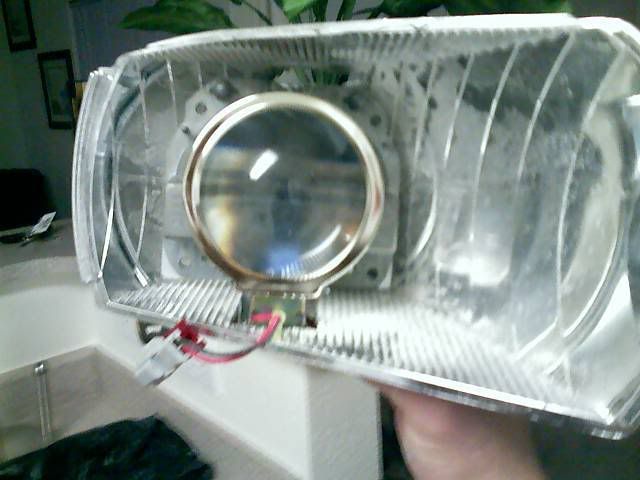
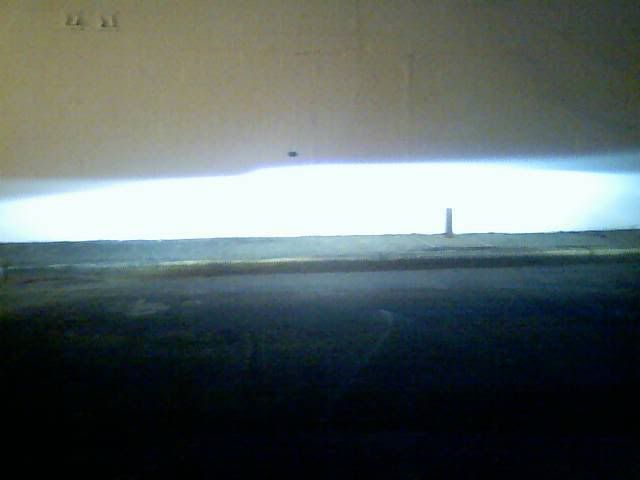
Here is some preliminary cutoff pics before better aligment
Here is my TL projector in my stock reflector
Here is some preliminary cutoff pics before better aligment

Post Fiend
Joined: Feb 2007
Posts: 14,541
Likes: 2
From: Dallas-Ft. Worth
Well, I put HIDs in my stock reflectors and I can say equivocally that there is DEFINITELY no loss of forward light. It's definitely brighter. I put in 8000Ks six months ago and have yet to be flashed. I can get some pics up when I get back to the house, if it will help.
EDIT: BTW, here's where I got mine:
http://www.xenonlink.com/
EDIT: BTW, here's where I got mine:
http://www.xenonlink.com/
Last edited by Izzy351; Dec 14, 2007 at 06:37 PM.
Post Fiend
Joined: Feb 2007
Posts: 14,541
Likes: 2
From: Dallas-Ft. Worth
FTE Stories
Ford Trucks for Ford Truck Enthusiasts

Top 10 Fords at 2026 Carlisle Ford Nationals
Joe Kucinski
3 Best / 3 Worst Parts of Modern Ford Ownership
Brett Foote
10 Amazing Upgrades That Solve Common Ford Truck Owner Headaches
Pouria Savadkouei
Every 2026 Ford Engine Explained
Brett Foote
10 Ugly Ford Trucks That We Still Kinda Love
Joe Kucinski
10 Things Every Truck Owner NEEDS (2026 Edition)
Michael S. Palmer
Rezvani's Latest Post-Apocalyptic Monster Is a Ford F-150 Raptor Underneath
Verdad Gallardo
Top 10 Most Expensive Ford Trucks Ever Sold on Bring a Trailer
Joe Kucinski
2027 Ford Super Duty Buyer's Guide (Every Model, Engine, & Package)
Brett Foote
Senior User
Joined: Jan 2007
Posts: 173
Likes: 1
I don't have pictures of my truck yet but I think you will get the idea with these.
The first picture is of a bad HID kit with horrible light patern notice no cut off.
The second is a good HID kit notice the cut off is the same as the stock halogen lights in the last picture.
The first picture is of a bad HID kit with horrible light patern notice no cut off.
The second is a good HID kit notice the cut off is the same as the stock halogen lights in the last picture.
Post Fiend
Joined: Feb 2007
Posts: 14,541
Likes: 2
From: Dallas-Ft. Worth
Here's what my HIDs look like against my garage door. These are just the ones from http://www.xenonlink.com/ without any special lenses. They are built to go into standard lenses, not projector types.

Posting Guru
Joined: Nov 2006
Posts: 1,154
Likes: 2
Izzy, first thanks for your input on this. Second, how do you like the 8000K bulbs? Is it only slightly blue or fairly blue? The site you linked has the kit on sale for $140, I'm trying to decide if I want to go with the 5000K or 8000K. I think I'd like the whiter 5000K set but it's kind of hard to get a realistic idea from pics online since there are so many factors that effect what you see in them...
Post Fiend
Joined: Feb 2007
Posts: 14,541
Likes: 2
From: Dallas-Ft. Worth
You're welcome!! That's why we're all here, right? 
I like the 8000Ks a lot. A guy here put up a pic of his truck with the 10000Ks and they were VERY blue. The 8000Ks are more white than blue. When they first turn on, they're more blue, then a short time later they get a bit whiter. I was on the fence between the two, and I like these. If you want even more white, get the 6000Ks. I like the slightly blue light, but that's my taste. And they are definitely bright...
I like the 8000Ks a lot. A guy here put up a pic of his truck with the 10000Ks and they were VERY blue. The 8000Ks are more white than blue. When they first turn on, they're more blue, then a short time later they get a bit whiter. I was on the fence between the two, and I like these. If you want even more white, get the 6000Ks. I like the slightly blue light, but that's my taste. And they are definitely bright...

Freshman User
Joined: Dec 2007
Posts: 37
Likes: 0
Ive noticed a few guys in my area running HID kits with purple looking light. I had heard that the 10k's would give off a purple discharge, but its sounds like its actually blue. Does anyone know what setup would be required to get the purple colored light?
Last edited by Boosted02; Dec 18, 2007 at 03:14 PM.
Post Fiend
Joined: Dec 2002
Posts: 6,245
Likes: 1
From: IL, USA
True HID kits include the capsules, ballasts (with built-in ignitor) and wiring (sometimes mounts/holders for the ballasts, zip ties, etc)
Some HID kits have separate ignitors and ballasts but include everything you need as well.
Some HID kits have separate ignitors and ballasts but include everything you need as well.