




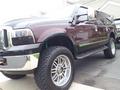

Vector 3000W Inverter

Thread Starter
|
Senior User
Joined: Aug 2005
Posts: 122
Likes: 0
Vector 3000W Inverter
I finally got my inverter installed. I bought it on eBay for 250 NIB. It is almost $600 on Northern Tool but I guess that is capitalism for you.
The cables were made at a local Tweeter. They did an excellent job considering I phoned in what I needed. Then I took the crimp ends in and it was plug and play at that point. They are 2AWG with 250A ANL fuses.
All 4 2AWG cables go through the firewall easily and run over the parking brake cable and brake wiring and under the steering shaft.
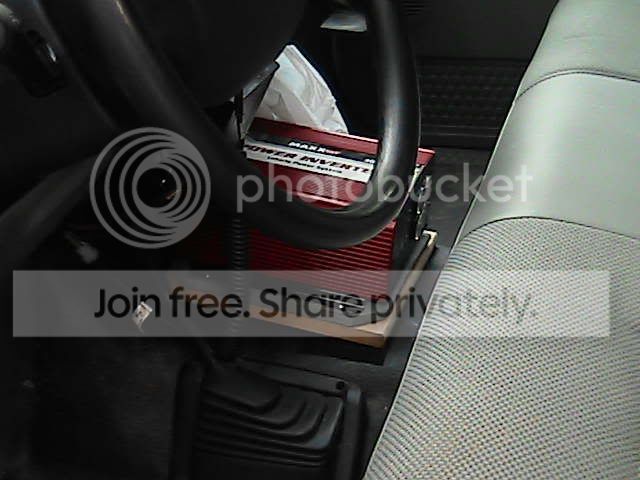
I used 4 2" wide velcro strips on the floor and the same on a 11x11 piece of MDF. I screwed the inverter to the wood with some padding for shock absorption in between. Also to help divert as much heat from the transmission through the floor.
I put paper between the velcro on the wood and the floor while positioning the inverter and tightening down the screws on the crimped ends. Then I shifted it to where I wanted and pulled the paper and seated the velcro pieces together.
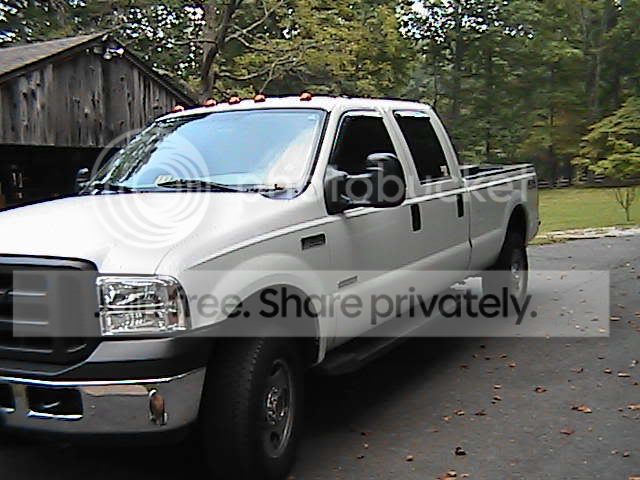
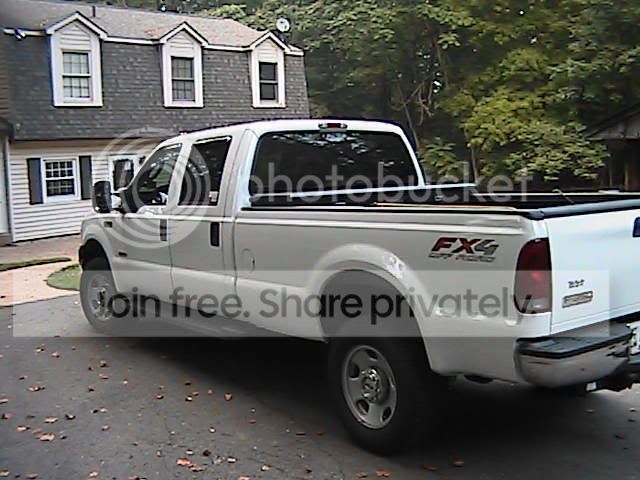
The cables fit between the gray plastic and a small black piece of plastic where the dash meets the floor. The cables are thick but it fits fine in a 2006 XL F350. I think I'll paint the MDF black.
Works like charm. I do work at foreclosures where the power is usually cut off and also I will use it to power my home water pump and well when the power goes out which is too often.
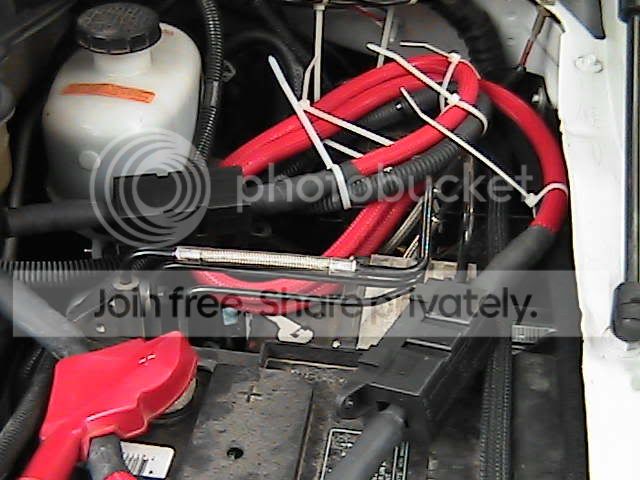
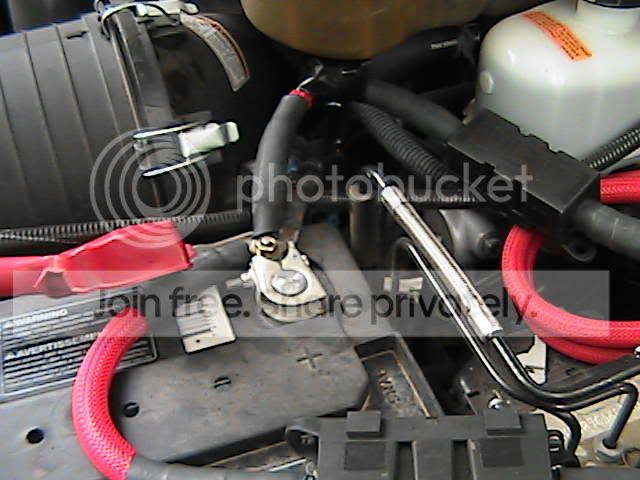
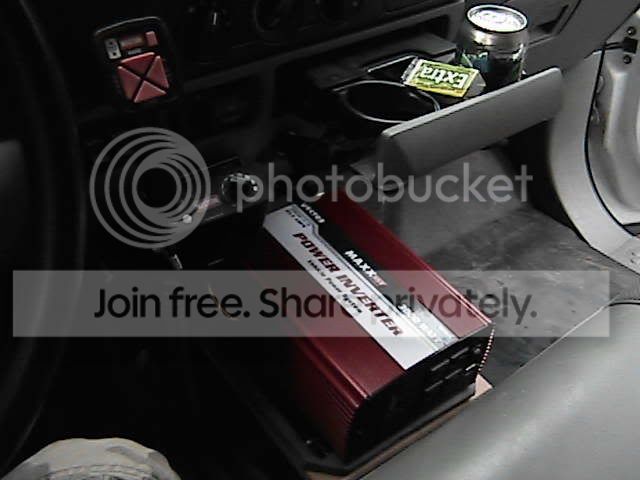
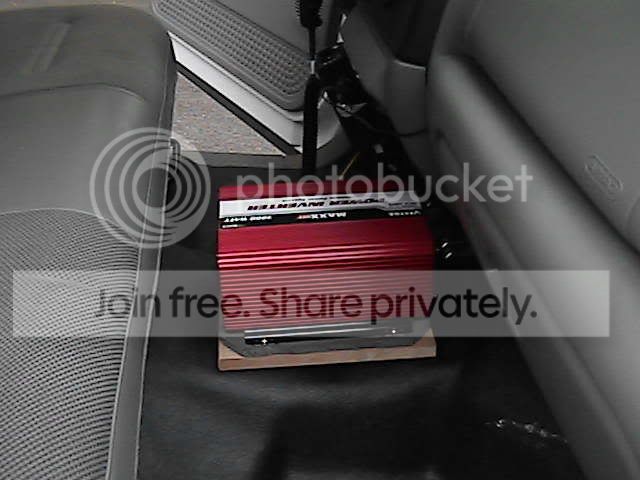
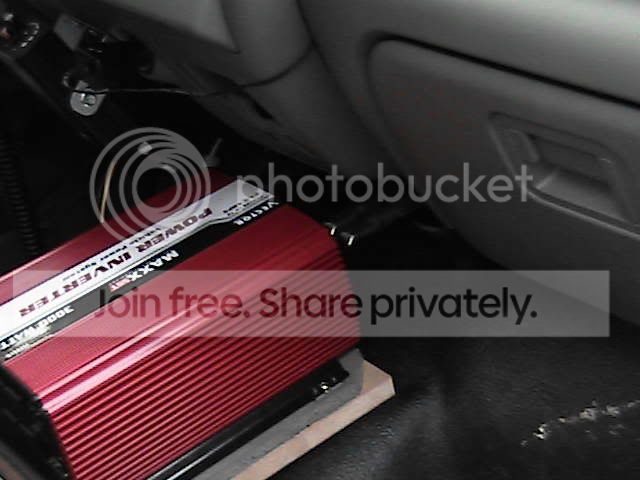
The cables were made at a local Tweeter. They did an excellent job considering I phoned in what I needed. Then I took the crimp ends in and it was plug and play at that point. They are 2AWG with 250A ANL fuses.
All 4 2AWG cables go through the firewall easily and run over the parking brake cable and brake wiring and under the steering shaft.
I used 4 2" wide velcro strips on the floor and the same on a 11x11 piece of MDF. I screwed the inverter to the wood with some padding for shock absorption in between. Also to help divert as much heat from the transmission through the floor.
I put paper between the velcro on the wood and the floor while positioning the inverter and tightening down the screws on the crimped ends. Then I shifted it to where I wanted and pulled the paper and seated the velcro pieces together.
The cables fit between the gray plastic and a small black piece of plastic where the dash meets the floor. The cables are thick but it fits fine in a 2006 XL F350. I think I'll paint the MDF black.
Works like charm. I do work at foreclosures where the power is usually cut off and also I will use it to power my home water pump and well when the power goes out which is too often.

New User
Joined: Aug 2007
Posts: 3
Likes: 0
Take care, take GREAT care.
That is an MSW, Modified Sine Wave, inverter. The output is alternating plus and minus voltage square waves typically of magnetude of ~148 VDC. Peak voltage of a true sine wave is in the range of 170 volts and some loads/devices will not operate efficiently (overHEAT) and others will not operate at all due to this lower peak voltage. Resistance and inductive loads, in general, will work okay. Capacitive loads will NOT. Many AC induction motors use a capacitor for initially starting while others use a capacitor during running. It will be a rare thing to be able to run any capacitive load with an MSW inverter.
That is an MSW, Modified Sine Wave, inverter. The output is alternating plus and minus voltage square waves typically of magnetude of ~148 VDC. Peak voltage of a true sine wave is in the range of 170 volts and some loads/devices will not operate efficiently (overHEAT) and others will not operate at all due to this lower peak voltage. Resistance and inductive loads, in general, will work okay. Capacitive loads will NOT. Many AC induction motors use a capacitor for initially starting while others use a capacitor during running. It will be a rare thing to be able to run any capacitive load with an MSW inverter.

Fleet Mechanic


Joined: Feb 2007
Posts: 1,852
Likes: 39

As you probably already know, if you run this thing at full power, it will be pulling well over 200 amps from your batteries. Although your writeup and pics were great, I was unable to discern exactly how you connected the cables to the batteries. I would just like to offer the following advice:
For extreme current draw (e.g. winches) in dual battery systems, it is important to take the positive lead from one of the batteries, and the negative lead from the other, and to not use the chassis/body to return any of the load current. There are resistive losses in the cables connecting the two batteries together, and connecting the output leads in this manner will divide those losses equally between the two batteries (this is also assuming no ground return from the load through the chassis).
If you don't wire it in this manner, you will not get as much capacity, and one of the batteries (the one the load cables are connected to) will bear more of the load.
For extreme current draw (e.g. winches) in dual battery systems, it is important to take the positive lead from one of the batteries, and the negative lead from the other, and to not use the chassis/body to return any of the load current. There are resistive losses in the cables connecting the two batteries together, and connecting the output leads in this manner will divide those losses equally between the two batteries (this is also assuming no ground return from the load through the chassis).
If you don't wire it in this manner, you will not get as much capacity, and one of the batteries (the one the load cables are connected to) will bear more of the load.
Thread Starter
|
Senior User
Joined: Aug 2005
Posts: 122
Likes: 0
I use the driver side battery since it controls nothing, as evidenced from having my truck stolen in January and the bad guys stole the driver side battery and the truck ran fine, so I am not guessing at what it does not do. The negative wires are attached to the negative terminal and the positive ones to the positive terminal each with 3/8" ID ring termnals which are attached securely.
If this setup is not capable of testing electronics left behind in foreclosures or 5-10 amp power tools long enough to cut something then I will be sad.
I got a 3000w inverter because the 750W (6.5A) one I had would not run a 7 amp angle grinder. I had no intention of getting another inverter that would not run the angle grinder or a sawzall. This one runs both fine.
If this setup is not capable of testing electronics left behind in foreclosures or 5-10 amp power tools long enough to cut something then I will be sad.
I got a 3000w inverter because the 750W (6.5A) one I had would not run a 7 amp angle grinder. I had no intention of getting another inverter that would not run the angle grinder or a sawzall. This one runs both fine.
More Turbo

Joined: Oct 2003
Posts: 597
Likes: 22
From: Central Maine
That 3K inverter will run your tools fine. As Kel mentioned, the MSW technique does not work so well for capacitive loads. My Dad has the exact setup, except only 2KW. He bought a small freezer to put in the bed of his truck to keep a moose frozen that we got last year. It would trip the breaker on the inverter when the truck slowed to an idle, worked fine on the highway though so he just unplugged it when he got into towns.
If you have an issue getting current from the alternator when idling, you may want to get a tuner or something that had a high idle mode to get more current from the alternator. Or upgrade to a 200A alternator, ugh ugh!
If you have an issue getting current from the alternator when idling, you may want to get a tuner or something that had a high idle mode to get more current from the alternator. Or upgrade to a 200A alternator, ugh ugh!
Trending Topics
Thread Starter
|
Senior User
Joined: Aug 2005
Posts: 122
Likes: 0
I have the SEIC wire on upfitter 4 and added the BCP on upfitter 3 in case the engine needs to vary based on the draw of the inverter.
FTE Stories
Ford Trucks for Ford Truck Enthusiasts

Top 6 Best Deals Available on New Fords & Lincolns Right Now
Brett Foote
This Hennessey Takes the Expedition Tremor's Off-Roading Capability to the Next Level
Verdad Gallardo
Top 10 Fords at 2026 Carlisle Ford Nationals
Joe Kucinski
3 Best / 3 Worst Parts of Modern Ford Ownership
Brett Foote
10 Amazing Upgrades That Solve Common Ford Truck Owner Headaches
Pouria Savadkouei
Every 2026 Ford Engine Explained
Brett Foote
10 Ugly Ford Trucks That We Still Kinda Love
Joe Kucinski
10 Things Every Truck Owner NEEDS (2026 Edition)
Michael S. Palmer
Rezvani's Latest Post-Apocalyptic Monster Is a Ford F-150 Raptor Underneath
Verdad Gallardo
Senior User
Joined: Jul 2005
Posts: 353
Likes: 0
Originally Posted by Ed in Maine
What is upfitter 3 and 4? And while I am asking questions, what is SEIC and BCP?
I don't know what SEIC and BCP are. I assume that are wires that tell the ECU to idle the engine at different RPMs.
More Turbo
Joined: Oct 2003
Posts: 597
Likes: 22
From: Central Maine
Pretty cool, I do not get out of the 7.3L forum too much so this is new to me. Thanks!
I had an AIC (automatic idle control) box in a 1997 that I never could get to set the idle higher... was a great digital tach though!
I had an AIC (automatic idle control) box in a 1997 that I never could get to set the idle higher... was a great digital tach though!
Fleet Mechanic
Joined: Feb 2007
Posts: 1,852
Likes: 39
Originally Posted by betrayz
I use the driver side battery since it controls nothing, as evidenced from having my truck stolen in January and the bad guys stole the driver side battery and the truck ran fine, so I am not guessing at what it does not do.
If this setup is not capable of testing electronics left behind in foreclosures or 5-10 amp power tools long enough to cut something then I will be sad.
Thread Starter
|
Senior User
Joined: Aug 2005
Posts: 122
Likes: 0
I love it. I had to pump up two tires on a rickety plow truck on my lawn. It's too far for the air hose on my larger compressor. My smaller 1.5HP 6 gallon compressor says 12 amps. I plugged it up to the inverter. The load indicator on the inverter was at 3 bars, out of a dozen, while the compressor was running. So far I've run the angle grinder, a sawzall, and the compressor. I can't wait to brew some coffee on my dash while plowing. I've searched for what may or may not run on the MSW and I promise not to use it on my oxygen compensators. 
For the money, I could not bring myself to buy a 2K or 1K inverter since my 750W failed when I needed it. I did not pay too much attention to amp and watt requirements prior to installing this large one. Copper is quite expensive these days with the war using so much ammo so the cables were $50 each labor included.
I made sure the cable were as fat as reasonable (2AWG). They are 7' long (manual recommends max of 6') and as you can see from the photos I could get them cut shorter but I ASSUME that a foot difference at the loads I will typically use should be ok. Famous last words though.
I didn't notice any heat issues and I had the hood up (to also jump the rickety plow truck) so I would probably run the inverter with the hood up to dissipate some heat from the cables. Inside, the inverter has plenty of room to ventilate and the AC in the truck is as cold as can be when needed.
Having electricity in the middle of nowhere is quite comforting. I plan on getting an electric impact wrench and I feel like any issues I have on a job site can be resolved quickly with electric power tools.
My experience with battery powered tools is that the battery will die before the job is done, the charger won't charge it fast enough or at all if the battery is too hot, and an electric power tool crushes the battery ones in power, time of use and variety. At $100 a piece the 18v batteries are just too expensive to buy 4 or 5 that aren't already in tools.
I would also like to thank Ford for making an adequately large hole in the firewall for all sorts of wiring.
For the money, I could not bring myself to buy a 2K or 1K inverter since my 750W failed when I needed it. I did not pay too much attention to amp and watt requirements prior to installing this large one. Copper is quite expensive these days with the war using so much ammo so the cables were $50 each labor included.
I made sure the cable were as fat as reasonable (2AWG). They are 7' long (manual recommends max of 6') and as you can see from the photos I could get them cut shorter but I ASSUME that a foot difference at the loads I will typically use should be ok. Famous last words though.
I didn't notice any heat issues and I had the hood up (to also jump the rickety plow truck) so I would probably run the inverter with the hood up to dissipate some heat from the cables. Inside, the inverter has plenty of room to ventilate and the AC in the truck is as cold as can be when needed.
Having electricity in the middle of nowhere is quite comforting. I plan on getting an electric impact wrench and I feel like any issues I have on a job site can be resolved quickly with electric power tools.
My experience with battery powered tools is that the battery will die before the job is done, the charger won't charge it fast enough or at all if the battery is too hot, and an electric power tool crushes the battery ones in power, time of use and variety. At $100 a piece the 18v batteries are just too expensive to buy 4 or 5 that aren't already in tools.
I would also like to thank Ford for making an adequately large hole in the firewall for all sorts of wiring.
Last edited by betrayz; Sep 3, 2007 at 02:54 PM.

Thread
Thread Starter
Forum
Replies
Last Post
dukedrummer89
1987 - 1996 F150 & Larger F-Series Trucks
39
Jan 6, 2016 08:58 PM
Rellim51
1973 - 1979 F-100 & Larger F-Series Trucks
31
Jul 19, 2011 09:38 PM